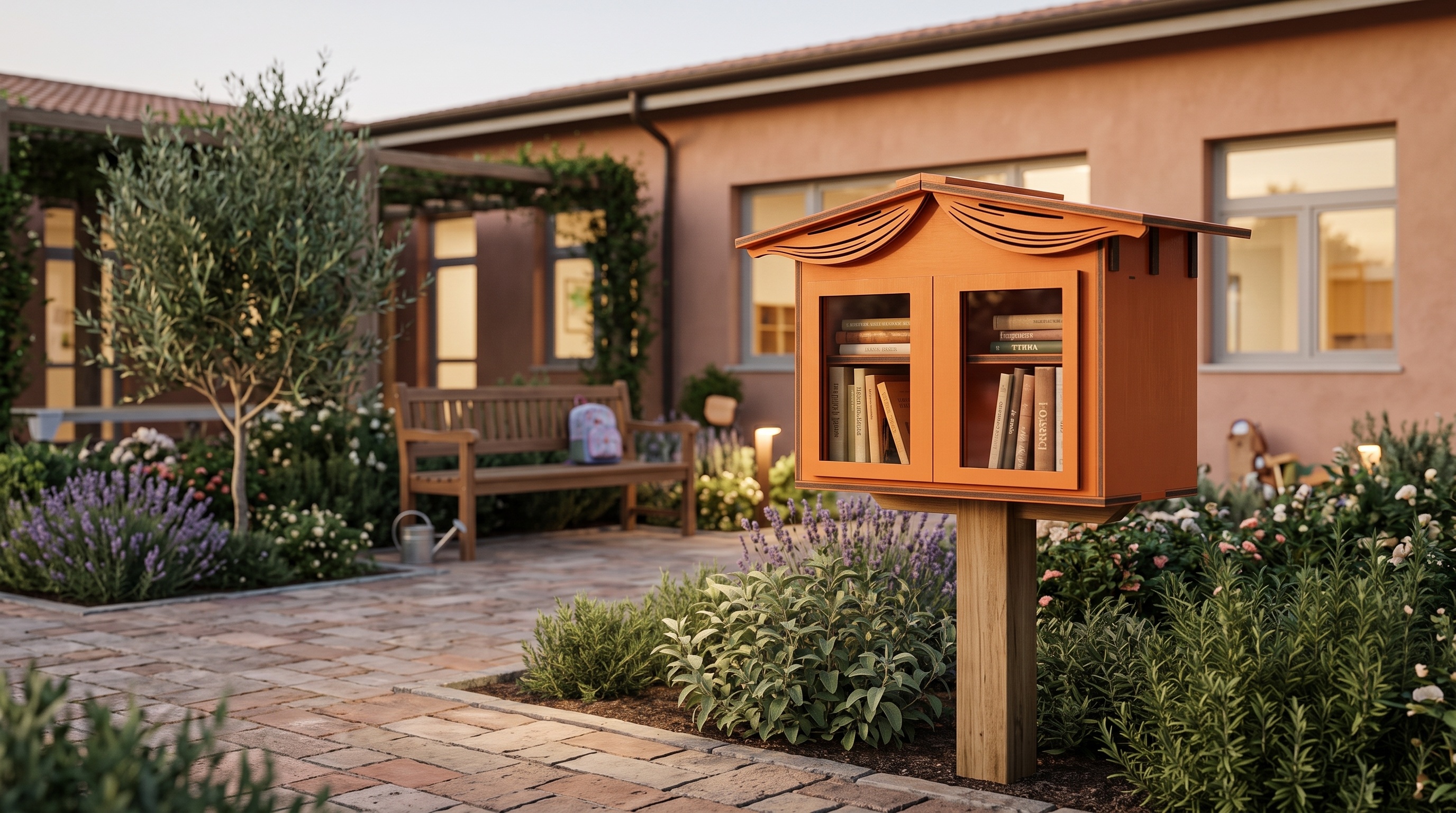
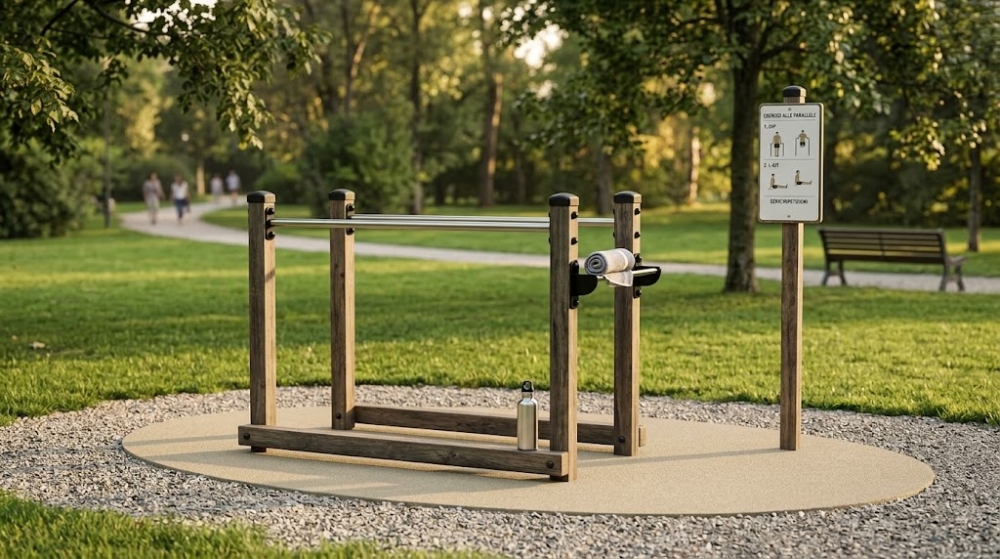
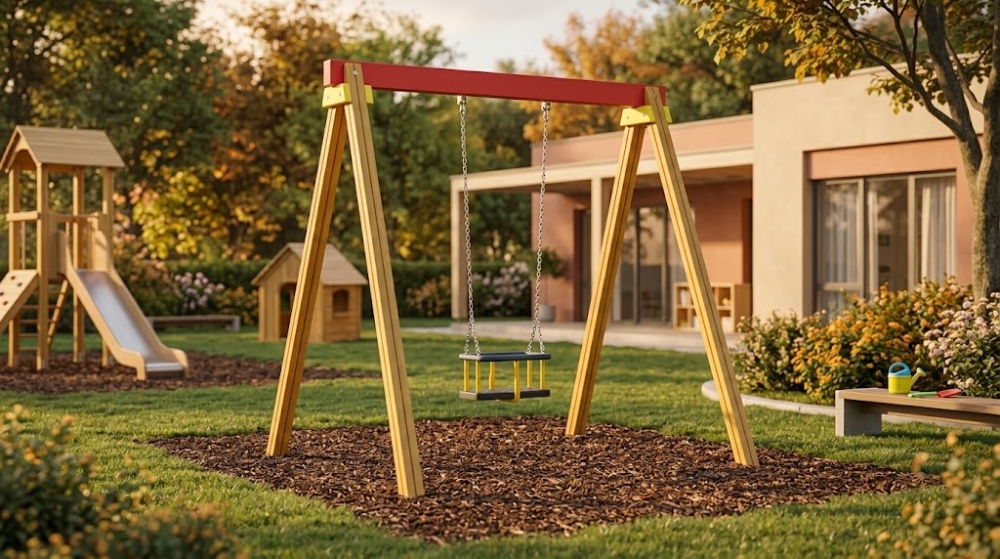
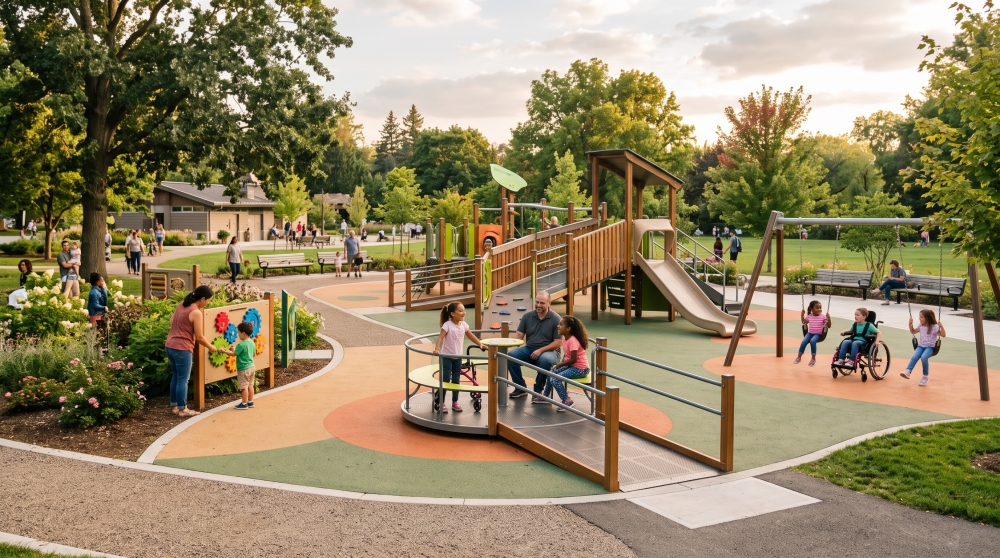
The book exchange houses allow the creation of small book sharing points accessible to citizens, students, families, and visitors to parks or common spaces. The principle is simple: whoever uses the house can leave one book and take another, encouraging the free circulation of volumes and creating a meeting point around reading. For the service to work over time, however, the structure must be chosen in relation to the location, the weather conditions, and the type of public who will use it.
A house located in a public park has different needs than one installed in a schoolyard, in a condominium space, or within a protected area. Exposure to rain, frequency of use, risk of impact, and the need for anchoring all differ. The dimensions, height of the shelves, and opening methods must also be carefully evaluated. An effective book sharing point therefore arises from a design choice, not from the simple positioning of a book container.
Why install a book exchange house
The Book sharing houses transform a passage or rest area into a small cultural center. They can be placed near benches, play areas, schools, civic centers, gardens, and pedestrian areas, creating a service that does not require opening hours or dedicated staff during each use. The simplicity of the system allows users to contribute directly to the availability of books, encouraging a spontaneous exchange mechanism.
For municipalities, associations, and administrators, the value of the house also concerns the ability to activate a space. A little-used corner can become more recognizable and frequented when associated with a clear function. The structure can They can also integrate with benches, tables, pedestrian paths, or other street furniture. The book exchange houses thus become part of the organization of the public space and not an isolated element.
How to choose the most suitable location for book sharing
The location should be visible and easily accessible, but not interfere with main routes. A spot that is too hidden risks being underused, while a small house placed in the center of a passageway can create obstacles. In parks, it is useful to choose areas close to rest areas or entrances, where the flow of users is constant and the structure can be located without significant deviations.
It is also important to consider exposure to sun, rain, and wind. A partially sheltered location can reduce stress on surfaces and help protect books. The installation must also avoid areas subject to stagnant or accumulated water. As with other street furniture, positioning should ensure accessibility, safety, and the absence of interference with pedestrian paths and maneuvering areas.
Materials and resistance for outdoor use
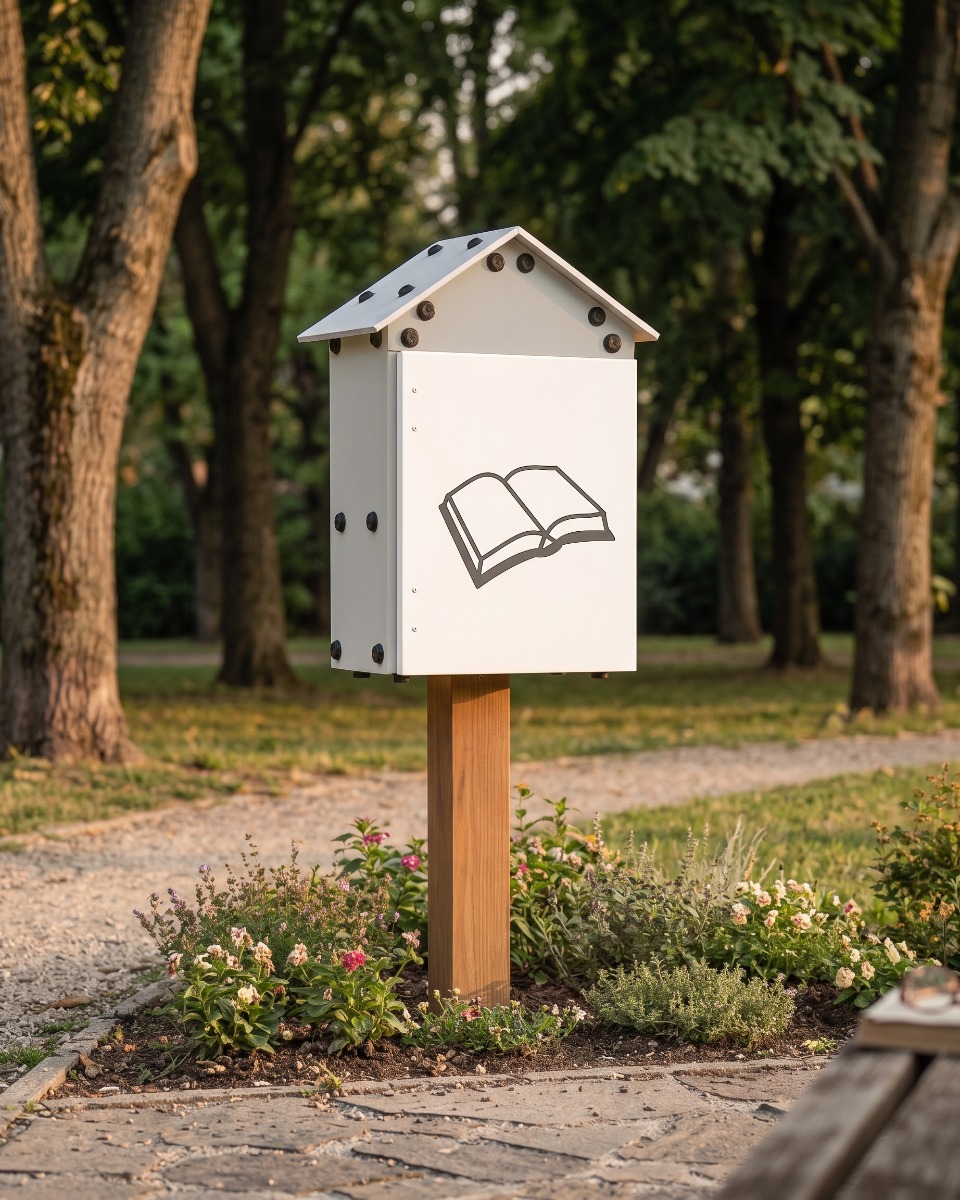 The material determines much of the house's lifespan. Wood offers a warm appearance that is easily associated with parks, schools, and gardens, but must be properly treated to resist humidity and atmospheric agents. Periodic maintenance may become necessary to preserve the finish, integrity, and protective capacity. An unprotected wooden structure, however, tends to deteriorate more rapidly when left exposed all year round.
Metal and technical materials can offer greater mechanical resistance and easier management in highly frequented contexts. The choice must, however, evaluate corrosion treatments, the quality of the joints and the behaviour of the surface over time. The criterion should not be exclusively aesthetic: an outdoor bookcrossing house must withstand rain, sun, temperature changes and repeated use while maintaining a stable structure.
Protecting books from rain, humidity and atmospheric agents
The protection of books is one of the central criteria in the choice. An overhanging cover can limit the direct entry of rain, while doors or flaps help protect the volumes during periods of inclement weather. The edges must prevent infiltration and the structure should prevent water from accumulating inside. The bottom of the bookcase must also remain raised above surfaces where stagnant water can form.
Humidity must be considered even when rain does not enter directly. A completely enclosed structure without proper air management can retain condensation and create an unfavorable environment for book storage. The design must therefore find a balance between protection and ventilation. Periodic checks also allow wet or deteriorated volumes to be quickly removed before they compromise the others.
Size, shelves and capacity of the bookcase
The dimensions must be proportionate to the number of books it plans to house. A structure that is too small tends to fill up quickly and encourages untidy stacking, while a very large bookcase may be oversized for a small apartment building or a school with limited use. It is useful to provide sufficient capacity to ensure variety without transforming the exchange point into an uncontrolled warehouse.
The shelves allow books to be organized by format, age group, or type, making consultation easier. They must have an adequate depth and keep the volumes visible without creating difficult-to-reach spaces. A playhouse intended for children should include at least one easily accessible area at a lower height. The internal organization must be simple, because the system works best when the user immediately understands where to take and leave the books.
Accessibility and ease of use for different users
The accessibility concerns the path leading to the house and the height of the usable elements. A structure that can only be reached via uneven terrain, steps, or very uneven surfaces limits the participation of wheelchair users, the elderly, and users with mobility difficulties. When possible, the book sharing point should be connected to a stable and sufficiently wide path.
Doors, handles, and shelves must also be usable without complex movements. Overly heavy doors or unintuitive closing systems reduce practicality, especially in contexts frequented by children. The goal is to make the act of exchange simple and immediate. An inclusive structure does not require sophisticated mechanisms, but must take into account the different abilities of the users who will use it.
Anchoring, stability and installation safety
A book sharing box installed outdoors must remain stable during opening, use, and in variable weather conditions. The fastening system depends on the size, weight, and characteristics of the support. In a public park, anchoring to the ground or to a pre-arranged base may be necessary, while in a controlled courtyard, different configurations may be considered. The type of installation must be defined before purchase and not improvised at the time of installation.
Stability takes on greater importance in areas open to the public, where the structure may be used frequently and not always with care. Screws, brackets, and fixing points must remain protected and controllable. It is also important to avoid dangerous edges, protruding elements, or doors that could open in an uncontrolled manner. Correct installation prolongs the life of the playhouse and reduces the need for subsequent interventions.
Bookcases for municipalities, schools, associations and condominiums
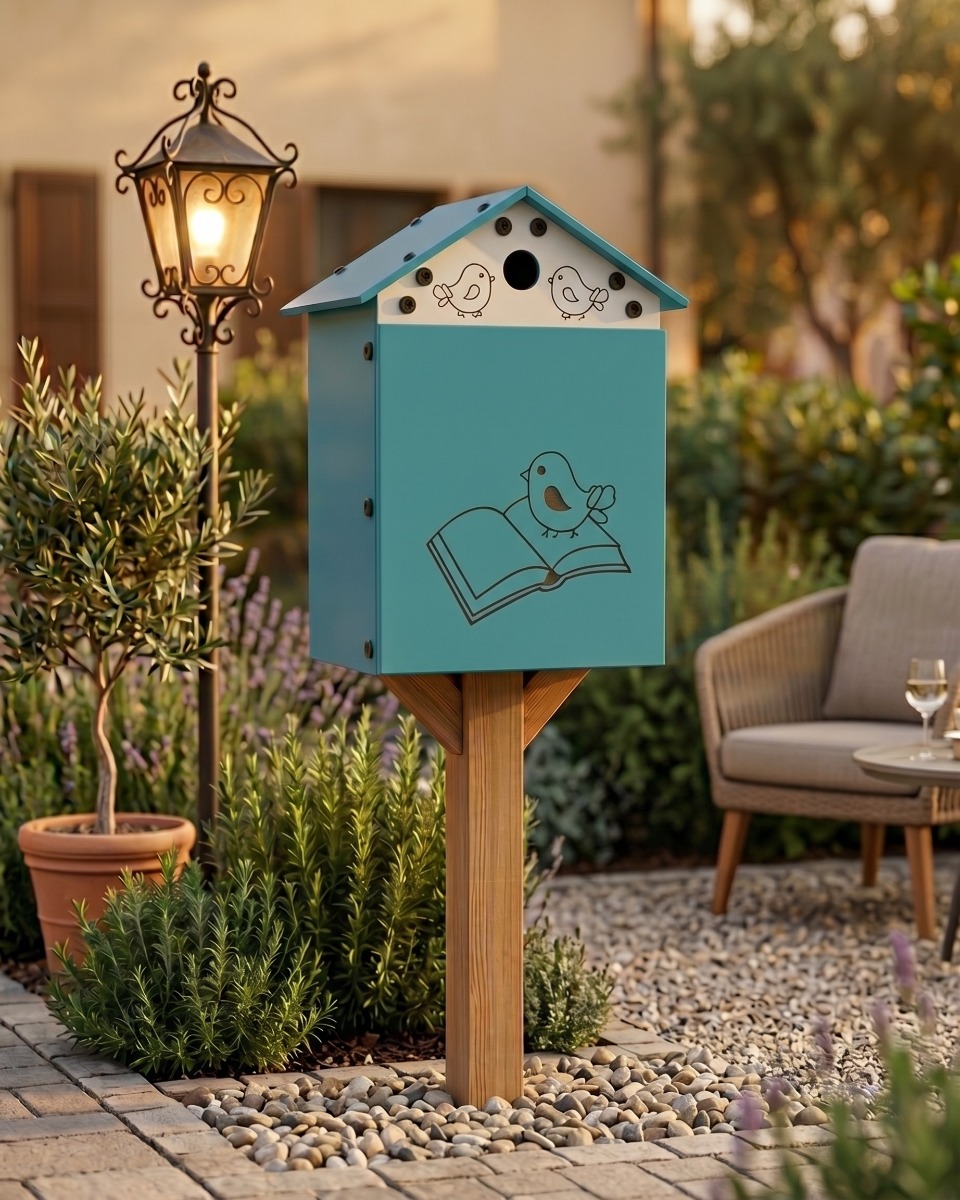 In municipal parks, the bookcase can be integrated into a street furniture project and combined with benches, tables and pedestrian paths. In a school, can become an educational tool and involve students and teachers in book management. Associations can use it within neighborhood projects, while in condominiums it can serve as a small sharing point dedicated to residents.
Each context requires a different level of robustness and control. In a protected condominium space, a compact solution may be sufficient, while in a public park, a resistant and stably fixed structure is preferable. The number of users also changes the frequency with which books need to be checked and tidied. The intended use must therefore be precisely indicated in the supply request.
Maintenance and daily management of the exchange point
The Book sharing can function spontaneously, but minimal management keeps the service orderly over time. It is useful to periodically check that the books are dry, intact and suitable for the context. Deteriorated volumes, abandoned magazines or irrelevant materials should be removed. The shelves should also be cleaned and checked, especially after periods of rain or intense climatic conditions.
The structure must be checked to identify deteriorated paintwork, corrosion points, leaks or damaged locking systems. Timely interventions reduce the risk that small problems compromise the entire house. In projects managed by institutions or associations, it may be useful to identify a contact person or prepare a simple notice explaining the rules of the exchange. Light but constant management contributes to the perceived quality of the service.
How to prepare a complete supply request
Before the quote, it is useful to indicate the installation location, the expected number of users and the environmental conditions. The desired material, dimensions, number of shelves, presence of doors and fastening system must be specified. Photographs and measurements of the area help evaluate the product's compatibility with existing paths, flooring and other furnishings.
The request should also clarify whether transport, assembly and installation are required. In the case of supplies for municipalities or schools, it may be useful to indicate quantities, any coordinated finishes and the need to replicate the same model in multiple locations. Initial clarity allows you to compare truly equivalent offers and reduces the risk of purchasing structures that are unsuitable for the environment or difficult to manage over time.
Professional solutions for creating open-air libraries
Holity, a specialist in professional supplies for institutions, schools, communities and street furniture, offers solutions designed for public and collective spaces in which resistance, functionality and continuity of use are central criteria. The availability of a broad catalogue allows municipalities, associations and purchasing managers to evaluate products consistent with the context and installation methods. This approach is in line with Holity's positioning towards professional and public customers who require structured support and supplies.
Holity represents a point of reference for professional street furniture and for supplies intended for institutions and organised structures. book exchange houses can become small cultural strongholds when materials, protection, accessibility and anchoring are evaluated from the beginning. A well-selected solution protects the volumes, makes user participation easier and allows the book sharing point to fit neatly into the park, schoolyard or condominium space.
 English
  Italian
 French
 German
 Spanish