
mon-fri 9-13 / 14.30-18.30
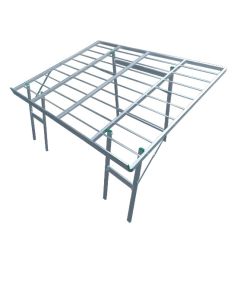
Fruit display stall with a lightweight structure, ideal for reduced loads. Surface dimensions: 100 x 150 cm. Capacity: 40 kg/m². Recyclable.
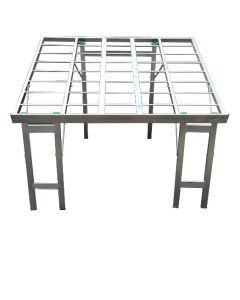
Display counter for fruit, vegetables and flowers. Top dimensions: 100 x 120 cm. Capacity: 55 kg/m². Profile: 30x18.
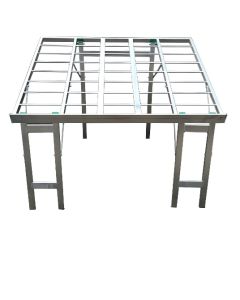
Inclined display stand for fruit and vegetable sales. Top dimensions: 60 x 150 cm. Capacity: 55 kg/m². 30x18 profile.
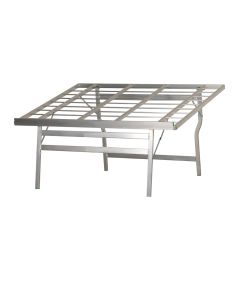
Display stand for fruit, vegetables and flowers, with anti-accident rounded corners. Platform dimensions: 120 x 120 cm. Front foot H: 56 cm. Rear foot H: 82 cm.
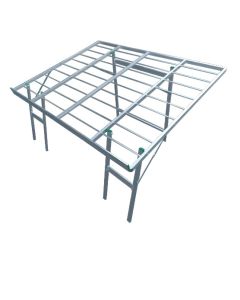
Display stand for fruit and vegetables, with a lightweight 30x18 mm profile structure. Top dimensions: 120 x 150 cm. Load capacity: 40 kg/m². Recyclable.
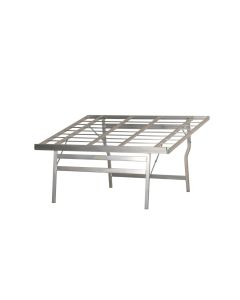
Stable bench with angled legs and robust top. Dimensions: W 150 x D 120 x H rear leg 90 cm and H front leg 50 cm.

Stable stall with reinforced hinges and independent feet. Dimensions: W 150 x D 120 x H rear foot 110 cm and H front foot 70 cm.
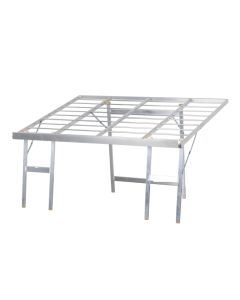
Lightweight bench for low loads with fiberglass top. Dimensions: W 150 x D 100 x H rear foot 86.5 cm and H front foot 64 cm.
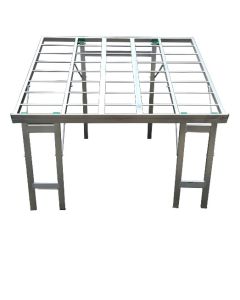
Market stall for fruit and vegetables with steel structure, robust top and stable legs. Top dimensions: 100 x 120 cm. Load capacity: 65 kg/m². Profile: 35x20.
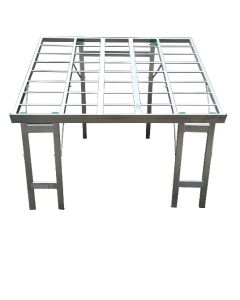
Inclined counter with 35x20 profile and 65 kg/m² load capacity, ideal for fruit, vegetables and flowers. 2 independent front feet. Top dimensions: 60 x 150 cm.

Stable and sturdy display stand. Top dimensions: 120 x 120 cm. Load capacity: 65 kg/m². With accident-prevention rounded corners, ideal for fruit, vegetables and flowers.
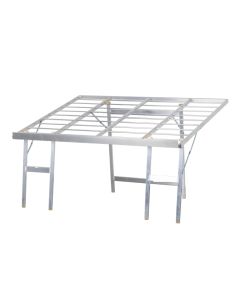
Inclined fiberglass stall for light loads. Dimensions: L 150 x D 120 x Rear foot H 86.5 cm and Front foot H 64 cm.
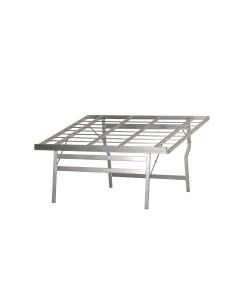
Stable bench with angled legs, ideal for fruit and vegetables with a resistant 35x20 tubular structure. Dimensions: W 150 x D 120 x Rear foot H 90 cm and front foot H 50 cm.
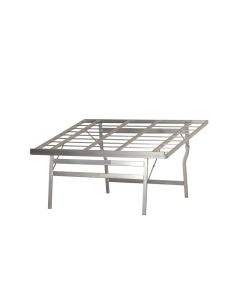
Slanted stand with fiberglass and angled legs. Dimensions: W 150 x D 120 x H back foot 90 cm and H front foot 50 cm.
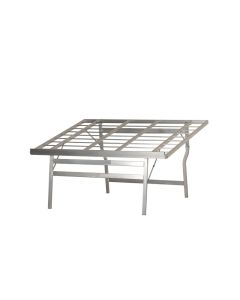
Slanted fiberglass stand with reinforced structure. Dimensions: W 120 x D 120 x H rear leg 90 cm and H front leg 50 cm.

Inclined stand with fiberglass top and stable structure. Dimensions: W 150 x D 120 x Rear leg H 90 cm and Front leg H 50 cm.
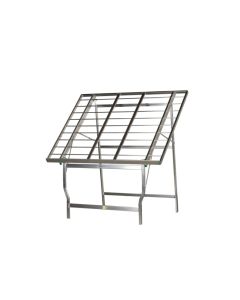
Lightweight slanted aluminum stall for euro crates. Dimensions: 120 x 150 x H rear leg of slanted surface 145 and H front leg of slanted surface 74.
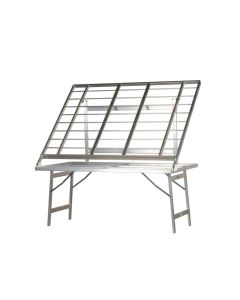
Lightweight stall with double inclined shelf for euro crates. Dimensions: W 150 x D 120 x H inclined shelf foot 70 and H lower shelf foot 63 cm.
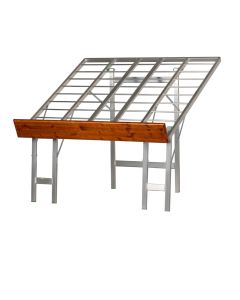
Slanted stand for displaying fruit, vegetables and flowers, with a stable and robust loading surface, rounded corners and non-slip edge. Surface dimensions: 120 x 120 cm.
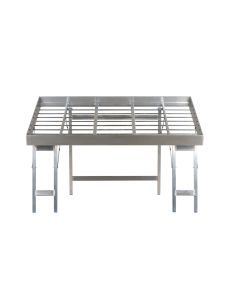
Inclined bench with fiberglass and independent front feet. Dimensions: 100 x 150 x H front foot 64 cm and H rear foot 86.5 cm.
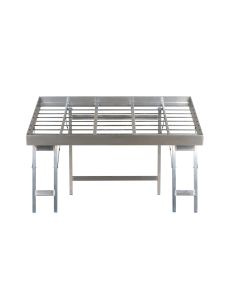
Inclined stand with fiberglass and independent front legs. Dimensions: 120 x 150 x H front leg 64 cm and H rear leg 86.5 cm.
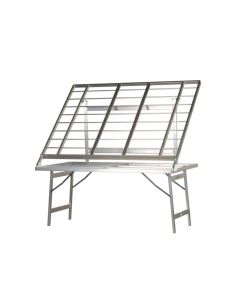
Inclined aluminum market stall for fruit crates, with 35x20 profile. Dimensions: W 150 x D 120 x H inclined top foot 70 and H lower top foot 63 cm.
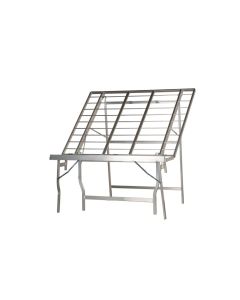
Double-level stand with inclined surface and step. Dimensions: 120 x 150 x H rear leg inclined surface 145 H front leg inclined surface 74 and H step 70 cm.
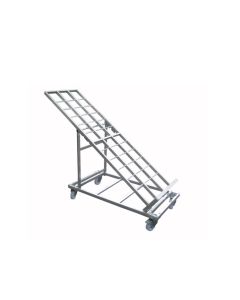
Folding aluminium trolley for fruit crates. Dimensions: 50 x 160 x H 67 cm.
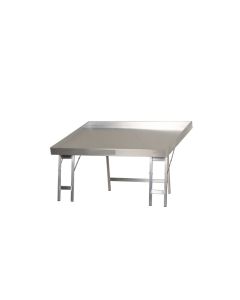
Slanted stall with aluminium top and independent front feet. Dimensions: 100 x 150 x H front foot 64 cm and H rear foot 86.5 cm.
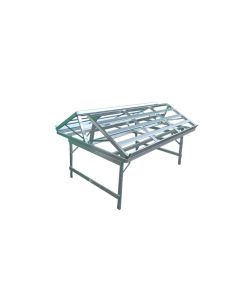
Double-sided sloped aluminum stand for fruit and vegetables. Dimensions: 120 x 150 x H 65 cm.
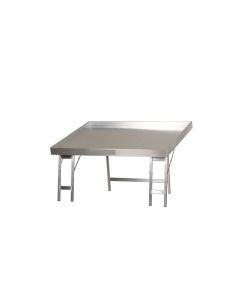
Inclined stand with aluminum top and independent front feet. Dimensions: 120 x 150 x H front foot 64 cm and H rear foot 86.5 cm.
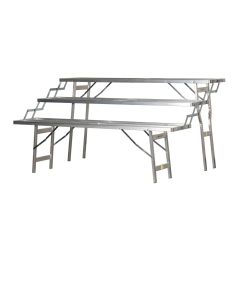
Display stand for fruit and vegetables, with a reinforced loading surface and a folding structure to reduce bulk. Individual shelf dimensions: 40 x 180 cm.
Market display stands represent a fundamental solution for the marketing of fruit and vegetables, flowers and fresh products in outdoor environments or temporary structures. These professional furnishings combine construction practicality, operational stability and dimensional versatility, allowing sellers to organize their product range in an orderly and visually attractive way. The choice of the appropriate stand directly influences product presentation, operational safety and the overall durability of the equipment, representing a strategic investment for traders, farms and seasonal fair organizers.
Each configuration meets specific needs: from the sloping geometry that facilitates visibility and customer access, to double tiers that maximize the display surface in limited spaces. Structural robustness, ease of assembly and manageable weight are determining factors for operators who frequently move between different locations. The variety of materials and profiles available allows the stand to be adapted to the environmental context and the type of goods displayed.
The adoption of professional market display stands professionalizes itinerant commercial activity, allowing products to be presented with dignity and accessibility. The sloping geometry typical of these furnishings significantly improves the visibility of the goods, encouraging customers to linger longer and facilitating direct product consultation. Furthermore, stands with raised tiers reduce operator fatigue during long sales days by better distributing body weight and limiting incongruous movements. The modular structure allows the display space to be quickly adapted to different formats: from classic weekly markets to fairs, from seasonal sales to permanent exhibition spaces.
From a logistical perspective, folding stands optimize transport and storage space, a critical aspect for operators with limited means at their disposal. The structural load capacity, which varies based on the construction type, ensures that the product load does not pose risks of failure or instability. In addition, the availability of rounded corners and non-slip edges significantly contributes to reducing injuries, complying with the best prevention and protection practices in temporary workplaces. Finally, the aesthetics of the stand influence the perception of product quality: an orderly and professional presentation inspires greater confidence in the customer.
Display stands are divided into different construction configurations, each responding to specific operational needs. Horizontal tier stands are the most versatile and suitable for delicate products or those that do not require a marked inclination; they feature lightweight structures in 30x18 mm tubular profiles for low loads (40-55 kg/m²) or 35x20 mm reinforced profiles for higher capacities (65 kg/m²). Sloping stands, on the other hand, utilize a two-tier geometry with a height difference between the front and rear feet, drastically improving visibility and facilitating product collection; this configuration is particularly appreciated for fruit, vegetables and flowers.
In terms of materials, fiberglass tiers represent a lightweight choice suitable for limited loads, while aluminum tiers are preferred in contexts of intense and frequent use. Some stands integrate combined structural profiles, allowing optimal load distribution and greater torsional rigidity. Double-level or stepped stands allow the same space to be used for two types of goods simultaneously, increasing display capacity. Finally, folding display carts represent an evolution of the traditional concept, adding horizontal mobility and minimizing space requirements when not in use, a solution appreciated in fairs and markets with frequent positioning rotations.
The selection of the display stand must be based on a balanced evaluation of technical and operational factors. The first element to consider is the weight and type of goods to be displayed: light products such as flowers and ornamental plants tolerate fiberglass tiers and slender structures, while fresh fruit and leafy vegetables involve heavier loads and require reinforced profiles. The load capacity declared by the manufacturer (expressed in kg/m²) must be compared with the expected average load, applying a safety margin of 20-30% compared to the theoretical maximum. The dimensions of the tier must adapt both to the space available at the point of sale and to the standard transport crates and trays used by the operator; typical dimensions range between 100x120 cm and 150x180 cm.
A second decisive element concerns mobility and frequency of movement: if the stand remains stably positioned in the same place, a heavier and more robust structure is preferable; if it must be assembled and disassembled frequently or transported between multiple locations, construction lightness and the compact closing system become priorities. The height of the front foot is critical for operator comfort and must allow for standing without excessive back flexion; stands with a front foot between 50-70 cm are ideal for most cases. Sloping geometry is recommended when visual display is crucial, while horizontal tiers maintain better control over fragile goods. Also evaluate the presence of reinforced hinges, independent feet and protective non-slip edges: these details significantly impact operational safety and the longevity of the stand.
Market display stands fall into the category of mobile commercial furniture and must meet safety and stability standards recognized at the European level. Although there is no specific UNI standard exclusively dedicated to market stands, the design and production must ensure compliance with the principles of structural stability indicated in the machinery directive 2006/42/CE, should the stand be equipped with motorized components or active safety mechanisms. The mechanical resistance of the materials, correct load distribution and the absence of dangerous protruding elements are essential requirements, as is the ability to maintain balance under non-symmetrical loads, a frequent occurrence during real operations.
From the point of view of occupational safety, the stands must be designed in accordance with the principles of directive 89/391/EEC, ensuring that their operation does not expose the user to risks of cuts, crushing or falls. The presence of rounded corners, smoothed edges and non-slip surfaces is strongly recommended. In outdoor environments or those exposed to atmospheric agents, the choice of corrosion-resistant materials (galvanized steels, aluminum, fiberglass) is decisive for durability and the prevention of sudden failures. Regarding environmental sustainability, many manufacturers use recyclable aluminum profiles or biodegradable plastics, in line with European regulations on waste reduction. Always check that the supplier provides documentation of conformity and clear instructions for use in the buyer’s language.
Explore all the products in the category and compare the available solutions to find the one best suited to your operational context, considering the dimensional specifications, structural load capacities and materials most suitable for your commercial needs.
The sloping stand features two levels at different heights: the rear foot is taller (80-145 cm) compared to the front one (50-74 cm), creating a slope that improves product visibility and facilitates customer access. The horizontal tier maintains constant heights, offering more control over fragile products and a more stable surface for round objects. The choice depends on the type of goods and the importance of visual impact.
The load capacity, expressed in kg/m², varies from 40 kg/m² for light stands to 65 kg/m² for reinforced ones. Calculate the average weight of the goods per square meter, apply a safety margin of 20-30%, and verify that the declared capacity exceeds this value. For heavy fruit and vegetables (pumpkins, potatoes), always use stands with a capacity of at least 55-65 kg/m².
Modern folding stands, equipped with reinforced hinges and independent lockable feet, offer stability comparable to fixed models. The main difference is in the ease of transport and storage. However, it is essential to check that the closing and opening system is perfectly functional before each use to avoid accidental collapses during the working day.
Aluminum and galvanized steels guarantee the best resistance to corrosion in environments exposed to humidity and rain. Fiberglass is highly resistant and lightweight, but less suitable for very heavy loads. Avoid stands with untreated carbon steel in humid contexts, as they tend to oxidize quickly even if protected by standard paints.
Yes, market stands are completely suitable for indoor setups; in fact, they offer superior management flexibility compared to fixed counters. However, ensure that the dimensions fit the available spaces and that the aesthetics of the stand are consistent with the image of the point of sale. Stands with refined finishes and quality materials integrate well even in more formal commercial contexts.
A standard folding stand can be assembled in 5-15 minutes by an experienced person, depending on the complexity of the locking system. Disassembly requires similar times. Double-level or stepped stands may require 20-30 minutes. Before purchasing, always try the specific model or check the times declared by the manufacturer in the instruction manual.
Certified stands comply with European directives on the safety of machinery and commercial furniture. Check for the presence of conformity documentation (CE declaration), the design of rounded corners, non-slip edges, and the absence of protruding elements. Reliable manufacturers always provide a user manual in English and complete technical specifications on the load tests performed.
Dimensions of 120x120 cm and 120x150 cm are the standard in European markets, as they adapt to the spaces assigned by municipal regulations and integrate well with standard fruit and vegetable crates (60x40 cm). Smaller stands (100x100 cm) are useful for tight spaces, while larger formats (150x180 cm) require more generous spaces and significantly more robust structures.
 English
  Italian
 French
 German
 Spanish