
mon-fri 9-13 / 14.30-18.30
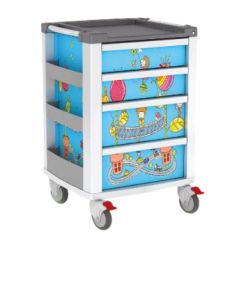
Trolley for pediatric wards of hospitals and clinics. With 4 drawers and side containers. Dimensions: W65.5 x D60.5 x H97 cm.
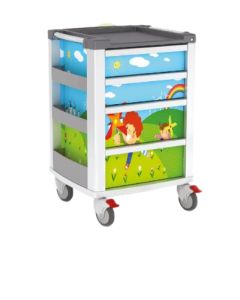
Pediatric ward trolley with 4 drawers. Dimensions: W65.5 x D60.5 x H97 cm.
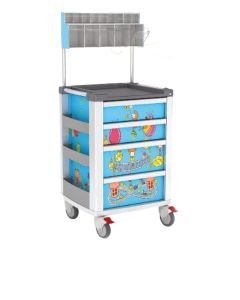
Pediatric trolley with 4 drawers and large work surface. Dimensions: W65.5 x D60.5 x H97 cm.
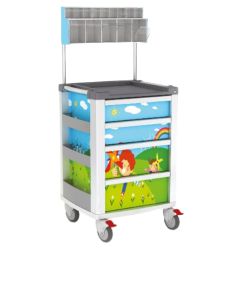
Hospital trolley for pediatric wards. With 4 drawers and overhead rack. Dimensions: W65.5 x D60.5 x H97 cm.
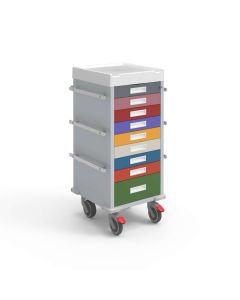
Hospital trolley for pediatric ward. With 9 colored drawers. Dimensions: W.54.4 x D.48.9 x H.103.3.
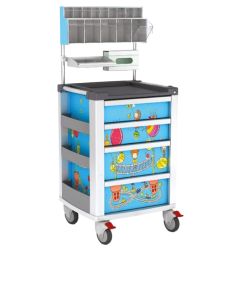
Pediatric trolley for hospitals and clinics. Large work surface and 4 drawers. Dimensions: W80.5 x D60.5 x H97 cm.
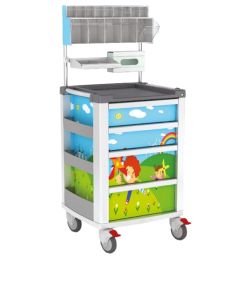
Pediatric ward trolley complete with overbridge and 4 drawers. Dimensions: W65.5 x D60.5 x H97 cm.
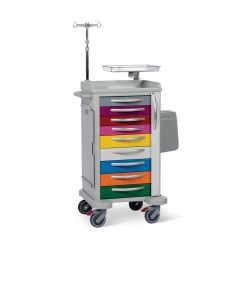
Emergency cart for use in pediatric wards equipped with IV pole and oxygen cylinder holder. Dimensions: W. 650 x D. 600 x h. 1110 mm
Pediatric carts represent an essential solution in hospital and clinical environments dedicated to childcare, combining technical functionality and design specifically conceived for younger patients. These hospital carts are designed to transport medications, dressing materials, diagnostic instruments, and emergency equipment in wards where the welcoming nature and tranquility of the environment play a role as important as medical performance. Unlike carts for general wards, pediatric models integrate colorful decorations, safe finishes, and optimized dimensions that make the hospital experience less traumatic for children and adolescents. Choosing an appropriate pediatric cart directly influences the ward’s operational efficiency and the level of safety and comfort perceived by the patient.
The availability of multiple configurations allows healthcare facilities to adapt the equipment to their specific needs, whether it is a dedicated pediatric hospital, a specialized private clinic, or a pediatric ward within a general facility. Each model is designed following international standards on safety and ergonomics, ensuring stability during movement and ease of sanitization between uses.
Pediatric carts offer concrete benefits from both an organizational and psychological perspective. Clinically, they allow for the orderly and safe transport of medications, sterile materials, diagnostic equipment, and emergency devices without loss or accidental damage during movement through hospital corridors. The compartmentalized drawer structure facilitates rapid identification of the necessary material, reducing search times and improving the efficiency of medical procedures. In the pediatric field, where the management of patient stress and anxiety is an integral part of care, the toy-like design and carefully chosen colors transform a technical object into an element that communicates serenity and professionalism. Wards that invest in equipment dedicated to childhood report higher patient compliance and better acceptance of medical procedures, with positive effects on the overall quality of care.
An additional advantage concerns operator ergonomics. Pediatric carts are sized to facilitate the work of healthcare personnel, with work surface heights optimized for frequent operations and handles positioned according to modern biomechanical criteria. Mobility is guaranteed by wheel systems with controlled weights and intrinsic stability, which minimizes the risk of accidents during transport and allows even less experienced colleagues to maneuver the equipment safely. Furthermore, many models are designed to integrate perfectly into the confined environments of pediatric wards, where available space is often less than in areas dedicated to adults.
The range of pediatric carts is divided into several categories, each responding to specific functions within the hospital structure. Carts with traditional drawers are the most versatile and widespread solution, offering compartments without doors that allow rapid access to material and immediate visibility of the contents. These models, available with 4, 6, or 9 drawers depending on the required operational capacity, allow organization by type of material and facilitate daily tidying. In contrast, carts with lateral compartments and an upper riser add high work surface functionality, useful for procedures that require a stable and hygienic support base. Pediatric emergency carts are distinguished by the presence of specialized supports such as the IV pole, oxygen cylinder holders, and drawers for emergency material, transforming them into mobile first-aid stations. Some multi-function models combine features of these three types, adapting to wards with mixed needs or facilities that prefer to standardize equipment.
Construction differences also concern the material of the structure and drawers: stainless steel guarantees durability and ease of sanitization using aggressive detergents and autoclaves, while colorful polymer finishes add visual appeal while maintaining hygienic properties. Some types include proprietary antibacterial finishes, particularly relevant in the pediatric field where the risk of cross-contamination must be minimized. Dimensions vary from compact models for narrow corridors to full-size versions for wards with more space, with heights generally ranging between 97 and 110 centimeters to ensure easy access even when seated. The limits of these carts mainly concern the maximum load capacity, which remains lower compared to adult models, but is nonetheless sufficient for all standard pediatric uses.
Selecting the most appropriate pediatric cart requires a systematic evaluation of the ward’s operational needs. The first criterion concerns the number and type of drawers required: a general pediatric ward with high patient flow benefits from carts with 8-9 drawers to separately organize medications, dressing materials, portable diagnostic equipment, and emergency supplies. A specialized clinic with a smaller caseload can operate efficiently with 4-drawer models. It is essential to consider the total width of the cart in relation to the available space: if the ward has narrow corridors or limited access doors, compact models remain the forced choice, while more spacious environments allow for solutions with a large work surface. A second critical aspect concerns the specific intended use: a cart dedicated to daily dressings needs drawers with small separations and a large work surface, while an emergency cart requires specialized accessories such as oxygen cylinder supports and spaces reserved for defibrillators or pediatric intubation kits.
The most frequent errors in selection concern the underestimation of the total load capacity and superficiality in analyzing the ergonomics for operators who will use the cart daily. A cart of inadequate size forces staff to perform repetitive compensatory movements, increasing the risk of musculoskeletal disorders in the long term. It is also fundamental to consider the cleaning systems in use in the ward: if the facility uses pressurized water sanitization procedures or aggressive chemical detergents, it is advisable to select models with stainless steel finishes rather than colored plastics. An often-overlooked factor is the maintainability of the wheel systems: some models offer wheels that are more easily replaceable, reducing equipment downtime. Finally, integration with medication identification systems (labeling, color coding, RFID systems) must be consistent with the protocols already implemented in the facility to avoid operational dissonance.
Pediatric carts must comply with a series of technical and regulatory standards that guarantee structural and hygienic safety. The UNI EN 13407 standard specifies the construction requirements for hospital carts, including dynamic stability tests, verification of maximum load capacity, and material resistance to repeated stress. In the pediatric field, this regulation applies fully, albeit with additional considerations for reducing the risk of accidents due to the smaller physical size of the patients. The wheels and locking systems must meet specific load and sliding criteria, periodically verified to maintain operational efficiency. Regarding hygienic safety, materials in direct contact with patients or sterile material must be suitable for food contact according to EC Regulation 1935/2004 when they involve the transport of medicines, and in any case must tolerate autoclave sterilization cycles if required by hospital protocol.
Recurring aspects in health requirements include the absence of sharp edges or cavities where pathogens can accumulate, the choice of non-porous and washable materials (stainless steel, certified medical polymers), and compatibility with disinfectants in use at the facility, particularly alcohol-based solutions and chlorine compounds. Finishes must remain stable over time without detachment, chipping, or corrosion after repeated cycles of cleaning and sterilization. For pediatric emergency carts, certification on compatibility with the medical devices they transport is also required, such as medical oxygen cylinders (UNI EN 10119) and defibrillators, along with documentation on static and dynamic resistance when the cart is fully loaded with equipment. Many healthcare facilities also require CE compliance certification according to Directive 93/42/EEC for use as Class I medical devices, even if the cart itself is not considered a device but a container for devices.
Explore all the products in the category and compare the available solutions to find the one most suitable for your operational context.
Standard pediatric carts have a height between 97 and 110 centimeters, a width between 54 and 80 centimeters, and a depth between 48 and 61 centimeters. Dimensions vary according to the number of drawers and configuration. The most common models measure 65x60x97 cm to ensure easy access in tight spaces while maintaining ample storage capacity.
Yes, there are specific versions of pediatric emergency carts equipped with IV poles, oxygen cylinder holders, and drawers dedicated to resuscitation material. These models maintain the compact dimensions of pediatric design but include all accessories for emergency intervention on pediatric patients.
Sanitization is performed using standard hospital detergents and water, using non-abrasive sponges so as not to damage the colored finishes. Stainless steel models also tolerate aggressive detergents and autoclave sterilization cycles at 121°C. It is fundamental to dry completely after cleaning to prevent moisture accumulation in the drawers.
Pediatric carts are distinguished by compact dimensions, colorful finishes, and a design intended for the child’s psychological comfort, as well as specialized accessories for pediatric emergencies. Standard adult carts are larger, have higher load capacity, and neutral decorations, and are not optimized for confined pediatric environments.
A pediatric inpatient ward benefits from carts with 4-6 drawers, which allow sufficient organization for medications, dressing materials, and small equipment without excessive bulk. Facilities with high patient turnover or frequent procedures may prefer 8-9 drawer models to reduce daily refills.
Many modern models support integration with RFID systems for tracking movements and material sterility. Compatibility depends on the specific configuration: some drawers allow for pass-through tag installation, while others require custom adaptations. It is advisable to verify compatibility before purchase.
The typical capacity of pediatric carts ranges between 50 and 100 kg, lower than adult models but sufficient for transporting medications, portable diagnostic equipment, and sterile materials. Exceeding the maximum load compromises stability during movement and the correct functioning of the wheel locking systems.
 English
  Italian
 French
 German
 Spanish