
mon-fri 9-13 / 14.30-18.30
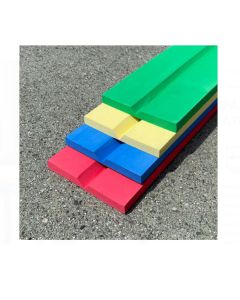
Protective corner profile in E.V.A. height 100 cm and thickness 10 mm. Non-toxic and antibacterial, ideal for securing corners in schools and playrooms.
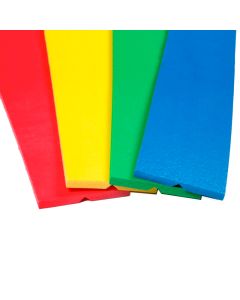
Corner protection in recycled expanded polyethylene, 100x5x5 cm. Fireproof and non-toxic, designed for impact safety in school environments.
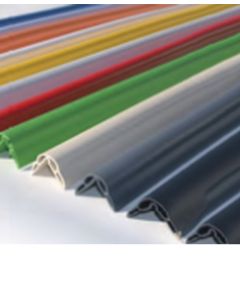
Class I fire-retardant PVC corner guard, 200 cm height. Ideal for securing corners in school and healthcare environments.
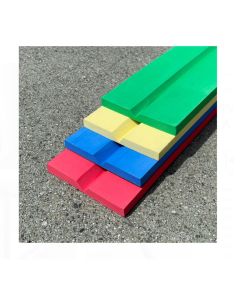
Protective corner guard in non-toxic E.V.A., height 150 cm and thickness 10 mm. Antibacterial cushioning profile for schools and play areas.
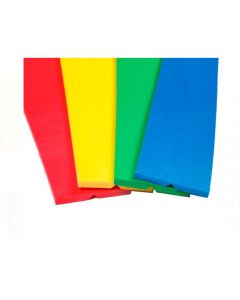
150 cm expanded polyethylene corner guard, non-toxic and fire-retardant. Ideal for safety in schools, 10 mm thickness and glue installation.
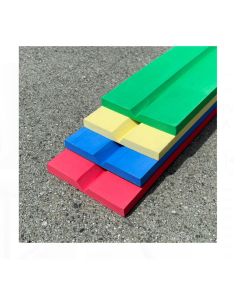
Protection for corners in non-toxic E.V.A., height 200 cm and thickness 10 mm. Ideal for safety in kindergartens and play areas, antibacterial and resistant.
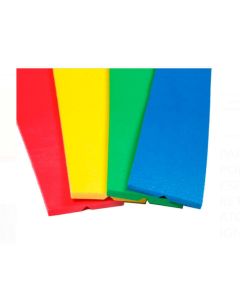
Protective corner guard in non-toxic and fire-retardant expanded polyethylene, height 200 cm. Ideal for securing schools and play areas.
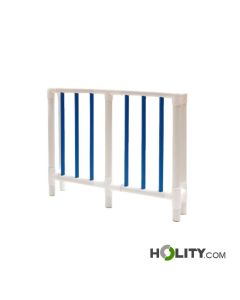
Safety radiator cover in fire-retardant and non-toxic PVC for schools and nurseries. Impact-resistant structure with Ø 50/32 mm tubes and tamper-proof fixing.
Securing environments frequented by children is an essential requirement for every manager of educational facilities, nurseries, and play centers. Professional corner guards and bumper protectors represent fundamental passive protection devices designed to neutralize hazards arising from sharp corners, table edges, pillars, and window frames. When little ones start taking their first steps or run during play activities, the speed and unpredictability of their movements exponentially increase the risk of impact. Applying soft, high shock-absorption protections transforms a potentially hostile environment into a protected space, where freedom of movement is not compromised by the fear of serious injury.
The adoption of certified protection systems responds not only to a moral duty of care but also to specific safety regulations in public and school settings. Unlike improvised domestic solutions, nursery bumper protectors are made with technical materials that maintain their elasticity and cushioning capacity even after years of use. The choice of bright colors or transparent finishes allows these protections to be integrated into existing furniture, improving classroom aesthetics and visually marking critical points. Investing in quality protections means drastically reducing the incidence of accidents and ensuring constant operational peace of mind for both teaching staff and families.
The primary utility of corner guards lies in their ability to dissipate impact energy in the event of a fall or accidental collision. In nurseries and kindergartens, most head or skin traumas occur precisely against the edges of furniture and walls; installing a soft rubber or EVA protection transforms a potentially sharp impact into an elastic and harmless contact. These devices are designed to adhere firmly to surfaces, resisting detachment attempts by curious children, ensuring the protection remains in place when needed. Their presence is a tangible sign of management attentive to risk prevention and care for structural detail.
In addition to individual protection, the use of bumpers preserves the integrity of the furniture and architectural structures themselves. Wall corners and door frames are subject to chipping and premature wear in high-traffic contexts; applying protective profiles reduces long-term maintenance and repainting costs. The versatility of these products allows for securing not only furniture but also radiators, pillars, handrails, and window frames, covering every possible blind spot in the school's risk assessment. Choosing professional protections means opting for non-toxic and hypoallergenic materials that do not release harmful substances in closed environments where children spend most of their day.
The landscape of protection devices is extremely varied to meet every specific technical need of the school facility. Angular corner guards are the most common, available in different lengths and thicknesses, ideal for tables, low walls, and sharp edges of all kinds. For larger areas, such as load-bearing pillars in gyms or halls, panel bumpers or modular wall coverings are used, which can be shaped and cut to size to cover curved or irregular surfaces. The latter are often made of closed-cell foam materials, which guarantee excellent surface hygiene and superior resistance to bites and scratches.
Another specific category is corner guards for windows and frames, designed not to hinder the closing of the sashes while offering a soft barrier against impacts on the lower part of the frame. There are versions with "U", "L" profiles or round sections, suitable for thin edges like glass or thicker sections like windowsills. Regarding fixing, it is possible to choose between self-adhesive models, equipped with special high-strength adhesives, or models to be applied with specific mastics for a permanent hold. The color range spans from primary colors, which help children identify obstacles, to transparent solutions or those matching the furniture for a more discreet and elegant visual impact.
Selecting the correct protection must begin with an accurate analysis of the danger of the existing edges, evaluating both the height of the risk (corresponding to the child's head) and the potential impact force in that area. For nurseries, where children crawl or walk uncertainly, it is essential to protect corners starting from a few centimeters off the ground. A technical decision criterion concerns the composition material: nitrile rubber (NBR) and EVA are excellent for their softness and elastic recovery capacity, as well as being inherently safe from a chemical point of view. It is essential to verify that the corner guard is equipped with a tenacious fixing system; a protection that detaches easily becomes a hazard itself or an unauthorized toy.
Installation environment must also be considered: for damp rooms or canteen areas, it is preferable to opt for water-repellent and antibacterial protections that do not absorb liquids. Ease of cleaning is a critical factor for maintaining high hygiene standards; smooth and non-porous surfaces allow rapid sanitization with common school disinfectants without degrading the material. A common mistake is neglecting compatibility between the bumper and the surface (wood, metal, wall); ensuring the adhesive or glue is suitable for the substrate guarantees long-lasting protection. Finally, consider visibility: in very crowded transit points, a contrasting colored bumper acts as a visual deterrent, helping to prevent a collision before it even happens.
The installation of corner guards and bumper protectors in schools must comply with the directives provided by Legislative Decree 81/08 regarding health and safety at work, which extends to the protection of users of public facilities. Although there is no specific standard obliging the use of a particular model of corner guard, safety guidelines for schools indicate the need to eliminate or protect all sharp edges below 2 meters in height. The materials used must comply with the UNI EN 71-3 standard, which guarantees the absence of toxic substances or heavy metals, making the product safe even in case of prolonged skin contact or accidental ingestion of small fragments.
Furthermore, for protections installed near heat sources such as radiators or along escape routes, materials must have fire resistance characteristics (Class 1 or higher) so as not to feed any fires and not release toxic fumes. Manufacturer technical sheets must certify shock absorption capabilities according to standardized tests, ensuring that the protection is effectively effective in reducing impact trauma. Safety officers (RSPP) must periodically inspect the state of conservation of the bumpers, verifying that they do not show signs of crumbling or partial detachment, thus ensuring that the school environment remains constantly compliant and free from hidden dangers for minors.
Explore all products in the category and compare the available solutions to find the one best suited to your operational context.
Installing corner guards is fundamental because it drastically reduces the risk of serious injury during falls. Young children have a precarious balance and a high center of gravity; an impact against a sharp corner can cause cuts or head trauma, which are instead cushioned and made harmless by the softness of professional bumpers.
The most suitable materials are soft rubber, EVA (Ethylene Vinyl Acetate), and nitrile rubber (NBR). These materials are chosen for their high impact absorption capacity, wear resistance, and, above all, because they are non-toxic and phthalate-free, ensuring children's safety even in case of oral contact with the protection.
Professional corner guards use high-strength double-sided adhesives specific for porous or smooth surfaces. In high-stress school contexts, the use of silicone adhesives or specific mastics that guarantee a permanent fix is recommended. This prevents children from removing the protections, maintaining a constant level of safety in the classroom or corridor.
Yes, there are specific bumpers for radiators and heaters. However, it is essential to choose products made with heat-resistant and fire-retardant materials that do not deteriorate with heat. These protections are vital for avoiding contact burns and for covering sharp metal fins typical of old radiators found in many educational facilities.
Certainly. Professional nursery bumpers are made with closed-cell or waterproof surfaces, making them easy to sanitize with common alcohol-based or chlorine-based detergents and disinfectants. Regular cleaning is essential to prevent the accumulation of dirt and bacteria in spots frequently touched by children.
Yes, there are versions in silicone or transparent PVC that offer excellent protection while being almost invisible. They are the ideal solution for school offices, modern play centers, or areas where you wish to keep the design of wood or glass furniture unaltered while ensuring maximum safety against accidental impacts.
 English
  Italian
 French
 German
 Spanish