mon-fri 9-13 / 14.30-18.30
Technical laboratory furniture represents the foundation of the functional organization of any scientific, clinical, or industrial workspace. These structural elements are not simple pieces of furniture, but strategic components designed to support daily activities, ensure operator safety, and facilitate compliance with hygiene protocols. Whether for clinical analysis laboratories, research facilities, pharmaceutical environments, or medical facilities, the correct choice and configuration of furniture directly influence operational efficiency and staff comfort. Proper technical furniture equipment reduces setup times, minimizes procedural errors, and contributes to maintaining the regulatory standards required by the sector.
The careful selection of technical furniture for laboratories profoundly affects work quality and the sustainability of daily operations. Elements such as ergonomic stools, workbenches, special sinks, and storage systems are designed to meet very specific needs: resistance to liquids and disinfectants, ease of cleaning and sanitization, stability during precise movements, and adaptability to available spaces.
Operators who work for consecutive hours in the laboratory require adequate seating that reduces muscle fatigue and facilitates correct posture during microscopic analysis, sampling, or specimen handling. Furthermore, technical sinks must comply with strict hygiene standards, using materials that do not absorb moisture and do not promote bacterial proliferation. Investing in quality furniture increases the overall durability of the work environment and reduces extraordinary maintenance costs in the medium-to-long term.
In addition to functional aspects, technical furniture influences the psychological well-being and productivity of the team. An organized environment, with ergonomic spaces and structures suitable for specific activities, promotes concentration and limits injuries due to incorrect posture or improper movements. Pharmaceutical, analytical, and research laboratories derive tangible benefits from optimal space configuration: reduced cycle times, decreased analytical errors, and facilitated regulatory compliance.
The availability of modular and customizable solutions allows the furniture to be adapted to the laboratory's size and specific operational protocols, without compromising on construction quality.
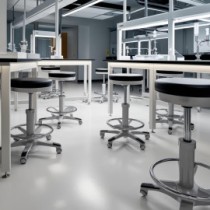
The technical laboratory furniture catalog includes several categories, each optimized for specific functions. Laboratory stools represent a central category, available in fixed versions with adjustable height, swivel versions, or with integrated backrests and armrests for long work sessions. Materials range from painted steel to high-resistance polymers, chosen based on the operating environment: sterile laboratories require easily sanitizable seating, while chemical environments demand resistance to corrosive vapors and splashes.
Workbenches and consoles represent the operational heart of the laboratory, available in stainless steel for critical environments, antimicrobial melamine laminate for analysis laboratories, or with epoxy tops for superior chemical resistance. These elements can be configured in standard or custom versions, with integrated drawer units, adjustable shelves, and structures to support specific instruments and equipment.
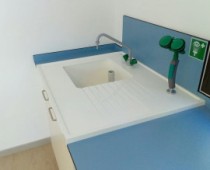
Technical sinks constitute a critical element for maintaining hygiene standards. Available in stainless steel, glazed ceramic, or specific composite materials, they are supplied with sensor or lever mixers to minimize manual contact. These systems can be equipped with integrated drainboards, siphoned drains, and provisions for the drainage of special liquids. Wall-mounted variants take up less space than freestanding models, while double models are ideal for laboratories with high operational flow.
Complementing these elements are storage systems: cabinets with doors, drawer units, open or closed shelving, structures for storing reagents and biological samples. Many of these are available in refrigerated versions or with temperature and humidity control, essential for preserving sensitive biological or pharmaceutical material. Solutions for managing special waste, such as negative pressure containers for infected material, are also part of the basic equipment of a modern laboratory.
Choosing technical furniture requires a preliminary assessment of the operational context and the architectural constraints of the available space. Fundamental questions include: how many operators will use the laboratory at the same time? What are the dimensions and layout of the room? What liquids or chemicals are handled regularly? What is the daily volume of activity and the frequency of cleaning/sanitization?
Regarding stools, it is crucial to evaluate the working height relative to the operational surfaces: stools that are too low or too high compromise posture and movement precision. Height adjustability becomes essential in laboratories where different operations alternate at different levels. Operators performing microscopic analysis benefit particularly from seats with supportive backrests and footrings for a natural and sustained posture.
In selecting workbenches, the first criterion concerns the top material: stainless steel offers maximum hygiene and chemical resistance but requires regular maintenance to avoid stains; high-pressure melamine laminates with PVC edging combine versatility, low cost, and ease of sanitization; epoxy and polyester offer superior protection against organic solvents and concentrated acids. A recurring mistake is underestimating the depth of the work surface: 70-80 cm is generally insufficient for high-complexity laboratories, where 90-100 cm allows for better organization of instruments.
For sinks, the material is of critical importance: stainless steel is preferable in environments where biological contamination is a priority; glazed ceramic is suitable for chemical laboratories with neutral pH; special composites resist extreme temperatures and aggressive compounds. The choice of flow rate and drain type depends on the volume of water used and the nature of the drained liquids. Laboratories with significant use of oily substances require drains with grease traps; those with biological samples need specific disinfectants in the siphon.
Technical furniture for laboratories is subject to a series of standards and regulations that vary depending on the type of activity performed and the jurisdiction. The ISO 14644 standard concerns cleanrooms and controlled laboratories, specifying cleanliness requirements and materials compatible with particulate reduction. For clinical and diagnostic analysis laboratories, the guidelines of the UNI EN ISO 15189 standard establish quality and safety criteria that include space and furniture configuration to prevent cross-contamination.
The ATEX directive (Atmosphère Explosible) is relevant for laboratories where flammable vapors are handled: furniture must be constructed with materials that do not generate dangerous electrostatic charges. American standards such as NFPA and OSHA impose specific requirements for chemical laboratories, including workbench resistance and ventilation system accessibility.
Common critical aspects across almost all contexts include the shatter resistance of materials (to avoid sample contamination), ease of cleaning and decontamination with standard disinfectants, structural stability even in case of accidental impacts, and compatibility with ventilation and fume systems. For pharmaceutical and biological environments, GMP (Good Manufacturing Practice) regulations require that all furniture and materials in contact with the product be traceable, certified, and subject to sanitization validation.
Biosafety requirements imply that furniture must not have sharp corners or edges where pathogens can accumulate, that surfaces be non-porous and easily disinfectable, and that drainage systems be equipped with non-return valves to avoid backflow. Laboratories operating with hazardous biological material (biosafety level 2 and above) must ensure that furniture is integrated with containment and ventilation systems, often requiring specific compliance certifications.
Explore all products in the category and compare the available solutions to find the one best suited to your operational context. Contact our team to receive personalized advice on the optimal configuration of your laboratory.
The fixed stool offers maximum stability during operations requiring microscopic precision or delicate sample handling; the swivel model facilitates rapid movement between different workstations within the same laboratory. The choice depends on the workflow and available space.
For chemical environments, stainless steel resists aqueous and dilute solutions well; epoxy offers superior protection against organic solvents and concentrated acids. The assessment must consider the specific substances handled and the expected cleaning frequency.
The ideal height allows operators to maintain their elbows at approximately 90 degrees relative to the work surface. Adjustability from 40-50 cm up to 60-70 cm seat height is recommended to adapt to different work surface heights and working postures.
Stainless steel requires regular rinsing and drying to avoid mineral deposits and stains. Periodically, the use of specific detergents and chemical passivation is recommended to maintain corrosion resistance and aesthetics.
Drains with a deep siphon and non-return valve are standard; some laboratories require double drains with separation of biological waste, or preliminary chemical treatment systems. Compliance with local disposal regulations is mandatory.
Yes, many modular benches allow for the addition of drawer units, adjustable shelves, and instrument supports even after installation. Check compatibility with the specific model and consider that future modifications may require process validation.
Standard cabinets maintain room temperature and are suitable for stable reagents; refrigerated models (2-8°C) are essential for bio-reagents, sera, enzymes, and heat-sensitive biological samples. The choice depends on the type of materials stored.
ISO 9001 certifications, GMP compliance, material traceability, and sanitization test reports are common requirements. For controlled environments, request statements of non-release of particulates and resistance to your facility's standard disinfectants.
 English
  Italian
 French
 German
 Spanish