
mon-fri 9-13 / 14.30-18.30
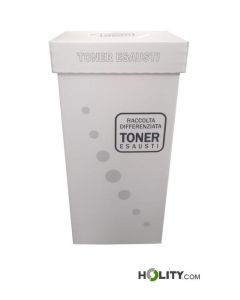
Pack of 10 pieces
€268.50 VAT excl.Used toner collection container with 70 L capacity. Completely recyclable.
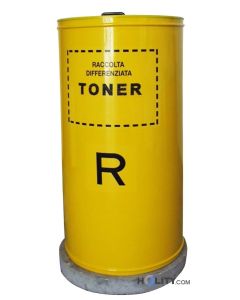
Ideal container for toner, laser cartridges and ink-jet cartridges. Made of yellow enameled steel. Capacity: 100 liters. Dimensions: Ø 400 x h.840 mm.
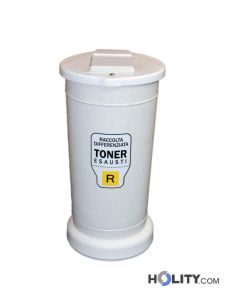
Exhausted toner collection container with concrete base coated in white polyethylene. Capacity: 105 lt. ABS lid with anti-intrusion flap.
Used toner containers represent an indispensable solution for the correct management and disposal of exhausted cartridges from laser printers and professional printing systems. The separate collection of toner is a regulatory obligation that concerns offices, graphic studios, print centers, warehouses, and commercial structures of any size. Toner contains potentially hazardous materials such as carbon dust, synthetic resins, iron, and silica, whose uncontrolled dispersion represents a risk both for the health of workers and for the environment. A dedicated container guarantees the isolation of the waste, avoids accidental contamination, and significantly simplifies collection procedures by authorized managers.
The choice of the right container depends on the volume of prints processed, the available space, the type of cartridges used, and the local regulations applied in your facility. Holity offers a complete range of solutions, from compact models for small offices to large-capacity containers for industrial environments. Each container is designed to facilitate transport, handling, and emptying, reducing management times and minimizing exposure to printing residues. The materials used guarantee mechanical resistance, impermeability, and ease of sanitization when necessary.
The use of dedicated containers for used toner entails concrete operational and regulatory advantages. From a practical point of view, an adequate container reduces the risk of dust dispersion, protects personnel from inhaling fine particulate matter, and prevents the contamination of other work areas. Prevention is fundamental: powdery toner can settle on work surfaces, equipment, and even on operators’ clothes, generating respiratory discomfort and allergens. In the event of an accident (accidental overturning or breakage of cartridges), a well-designed container contains the damage, simplifying cleanup operations and reducing extraordinary cleaning costs.
From a regulatory perspective, exhausted toner falls into the category of hazardous waste and its management must meet requirements for traceability, documentation, and entrustment to authorized subjects. A certified container facilitates administrative compliance, clearly highlights the type of waste through specific labeling, and allows authorized managers to collect the material in safe conditions. Many modern containers include anti-intrusion flaps, sealable lids, and even ballastable bases, features that guarantee stability in high-traffic environments and prevent unauthorized access. For facilities with high print volumes, investing in robust containers translates into a reduction in waste, wear of improvised alternative equipment, and downtime related to accidents or disorder.
The waste toner containers offered by Holity differ based on three main parameters: capacity, material, and construction features. The capacity varies from 70 liters to 105 liters, a range that covers the needs of most professional environments. The 70-liter models are suitable for offices with medium print traffic, while the 100-105 liter containers are ideal for print centers, warehouses, and industrial structures where toner collection is constant. The construction material affects both durability and intended use: polyethylene (PE) containers offer lightness, resistance to impact and ultraviolet degradation, making them suitable even for outdoor areas; those in propylene (PP) guarantee greater structural rigidity and resistance to liquids and solvents; enameled steel models combine robustness and ease of sanitization, ideal for sensitive environments.
In terms of construction, the containers differ by the type of lid and opening. Some models have a simple snap-on lid, while others feature anti-intrusion flaps with a key lock or a triangular mechanism, preventing unauthorized removal of waste or the introduction of foreign materials. The presence of transport handles is common in smaller capacity models, while larger containers often include a ballastable base in polyethylene-coated concrete, which provides stability even in environments with vehicle traffic. Some suppliers offer customizable options, such as the possibility of adding a removable internal bucket to facilitate emptying, or specific descriptive markings of the waste on the lid for rapid visual identification.
The selection of the appropriate container requires a preliminary assessment of the customer’s operating conditions. The first criterion is the estimated monthly volume of exhausted cartridges: an administrative office that uses a shared laser printer among 10-15 people generally generates less than 20-30 cartridges per year, while a commercial print center can reach dozens of cartridges per month. Under-sizing the container generates frequent emptying, increasing management costs; over-sizing occupies unnecessary space and slows down the turnover of waste, creating stagnant accumulations. The second factor is the available space: narrow environments or those with architectural constraints may require compact 70-liter models, while industrial structures have space for more voluminous containers. The third element concerns the location and environment: a container intended for an outdoor or covered area must withstand temperature variations, humidity, and UV rays, for which the choice of polyethylene is preferable; an indoor container can opt for lighter materials such as propylene.
A frequently overlooked aspect is the required level of security. In environments open to the public or with high traffic, the presence of an anti-intrusion flap or a lock represents a critical element to prevent uncontrolled access. Healthcare, school, or municipal facilities tend to require this type of protection for reasons of order and administrative accountability. The type of printer (laser, inkjet, multifunction) also influences the choice: different printers can generate cartridges of varying sizes, and a container with an opening that is too narrow could create difficulty in insertion. Finally, it is advisable to check if the container supplier offers free or facilitated collection services, as some authorized managers collaborate with specific distributors to facilitate logistics. Compatibility with local collection systems is not trivial: choosing a container not suitable for the available transport means entails further manual handling and increases risks during management.
The primary reference regulation for exhausted toner is the European Directive 2012/19/EU (WEEE - Waste Electrical and Electronic Equipment) and its transposition into Legislative Decree 49/2014 in Italy. According to this regulation, toner and exhausted cartridges are classified as hazardous waste because they contain toxic and potentially carcinogenic substances. Cartridges must not be thrown into unsorted waste but must be collected separately and sent to specialized recovery and regeneration plants. At the national level, Legislative Decree 152/2006 (Environmental Code) establishes the responsibilities of the waste producer, imposing correct segregation, documentation through transport forms (FIR), and traceability through the Loading and Unloading Register for companies subject to it. Each container must be clearly labeled with the specific EWC (European Waste Catalog) code: 08 03 17 for exhausted toner cartridges.
The technical requirements that a container must respect include impermeability, mechanical resistance, stability, and the absence of leaks even in the event of non-ideal handling. Some regional or local regulations impose additional requirements: for example, the presence of a hermetically sealed lid, compliance with materials in contact (if the container can come into indirect contact with food surfaces), or specifics relating to signaling by means of hazard pictograms. For structures that fall into the category of "small producers of hazardous waste" (threshold variable by region), traceability obligations can be reduced, but segregation remains mandatory. Companies must also designate a person responsible for hazardous waste management, who will have to guarantee the correct compilation of documentation and entrustment to authorized companies. It is advisable to check with the local competent authority (Municipality, Province, or Region) if there are specific municipal ordinances that supplement the national legislation, as some local administrations have adopted more stringent regulations in order to incentivize separate collection and recycling of toner.
Explore all products in the category and compare available solutions to find the one most suitable for your operational context. Each container is designed to guarantee regulatory compliance, practical use, and environmental protection.
Toner is a fine powder composed of synthetic resin, carbon, iron, and silica used by laser printers to create the image on paper. It contains toxic and potentially carcinogenic substances (such as carbon black) and falls into the category of hazardous waste according to European regulations. Diversified disposal prevents the inhalation of particulate matter, soil and water contamination, as well as the risk of landfill fires.
A 70-liter container is generally sufficient for a medium-sized office with one or two laser printers in regular use. This volume allows at least 6-12 months of collection before pickup, reducing management costs. If printing is very limited, it is still advisable not to go below this capacity to avoid frequent emptying and consequent manual handling.
Polyethylene (PE) is the optimal choice for outdoor environments because it offers excellent resistance to UV rays, thermal variations, and humidity. PE models maintain mechanical properties even after prolonged climatic exposure. Propylene is less suitable for prolonged outdoor use, while enameled steel is preferable only if protected by sheds.
No, it is discouraged for reasons of cross-contamination and regulatory traceability. A container labeled for toner must remain dedicated to that specific waste, in order to facilitate collection by authorized managers and ensure correct administrative documentation. Using it for other waste involves legal and contamination risks.
The anti-intrusion flap is a mechanism that allows the insertion of the exhausted cartridge but prevents unauthorized removal of the waste. It works by means of a key lock or a triangular mechanism that triggers automatically after the object passes. It is important in public environments, schools, and municipal structures to avoid uncontrolled access and ensure administrative accountability.
The cost of disposal varies based on the local authorized manager and the volume collected, generally from 50 to 150 euros per collection. The container is emptied by the manager when it reaches a certain threshold (usually agreed upon at the time of the contract) or upon express request from the company. Some suppliers offer free pickups or discounts for multi-year contracts.
 English
  Italian
 French
 German
 Spanish