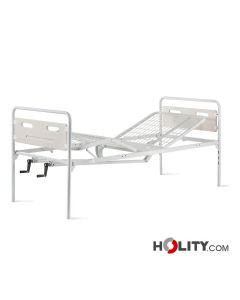
mon-fri 9-13 / 14.30-18.30
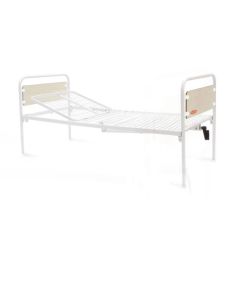
Hospital bed for patients. Capacity: 135 kg. Dimensions: W.204 x D.90 x H.93 cm (at the headboard).
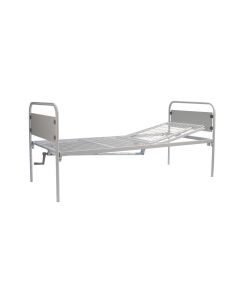
Bed for the disabled and elderly with a single-crank base. Frame and base oven-painted white. Maximum capacity: 150 Kg. Dimensions: 205 x 85 x h. 50 cm.
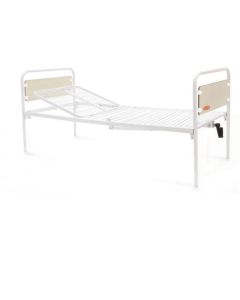
Hospital bed. Dimensions: W.204 x D.90 x H.93 cm. Bed base dismountable in 2 parts.
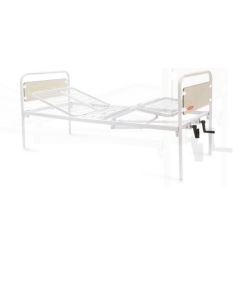
Ward bed for clinics. Dimensions: W.204 x D.90 x h.93. Manually adjustable backrest and leg rest.
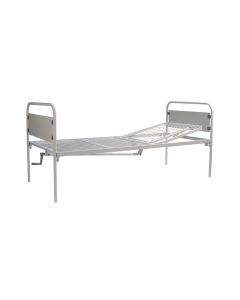
Folding hospital bed in painted steel with crank-adjustable backrest. Space-saving foldable structure, ideal for home care.
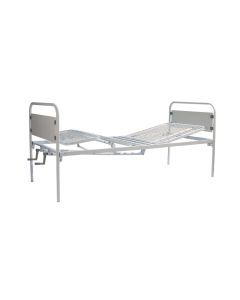
Two-crank mesh hospital bed. Orthopedic base in electro-welded wire mesh. Maximum capacity: 150 Kg. Dimensions: 205 x 85 x h.50 cm.
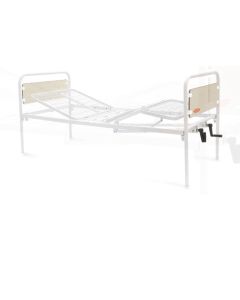
Nursing care bed for nursing homes with manual backrest and leg rest adjustment. Dimensions: W.204 x D.90 x h.93 cm. Bed base dismountable in 2 parts.
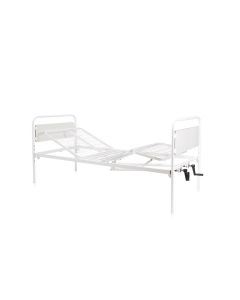
Manual steel hospital bed with 2 cranks. Backrest/legrest adjustment and variable height 32-52 cm. Solid structure for nursing homes and home care.
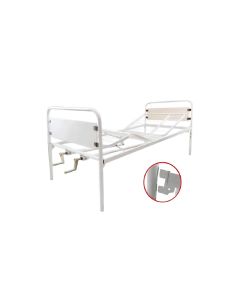
Care bed with steel frame and MDF panels. Adjustable via two cranks. Open dimensions: L 205 x D 50 x H 85 cm. Maximum supported weight: 170 kg.
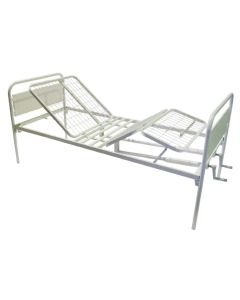
Hospital bed with two cranks. Dimensions: L. 206 x W. 92 x h. 94 cm
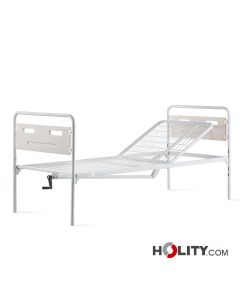
Single-joint hospital bed with 2 sections. Patient weight capacity: 135 kg.
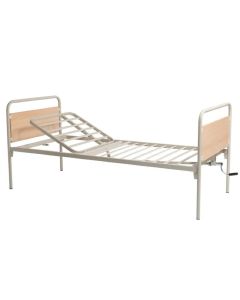
Pack of 5 pieces
€1,225.00 VAT excl.Hospital bed ideal for hospitals. Single-crank bed. Load capacity: 135 kg.
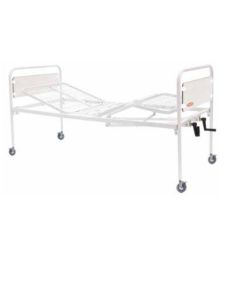
Hospital bed with wheels. Dimensions: W.204 x D.90 x H.93 cm. Material: steel.
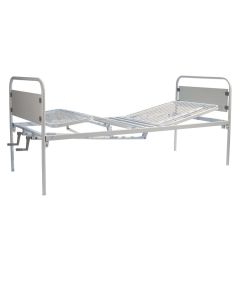
Hospital bed for medical environments. Manually adjustable backrest and leg rest. Foldable.
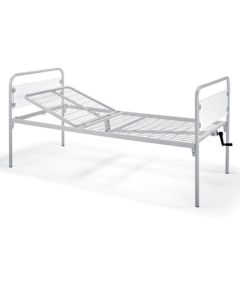
Hospital bed h937_23 in steel with adjustable headrest, maximum capacity 135 kg. Dimensions: L. 2060 x D. 910 x h. bed base 470 mm.
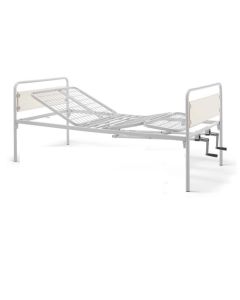
Hospital bed with 3 joints and 4 sections, adjustable by means of two independent cranks. Dimensions: W. 2060 x D. 910 x h. bed base 470 mm.
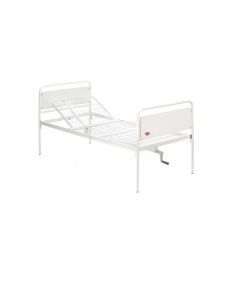
Pack of 2 pieces
€558.32 VAT excl.Manual 1-joint hospital bed with 1 hand crank.
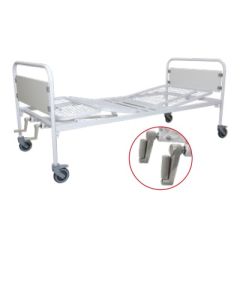
Hospital bed with 2 cranks with independently adjustable backrest and leg rest. Base wheels.
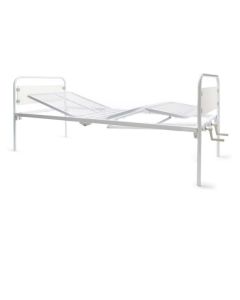
H937_21 removable hospital bed with 3 joints and 4 manually adjustable sections, steel frame. Dimensions: L 2060 x W 910 x H. bed base 470 mm.
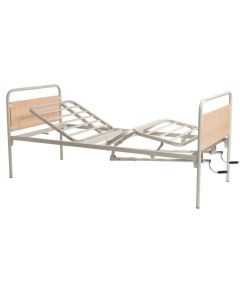
Hospital bed equipped with two cranks. Load capacity: 135 kg. Dimensions: L. 206 x W. 92 x h. 94 cm.
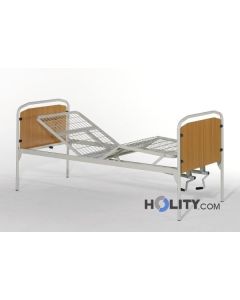
Hospital bed for disabled people with two cranks. Structure in powder-coated steel profiles. MDF panels coated in melamine. Made in Italy.
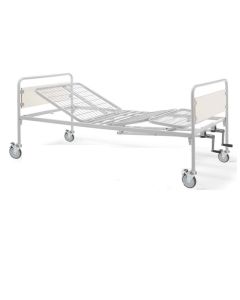
H937_25 3-joint hospital bed with manual backrest and legrest adjustments. Overall dimensions: 910 x 2060 mm. Bed base height: 470 mm.
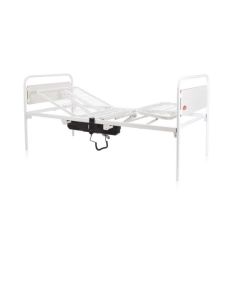
Hospital medical bed with electrically operated headrest and legrest. Dimensions: W.204 x D.90 x h.93 cm.
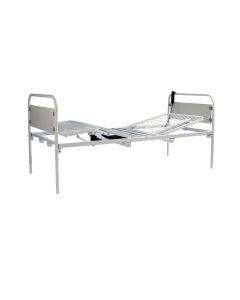
Electric motorized three-joint hospital bed. Capacity: approx. 130 Kg.
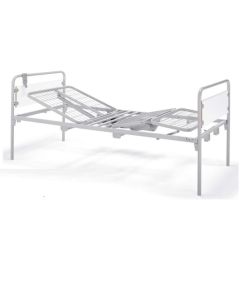
H937_20 3-joint bed, electric adjustment of backrest and legs, steel frame, Dimensions: W. 2060 x D. 910 x H. bed base 470 mm.
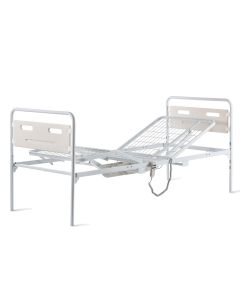
Home care bed with electronic adjustment. 3 joints and 4 sections.
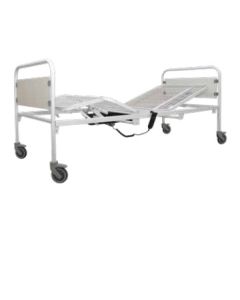
Electric 3-joint mesh hospital bed. Equipped with wheels. Maximum supported weight: 170 kg.
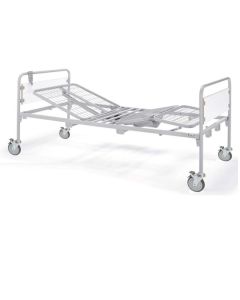
Electric inpatient room bed, 4 sections. 4 wheels with independent brakes. Bed base: 890x1990 mm.
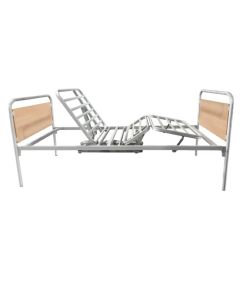
Motorized hospital bed. Capacity: 135 kg. Dimensions: W. 206 x D. 92 x H. 94 cm.
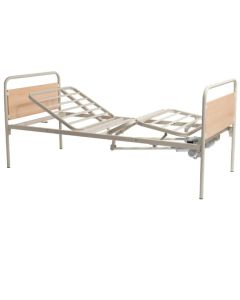
Electric hospital bed with 3 joints. Dimensions: W.206 x D.92 x h.94 cm. Capacity: 135 kg.
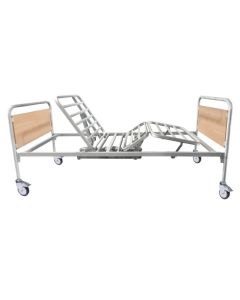
Motorized hospital bed. Load capacity: 135 kg. Dimensions: L. 206 x D. 92 x h. 94 cm. Equipped with wheels with brakes.
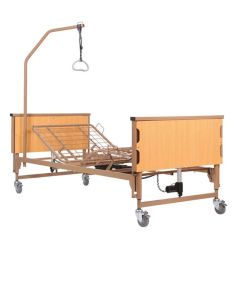
Electric medical bed 3 joints 4 sections with electro-welded mesh. Capacity: 135 kg. Adjustable height.
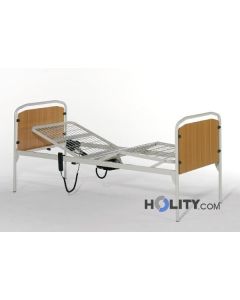
Electric bed for the elderly and disabled with melamine-coated MDF panels and painted steel structure. 100% Made in Italy. Capacity: 170 kg.
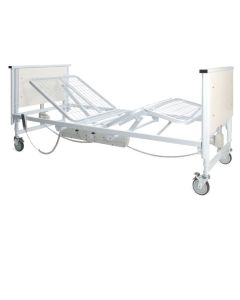
Hospital bed 3 joints 4 sections, in steel. Max overall dimensions: 2100X930 mm. Mattress platform height: 405 - 800 mm.
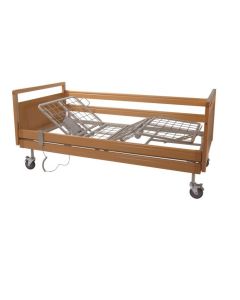
3-joint home care bed with electric steel mesh base at fixed height.
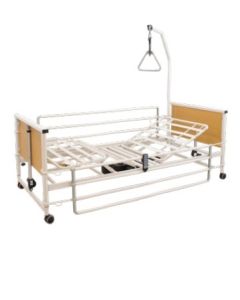
3-section electric height-adjustable hospital bed with Trendelenburg. Dimensions: W. 213 x D. 95 x h. 80 - 130 cm.
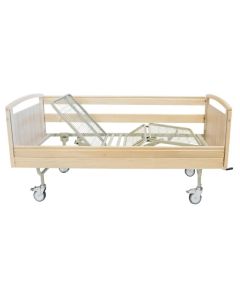
Medical care bed with two cranks. Dimensions: L. 208 x W. 102.5. Bed base height: 45 cm.
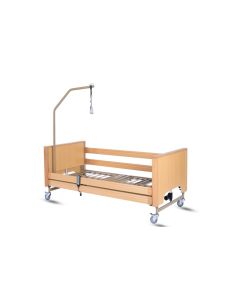
Electric 4-section medical bed with steel structure. Dimensions: L 215 x W 102 x H from 84 to 125 cm.
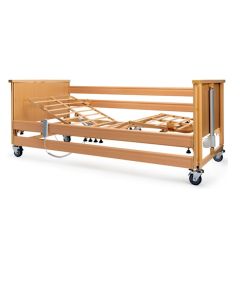
Electric hospital furnishing bed. 3 joints and 4 sections. Dimensions: L. 214 x W. 101 x h. 35 - 75.5 cm.
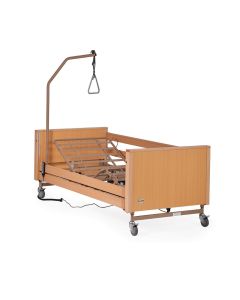
Orthopedic care bed, wooden with variable height. Electric.
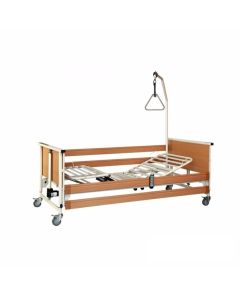
Electric hospital bed ideal for nursing homes, care homes, with an iron slatted base. Three sections with Trendelenburg. Variable height
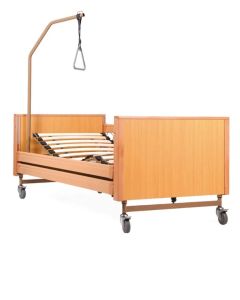
Electric wooden hospital bed with variable height. With side rails. Capacity: 135 kg. Maximum dimensions: 2165 x 1020 mm.
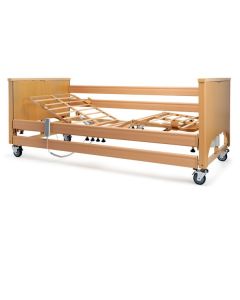
Bed for hospital rooms with wheels. Electric movement. Variable height. Dimensions: W. 214 x D. 101 x h. 35 - 75.5 cm.
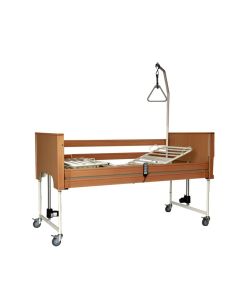
Electric hospital bed ideal for nursing homes and residential care facilities. Adjustable backrest and leg rest. Vertical movement of the surface.
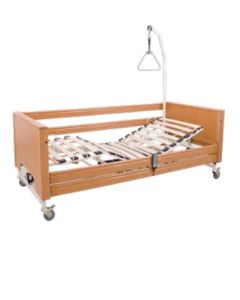
Electric hospital bed with adjustable height platform. Trendelenburg and anti-Trendelenburg movement.
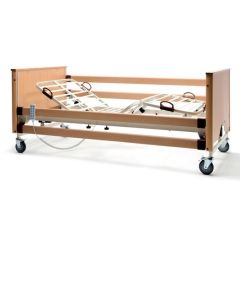
Electric hospital bed with vertical movement of the bed base between 40 cm and 82 cm. Bed base: 90x200 cm.
3-joint electric bed, adjustable height, wooden slats. Load capacity: 150 kg. Base: 90x200 cm.
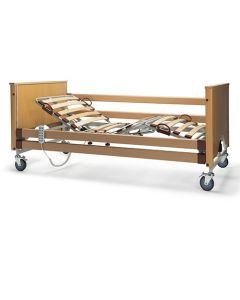
3-joint/4-section nursing bed. Variable height. Full electric movement. Bed base: 90x200 cm.
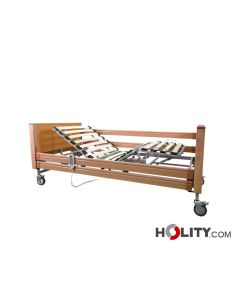
3-section electric nursing bed in steel and wood, 216x102 cm. Ti-MOTION motorized adjustment with Trendelenburg functions for healthcare use.
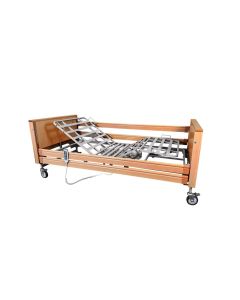
Electric steel hospital bed with Ti-MOTION motorization, Trendelenburg functions and variable height. Ideal for nursing homes and health clinics.
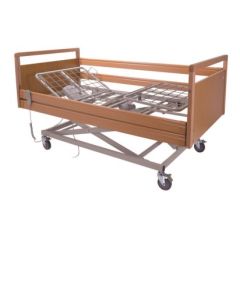
Electric 3-joint hospital bed with variable height. External dimensions: 208 x 102 x h. 116.5 cm.
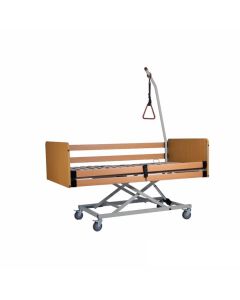
Electric height-adjustable hospital bed ideal for nursing homes and hospital facilities.
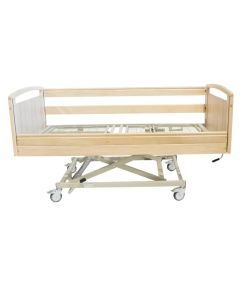
Nursing bed with two cranks. Height adjustable from 40 to 80 cm. Capacity: 135 kg
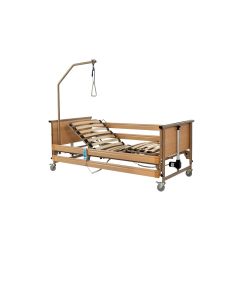
Electric hospital bed with electrically variable height. Exposed motor
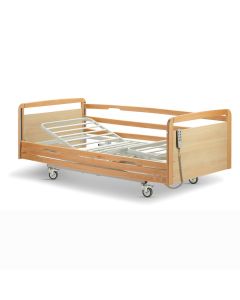
Electric care bed with fixed height. Dimensions: L.211 x W.105 x h.45 cm.
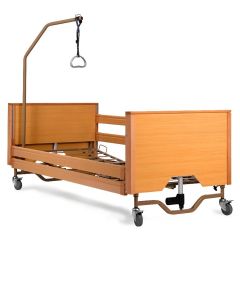
Electric variable height hospital bed for Alzheimer’s patients. Capacity: 135 kg. Bed base-floor height: min. 280 max. 690 mm.
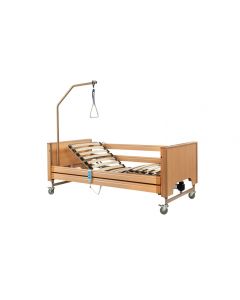
Electric hospital bed with variable height
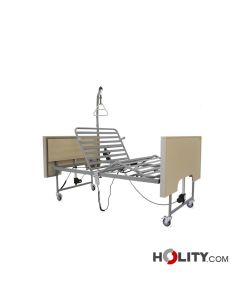
Electric orthopedic bed with 4 motors and emergency battery, steel frame, and wooden finishes. Dimensions: 215 x 131 x H 87-129 cm.
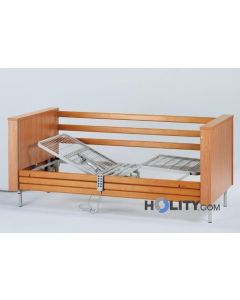
Motorized nursing bed with variable height with a 4-section base made of electro-welded rectangular mesh. Bed surface adjustable from 32 to 42 cm from the ground.
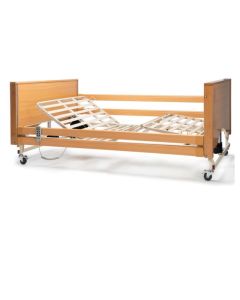
Electric nursing bed with variable height and 4 wheels with independent brake. Dimensions: L. 212 x D. 132 x h. 20-79 cm.
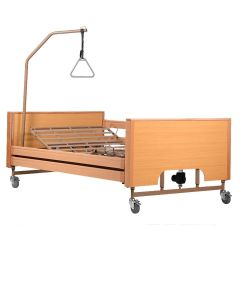
Electric bariatric care bed with small double bed base. Capacity: 230 kg. Maximum dimensions: 2150 x 1320 mm.
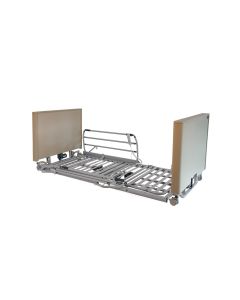
Low-profile electric orthopedic bed with 4 motors for Alzheimer’s/fall risk, with emergency battery. Dimensions: 217 x 90 x H 85-140 cm.
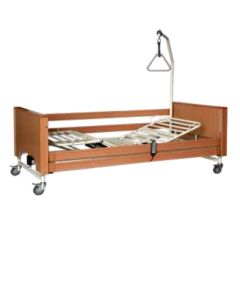
Electric hospital bed with 120 cm wide base. Height-adjustable platform. External dimensions: L. 216 x D. 140 x h. 89/130 cm.
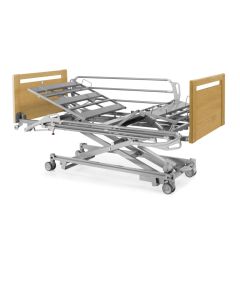
Electric hospital bed with steel structure, height adjustment from 25 to 86 cm, 4 independent sections, and maximum load capacity up to 230 kg. Dimensions: 206 x 100 cm.
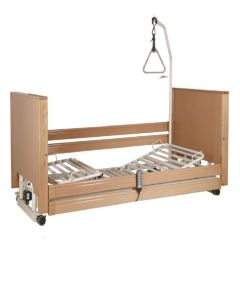
Electric medical bed for hospitals and nursing homes. Height-adjustable base. Trendelenburg and anti-Trendelenburg movement.
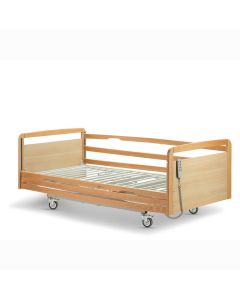
Home care bed with electrically adjustable height. Dimensions: W.211 x D.105 x h.35/75 cm.
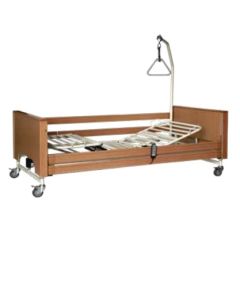
Bariatric electric hospital bed with height-adjustable slatted base. Maximum capacity: 280 kg.
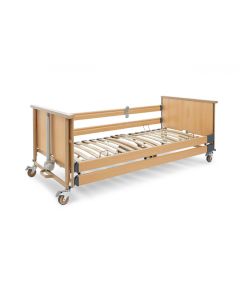
Nursing care bed for nursing homes with lowered entry. Electrically adjustable height. Max resident weight: 145 kg.
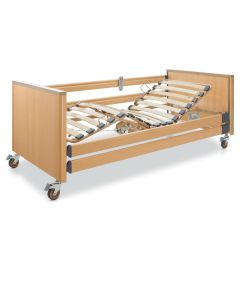
Nursing bed with portable wireless remote control and 24 Volt drive system. Maximum user weight: 155 kg.
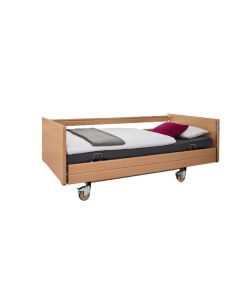
Hospital bed for nursing homes. Height adjustable via scissor mechanism. Total dimensions: 102 x 210 cm. Height: 35/80 cm.
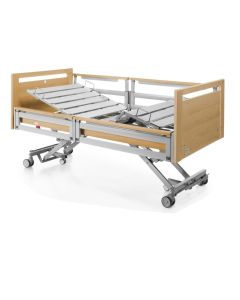
Electric hospital bed with adj. height, anti-decubitus system and Trendelenburg/Anti-Trendelenburg function. Dimensions: 210 x 101 cm. Max load capacity: 230 kg.
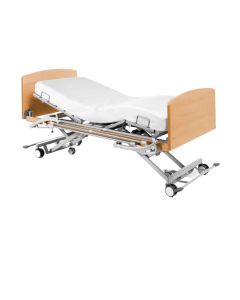
Electric geriatric bed with steel structure, height adjustment from 21 to 82 cm, Trendelenburg/Anti-Trendelenburg function. External dimensions: 210 x 101 cm. Max load: 230 kg.
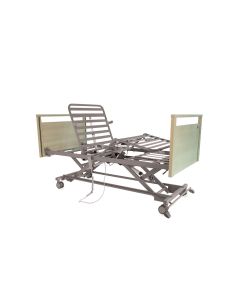
Electric care bed with pantograph mechanism, steel slats and emergency battery, without side rails. Dimensions: 209 x 105 x H 73-129 cm.
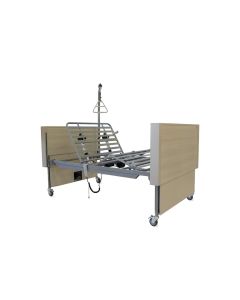
Electric orthopedic bed with 4 motors, high capacity 325 kg, emergency battery, and wood finishes. Dimensions: 278 x 134 x H 85-128 cm.
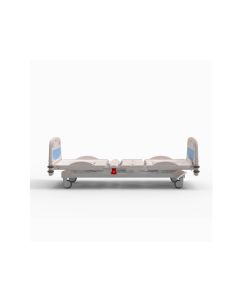
4-section electric hospital bed, adjustable height, 4 wheels Ø125 mm. Dimensions: W 217.2 x D 95.8 x H 72.4 cm.
Hospital beds represent a fundamental structural solution in healthcare, hospital, and residential care environments. These medical furnishings are designed to ensure maximum patient comfort during their stay, while facilitating the work of healthcare staff through adjustment systems that allow for body position adaptation according to clinical needs. Choosing an appropriate hospital bed directly affects the quality of care, the prevention of pressure ulcers, and patient mobility. Every healthcare facility, whether it is a hospital, a nursing home, a private clinic, or a home care setting, requires a specific solution that takes into account maximum weight capacity, available dimensions, and the necessary adjustment methods.
The range of hospital beds currently available is wide and diversified: from manual models with crank adjustment to fully electric systems with remote control. The materials used, primarily painted or galvanized steel, guarantee durability and ease of sanitization, essential requirements in the medical field. The capacity generally varies between 130 and 170 kg, while standard dimensions are around 204-206 cm in length and 85-92 cm in width. Understanding the technical characteristics of each model is fundamental to identifying the most appropriate solution for the context of use.
A high-quality hospital bed offers measurable advantages from both a clinical and operational perspective. The ability to independently adjust the backrest and legrest allows the patient to be positioned in therapeutically optimal configurations, reducing the risk of circulatory complications and skin lesions. Crank-operated or electric adjustment systems allow healthcare personnel to quickly adapt the bed's position without requiring excessive physical effort, improving operational efficiency and caregiver safety. In hospitals and long-term care facilities, choosing beds with advanced ergonomic features translates into reduced care times and a better overall clinical outcome.
In addition to clinical aspects, modern hospital beds offer practical solutions for various situations: folding models are ideal for facilities with limited space, beds with wheels facilitate movement, while dismantlable versions simplify maintenance and transport. The durability of the steel structure ensures years of intense use without deterioration, while powder coating or galvanization protects the material from corrosion due to humidity and detergents used for sanitization. For facilities managing high patient flows, such as hospitals, rapid adjustment capability and robust design become critical factors for productivity and reliability.
Hospital beds differ mainly based on the adjustment system and the number of mobile sections. Models with manual adjustment via a single crank allow for headboard height control, ideal for home environments or where the operational load is moderate. Beds with two independent cranks offer greater versatility, allowing simultaneous adjustment of the backrest and legrest, a feature particularly valued in hospitals and intensive care facilities. Three-joint systems with four sections represent the most complete solution, with independent sections for the headboard, lumbar cavity, knees, and footrest, allowing for very precise positioning. Alongside these, fully electric models offer maximum comfort to the patient and reduce physical effort for staff, although they involve higher initial costs.
Another classification concerns the mobility of the bed itself. Fixed models are mainly used in dedicated rooms, while beds on wheels with brakes allow for easy movement without compromising stability during use. Folding beds represent an intermediate solution: they maintain the functional characteristics of a complete hospital bed but can be folded for transport or storage, with reduced dimensions when closed. The choice between galvanized steel, powder-coated steel, or treated with special finishes depends on the environment: hospitals require easily sanitizable materials, while residential facilities may opt for solutions with coated MDF panels, which offer a more domestic aesthetic without compromising functionality.
The selection of a hospital bed must start from an accurate analysis of the facility's specific needs. The first parameter to consider is the maximum weight capacity supported: for a general hospital, capacities of 135-150 kg are sufficient in most cases, while facilities managing bariatric patients may require solutions with higher capacities. Bed dimensions must be compatible with the available space in the room and with access routes; the standard of 204 x 90 cm is universal, but in confined spaces, slightly more compact solutions might be necessary. Another decisive criterion is the type of adjustment required: if the facility has dedicated staff and the number of patients is limited, manual systems are economically advantageous; conversely, hospitals and nursing homes with high patient turnover benefit from automation, which accelerates bed preparation times and reduces staff fatigue.
Common mistakes in selection include underestimating cleaning complexity: a bed with too many crevices or difficult-to-reach components leads to longer sanitization times, a considerable hidden cost in hospital contexts. Verifying the availability of spare parts, ease of disassembly, and technical support is equally important, especially for installations in significant-sized facilities. Compatibility with accessories such as side rails, patient lifters, and anti-decubitus systems must be evaluated at the time of purchase. Finally, consider the total cost of ownership, not just the purchase price: a slightly more expensive bed with a longer lifespan and lower maintenance requirements represents a better investment in the medium to long term. For public facilities or those operating with tight budgets, bulk purchasing options often offer significant price reductions.
Hospital beds used in medical and healthcare contexts must comply with specific standards that guarantee safety, reliability, and clinical appropriateness. The reference standard is UNI EN 60601-2-52, which establishes safety requirements for medical beds, ensuring protection against mechanical and electrical risks. In addition, manufacturers must comply with the Medical Device Regulation (2017/745/EU), which governs CE certification and technical documentation. Load-bearing capacity must be clearly indicated and verified through load tests, as well as structural stability during use and adjustment operations. The mechanical resistance of various components, particularly hinges and locking systems, must be tested according to standardized protocols.
From an operational safety standpoint, it is essential that hospital beds are equipped with effective braking systems on the wheels, if present, to prevent involuntary movement during patient care. Side rails, if integrated, must meet specific height and resistance requirements. Ease of sanitization is an increasingly relevant regulatory aspect, with specifications on material porosity and the absence of areas where biological residues can accumulate. Facilities receiving public funding or operating in the hospital sector must ensure product traceability, the availability of maintenance logs, and compliance with sterilization protocols where necessary. Verifying the presence of the CE marking and the manufacturer's declaration of conformity is not only a regulatory obligation but a guarantee of quality and legal responsibility for the facility acquiring the equipment.
Explore all the products in the category and compare the available solutions to find the one best suited to your operational context. Each hospital bed is described with complete technical specifications, maximum capacity, dimensions, and adjustment methods, allowing you to accurately evaluate which model best meets your facility's needs.
A manual bed uses cranks to adjust the height of the headboard and legrest, requiring direct intervention from staff. An electric bed, on the other hand, uses motors with a remote control, allowing for rapid and precise adjustments with less physical effort, although it involves higher costs and greater maintenance complexity.
Most standard hospital beds support capacities between 130 and 150 kg. However, facilities assisting patients with higher body weight must pre-verify the specific load capacity of the chosen model and consider dedicated solutions for bariatric patients with capacities up to 170 kg.
Beds made of painted or galvanized steel can be cleaned with standard hospital detergents, avoiding products that are too acidic or alkaline. It is important to remove residues from all surfaces, particularly in the spaces between mobile sections. Verifying that the bed design has no difficult-to-reach crevices is fundamental to ensuring complete sanitization.
A standard hospital bed measures approximately 204 x 90 cm. A free space of at least 260 x 150 cm around the bed is recommended to allow for operator maneuvering, the positioning of medical equipment, and access from both sides. In tight environments, slightly more compact models are available.
No. Modern folding beds have the same structural strength as fixed models, as they use the same materials and locking systems. The main difference is the ability to be folded for transport or storage, a feature particularly useful in facilities with limited space or for mobility needs.
A hospital bed must have the CE marking, the manufacturer's declaration of conformity, and, if equipped with electrical components, comply with the UNI EN 60601-1 standard relating to medical electrical equipment. It must also meet the requirements of the Medical Device Regulation 2017/745/EU and relevant national regulations.
Yes. A two-crank bed allows you to independently adjust the headboard and the legrest. Three-joint models with four sections offer even greater versatility, with separate adjustments for the lumbar cavity and knees, useful in complex clinical situations requiring very precise positioning.
 English
  Italian
 French
 German
 Spanish