
mon-fri 9-13 / 14.30-18.30
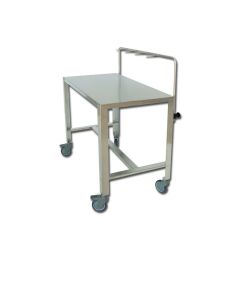
Stainless steel instrument table for operating rooms, with wheels.
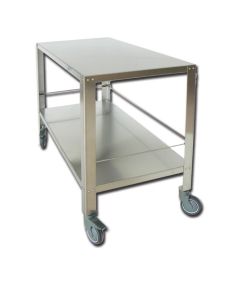
Mobile instrument table for operating room in stainless steel. Dimensions: W. 120 x D. 65 x h. 95 cm
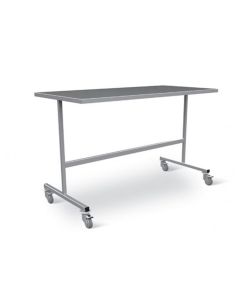
Stainless steel operating room instrument table. L.1200xW.640xh.900 mm.
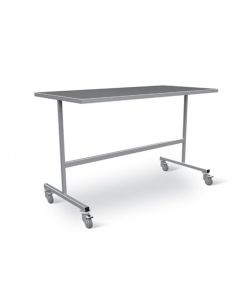
Operating theatre instrument table in stainless steel. W.1400xD.640xH.900 mm
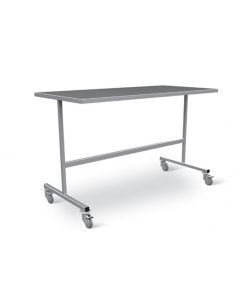
Instrument mother table 1 shelf. W.1600xD.640xH.900 mm.
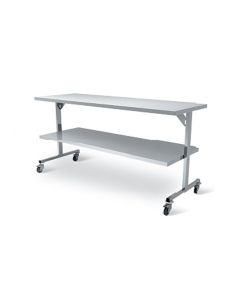
Operating room instrument table 2 shelves in stainless steel. W.1200xD.640xH.900 mm
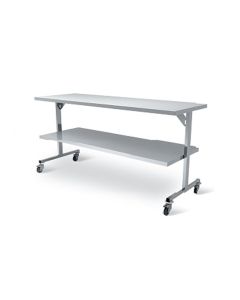
Operating room main table in steel with 2 shelves. L.1400xD.640xH.900 mm
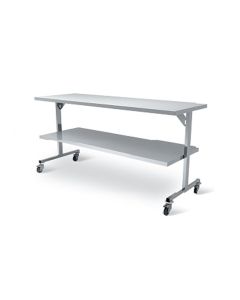
Stainless steel operating room instrument table with 2 shelves. L.1600xW.640xH.400/900 mm.
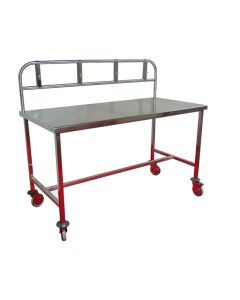
Stainless steel instrument table. Dimensions: W.1500xD.700 mm. Total height: 1300 mm.
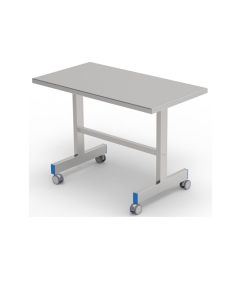
Instrument table for operating rooms in 18/10 AISI 304 stainless steel.
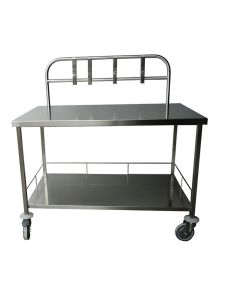
Operating theatre instrument supply table in AISI304 stainless steel with swivel wheels. Dimensions: L.1500xD.700xH.900mm
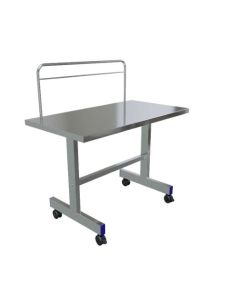
Instrument table in 18/10 AISI 304 stainless steel with rear shelf. Static load capacity: 120 kg.
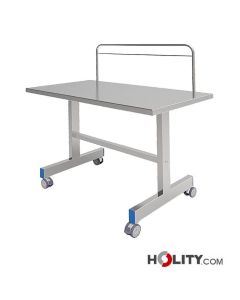
Mayo instrument table for outpatient clinic. Material: AISI 304 stainless steel. Dimensions: L130 x W65 x H124 cm.
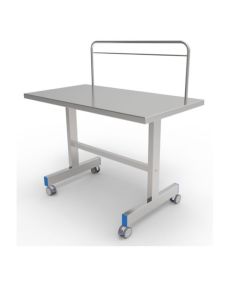
Hospital instrument table. Support surface dimensions: W. 130 x D. 55 x h. 4 cm.
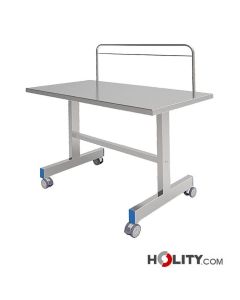
Main instrument table with removable top. Material: AISI 304 stainless steel. Dimensions: W150 x D65 x H124 cm.
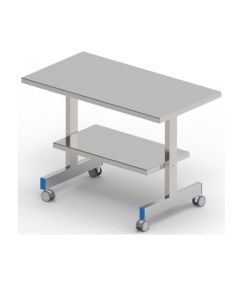
Instrumental table for hospitals. Support surface dimensions: W. 120 x D. 55 x H. 4 cm.
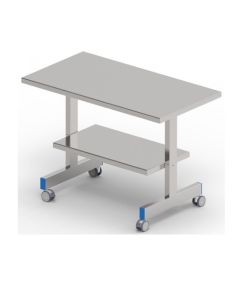
Instrument table for hospitals. Support surface dimensions: W. 130 x D. 55 x h. 4 cm
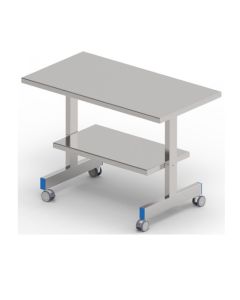
Mother instrument table for hospitals. Countertop dimensions: W. 150 x D. 55 x H. 4 cm.
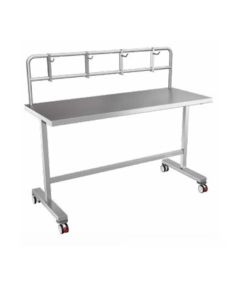
Mother table for hospital with upstand and hooks. Dimensions: W. 140 x D. 70 x H. 90 cm
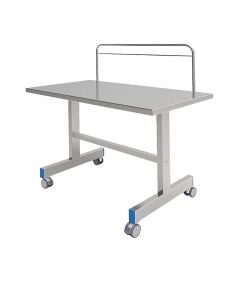
Stainless steel instrument table. Dimensions: W120 x D65 x H124 cm.
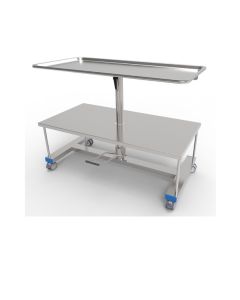
Mother table with two shelves in 18/10 AISI 304 stainless steel, with adjustable height. Overall dimensions: W. 1200 x D. 580 x h. from 910 to 1270 mm.
Instrument tables represent a fundamental element in the furniture and functional organization of modern operating rooms. These specialized furnishings are designed specifically to allow the orderly positioning and rapid availability of all sterilized surgical instruments during surgery. Made entirely of AISI 304 stainless steel, they guarantee the rigorous hygienic conditions required by international regulations and hospital best practices. An efficient instrument table allows the scrub nurse and the surgeon to operate in maximum safety, reducing instrument search times and minimizing the risk of contamination of the controlled sterile area.
The choice of the correct model directly affects the fluidity and safety of the surgical procedure, which is why there are several dimensional and configuration variants. From the depth of the worktop to the static load capacity, from the number of available shelves to the presence of accessories such as risers and hooks, every technical feature has been developed based on consolidated experience in the hospital and healthcare sector.
A high-quality instrument table represents a strategic investment for any healthcare facility wishing to maintain high operational standards. The practicality and organizational efficiency that derive from it translate directly into shorter surgery times, a benefit that reflects both on patient safety and on the reduction of fatigue for the medical team. During a surgical operation, every second counts: having a correctly positioned and immediately available instrument means avoiding useless interruptions, maintaining the operator’s concentration, and preserving the sterility conditions of the environment. Furthermore, a well-sized instrument table equipped with multiple shelves allows instruments to be organized by surgical sequence, facilitating the work of the scrub nurse who must anticipate the surgeon’s needs.
Certified models with swivel castors guarantee impeccable mobility even in critical areas, allowing silent and controlled movements without vibrations that could compromise the arrangement of the material. The stainless steel base ensures that no residue or particle can settle on the instruments, a crucial aspect for preventing post-operative infections. Smooth surfaces free of joints that are difficult to clean significantly reduce sanitation times between procedures, thus increasing the overall efficiency of the operating room.
The range of instrument tables for the operating room is mainly distinguished based on the dimensions of the worktop and the number of configurable shelves. The most compact models, with lengths ranging from 120 to 140 centimeters, are ideal for facilities with limited space or for surgical procedures that do not require a large amount of accessory instrumentation. These tables still maintain a standard depth of 65 centimeters, guaranteeing a large useful surface for support. The elongated models, available up to 160 centimeters, are instead preferred in contexts where it is necessary to organize complex instrumentation, such as in rooms dedicated to cardiovascular or orthopedic surgery. The difference in static load between a single-shelf model and one with a double shelf can reach up to 120 kilograms of capacity, an essential parameter to evaluate based on the type of instruments that will be positioned.
In addition to the standard configuration, there are variants with a rear riser and dedicated hooks, particularly useful when it is necessary to hang heavy instruments or when horizontal space is insufficient. Some models feature adjustable heights between 910 and 1270 millimeters, allowing an ergonomic adaptation to the specific needs of the surgical team. The quality of the surface coating, always in 18/10 stainless steel, guarantees that regardless of the model chosen, resistance to corrosion and contamination remains constant over time, even after thousands of sterilization and high-temperature cleaning cycles.
The selection of the appropriate instrument table depends on multiple factors that must be carefully evaluated in relation to the operational context of the facility. First of all, it is necessary to measure the available space in the operating room, considering not only the footprint of the table itself but also the space required for personnel circulation and the positioning of other furnishings such as monitors or surgical lights. A work surface that is too small creates stressful situations and slows down the operation, while a table that is oversized for the available space reduces the overall agility of the room. A frequent error is underestimating the required static load capacity: instrumentation for complex procedures, particularly in orthopedic or trauma surgery, can easily reach 100-120 kilograms, making it essential to verify that the structure adequately supports these loads without deformation.
Another critical aspect concerns the number of shelves and the vertical configuration: short-duration procedures with limited instrumentation can be managed effectively with a single-shelf table, while complex and multi-specialty procedures benefit significantly from the availability of two or more support levels. It is also important to consider the type of movement required; if the table must be frequently moved between different rooms, the choice of a model with swivel castors and a light base is a priority over fixed configurations. Finally, consulting the facility’s scrub nurse is a recommended practice, as these professionals have concrete experience with daily operational needs and can accurately indicate which features are critical for their team’s workflow.
Instrument tables for operating rooms must comply with specific international regulations that guarantee safety, hygiene, and durability. The ISO 14644 standard on cleanrooms and related controlled environments represents the fundamental reference for any furniture intended for this field, prescribing that all materials in contact with the sterile area must be non-corrosive, easy to decontaminate, and free of sharp edges or geometries that can collect bacteria. AISI 304 stainless steel, referred to as 18/10, is the established standard for instrument tables, as it offers superior resistance to corrosion even after repeated exposure to aggressive disinfectants and autoclave cycles. The certification of the material must include chemical analysis certifying the composition, with precise percentages of nickel, chromium, and molybdenum as prescribed by UNI EN 10088-1 standards.
From the point of view of structural safety, instrument tables must meet the criteria of the UNI EN 527 standard regarding static and dynamic stability, ensuring that no dangerous yielding or oscillations occur during ordinary use. The declared static load capacity must provide an adequate safety coefficient, usually a minimum factor of 4 compared to the maximum expected load. The wheels, where present, must be certified according to EN 12527 and equipped with manually operated brakes that allow locking in any position, a fundamental aspect for avoiding involuntary movements during the operation. Hooks and suspension accessories must also be certified for the declared capacity, avoiding risks of instruments falling. Ordinary and extraordinary maintenance, including periodic verification of stability, is part of the hospital facility’s obligations in accordance with the guidelines on the safety management of medical installations.
Explore all the products in the category and compare the available solutions to find the one best suited to your operational context. Each model is detailed in its technical specifications, dimensions, and static load capacity, allowing you to accurately evaluate which configuration best matches the needs of your operating room.
An instrument table is a specialized piece of furniture designed to organize and keep sterilized surgical instruments within reach during surgery. It allows the scrub nurse to arrange instruments in surgical sequence, helping the surgeon and reducing search times. Made of stainless steel, it maintains the hygienic conditions required by the controlled sterile area.
AISI 304 stainless steel (18/10) is the reference standard because it resists corrosion even after repeated exposure to aggressive disinfectants and autoclave cycles. It ensures ease of cleaning, does not release contaminants, and preserves the hygiene of the controlled sterile environment permanently, unlike other materials that tend to degrade over time.
For simple procedures with limited instrumentation, lengths of 120-140 cm are sufficient. Complex and specialized procedures require 150-160 cm tables. The standard depth is 65 cm. Also consider the height: models adjustable between 910 and 1270 mm allow for optimal ergonomics suitable for your team. Always measure the available space in the operating room.
Static capacity varies from 100 to 120 kilograms depending on the configuration. To determine it, add up the weight of the instruments most used in your procedures. A safety margin of at least 30% is recommended. Orthopedic and trauma procedures, which are particularly demanding, preferably require models with certified maximum capacity.
A single shelf is suitable for short procedures with essential instruments. Two shelves allow for better vertical organization and are ideal for complex procedures. Three or more shelves are rare but useful in highly specialized contexts. Consult your facility’s scrub nurse to understand which configuration best reflects the daily surgical workflow.
Yes, swivel castors are an important feature when the table must be moved frequently between different rooms or when the operating room has limited space. They must be certified according to EN 12527 and equipped with reliable manual locking brakes. In fixed and dedicated rooms, a fixed table is still a valid choice from the stability point of view.
The rear riser with hooks allows for hanging heavy instruments and utilizing vertical space, freeing up the horizontal surface. It is particularly useful when instrumentation is abundant or when certain tools cannot be placed directly on the surface. It increases overall versatility but occupies more vertical space in the room.
Reference regulations include ISO 14644 for controlled environments, UNI EN 10088-1 for stainless steel certification, UNI EN 527 for structural stability, and EN 12527 for wheels. The table must be non-corrosive, easily decontaminable, and free of sharp edges. Each certification must be provided by the supplier and kept in the facility’s technical documentation.
 English
  Italian
 French
 German
 Spanish