
mon-fri 9-13 / 14.30-18.30

Trolley for transporting sterile containers in AISI 304 stainless steel.
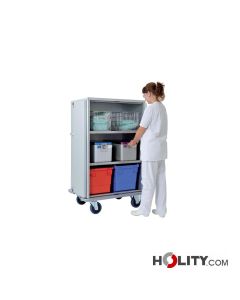
Cart for sterile containers with push handle and swivel wheels. Dimensions: W.977 x D.710 x H1500 mm.
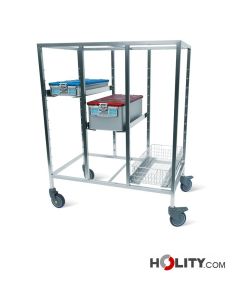
Stainless steel trolley for sterile containers. Dimensions: W.1200xD.750xH.1300 mm

Sterile container trolley with 2 internal shelves. Dimensions: W.80 x D.78 x h.145 cm.

Sterile container trolley with 2 vertical sections and aluminum handle. Dimensions: L.977 x D.710 x H.1585 mm. Weight: 71 kg.

Trolley for sterile baskets with 2 shelves and AISI304 stainless steel bottom: Dimensions: W.1230 x D.710 x H.1500 h mm .

3-section vertical sterile container trolley with 2-leaf door. External dimensions: W.1230 x D.710 x H.1585 mm.

Cupboard trolley for sterile containers with 2-section ISO-NORM internal shuttle.

Trolley for sterile baskets with 2 vertical sections, 9 baskets each.

Stainless steel trolley for transporting sterile containers. Dimensions: W102.5 x D71.1 x H150.7 cm.

Cabinet trolley for sterile containers. Material: stainless steel. With 2 internal shelves. Dimensions: W123.5 x D71.1 x H150.7 cm.

Trolley for sterile containers. Material: AISI 304 stainless steel. Dimensions: W123.5 x D71.1 x H150.7 cm.

Sterile container trolley in stainless steel. With 3 vertical sections. Dimensions: W123.5 x D71.1 x H150.7 cm.
Sterile container transport trolleys represent a fundamental solution for the safe transport of sterilized material within hospital environments, diagnostic laboratories, and sterilization departments. This equipment is designed to maintain the microbiological integrity of baskets and containers during movement, protecting the material from external contamination and ensuring compliance with hygiene protocols. Their importance is critical in every healthcare facility, where the correct management of sterile material directly impacts patient safety and the operational efficiency of the departments.
The choice of the appropriate trolley depends on the required load capacity, the dimensions of the containers used, and the configuration of the department. Available in various construction variants, from simple models with shelves to more complex solutions with vertical sections and integrated cabinets, these trolleys adapt to the specific needs of endoscopy, radiology, operating rooms, and dedicated sterilization areas. The predominantly used material is AISI 304 stainless steel, chosen for its corrosion resistance and ease of sanitization.
Sterile container transport trolleys offer immediate operational advantages in any hospital or diagnostic environment. Their structure allows for the simultaneous transport of multiple baskets or containers, reducing the number of necessary movements and optimizing the time of healthcare personnel. The ability for fluid movement thanks to swivel wheels and ergonomic design allows for navigating through narrow department spaces with ease, minimizing the risk of impacts that could compromise sterility. Furthermore, the organized positioning of containers on the trolley facilitates quick identification of materials and simplifies loading and unloading operations in the operating room or critical areas.
Beyond functional aspects, these trolleys significantly contribute to regulatory compliance within departments. Using specific equipment for sterile transport demonstrates adherence to sterilization and hygiene protocols, reducing legal disputes and risks of healthcare-associated infections. Long-term durability, thanks to the stainless steel construction, ensures an economically sustainable investment, with reduced maintenance costs and a long operational life. Many healthcare facilities also value the possibility of customizing the trolley with specific accessories, such as container sliding guides or adjustable shelves, to adapt to their clinical procedures.
The range of sterile container transport trolleys is divided into various construction configurations to meet the varying needs of departments. The simplest models have a single stainless steel shelf, ideal for environments with limited space or for transporting a limited number of baskets. Carts with 2 shelves represent an intermediate solution, allowing containers to be organized on different levels and increasing total capacity without significantly increasing bulk. The vertical section versions, available in 2 or 3-section configurations, instead offer a more robust structure with guides that allow for the smooth sliding of containers, much appreciated in sterilization departments where it is necessary to manage high volumes of material.
Cabinet trolleys represent the most sophisticated segment, integrating hinged doors or internal shuttles that completely protect the content from contamination during transport. These models are particularly suitable for critical contexts such as operating rooms and high biological risk laboratories. Some trolleys also include selectable fixed or swivel wheels, aluminum handles to facilitate pushing, and dimensions designed according to ISO-NORM standards to ensure compatibility with the most common containers used in the hospital field. The choice of type depends on the density of use, available space, and the level of protection desired during internal transfers.
Selecting the appropriate trolley begins with evaluating the number and size of containers that must be transported daily. A department that uses standard ISO-NORM containers will have different needs compared to a laboratory working with custom-sized baskets. It is essential to measure the transit spaces available in corridors, operating room doors, and elevators, as some trolleys reach significant heights, up to approximately 150-160 centimeters. A common mistake is underestimating the maximum required load capacity, with the risk of purchasing an insufficient model that requires frequent reloading, increasing time and personnel fatigue.
A second decisive aspect concerns the material and ease of cleaning. AISI 304 stainless steel is the market standard because it resists autoclaving, aggressive chemical detergents, and ethylene oxide sterilization. It is necessary to verify that all joints are welded and polished, without sharp edges that could harbor bacteria or make sanitization difficult. For very high-volume departments, such as centralized sterilization centers, it is advisable to opt for vertical section trolleys with linear guides, which accelerate loading operations. Finally, consider whether the trolley will be used exclusively within the facility or if it requires frequent movement between buildings: in this case, superior quality wheels and low weight become critical factors for reducing operator fatigue and prolonging mechanical durability.
Sterile container transport trolleys must comply with a series of international and national regulations to ensure hygienic safety and structural compliance. The UNI EN 14183 standard specifies the requirements for hospital trolleys, including load limits, stability, and mechanical resistance. The ISO 11135 standard and subsequent variants regulate sterilization processes, and the trolleys must be compatible with the sterilization methods used in the department, whether it be autoclaving at 121°C or ethylene oxide sterilization. Further compliance is required by occupational safety regulations, which impose maximum manageable weight limits, handle ergonomics, and adequate visibility during movement.
From a hygienic and microbiological profile, the trolleys must be able to undergo regular sanitization cycles without deterioration of materials or their microbiological resistance. Surfaces must be non-porous, without crevices, and with finishes such as to prevent the accumulation of dirt or biological agents. In Italy, the Ministry of Health requires that equipment used in critical areas be subject to periodic functional and hygiene checks, documented according to company procedures. Many facilities also require biocompatibility certifications for materials in contact with the sterile content, especially if the trolley will be used in high biological risk departments. It is advisable to check, at the time of purchase, the availability of test certificates, detailed technical data sheets, and compliance with European directives 93/42/EEC (subsequently 2017/745/EU) regarding medical devices.
Explore all the products in the category and compare the available solutions to find the one best suited to your operational context. Each model is documented with complete technical specifications and certificates of conformity.
Trolleys with shelves are suitable for moderate volumes and limited spaces, allowing for simple stacking of containers. Vertical sections, on the other hand, integrate guides that facilitate the rapid sliding of containers and are recommended for high-volume departments where movement speed is critical and the number of containers to be transported simultaneously is high.
Yes, AISI 304 stainless steel trolleys are specifically designed to withstand autoclaving cycles at 121°C and pressure. However, verify that all components, including handles and wheels, are compatible with the thermal treatment. Some rubber wheels may require prior removal to avoid damage.
Dimensions vary widely. Compact models have dimensions around 100 x 71 x 150 centimeters (length x depth x height), while cabinet trolleys reach up to 123.5 x 71.1 x 150.7 centimeters. Before purchasing, check compatibility with your transit spaces, especially for narrow doors and corridors.
The capacity varies depending on the model: simple trolleys typically support 100-200 kg, while robust vertical section models can reach 300-400 kg. Consult the specific technical sheet, as overloading compromises stability and invalidates safety certifications.
Use hot water with specific non-abrasive detergents for stainless steel, avoiding sponges that scratch. For disinfection, apply solutions based on diluted chlorine or 70% alcohol, let dry completely. Once a month, perform a deep cleaning including the spaces between wheels and legs to remove biological residues.
Vertical section trolleys are designed with a stabilized base and low center of gravity, making them stable even during elevator transport. However, it is important to distribute the load evenly and avoid sudden accelerations. Trolleys with a width around 123 cm fit into most standard hospital elevators.
Many trolleys are modular and allow for the addition of accessories such as extra guides, intermediate shelves, or anchoring plates for specific containers. Contact the supplier to verify compatibility: unauthorized modifications could compromise the hygienic and structural certification of the product.
Trolleys must comply with the UNI EN 14183 standard for hospital equipment, in addition to occupational safety directives (Legislative Decree 81/2008) and hospital hygiene standards. Public health facilities must ensure compliance through test certifications and documented maintenance according to company protocols.
 English
  Italian
 French
 German
 Spanish