
mon-fri 9-13 / 14.30-18.30
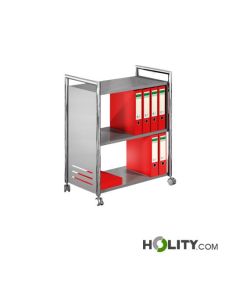
Office file trolley. Dimensions: W.70 x D.40 x h.84 cm. With 3 shelves.
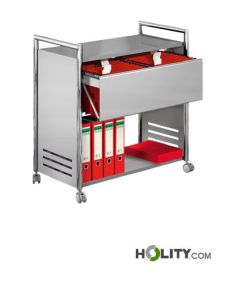
Trolley for transporting binders and suspension files. Dimensions: W.81.5 x D.43.5 x h.80 cm. With 2 shelves and 1 large drawer.
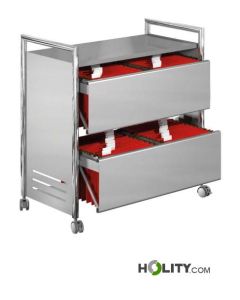
Trolley for transporting hanging folders with 2 large drawers. Dimensions: W.81.5 x D.43.5 x h.80 cm.
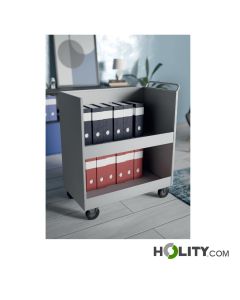
Document and folder distribution trolley in sheet steel for courts and offices. With single handle.
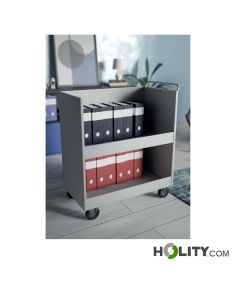
Office trolley for file transport with double handle.
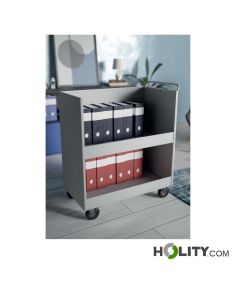
Office file trolley with one handle. Dimensions: W. 90 x D. 40 x h. 100 cm. Color: grey.
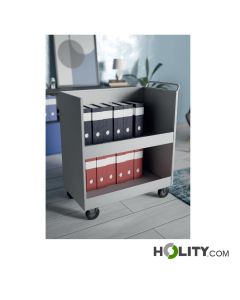
Binder and document distribution trolley for offices. Single handle. Dimensions: 90 x 50 h.100 cm.
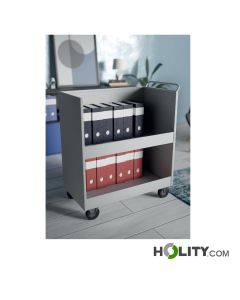
Document and folder distribution trolley with double handle. Color: Ral 7035 grey. Dimensions: W.90 x D.40 x h.100 cm.
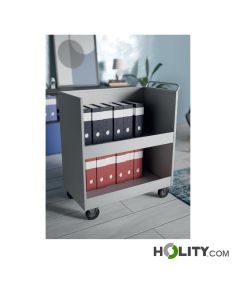
Practical office document and folder cart equipped with double handle. Colour: grey.
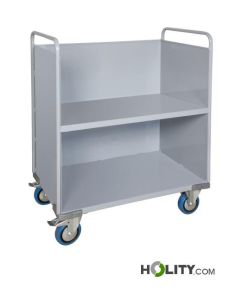
Document trolley for offices. 2 shelves. Total dimensions: 465 x 795 x h. 1050 mm.
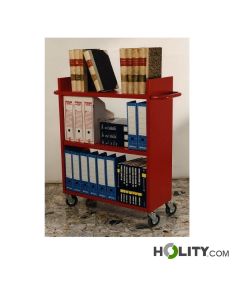
Dossier transport trolley, ideal for offices. It features 3 shelves.
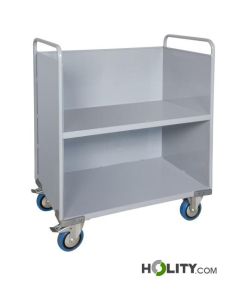
File and document transport trolley with 20/10 sheet metal structure and 2 shelves. Total dimensions: 520 x 850 x h. 1050 mm
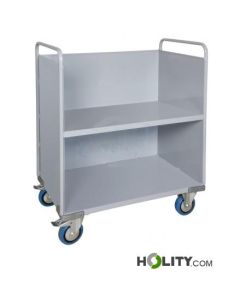
File holder trolley ideal for offices. 2 shelves. Useful shelf dimensions: 400 x 800 mm.
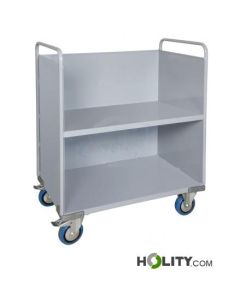
Office file folder and binder trolley. Number of shelves: 2. Number of sides: 3. Capacity: 300 kg.
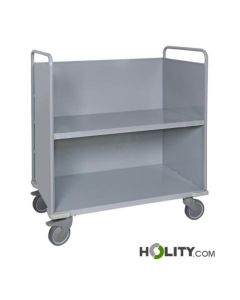
Document and folder distribution trolley made of 20/10 sheet metal. Number of shelves: 2. High-silence wheels.
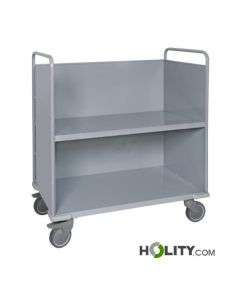
2-tier office trolley for transporting files. Equipped with high-silence non-marking rubber wheels.
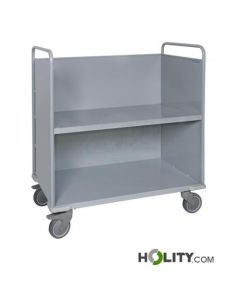
2-shelf folder and file trolley with high-silence non-marking rubber wheels. Dimensions: 420 x 850 x h. 1050 mm.
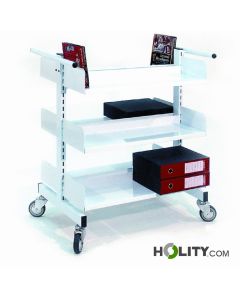
Double-sided book transport trolley with 3 + 3 shelves. Equipped with Ø 100 mm wheels.
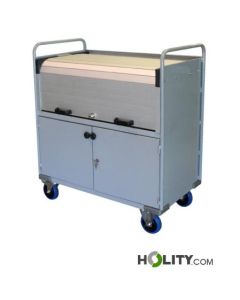
Binder trolley with 3-sided structure and 2 shelves. Full closure. Dimensions: 500 x 900 x h. 900 mm.
File and document trolleys are specialized equipment designed for the efficient movement of documentation in environments where paper volume represents a critical aspect of daily operations. In courts, prosecutors’ offices, public offices, and complex administrative structures, document management requires solutions that guarantee operator safety, material preservation, and process fluidity. These trolleys solve the problem of manual transport of heavy and bulky document stacks, preventing workplace injuries and damage to the files themselves. Designed with industrial logic adapted to the administrative context, they allow the simultaneous transfer of dozens of cases between courtrooms, consultation rooms, and offices, keeping the material organized and immediately accessible during every phase of movement.
The robust metal structure of the selected models is capable of withstanding high loads without undergoing critical deformations, ensuring operational longevity that is particularly important in environments where equipment turnover must be limited. The daily use of these trolleys not only optimizes document distribution times but also supports dynamic consultation activities: the operator can have the entire current file available directly in the room where a proceeding or a strategic meeting is being held, eliminating the multiple trips that characterize traditional work.
The adoption of a trolley dedicated to transporting files primarily addresses a health and safety need in the workplace. Lifting and manually carrying heavy binders is one of the main causes of musculoskeletal disorders among office workers, with consequences ranging from chronic fatigue to serious back injuries. A professional file trolley eliminates this source of risk, allowing employees to move even significant loads without excessive physical effort. Investing in this equipment is therefore not a choice of convenience, but a mandatory preventive measure: trolleys significantly reduce the incidence of workplace injuries and support compliance with health and hygiene safety regulations. Furthermore, the possibility of moving numerous files simultaneously reduces document distribution times between various offices, increasing the productivity of administrative staff and reducing the bottlenecks that characterize paper management. In fields such as public prosecutors’ offices or land registry offices, where the volumes of cases are considerable, this acceleration of flows represents a tangible and measurable operational gain.
A second crucial advantage concerns preserving the integrity of the files themselves. Documents transported manually risk tears, stains, disorder, and loss of pages, compromising administrative accessibility and traceability. Specialized trolleys protect binders from accidental contact during movement, maintaining the internal organizational structure of the cases. This aspect is particularly relevant in contexts where paperwork is subject to frequent checks by magistrates, technical consultants, or citizens, as any visual degradation or document disorder can compromise the credibility of the case itself. In addition, many modern models include drawers, dedicated shelves, or organization systems that allow files to be grouped by category, proceeding, or processing stage, facilitating daily search and management.
The file trolley category is divided into several construction variants, each responding to specific operational needs. Open-shelf trolleys represent the most versatile and widely used solution in medium-sized offices. Available with 2 or 3 shelves, they allow for the agile placement of files without size constraints, facilitating quick retrieval during consultation. These models, with typical dimensions ranging from 70 to 90 cm in width and heights between 80 and 110 cm, easily adapt to the narrow spaces of corridors and courtrooms. The total capacity generally fluctuates between 200 and 300 kg, guaranteeing simultaneous loading without structural compromises. Trolleys with large drawers are instead the preferred choice in contexts where confidentiality or material protection is an absolute priority: binders remain completely hidden from view and unauthorized access, an essential feature in prosecutors’ offices or justice offices where file secrecy is imperative. These models require more space and a more contained maneuvering height but offer total closure that increases document security.
Another category emerges from bilateral trolleys, structured with shelves on both sides of the central frame. This configuration allows for doubling storage capacity in a footprint practically identical to standard models, making them particularly convenient in environments with limited square footage. High-silence wheeled trolleys represent an important technical evolution: the use of non-marking rubber wheels or specific bearings drastically reduces movement noise, a crucial element in historic buildings (such as nineteenth-century courts) or spaces where activities requiring concentration take place. Finally, trolleys with total perimeter closure offer maximum protection, ideal for transporting sensitive files between different locations or for temporary storage in restricted access rooms. The latter require higher investments but are justified in contexts of high administrative criticality.
Selecting the most appropriate trolley primarily depends on the analysis of the specific operational context. The first step is to identify the average document volume that the trolley will have to transport in a single move: if the activity frequently requires transporting over 200-250 kg of files, it is necessary to move towards models with high capacity (300 kg or more) and thick sheet metal structures (20/10 or equivalent). Undervaluing this need carries the risk of structural failure that compromises functionality and operational safety. In parallel, it is necessary to evaluate the space available in corridors, courtrooms, and maneuvering areas: a trolley that is too wide or high creates passage difficulties and increases the risk of impacts and damage to architectural structures. A 70 cm wide trolley is generally suitable for standard spaces, while particularly narrow environments require more compact solutions, even if with reduced capacity.
A second decision criterion concerns the frequency and duration of transport. If the trolleys remain in constant motion throughout the entire working day, the quality of the wheels becomes a critical element: models with ball bearings, generous wheel diameter (100 mm or more), and high-hardness rubber guarantee persistent smoothness and reduce operator fatigue in the long term. High-silence wheels are a smart choice if the trolley frequently circulates in sensitive areas such as hearing rooms or consultation offices where noise is a disturbing element. Regarding internal organization, the decision between open shelves and drawers depends on the need for confidentiality and the frequency of consultation: sealed drawers protect files from accidental access but slow down retrieval operations; open shelves facilitate quick consultation but expose the material to risks of disorder and uncontrolled access. In contexts where documentation is frequently consulted by multiple users simultaneously, open shelves are more efficient.
File trolleys used in Italy must comply with a series of technical and regulatory standards that guarantee operational safety and durability over time. The UNI EN 1808 standard represents the main reference for non-motorized manual handling equipment: it establishes the minimum construction requirements for general-purpose trolleys, defining parameters such as maximum capacity, stability, structural strength, and ergonomic aspects. Although there is no specific standard exclusively dedicated to file trolleys, they fall under the general category of warehouse and office trolleys and must respect the same standards. A compliant trolley guarantees that the metal structure resists repeated load cycles without undergoing permanent deformation, that the wheels maintain grip on the ground, and that the maneuvering elements (handles, sides) do not give way under the application of reasonable forces. The manufacturer’s ISO 9001 certification represents a further indicator of reliability, ensuring that quality control takes place according to standardized procedures.
From the point of view of occupational safety, the use of file trolleys falls under the measures for preventing risk from manual handling of loads, regulated by Legislative Decree 81/2008 (Consolidated Law on Safety). Although the trolley significantly reduces the muscular workload compared to direct manual transport, some obligations remain: initial loading and final unloading operations must be evaluated by the employer to identify any residual risks, and staff must receive specific training on the correct use of the trolley (pushing methods, speed, overtaking obstacles). The floors of transit spaces must be kept free of obstacles, holes, and elements that could cause the trolley to tip over when loaded. Periodic maintenance of wheels and sides represents a management obligation: wheel grease must be checked at least quarterly in high-use environments, and any cracks in the metal structure must be reported and repaired promptly, as they represent potential failure points. Documentation of compliance with the UNI EN 1808 standard must be kept by the employer for administrative traceability purposes.
Explore all products in the category and compare the available solutions to find the one best suited to your operational context. Each model has been selected considering the quality and regulatory standards required in institutional and administrative environments, guaranteeing durability, safety, and compliance with current legislation.
Open-shelf trolleys allow for quick file retrieval and immediate visibility of the material, ideal for frequent consultations. Models with drawers offer total protection from accidental contact and guarantee document confidentiality, suitable for sensitive files or in prosecutors’ offices. The choice depends on the balance between accessibility and security required by the operational context.
Most professional trolleys support capacities between 200 and 300 kg, sufficient to carry 150-200 files simultaneously depending on thickness. Specific models for heavy loads reach up to 400 kg. It is essential to choose a capacity higher than the expected average load to ensure a structural safety margin.
Non-marking rubber wheels with ball bearings are the quietest available on the market, with an ideal diameter around 100 mm. These models significantly reduce rolling noise and impacts, essential in hearing rooms, consultation offices, or historic buildings where operational quiet is a priority.
No, wheeled trolleys are not designed to overcome stairs or level changes greater than 2-3 cm. For vertical transport, it is necessary to use elevators or specially made ramps. In buildings with complex layouts, movement route planning must consider the presence of structures accessible with the loaded trolley.
 English
  Italian
 French
 German
 Spanish