
mon-fri 9-13 / 14.30-18.30
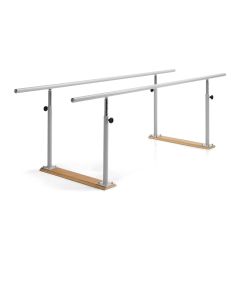
Professional rehabilitation parallel bars in steel and wood, length 250 cm, adjustable height (69-89 cm). Capacity 160 kg for physiotherapy and medical clinics.
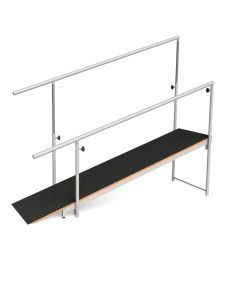
Steel and MDF physiotherapy ramp with non-slip surface. Adjustable height, load capacity 160 kg, ideal for motor rehabilitation paths.
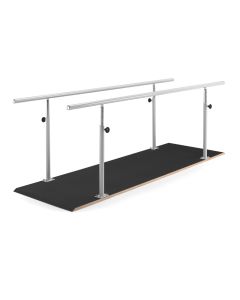
Rehabilitation parallel bars in steel and beech, 250x80 cm, with adjustable height and non-slip base for professional gait exercises.
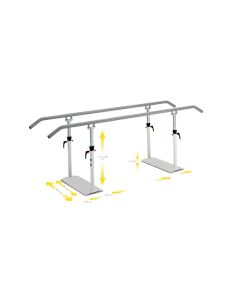
Rehabilitation therapy parallel bars with foldable structure. Dimensions: L.250 x D.65 x h.75-108 cm. Without floor platform.
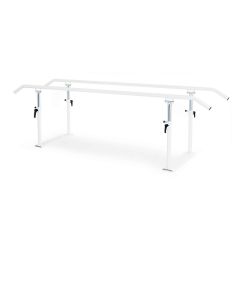
Foldable parallel bars for walking exercises. Structure material: painted steel. Handrail length: 3 m.
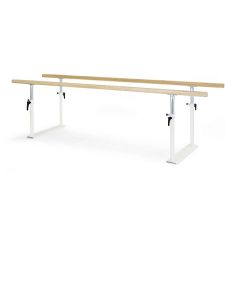
Parallel bars for rehabilitation exercises with wooden handrails, height-adjustable. Frame material: painted steel.

Rehabilitation parallel bars with wooden handrails. Foldable structure. Length: 300 cm. Height adjustable from 75 to 108 cm.
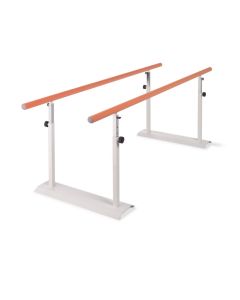
Walking parallel bars 2.5 m long with painted steel structure.
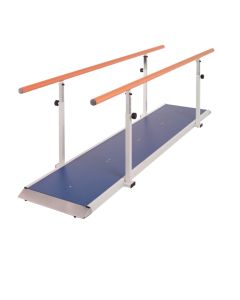
Physiotherapy parallel bars 3 m long in painted steel.
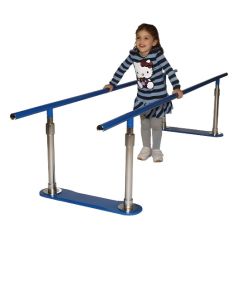
Metal parallel bars for children h948_04, 250 cm long. Adjustable height 45-66 cm and weighted bases for rehabilitation and motor development.
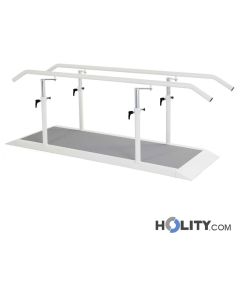
Parallel bars for physiotherapy centers and gyms in nursing homes and RSA. Painted steel structure. Length: 2 mt.

Rehabilitation parallel bars with handrails. Platform length: 250 cm. Wooden floor covered in non-slip rubber. Capacity: 160 kg.

Children’s parallel bars h948_05 in metal (250x50 cm) with adjustable height and removable worm-shaped separator for safe motor education.

Parallel bars for walking complete with walking platform and access ramps. Wooden handrails. Frame material: painted steel.

Rehabilitation parallel bars including steel handrails, walkway and access ramps. Length: 3 m.
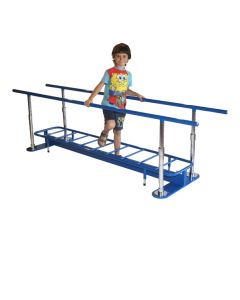
Metal parallel bars for children with adjustable obstacles and guide plane. Dimensions 250x50 cm, ideal for coordination and motor rehabilitation.
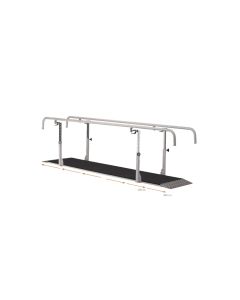
Parallel bars for rehabilitation with handrails suitable for adults and children. Length: 300 cm. Adjustable height from 50 to 90 cm.
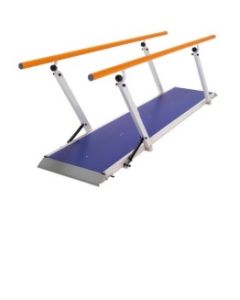
Parallel bars for child rehabilitation exercises, 2 m. Frame material: painted steel.
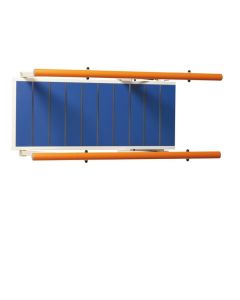
Sliding parallel bar for physiotherapy, without steps. 18° inclination. With adjustable handrails.
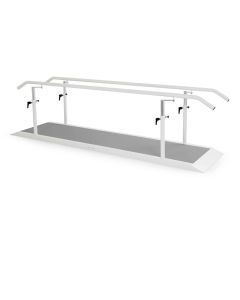
Walking parallel bars with 4 m length base. Height and width adjustable handrails.
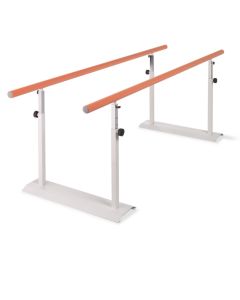
Rehabilitation parallel bars, 2.5 m long, in painted steel.
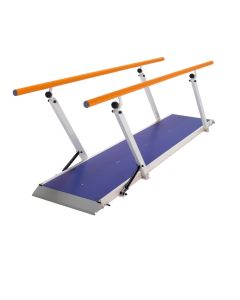
3 m long parallel bars for physical-rehabilitation exercise.
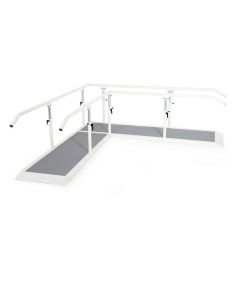
Corner parallel bars with steel handrails for rehabilitation. Length of the 2 walking platforms: 200 - 270 cm.
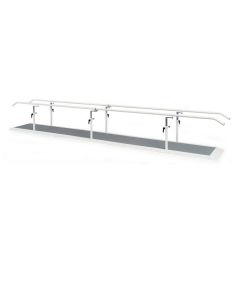
Painted steel parallel bars for walking exercises. Length: 6 m. With steel handrails.

Rehabilitative parallel bars for children in metal with monorail and harness. Adjustable height 45-66 cm and separator board for gait correction.
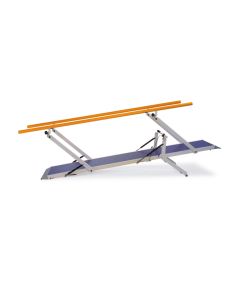
Parallel bars for physiotherapy 3 meters in length and painted steel structure. Suitable for adult subjects.
Rehabilitation parallel bars represent fundamental equipment in therapeutic paths for motor recovery, gait training, and muscle strengthening. Used in physiotherapy centers, nursing homes, care homes, and hospital facilities, these parallel bars allow the patient to move safely during assisted walking exercises and functional rehabilitation. The choice of the right parallel bar directly affects the quality and effectiveness of the treatment, as it must adapt to the patient's specific needs, supporting body weight while maintaining stability and facilitating correct exercise biomechanics.
The variability offered by the catalog meets multiple clinical contexts: from fixed parallel bars for highly specialized physiotherapy centers, to foldable and portable versions for environments with limited space, up to solutions dedicated to pediatric rehabilitation with heights and dimensions calibrated for children. Each configuration is designed to meet recognized safety standards and international physical therapy protocols.
Parallel bars represent an indispensable clinical tool for motor re-education in patients who have suffered strokes, surgeries, fractures, or who have degenerative neurological pathologies. Their double-handrail structure offers symmetrical bilateral support, allowing the patient to distribute body weight on both sides of the body and favoring a symmetrical recovery of gait. This balance is fundamental for proprioceptive re-education and for regaining confidence in movement, key elements in the transition from the acute phase of injury to full functional recovery. Furthermore, the absence of a central support surface (as occurs with walkers) allows for greater trunk mobility and a more natural engagement of the stabilizing muscles.
In pediatric contexts, parallel bars dedicated to children allow for the control of motor coordination and the development of balance in controlled environments, with adjustable heights that adapt to the growth of the young patient. For hospital facilities and nursing homes, investing in quality parallel bars translates into a reduction in fall risks during rehabilitation paths, a lower need for constant supervision and, consequently, a general improvement in the organizational efficiency of the ward. Versatility in configurations (variable lengths, adjustable handrails, access ramps) allows the equipment to be adapted to different clinical needs, from basic motor rehabilitation to more complex dynamic balance exercises.
The rehabilitation parallel bars catalog is divided into several constructive categories. Fixed parallel bars, generally in painted steel with wood or steel handrails, represent the standard solution for dedicated centers and environments that do not require portability. These models offer maximum stability and durability over time, with weight capacities often exceeding 160 kg and height adjustments ranging from a few centimeters up to over 30 cm. Foldable and collapsible structures, on the other hand, constitute the ideal choice for contexts where space is critical: they allow a considerable reduction in bulk when not in use, facilitating storage in confined spaces or in facilities that alternate different activities in the same physical space. Models with integrated access ramps represent an inclusive solution for patients with severely compromised mobility, ensuring access to the parallel bar even in conditions of severe muscle weakness.
Regarding the pediatric population, there are specifically sized parallel bars with heights adjustable between 45 and 66 cm, some complete with a removable separator floor (a central surface that guides the child during walking) and others with a monorail and support harness for situations of greater instability. Construction materials vary between painted steel, wood (generally beech or fir) for the walking surfaces, and non-slip rubber coatings. Some models include weighted bases to ensure stability even on surfaces that are not perfectly flat, while others feature ergonomic curved wood handrails to promote a natural hand grip. The length of the handrails typically varies from 200 cm to 600 cm, allowing for progressive walking exercises of different intensity and duration.
The selection of the appropriate parallel bar must first consider the physical characteristics and clinical needs of the patient. Adjustable height is a crucial parameter: it must allow the patient to grasp the handrail with the arm slightly flexed (angle of approximately 20-30 degrees at the elbow), a necessary condition for an ergonomic grip and effective control. For average-height adult patients, heights are around 75-90 cm; for shorter subjects or those with postural impairments, models with ranges up to 69 cm are preferable. The length of the parallel bar must instead correspond to the planned exercise time: short grip and movement exercises require 200-250 cm, while prolonged motor rehabilitation programs benefit from lengths of 300-600 cm.
An often overlooked aspect concerns the declared weight capacity: although many patients fall within the standard range of 160 kg, situations of overweight patients or those who partially use the parallel bar for support require specific checks. The configuration of the clinical space is equally decisive: compact environments benefit from foldable versions, while wards with dedicated space availability may prefer fixed models, which are generally more stable and durable. For children and patients with complex neurological syndromes, the presence of accessories such as the separator floor or the support monorail becomes an important factor. Common errors include underestimating height adjustability, choosing models that are too short, which compromises exercise dosage, and purchasing fixed parallel bars in contexts where organizational flexibility would be a competitive advantage. Consulting the physiotherapist responsible for the path is recommended practice before acquisition, as the specific clinical needs of the facility can guide different choices compared to a general evaluation.
Rehabilitation parallel bars in the European and Italian context must comply with the UNI EN 960 standard, which establishes the safety and performance requirements for parallel bars intended for training. This regulation covers aspects such as structural stability, static and dynamic resistance of the handrails, non-slip properties of the walking surfaces, and clarity of instructions for use. The maximum weight capacity must be clearly declared and tested according to standardized protocols, ensuring a safety margin appropriate for the target population. In the medical field, parallel bars used in hospitals or specialized rehabilitation facilities may be subject to additional local directives requiring biocompatibility certifications for materials in skin contact and compliance with hygiene and sanitization standards.
CE marking is mandatory for marketing in the EU, certifying compliance with essential safety requirements. Materials used in the handrails and contact surfaces must be non-toxic and easily sanitizable, a quality particularly relevant in hospital contexts where infection control is a priority. Walking surfaces must have a minimum coefficient of friction to prevent slipping, generally certified by tests according to specific ASTM or ISO standards. For parallel bars intended for public facilities (hospitals, nursing homes, contracted physiotherapy centers), compliance with national accident prevention standards and institutional guidelines is a requirement normally verified during the purchase phase. Furthermore, the provided technical documentation must include user manuals, periodic maintenance schedules, and instructions for inspecting wear of critical components, aspects that affect operational continuity and the management responsibility of the purchasing facility.
Explore all products in the category and compare the available solutions to find the one best suited to your operational context. Each parallel bar is described in technical detail, from dimensions to weight capacities, from adjustability configurations to included accessories, allowing you to make an informed assessment based on the specific needs of your rehabilitation facility.
Standard parallel bars vary from 200 to 600 cm in length, with adjustable heights usually between 69 and 108 cm for adults, and between 45 and 66 cm for pediatric versions. The depth generally ranges between 50 and 80 cm. The choice depends on available space and the duration of the planned therapeutic exercise.
Both wood (beech, fir) and painted steel are valid solutions. Wood offers superior ergonomics and tactile comfort, facilitating a natural hand grip. Steel is more resistant to wear and frequent sanitization, an important requirement in hospital environments. The choice depends on the context of use and the facility's clinical priorities.
Most professional models support weight capacities of 160 kg, which is sufficient for the average adult population. Overweight patient situations require specific verification, as do contexts where the parallel bar serves as primary rather than secondary support during exercise.
If designed correctly according to regulations, foldable parallel bars have no stability compromises compared to fixed models. Their structure is tested to ensure rigidity during use. They offer the decisive advantage of portability and compact storage, an important variable for facilities with limited space.
Pediatric parallel bars have a range of 45-66 cm to follow growth. The correct height is reached when the child grasps the handrail with the arm slightly flexed. Models with fine height adjustment allow for progressive adjustments, avoiding the purchase of new equipment as the child grows.
A central separator floor (not recommended for correctly oriented patients, but useful in pediatric or neurological rehabilitation), integrated access ramps, overhead support harnesses, and safety monorails represent accessories that extend the clinical applications of the parallel bar, adapting it to cases of greater impairment.
The parallel bar offers symmetrical bilateral support of body weight and is more effective for motor re-education and gait recovery. The walker is more versatile for independent and long-distance movement but does not promote motor symmetry like the parallel bar. The choice depends on the recovery phase and therapeutic goals.
Safety is ensured by structures compliant with the UNI EN 960 standard, non-slip surfaces on walking paths, ergonomic low-slip handrails, weighted bases, and, in many models, continuous supervision by a physiotherapist during exercise. Periodic maintenance and visual wear checks complete the risk prevention protocol.
 English
  Italian
 French
 German
 Spanish