mon-fri 9-13 / 14.30-18.30
Fire protection products represent the fundamental element of any fire protection system, both in hospitality facilities and in workplace and commercial environments. Extinguishers, detection systems, cabinets, and specific supports constitute an integrated defense network designed to contain and control fires in the early stages, when timely intervention can make a difference. Italian and European regulations impose strict requirements on the provision and maintenance of these devices, making deep knowledge of available solutions and their specific applications in different operational contexts essential.
The choice of adequate fire protection systems determines the level of protection effectively achievable within a structure. A correctly positioned and maintained extinguisher allows for tackling fires in critical phases, when evacuation might not yet be necessary; simultaneously, automatic detection systems provide the time needed for the intervention of rescuers and the implementation of emergency protocols. In the HoReCa sector, where the simultaneous presence of fire, combustible materials, and people creates high-risk scenarios, having certified and easily accessible fire protection solutions becomes an indispensable management responsibility, as well as a regulatory obligation.
The operational value of fire protection products also extends to management and insurance benefits: facilities equipped with complete systems subject to scheduled maintenance significantly reduce insurance premiums and demonstrate compliance with recognized safety standards. From a practical standpoint, the simplicity of use of modern extinguishers and integration with easy-to-locate supports (cabinets, floor stands) ensure that even non-specialized personnel can intervene quickly in case of necessity, without requiring complex training.
The market offers various types of fire protection products, each optimized for specific fire classes and contexts of use. Dry powder extinguishers represent the most versatile solution, effective on Class A, B, and C fires, and therefore suitable for restaurants, warehouses, and mixed environments; foam extinguishers are ideal for flammable liquids and ensure rapid cooling of the surface, while carbon dioxide (CO2) ones are preferred for rooms where chemical residues cannot remain, such as server rooms or sensitive food areas. Fire detection systems range from simple solutions with smoke/heat sensors to more advanced technologies integrated with control units and automatic notifications to emergency numbers, adaptable to the size and complexity of the structure.
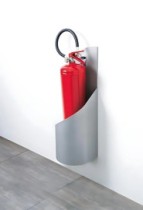
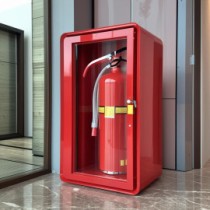
In addition to extinguishers, containment and positioning supports (extinguisher cabinets, floor stands, hose baskets) perform critical functions of accessibility and visual signaling. A painted steel extinguisher cabinet guarantees protection from humidity and impacts, while a floor stand with wheels allows for rapid movement in large environments; hose baskets, on the other hand, organize hydrant connections and maintain the functionality of sprinkler systems. The choice between these variants depends on the layout, the type of activity, and the aesthetic constraints of the space.
The selection of fire protection products must start from a careful analysis of the specific risks present in the structure. A restaurant with an open-flame kitchen will have different priorities than a hotel with extensive common areas; similarly, a warehouse with stocks of flammable materials requires completely different fire coverage than an office space. The first decision criterion concerns the classification of the fire classes present: common fires on solid materials (Class A), on flammable liquids (Class B), on gases (Class C), on metals (Class D), or electrical fires (Class E according to some regulations). The extinguishing capacity (measured in kg or liters) must be proportionate to potential fire sources, and the distribution density of the extinguishers must ensure that no point in the structure is further than a short distance away.
A frequent error consists in selecting extinguishers exclusively based on price, without verifying compatibility with real risks. Equally critical is underestimating the importance of maintenance: an extinguisher that is not periodically checked could be inoperative at the time of an emergency. When choosing detection systems, one must consider the type of fuels present (dense smoke vs. fast fire) and the geometry of the environment: in rooms with high ceilings, smoke sensors might not be sufficient, making temperature or flame detectors necessary. For complex structures, the technical advice of a certified professional remains the safest approach, ensuring compliance with standards and optimization of the investment.
Italian legislation on fire protection is based on Decree Law April 9, 1994 n. 626 (now Legislative Decree 81/2008 on the Consolidated Safety Act), integrated by specific technical standards such as UNI 9994 for portable extinguishers and UNI EN 671 for hydrant systems. Each facility must have extinguishers in number and capacity proportionate to the fire load, i.e., the total quantity of combustible material present; the minimum required density generally provides for at least one extinguisher every 200-250 square meters, with stricter checks in high-risk areas. Maintenance represents a non-derogable legal obligation: extinguishers must be subjected to an annual check by a specialized technician and a general revision every four years, with documented tracking and the posting of a label certifying compliance.
Regional and municipal regulations may introduce specific additional requirements, especially for hospitality, commercial, and industrial structures. Hydrants must be subjected to a five-year functionality test, while fire detection systems must comply with EN 54 standards if connected to control units. CE certification of products is now mandatory to guarantee quality and reliability standards recognized at European level. Furthermore, the employer is responsible for training personnel on the use of fire protection devices, a topic often included in safety courses per Legislative Decree 81/2008; non-compliance leads to administrative sanctions and, in the event of an incident, possible criminal consequences.
Explore all the products in the category and compare available solutions to find the one best suited to your operational context. From automatic detection systems to specialized extinguishers, from cabinets to positioning supports, our catalog is designed to meet the specific needs of hospitality facilities, industrial environments, and commercial spaces, always in compliance with current regulations.
Fire protection products include extinguishers, automatic detection systems, hydrant systems, and containment supports. Extinguishers vary by extinguishing agent (powder, foam, CO2, water) and are classified by fire classes A, B, C, D, E according to the type of fuel to be countered.
For kitchens with open flames and deep fryers, foam extinguishers (class B) or multi-purpose powder (A-B-C) are indicated. Foam effectively controls fires on oils and flammable liquids, while powder ensures versatility on different fuels. Avoid water on hot oils due to the risk of splashing.
The UNI 9994 standard requires at least one extinguisher every 200-250 square meters. Higher values are required in high fire risk areas. The exact choice depends on the total fire load, the dominant fire class, and the geometry of the premises; a personalized technical assessment is always recommended.
Fire extinguishers require an annual check by a certified technician and a general revision every four years. Between revisions, monthly visual checks by the person in charge ensure there is no physical damage, pressure loss, or corrosion. Maintenance documentation is mandatory and must remain available to inspection bodies.
A simple system relies on smoke/heat sensors that activate a local siren. An advanced system integrates an intelligent control unit, automatic notifications to the fire department, alarm recording, and diagnostic capabilities. The choice depends on the size of the facility and the perceived level of risk.
An extinguisher cabinet is a steel or plastic housing that contains and protects the extinguisher, facilitating its visibility and access. While not mandatory by law, it is strongly recommended in humid environments or those subject to impacts, ensuring durability and immediate visual signaling of the extinguisher.
The physical installation of extinguishers can be done independently, but the choice of type, position, quantity, and density requires a technical assessment relative to specific risks. The first maintenance and subsequent legal revisions must be carried out by certified personnel according to UNI standards.
No. Sprinklers are structural protection systems, but portable extinguishers remain mandatory as the first line of defense to counter initial fires. Automatic systems and portable devices perform complementary functions in an integrated and multi-grade fire protection strategy.
 English
  Italian
 French
 German
 Spanish