
mon-fri 9-13 / 14.30-18.30
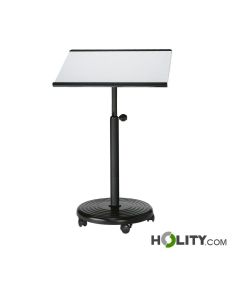
Mobile desk with a versatile design. Height: 77-119 cm.
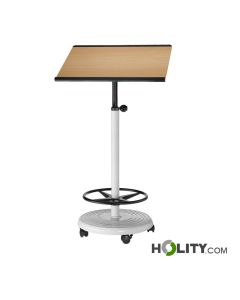
Height-adjustable desk with a versatile design. Frame color: white.
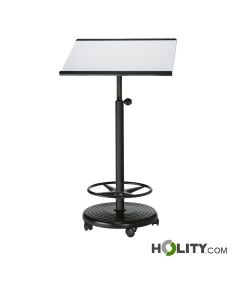
Height-adjustable desk with a versatile design. The top is available in different colors.
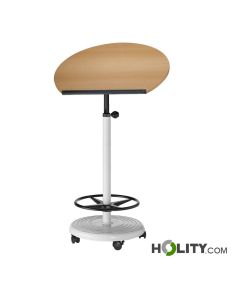
Standing desk with a modern and versatile design. Height adjustable.
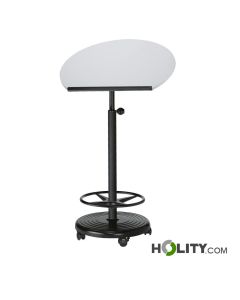
Adjustable height desk with an innovative design. The top is available in different color variants.
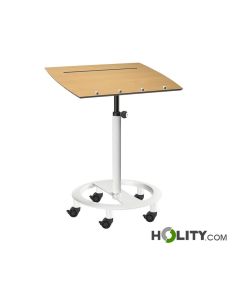
Standing desk with a modern and innovative design. The desk features adjustable height.
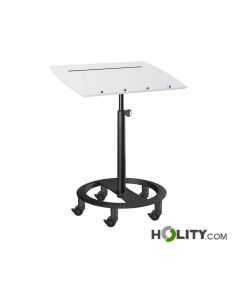
Standing desk with innovative design. Height adjustable from 80 to 120 cm.
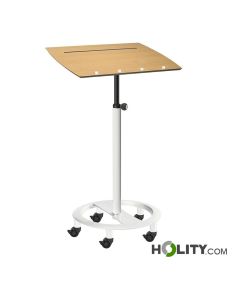
Height-adjustable desk with an innovative design. The top is available in different colors.
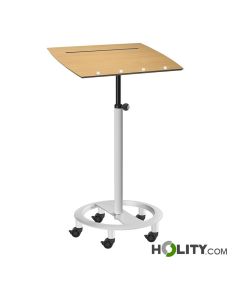
Standing desk with a versatile design. The top is available in different colors.
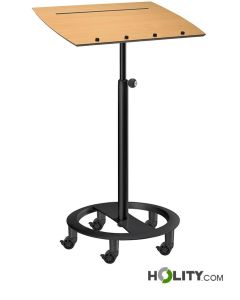
Standing desk with a versatile design. Top available in various colors.
Standing desks represent a conscious evolution of contemporary workspaces, responding to an increasingly widespread need in modern organizations: to break the static nature of prolonged sedentary behavior. A standing desk is not simply a different piece of furniture, but rather a technical solution that allows for a fluid transition between sitting and standing positions without compromising operational continuity. This ability to vary posture throughout the entire working day represents a true health prevention tool, improving blood circulation, reducing tension on the spine, and naturally stimulating cognitive concentration.
In the professional context, where offices face growing challenges related to quality of working life and sustainable productivity, height-adjustable desks have established themselves as a strategic solution in sectors such as consulting, technology, media, and administration. Their utility extends beyond simple individual well-being: thanks to lockable wheels and rapid adjustment systems, these work surfaces prove invaluable for hot-desking configurations, where the same workstation is used by multiple professionals throughout the day.
The biomechanical impact of a height-adjustable desk on workers is documented by numerous international ergonomic studies. The ability to switch from a sitting to a standing position allows for the distribution of muscular load over different groups, preventing the localized fatigue that characterizes those who remain stationary for consecutive hours. In particular, standing work promotes the activation of core and lower limb stabilizing muscles, compensating for the negative effects of prolonged sedentary behavior on bone density and metabolic functionality. A professional who alternates postures during the day also manifests greater mental alertness and creativity during critical sessions such as brainstorming, decision-making meetings, and complex problem-solving, as the upright position naturally increases the oxygen supply to the brain.
From an organizational and managerial perspective, these work surfaces offer operational flexibility without compromise. Coworking spaces, professional studios, and creative agencies benefit enormously from the possibility of reconfiguring workstations in seconds thanks to the controlled mobility of the structures. Smooth-rolling wheels with integrated brakes allow the desk to be moved without the need for additional people, transforming an individual workspace into an open collaboration area or a temporary brainstorming station. This logistical versatility, combined with structural robustness, ensures that your investment in technical furniture remains functional for years, regardless of the evolution of organizational layouts.
Our catalog of standing desks offers solutions built according to two main technological lines: gas spring systems with balanced springs and adjustable manual lever mechanisms. Gas spring models represent the predominant solution for high-traffic professional environments, as they allow the top to be raised and lowered with a simple gesture of the wrist, without perceptible physical effort and without operational noise. This system guarantees smooth and infinite adjustment within the declared height range, typically between 77 and 120 centimeters, adapting to professionals of different statures and the ergonomic variations that each individual requires throughout the day. The work surfaces are available in multiple configurations: standard rectangular for single workstations, semi-circular for tight corners, sector-shaped for collaborative islands, and can reach working depths from one meter to 150 centimeters depending on the available space.
A distinctive element of professional models concerns the integration of technical details oriented towards real operational comfort. Many desks feature grooves carved into the top, designed to accommodate smartphones, tablets, and documents being read without obstructing the typing space. The support bases are sized to ensure an absence of oscillation even when using two monitors or heavy peripherals; this characteristic is critical in contexts where precise cursor positioning is essential. Surface materials range from scratch-resistant laminate to noble wood veneers, allowing the desk to be coordinated with the company’s visual identity. The finishes of the supporting structure range from black painted steel to glossy white, from dark gray to natural aluminum, ensuring aesthetic compatibility with any contemporary office color scheme.
The first decision that determines the success of implementing a standing desk concerns the available height adjustment range. An insufficient range would force workers to maintain non-ergonomic postures during one of the two work phases: if the minimum is too high, the person sitting will have to stretch their arms; if the maximum is insufficient, the person working standing will have to hunch their shoulders. The universally accepted criterion dictates that, whether sitting or standing, the elbow should maintain a ninety-degree angle with the work surface, and the eyes should be about sixty centimeters from the surface, aligned slightly below the visual horizon. An adjustment range of forty to fifty centimeters is generally sufficient to adapt to heights from 155 to 195 centimeters. The second determining criterion is the load capacity of the system: if you intend to use multiple monitors, scanners, heavy peripherals, or specific instrumentation, make sure that the gas spring is calibrated to support the declared weight without straining over time.
Regarding dimensions, the depth of the top is an often underestimated but decisive parameter. Insufficient depth forces the monitor to an unergonomic distance from the body; alternatively, the surface is non-functional when it does not simultaneously accommodate peripherals, documents, and movement space. For single workstations, a minimum depth of seventy centimeters is recommended; for collaborative configurations or for those who integrate analog activities with digital ones, eighty centimeters become necessary. The shape of the top affects spatial logistics: if the office has corners or alcoves, a semi-circular or sector top allows for the exploitation of difficult geometries; for aligned rows of desks, the rectangular shape is more efficient. A recurring error is underestimating the visibility of the base during the aesthetic choice: choose a structure finish that visually integrates with the floor and surrounding walls, not just with the desktop, as the structure occupies more visual space than one might intuitively think while seated.
In the Italian and European regulatory landscape, standing desks fall into the general category of "office furniture" regulated by the UNI EN 527 standard, which prescribes requirements for stability, mechanical strength, and durability for work tables in professional contexts. This standard specifies that the top must not wobble excessively during normal use, and that the structure must resist a lateral force applied to the top equal to one hundred and fifty Newtons for at least twenty-four hours without breakage or permanent deformation. Furthermore, the health and safety legislation in the workplace (D.Lgs. 81/2008) emphasizes how employers must provide ergonomic tools that reduce the risk of musculoskeletal disorders; adjustable desks represent a preventive measure recognized by labor inspections and risk assessments according to the OCRA method. Particularly important is that any lifting system be equipped with reliable mechanical blocks that prevent the uncontrolled fall of the top in the event of gas spring failure; certified models feature components certified according to DIN and ISO, with certificates of conformity that guarantee safety of use even after years of intensive use.
Regarding the accident prevention aspect, it is essential to verify that the perimeter of the structure does not have sharp edges and that power cables for peripherals are managed in an orderly manner using dedicated clips and conduits, preventing obstructions during height adjustment. If the desk is positioned near transit areas, ensure that the base is stable enough not to tip over if someone accidentally bumps into the structure; professional models include a center of gravity distribution designed to avoid these critical scenarios. Furthermore, for high-density worker environments, it is advisable to implement standardized adjustment protocols, so that people sharing the same workstation find the height adjusted to a neutral position, easily adaptable to their specific needs without needing a prolonged search for the attachment points of the lifting mechanism.
Explore our complete catalog of standing desks and compare the technical specifications of each model to identify the solution that best fits your professional environment, available budget, and your team’s ergonomic needs.
A standing desk is designed with a height adjustment system that allows you to vary the position between sitting and standing, while a traditional desk maintains a fixed height. This allows for alternating postures during the day, reducing the risks of prolonged sedentary behavior and improving circulation and concentration.
A range of forty to fifty centimeters is generally suitable for most professionals. The lowest position should allow sitting work with elbows at ninety degrees, while the maximum should allow the same angle while standing. A range of seventy to one hundred and twenty centimeters is ideal to accommodate different statures.
The load capacity varies according to the model, typically between forty and sixty kilograms. If you plan to use dual monitors, scanners, or heavy equipment, check that the gas spring is specifically calibrated for the total weight of the peripherals you intend to place on the surface.
Yes, this is one of the main advantages of a standing desk. Gas spring systems are designed for frequent and smooth adjustments. Most professionals alternate postures every thirty to sixty minutes, finding a significant improvement in energy and concentration in this practice.
The tops are generally available in scratch-resistant laminate, noble wood veneers such as beech or cherry, or high-quality melamine. The choice depends on the available budget and the desired aesthetic coordination with the surrounding office furniture.
Absolutely. Thanks to the lockable swivel wheels and the quick adjustment system, standing desks are particularly suitable for shared spaces. More people can adapt the same workstation to their ergonomic preferences without difficulty.
Office desks must comply with the UNI EN 527 standard, which prescribes stability and mechanical strength requirements. Furthermore, Legislative Decree 81/2008 on workplace safety recognizes these furnishings as tools for preventing musculoskeletal disorders. Professional models include certificates of conformity that guarantee regulatory compliance.
 English
  Italian
 French
 German
 Spanish