
mon-fri 9-13 / 14.30-18.30
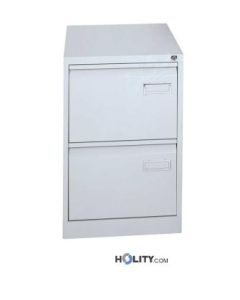
Office filing cabinet with 2 pull-out drawers. Material: steel sheet. Dimensions: W47 x D62.2 x H71.1 cm.
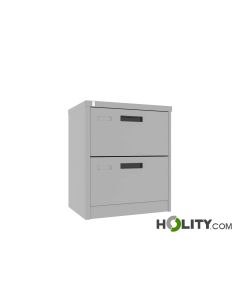
2-drawer office filing cabinet. Color: light grey RAL 7035. Dimensions: W.49 x D. 65 x h.76 cm
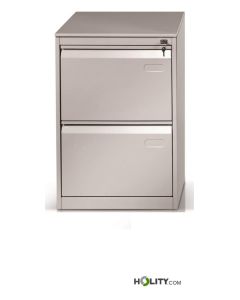
2-drawer office filing cabinet with recessed handles. Dimensions: 49.5 x 65.2 x h. 73 cm. Metal structure.
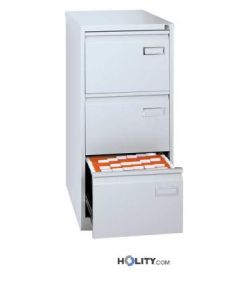
3-drawer monoblock filing cabinet. With cylinder lock. Dimensions: W47 x D62.2 x H101.6 cm.
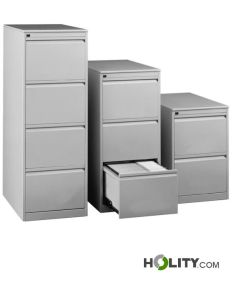
Document filing cabinet with 2 drawers. Dimensions: W.47 x D.63 x h.73.5 cm. With centralized lock.
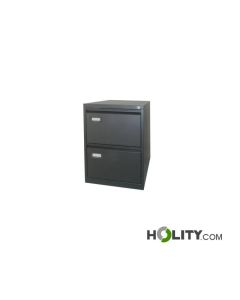
Metal filing cabinet with 2 black drawers with ergonomic handle. Dimensions: W.46.5 x D. 62 x H. 70 cm.
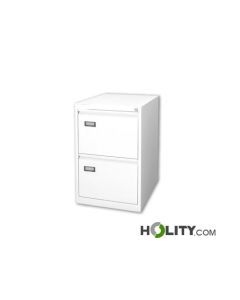
Metal office filing cabinet with 2 drawers and anti-tip system. Dimensions: W. 46.5 x D. 62 x H. 70 cm.
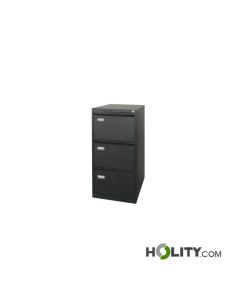
Metal office filing cabinet with 3 black drawers. Dimensions: W. 46.5 x D. 62 x H. 100 cm.
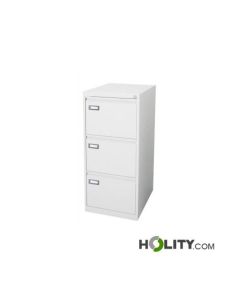
Metal office filing cabinet with 3 drawers with ergonomic handle. Dimensions: W. 46.5 x D. 62 x H. 100 cm.
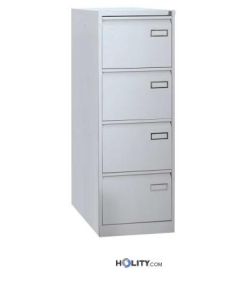
Metal filing cabinet for secretariats and offices. With 4 drawers for hanging folders. Dimensions: W47 x D62.2 x H132.1 cm.
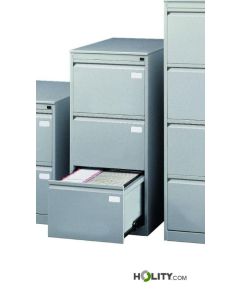
3-drawer filing cabinet for offices. Dimensions: W.47 x D.63 x h.105 cm. Material: 8/10 steel sheet.
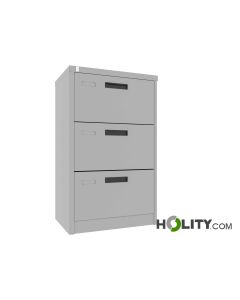
3-drawer filing cabinet. Dimensions: W. 49 x D. 65 x h. 107 cm. Color: light gray RAL 7035.
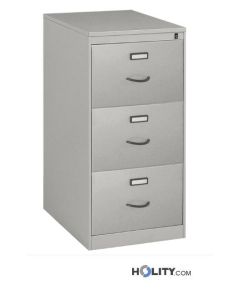
Filing cabinet for document storage. Material: sheet metal. With 3 drawers. Dimensions: W48 x D66 x H103 cm.
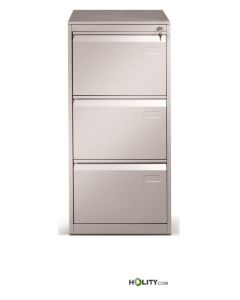
3-drawer filing cabinet with recessed handles. Dimensions: 49.5 x 65.2 x h. 104.5 cm. In metal.
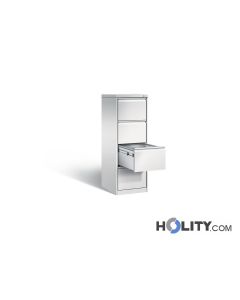
Office filing cabinet with 4 drawers. Colour: light grey. Dimensions: W.433 x D.590 x H.1357 mm.
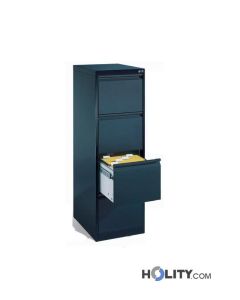
Document filing cabinet in dark grey RAL 7021. 4 drawers. Dimensions: W.433 x D.590 x H.1357 mm.
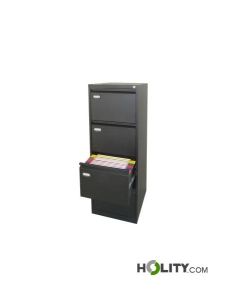
Black office filing cabinet with 4 drawers. Dimensions: W. 46.5 x D. 62 x H. 130 cm.
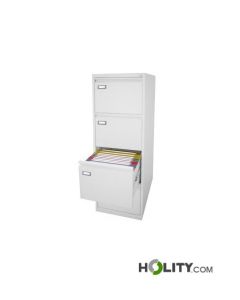
Metal office filing cabinet with 4 white drawers. Dimensions: W. 46.5 x D. 62 x H. 130 cm.
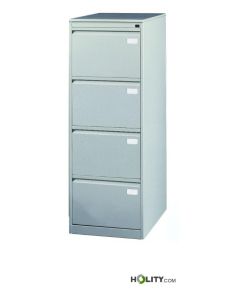
4-drawer filing cabinet in 8/10 sheet steel. Dimensions: W.47 x D.63 x h.136 cm. Centralised lock.
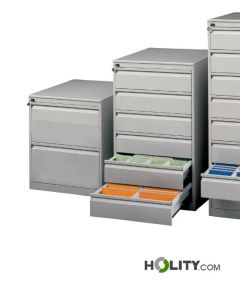
Document filing cabinet with 2 drawers. Dimensions: W.64 x D.63 x H.73.5 cm. Drawer height: 32 cm.
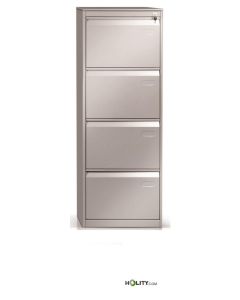
4-drawer office filing cabinet with recessed handles. Dimensions: 49.5 x 65.2 x h. 136 cm.
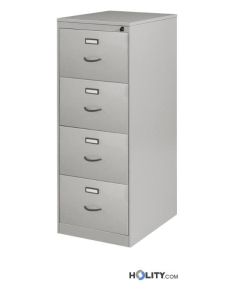
Monobloc office filing cabinet with 4 drawers. Dimensions: W48 x D66 x H133 cm.
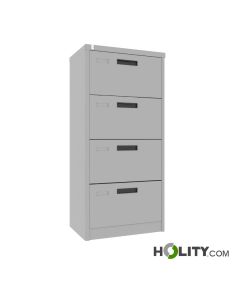
4-drawer office filing cabinet. Dimensions: W. 49 x D. 65 x H. 138 cm. Lock with simultaneous closure of all drawers.
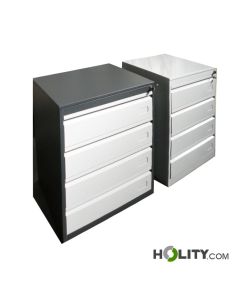
Filing cabinet for document organization. Number of drawers: 4. Dimensions: W.64 x D.63 x h.73.5 cm.
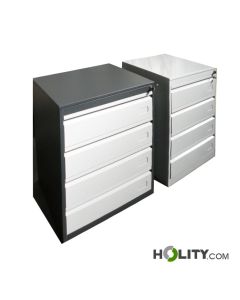
3-drawer filing cabinet for document archiving. Single drawer height: 32 cm. Dimensions: W.64 x D.63 x h.105 cm.
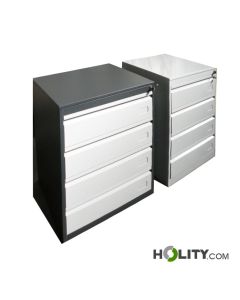
Filing cabinet for office document storage. Dimensions: W.64 x D.63 x h.136 cm. With 4 drawers h.32 cm.
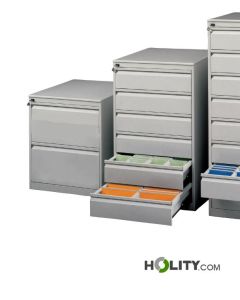
Office filing cabinet with 2 drawers of height 48 cm. Total dimensions: W.64 x D.63 x h.105 cm. Material: 8/10 steel sheet.
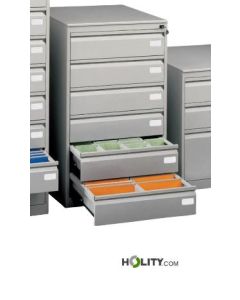
Professional filing cabinet in 8/10 steel sheet, 6 full-extension drawers, 64x63x105 cm, ideal for intensive and secure archiving.
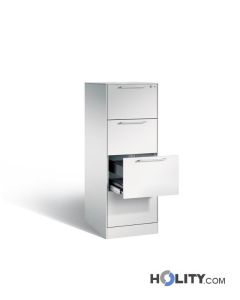
Filing cabinet for document storage, ideal for offices and archives. Dimensions: W.440 x D.600 x H.1298 mm. Material: metal.
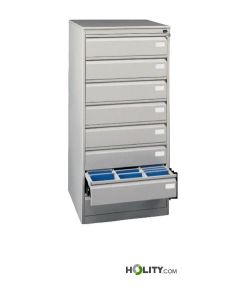
8-drawer filing cabinet h16 cm. Dimensions: W.64 x D.63 x h.136 cm. Material: 8/10 sheet steel.
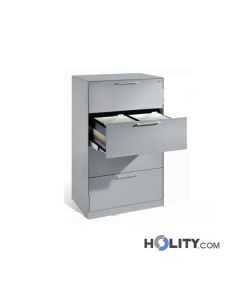
Steel office filing cabinet with 4 drawers. Maximum load per drawer: 60 kg. Dimensions: W.800 x D.600 x H1298 mm.
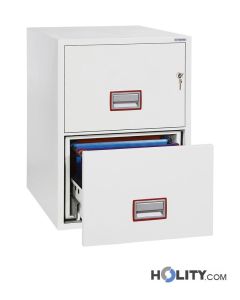
Office filing cabinet with 2 drawers. Key lock. Dimensions: W53 x D67.5 x H72 cm.
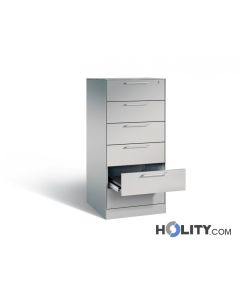
Office filing cabinet with 6 drawers. Color: light grey RAL7035. Dimensions: W.562 x D.600 x H1298 mm.
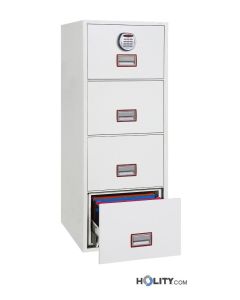
Filing cabinet for offices. With electronic lock and 4 drawers. Dimensions: W53 x D67.5 x H140.5 cm.
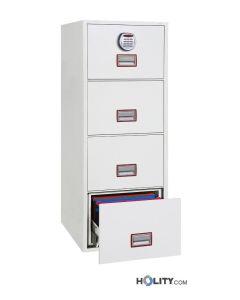
Fireproof filing cabinet for office. Number of drawers: 4. Electronic lock. External dimensions: W57 x D70 x H140.5 cm.
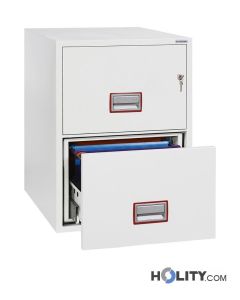
Office filing cabinet for document archiving. With 2 drawers and key lock.
Office filing cabinets represent essential storage solutions for the organized management of documents, files, and administrative records. These pieces of furniture, mainly made of industrial-grade steel sheet, offer pull-out drawers that allow for quick and orderly access to documents. In corporate structures, professional firms, public entities, and communities, filing cabinets ensure regulatory compliance in archiving, protection of document confidentiality, and maximization of available vertical space. Choosing the correct model depends on the volume of documents, the size of the files, and the specific needs of the available space.
The use of professional metal filing cabinets brings significant advantages in terms of operational efficiency and document management. This furniture allows for the organization of large volumes of papers in a contained space, reducing the overall footprint compared to traditional shelving. The steel sheet structure ensures long-term durability and resistance to daily wear and tear, which is particularly important in high-traffic environments. Pull-out drawers allow for immediate access to documents without the need to move laterally, improving employee productivity.
Furthermore, filing cabinets offer protection from accidental damage and, where equipped with a centralized lock, ensure the confidentiality of sensitive documents. The modular design allows you to choose the number of drawers based on actual needs, avoiding underutilization of space. In contexts such as law firms, tax offices, hospital facilities, and public administrations, the filing cabinet becomes a fundamental tool for complying with regulatory obligations related to the preservation and traceability of documents. Orderly management also reduces search times and the risk of losing or deteriorating files.
An often underestimated aspect concerns operational ergonomics: smooth-moving drawers and ergonomic handles reduce fatigue during repeated use. Many models include anti-tilt devices that guarantee workstation safety, especially when multiple drawers are opened simultaneously. The ability to lock all drawers simultaneously via a single key simplifies the closing procedure at the end of the day and increases control over access to documents. In open-plan environments, filing cabinets also serve as a partitioning element, helping to visually delimit different work areas without resorting to fixed walls.
The range of office filing cabinets is mainly divided according to the number of drawers and overall dimensions. The 2-drawer models represent the ideal compact solution for small offices, professional firms, and receptions, occupying limited space with heights generally between 70 and 76 centimeters. These filing cabinets fit easily under work surfaces or in dedicated corners without taking up excessive vertical space. The 3-drawer models constitute the compromise between storage capacity and footprint, with heights between 100 and 110 centimeters, suitable for medium-sized offices with moderate document preservation needs. The 4-drawer filing cabinets represent the ultimate solution for environments with high document volumes, reaching heights of 130-140 centimeters and allowing for the organized archiving of thousands of files.
Regarding construction materials, 8/10 mm steel sheet is the most common quality standard, ensuring structural rigidity and corrosion resistance when subjected to anti-corrosion treatments. Some models offer color variants in light grey RAL 7035, dark grey RAL 7021, and black, favoring aesthetic integration in various environmental contexts. Handles differ between recessed models, which guarantee a more linear appearance and reduce accidental bumps, and ergonomic ABS handles that offer a better grip during drawer extraction. Some versions include a mechanical cylinder lock with the possibility of centralized locking, while others feature a simple bolt lock for use that is not particularly critical from a confidentiality standpoint.
The selection of the appropriate filing cabinet requires a preliminary quantitative assessment of the document volume that needs archiving. Standard A4 size files require approximately 32 centimeters of depth per drawer; thicker legal or technical documents may require 40-48 centimeters. It is essential to measure the available space in width, depth, and height, considering that standard filing cabinets occupy a depth between 62 and 66 centimeters. A recurring error consists in undersizing the number of drawers: it is preferable to choose a model with a capacity greater than the immediate need, as complete saturation of the drawers compromises smooth extraction and access to the innermost documents.
The lock criterion is of critical importance: open environments, receptions, and high-traffic areas benefit from filing cabinets with centralized locking that prevents unauthorized access. Law firms, tax offices, and medical facilities, subject to regulatory constraints on confidentiality, mandatory require robust security devices. Regarding color, light grey and dark grey favor discrete integration into modern offices, while black fits better in more corporate or contemporary settings. Checking the drawer extraction system is fundamental: models with ball-bearing guides guarantee easier opening compared to pure friction systems, reducing long-term wear. If vertical space is particularly limited, 2-drawer models with a height of less than 73 centimeters allow for positioning under standard work surfaces (74-76 cm). Conversely, environments with high ceilings and free space call for the adoption of 4-drawer units that maximize overall vertical capacity.
Professional office filing cabinets, as work furniture, must comply with construction standards dictated by national and European regulations. The UNI EN 16139 standard establishes quality and performance requirements for office furniture, including specifications on load capacity, structural stability, and resistance to tipping. The minimum drawer depth and sheet thickness are regulated parameters to ensure that the declared maximum load does not cause structural deformation or failure. In public and administrative environments, the application of Legislative Decree 81/2008 (Consolidated Law on Health and Safety) requires that filing cabinets, as elements of the work environment, do not present specific risks to operators. This involves periodic checks on the integrity of the structure, the smooth operation of the drawers, and the efficiency of the locking systems.
Document preservation in public entities and listed companies is regulated by traceability and access control obligations; filing cabinets with centralized locking support compliance with these requirements. In professional firms subject to professional secrecy (lawyers, tax consultants, doctors), the use of filing cabinets with physical protection of documentation constitutes an organizational measure required by professional disciplines. Fire safety regulations (D.P.R. 37/98) do not impose specific limitations on metal filing cabinets; however, their presence in large numbers affects the calculation of load density in archive rooms. Periodic verification of construction compliance and safety requirements is the joint responsibility of the employer and the supplier, with documentation kept at the facility for any inspections conducted by relevant bodies.
Explore all products in the category and compare the available solutions to find the one best suited to your operational context. Consulting the detailed technical data sheets and speaking with our specialists will allow you to identify the optimal model in terms of capacity, dimensions, security features, and regulatory compliance.
The 2-drawer cabinet is compact (height ~73 cm) and suitable for small offices with moderate document volumes. The 4-drawer model reaches ~130-140 cm in height, offers 2-3 times more capacity, and is suitable for organizations with more consistent archives and a need for document centralization.
Yes, 2-drawer cabinets are approximately 70-76 cm high and fit perfectly under standard desks (74-76 cm). 3-4 drawer models are taller and are better placed in dedicated areas or along free walls, avoiding the creation of excessive visual barriers on the work surface.
The 8/10 mm (0.8-1 mm) steel sheet represents the industrial standard for professional filing cabinets, ensuring structural rigidity, corrosion resistance, and a lifespan exceeding 10 years under ordinary use conditions. Thinner thicknesses (below 0.7 mm) lead to premature deformation.
The centralized lock allows all drawers to be locked simultaneously using a single key located on the first drawer. This system speeds up closing procedures at the end of the day, reduces the risk of unauthorized access, and facilitates access control for sensitive documents in open-plan environments.
Metal 4-drawer cabinets weigh 100-150 kg and require sufficiently level floors (tolerance ±1 cm). On very uneven surfaces, leveling supports under the feet or the use of spacers guarantee stability. Many models include anti-tilt devices that prevent collapse even with multiple simultaneous openings.
The average depth of 62-66 cm allows for the standard filing of A4 and A3 size folders. Folded technical documents, suspension files, and standard legal records fit easily. For oversized documents (>open A3), custom solutions are required; contact us for specific needs.
Light grey RAL 7035 discreetly integrates into modern and bright environments, reflecting light; dark grey RAL 7021 and black suit corporate and contemporary settings. The choice depends on the existing color palette and the desired effect: discreet or a characterizing element of the space.
Stacking is not recommended from a structural and regulatory standpoint, as the weight of the upper model compromises the stability of the lower base and increases the risk of tipping. It is preferable to install two units side-by-side or choose a 4-drawer model with a sturdier base.
 English
  Italian
 French
 German
 Spanish