
mon-fri 9-13 / 14.30-18.30

Chaise longue made in Italy, in HPC concrete with bevelled corners. CAM certified. Dimensions: W 70 x D 57 x H 80 cm.

Outdoor chaise longue. Available in various colors

Chaise longue in HPC concrete with ergonomic profile and CAM certification. Dimensions: L 140 x D 57 x H 80 cm.
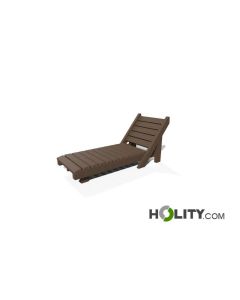
Chaise longue for street furniture in recycled material. Dimensions: L.170 x W.70 x H.76 cm.
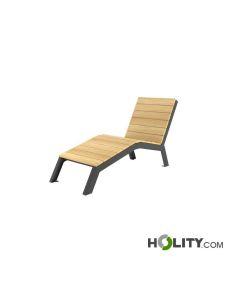
Ergonomic wooden and metal chaise longue, weather-resistant. Dimensions: L 171 x W 64 x H 92.3 cm.
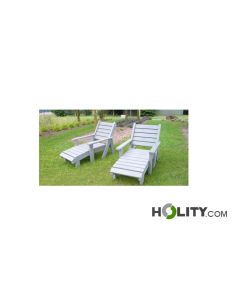
Eco-friendly chaise longue with armrests. Dimensions: W.154 x D.81 x H.96 cm.
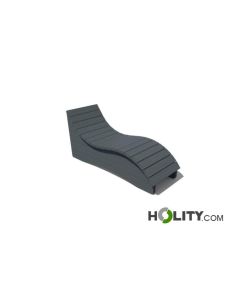
Eco-sustainable chaise longue. Available in various colors: Dimensions: L.156 x D.60 x H.73 cm.
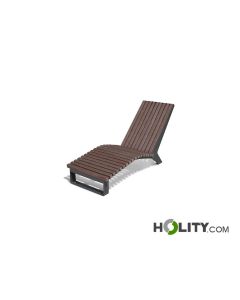
Outdoor Chaise Longue in recycled plastic with galvanized steel structure. Dimensions: L.1520 x W.600 x H.815 mm.
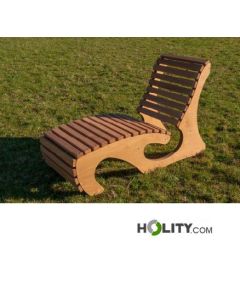
Chaise Lounge for urban furniture. Material: exotic wood. Dimensions: L.148.5 x D.60 x seat h. 94 cm.
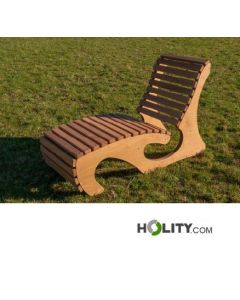
Chaise longue for outdoor public spaces. Material: wood. Dimensions: L.148.5 x D.80 x seat h.94 cm.
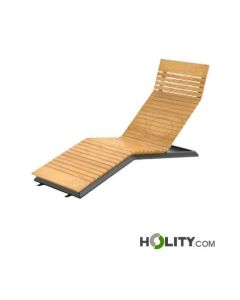
Chaise longue for green areas, squares and parks in wood and carbon steel. Dimensions: L. 168 x D. 60 x h. 99 cm.
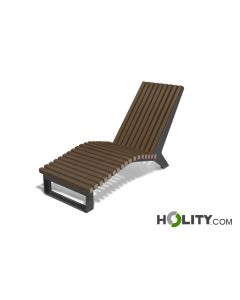
Chaise Longue for public spaces in tropical wood with galvanized steel supporting structure. Dimensions: W.1520 x D.600 x H.815 mm,
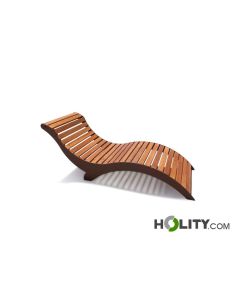
Chaise longue for urban furniture with galvanized steel structure and Okoumè exotic wood seat. Dimensions: 81 × 200 × 84 cm.
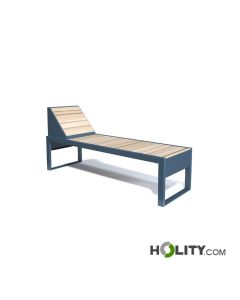
Design chaise longue for urban furniture. Available in different colours. Dimensions: W.1800 x D.570 x H. 836 mm.
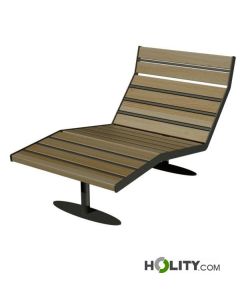
Urban furniture chaise longue in galvanized steel and Nordic pine wood, 1616x600 mm. Ergonomic design for relaxation in parks and public areas.
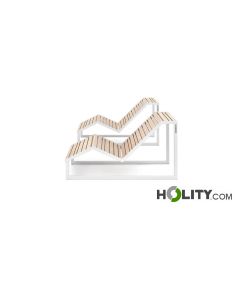
Chaise longue for public spaces wood effect
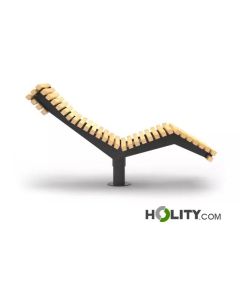
Chaise longue with rotating structure in carbon steel and wood. Dimensions: L. 152 x D. 60 x h. 87 cm.
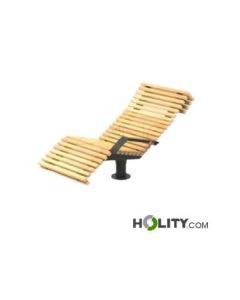
Chaise longue with 360° rotating connection. Equipped with armrest. Materials: wood and carbon steel.
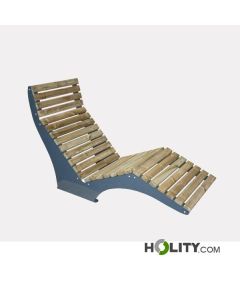
Chaise Longue for public gardens. Material: wood and steel. Dimensions: L160 x D60 x H95.5 cm.
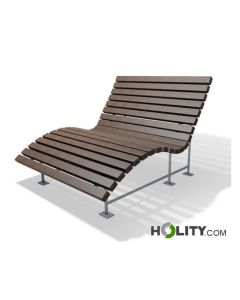
Outdoor recycled plastic chaise longue. Width: 140 cm.
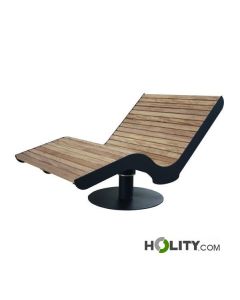
Chaise Longue for villas, gardens and public parks. Rotating steel structure and wooden seat. Dimensions: L175.1 x D120.2 x H109 cm.
The integration of ergonomic and relaxing seating in urban and collective contexts represents an advanced frontier of contemporary urban furniture, where the chaise longue for public spaces stands out as a key element for the citizen’s well-being. These structures are not simple elongated benches, but true design devices studied to promote regenerative rest in high-traffic outdoor and indoor environments. Designing a rest area with these solutions means recognizing the importance of the quality of free time and posture, offering support that respects human anatomy while resisting the intensive stresses typical of squares, parks, and shopping centers.
The selection in our catalog reflects an approach oriented towards extreme durability and functional aesthetics, where cutting-edge materials meet lines that integrate harmoniously with the surrounding architecture. Choosing a professional chaise longue means investing in a product capable of withstanding climatic cycles and mechanical wear, while ensuring a superior user experience that elevates the prestige of the space in which it is installed. Each model is conceived to meet specific collective comfort needs, transforming a place of passage into a quality destination for relaxation and safe socialization.
The adoption of a chaise longue in a public context responds to the growing demand for more inclusive urban spaces oriented towards individual well-being. Unlike traditional seating, the reclined configuration allows for optimal weight distribution along the spinal column, offering an opportunity for relaxation that normal benches cannot guarantee. This type of urban furniture encourages a prolonged and pleasant use of public space, incentivizing people to experience parks or pedestrian areas as extensions of their own home environment, with a positive impact on the perception of city livability and urban decorum.
From a planning perspective, the inclusion of this equipment demonstrates specific attention to collective ergonomics. Professional chaise longues are built with reinforced thicknesses and joints that make them immune to vandalism and the most aggressive atmospheric agents, such as salinity or constant exposure to UV rays. Their presence immediately qualifies an area as a “comfort zone”, attracting tourist flows or residents in search of a quality break. Investment in such structures translates into reduced maintenance in the long term, thanks to anti-corrosion surface treatments and high-density materials that keep structural and aesthetic properties unchanged for decades.
The variants of outdoor chaise longues differ mainly in material composition and structural design, factors that determine their thermal inertia and mechanical resistance. Models in galvanized and powder-coated steel are among the most widespread for their stylistic versatility and extreme robustness; they can be made with metal slats or perforated sheets that prevent the pooling of rainwater and promote breathability. Conversely, versions in concrete or reconstituted stone offer exceptional stability and a thermal mass that releases heat gradually, making them ideal for parks and waterfronts where solidity is the primary requirement to counter theft or damage.
There are also hybrid solutions that combine metal frames with inserts in precious wood, such as teak or iroko, or in composite materials like WPC. These options are particularly appreciated in prestigious urban furniture contexts or protected green areas, as wood provides a natural tactile sensation and low thermal conductivity, preventing the seat from becoming excessively hot under the summer sun. In addition to materials, the distinction also occurs by installation method, with high-weight self-supporting models that do not require fixing, and flanged models that must be bolted to the ground to ensure maximum safety in squares and unfenced areas.
The selection of a professional chaise longue must start from a rigorous analysis of the environmental context and the expected intensity of use. If the destination is a marine area, it is imperative to opt for stainless steels or high-thickness hot-dip galvanizing treatments, as salty air rapidly degrades standard coatings. In areas subject to strong temperature fluctuations, it is preferable to orient towards materials with controlled expansion coefficients and surfaces that do not excessively absorb heat. A common error is underestimating the inclination of the backrest: a slope that is too pronounced can make it difficult for elderly people or those with reduced mobility to get up, compromising the universal accessibility of the project.
Another critical factor concerns maintainability and resistance to vandalism. In peripheral or unsupervised contexts, seats with individually replaceable slats represent a strategic choice, as they allow for the restoration of a single damaged element without having to replace the entire structure. It is essential to also verify the quality of the surface finishes, ensuring that there are no sharp edges or coarse welds that could cause injuries or damage users’ clothing. The choice should always favor models that offer a balance between architectural aesthetics and structural robustness, ensuring that the furniture does not become an economic burden for the administration in terms of constant repairs.
All equipment intended for public use must comply with rigorous safety and stability standards to prevent risks of tipping or structural failure. Compliance with European standards on urban furniture safety ensures that the materials used are non-toxic and that the design avoids entrapment points for fingers or limbs, a fundamental detail especially if the relaxation areas are adjacent to playgrounds. The CE marking and certifications on the fire resistance of materials are essential requirements for installations in enclosed spaces such as airports, railway stations, or shopping galleries, where the fire load must be constantly monitored.
In addition to mechanical safety, regulations emphasize durability and the eco-sustainability of production processes. Coating treatments must be free of heavy metals and wood species must come from responsibly managed forests, with FSC or PEFC certification. An often overlooked but regulated aspect is correct installation: the manufacturer must provide precise instructions on the anchoring depth and the types of plinth necessary to ensure that the chaise longue remains firmly fixed to the ground even in the event of abnormal stress. Compliance with these parameters is not only a legal obligation but represents the guarantee that the furniture will maintain its social and technical function over time, protecting the buyer’s investment.
Explore all the products in the category and compare the available solutions to find the one best suited to your operational context.
The chaise longue offers a superior level of comfort thanks to its ergonomic design that supports the entire body in a reclined position. This promotes deep relaxation and prolongs users’ stay in public spaces, improving the attractiveness of the urban area and promoting a culture of collective well-being in the open air.
In maritime contexts, it is essential to use stainless steel or hot-dip galvanized steel with specific coating for saline environments. These materials prevent electrochemical corrosion caused by salt and humidity, ensuring a decennial duration without the need for frequent structural interventions or restoration paintings every season.
It depends on the weight of the chosen model. Concrete or reconstituted stone variants are often self-supporting due to their high mass, while light structures in steel or wood must be mandatorily bolted or cemented to the ground to prevent theft, accidental tipping, or unauthorized movements that could compromise safety.
For wooden seats, it is advisable to apply natural protective oils once or twice a year to prevent graying due to solar rays. However, many exotic woods such as teak can be left natural, assuming a silvery patina that does not compromise their structural solidity but requires periodic cleaning of the cracks.
Professional chaise longues are designed with anti-vandalism surfaces, such as scratch-resistant powder coatings and oil-repellent treatments that facilitate graffiti removal. The mechanical robustness of the materials also prevents deformation or breakage from impact, making these seats ideal for complex urban contexts and high-traffic density areas.
Certainly, most metal models are available in the entire range of RAL scale colors. This possibility allows for the perfect integration of the furniture with the visual identity of the surrounding architectural project, ensuring aesthetic consistency between the relaxation seats and other urban furniture elements already present in the area.
 English
  Italian
 French
 German
 Spanish