
mon-fri 9-13 / 14.30-18.30
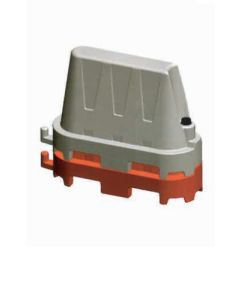
Pack of 30 pieces
€1,282.50 VAT excl.New Jersey traffic barrier. Material: plastic. Available in white or red. Length: 108 cm.
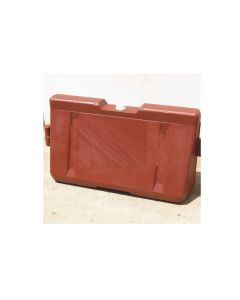
Pack of 24 pieces
€1,136.64 VAT excl.Road barrier in recycled polyethylene, lightweight and ballastable, ideal for traffic separation and urban interventions. Dimensions: W 120 x D 40 x H 60 cm.
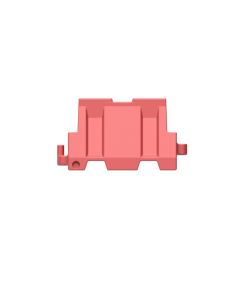
Pack of 32 pieces
€1,651.20 VAT excl.Polyethylene New Jersey barrier. Dimensions: L100 x D40 x H60 cm. Available in white or red.
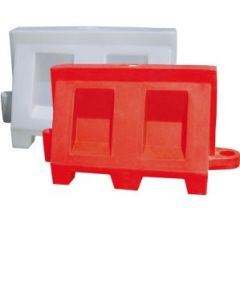
New Jersey road barrier in plastic. Dimensions: W100x D40 x H60 cm. Color: red.
Pack of 10 pieces
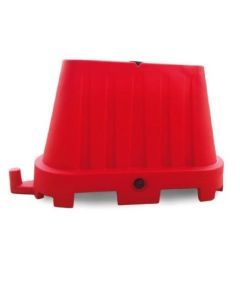
€546.00 VAT excl.New Jersey road barrier in plastic material. Dimensions: L100 x 40 x H70 cm.
Pack of 28 pieces
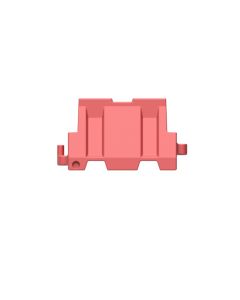
€1,533.56 VAT excl.Stackable plastic New Jersey barrier. Dimensions: W100 x D40 x H70 cm. Can be filled with water or sand.
Pack of 16 pieces
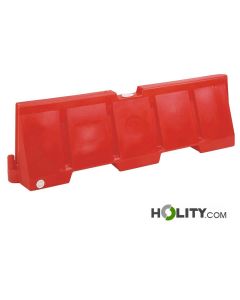
€1,638.40 VAT excl.200 cm polyethylene New Jersey barrier, ballastable with water or sand. Impact-resistant, ideal for road construction site safety.
Pack of 14 pieces
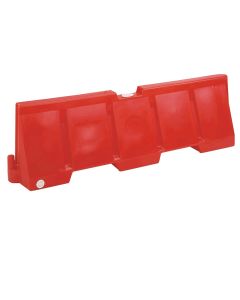
€1,544.76 VAT excl.Polyethylene New Jersey road barrier. Length: 200 cm. Lightweight and stackable.
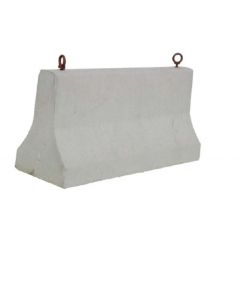
New Jersey road barrier. Material: concrete. Length: 100 cm.
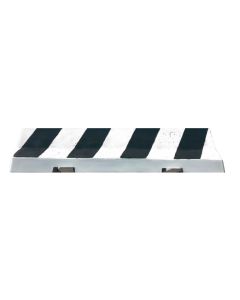
Mini single-sided New Jersey barrier. Material: vibrated concrete. Length: 200 cm
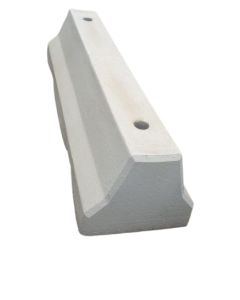
New Jersey barrier in vibrated concrete. Color: stone gray. Dimensions: L200 x W58 x H50 cm
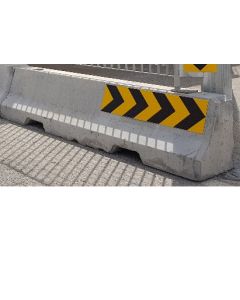
Mini New Jersey barrier single-sided. Material: concrete. Length: 200 cm

Mini New Jersey road barrier. Type: double shoe. Material: concrete. Length: 200 cm
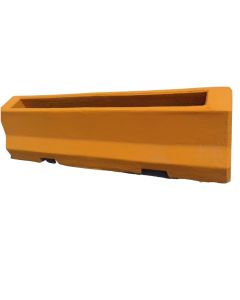
New Jersey road barrier with planter. Material: vibrated concrete. Length: 200 cm
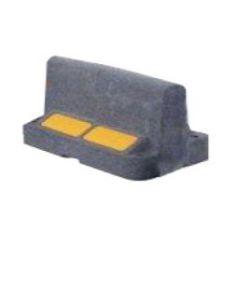
New Jersey rubber barrier. Dimensions: L100 x W40 x H40 cm. Color: grey.
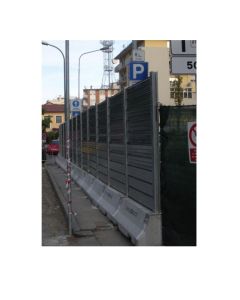
Concrete boundary barrier (mm 2000x600x450h) complete with integrated hot-dip galvanized iron fence H 2000 mm. Weight 750 kg, ideal for stable mobile fences.
New Jersey road barriers represent a well-established solution in the landscape of road safety and urban and motorway traffic management. Characterized by a specific longitudinal profile, these containment devices are designed to channel vehicle flow, reduce the severity of accidental impacts, and prevent encroachment into opposing lanes. Their particular shape allows vehicles to correct their trajectory gradually rather than performing dangerous rebounds, maintaining a high standard of protection for both occupants and the structural integrity of the vehicles themselves.
In addition to use in permanent motorway contexts, New Jersey barriers find widespread application in temporary construction sites, work areas along high-traffic arteries, and in the provisional fencing of critical zones. Their versatility stems from the availability of various materials—plastic, recycled polyethylene, vibrated concrete, and rubber—and from construction variants that make them suitable for specific contexts: from water or sand ballasting for light versions to the structural stability of concrete solutions. This plurality of options allows project choices to be adapted to real operational needs, local regulatory constraints, and the available budget.
New Jersey barriers offer significant technical advantages over other road containment solutions. Their concave geometry allows for a progressive distribution of impact energy, reducing deceleration peaks that could cause injury to occupants. Unlike rigid or simple-profile barriers, the New Jersey design minimizes the risk of overturning, especially for higher-category vehicles, by absorbing part of the kinetic energy through controlled trajectory deviation. This biomechanical principle makes New Jersey barriers particularly suitable for high-speed sections and sustained traffic volumes, where the statistical probability of accidental contact is high. Furthermore, the continuity of the profile facilitates lateral sliding without interruptions, further reducing the risk of blocking or entrapment.
From an operational standpoint, New Jersey barriers guarantee rapid installation and removal, an essential quality in temporary construction site contexts. Lightweight plastic or polyethylene versions are easily transportable and stackable, allowing flexible use across different work sites without the need for heavy lifting equipment. Ballastable variants allow for stable fixing without requiring permanent anchoring to the ground, a crucial aspect where surfaces do not allow drilling or where local regulations limit structural modifications. Concrete barriers, while requiring greater handling capacity, offer superior structural stability and extended longevity, making them advantageous for semi-permanent or permanent installations. The possibility of choosing between single-base and double-base versions also allows for adaptation to specific site configurations and differentiated load profiles.
The New Jersey road barrier catalogue includes solutions made in four main material categories, each with distinct performance and usage characteristics. Plastic and recycled polyethylene barriers represent the lightest and most economical solution: with a low weight, usually ranging between 30 and 50 kg per unit, they are ideal for temporary applications and mobile construction sites where manual handling or handling with small vehicles is preferable. These versions are available in packs of 10 to 32 pieces, facilitating purchase and logistics management on a small scale. Standard dimensions vary between lengths of 100-200 cm and heights of 60-70 cm, allowing for a versatile configuration in terms of routes and site zones. Many versions are ballastable—fillable with water or sand—ensuring stability even on unprepared surfaces.
Vibrated concrete and reinforced concrete barriers represent the upper end of the performance spectrum: with weights exceeding 100 kg, they offer almost absolute structural stability and superior mechanical resistance to repeated impacts. Available in single-base and double-base versions, concrete barriers are suitable for permanent or semi-permanent installations on motorways, junctions, and critical urban areas where traffic is intense and continuous. Some models feature integrated planters, combining the function of road protection with elements of urban furniture and public greenery, an aspect increasingly considered in urban regeneration and smart city interventions. Standard dimensions in concrete are predominantly 200 cm in length with depths and heights varying according to the technical profile. Finally, rubber barriers constitute a specialized niche: particularly shock-absorbent, they are preferred in contexts where reducing impact noise is a priority—for example, car parks, low-speed maneuvering areas, or protection interventions for vulnerable structures.
Selecting the appropriate New Jersey barrier requires a methodical evaluation of at least four fundamental decision parameters. The first concerns the type of intervention and the expected duration: if the use is temporary and mobile—construction sites, short road diversions, public events—lightweight plastic and recycled polyethylene solutions are recommended, offering ease of transport, storage, and handling. If, on the other hand, the intervention is permanent or semi-permanent—definitive lane separation, protection of critical infrastructure, motorway installations—concrete barriers represent the correct choice, despite higher initial costs and the need for heavy logistics. The second parameter concerns the characteristics of the installation surface: irregular, unprepared surfaces or where drilling is not permitted require ballastable barriers; flat and stable surfaces allow the use of rigid concrete barriers with anchors; special surfaces such as hot asphalt car parks may require rubber barriers to avoid differential movements.
The third criterion concerns the expected speed profile and traffic category: motorways and high-speed junctions require standard concrete New Jersey profiles with a double base, capable of absorbing impacts from both heavy and light vehicles indiscriminately; moderate-speed urban areas and construction sites can tolerate lighter solutions, provided they are adequately ballasted. The fourth element is the available budget and the economic return over time: lightweight barriers have lower unit costs but a shorter useful life—generally 2-5 years with aesthetic wear and micro-fractures; concrete barriers have initial costs 150-300% higher but a duration of 15-20 years if maintained. A common error is underestimating the importance of single-base versus double-base configuration: the single-base is lighter, more economical, and sufficient for low-traffic sites; the double-base offers superior stability and is mandatory for motorway contexts according to European regulation (EN 1317). Choosing stackable models is advantageous if storage space is limited, reducing vertical warehouse footprint by up to 40%.
New Jersey road barriers are subject to a complex regulatory structure that varies according to the geographical context and traffic level. In the European context, the EN 1317 standard represents the fundamental reference, specifying containment levels (N1-N4) based on impact energy absorption and the category of vehicles involved. Installations on motorways and high-speed roads generally require compliance with N2 or higher, implying crash tests with standardized masses (900 kg for light cars, up to 1500 kg for medium vehicles) at preset speeds (80-100 km/h). Vibrated concrete New Jersey barriers can be certified up to N3, while lightweight plastic solutions typically fall under N1 and are intended for low-traffic contexts, construction zones, car parks, and speed-controlled urban areas. Every manufacturer is required to provide declarations of conformity (CE marking) and specific technical data sheets documenting the containment level achieved.
Further regulatory requirements concern useful protection height, optical visibility, and shock absorption properties. Barriers must have minimum heights of 60-80 cm depending on the road class, be equipped with high-visibility retroreflective markings (white, red, or orange for construction sites), and have profiles that minimize lateral rebound. In Italy, the Highway Code (Legislative Decree 285/1992) and the Technical Standards for Construction (NTC 2018) integrate European requirements with additional specifications for national and urban roads. For temporary construction sites, the Safety Operational Plan (POS) must document the use of compliant containment devices, with the responsibility of the safety coordinator and the contracting company. Some local authorities require additional specific certifications—for example, crash test certificates on samples or environmental traceability documentation for recycled materials—therefore, a preliminary check with the competent authority is always recommended before installation on significant infrastructure.
Explore all products in the category and compare the available solutions to find the one best suited to your operational context. Each barrier is accompanied by detailed technical specifications, regulatory certifications, and logistical information to simplify the decision-making process and accelerate implementation times on site.
A New Jersey barrier is a road containment device characterized by a concave longitudinal profile. In the event of an impact, the vehicle does not rebound abruptly but follows a gradual deflection trajectory, dissipating kinetic energy and reducing the risk of lane reversal and head-on collisions. The design minimizes damage to vehicles and occupants compared to traditional rigid barriers.
New Jersey barriers are made from four main materials: plastic and recycled polyethylene (lightweight, ballastable, ideal for temporary sites), vibrated concrete (heavy, stable, suitable for permanent installations), rubber (shock-absorbent, indicated for noise reduction), and hybrid versions. Each material offers different technical characteristics, costs, and life cycles.
The single-base barrier is lighter, more economical, and uses less material: suitable for low-traffic sites and temporary applications. The double-base offers superior structural stability, absorbs lateral impacts from heavy vehicles better, and is mandatory on motorways according to the EN 1317 standard. The choice depends on the traffic level and the regulatory requirements of the context.
Yes, many lightweight plastic and polyethylene versions are equipped with internal cavities that allow filling with water or sand to increase stability without requiring permanent anchoring. This feature makes them ideal for unprepared surfaces, car parks, and contexts where structural modifications are prohibited.
A Guard Rail is a continuous metal barrier fixed on posts, suitable for lateral protection of bridges and viaducts. The New Jersey barrier is modular, more flexible in installation, and ideal for lane separation, construction sites, and urban areas. The New Jersey profile is specifically designed to minimize damage in lateral impacts, while the Guard Rail prevents vehicles from leaving the road.
 English
  Italian
 French
 German
 Spanish