
mon-fri 9-13 / 14.30-18.30
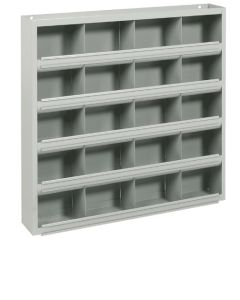
Spare parts storage rack for workshops in sheet metal with 20 compartments. Dimensions: h 600 x w 600 x d 100 mm.
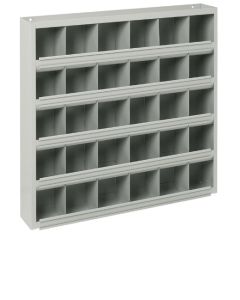
Monobloc small parts shelving unit with 30 bins. Dimensions: h 600 x w 600 x d 100 mm. Material: metal sheet.
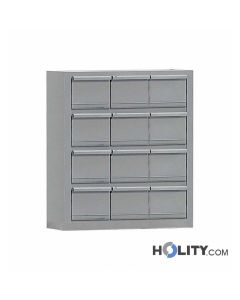
Metal spare parts cabinet with 12 large drawers with divider. Drawer dimensions: 26 x 28 x h.16 cm. Color: grey RAL 7035.
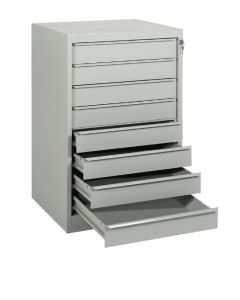
Small parts storage cabinet suitable for light loads with 8 empty drawers. Dimensions: h 952 x w 620 x D 550 mm. Material: sheet metal.
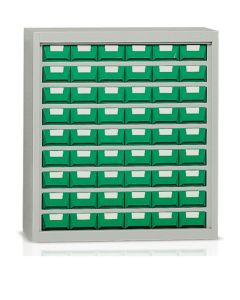
Sheet metal cabinet for small parts storage. With 54 green plastic drawers. Dimensions: W.90 x D.35.5 x H.100 cm.
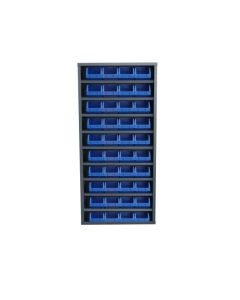
Steel small parts storage cabinet with 40 4L polypropylene containers. Dimensions 760x260x1600 mm, open structure for quick access.
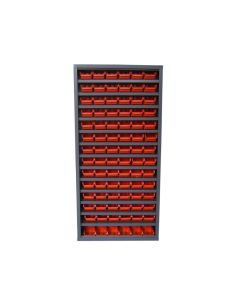
Steel small parts cabinet with 84 1-liter bins. Dimensions 760x260x1600 mm. Open structure for quick access and technical organization.
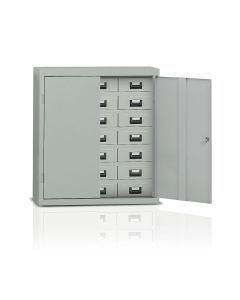
Small parts cabinet for workshops. Equipped with hinged doors and 21 drawers.
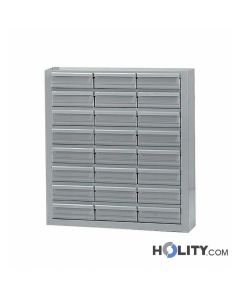
Workshop cabinet made of sheet steel, with 24 drawers. Useful drawer measurements: 26 x 28 x h.6 cm. Color: grey RAL 7035.
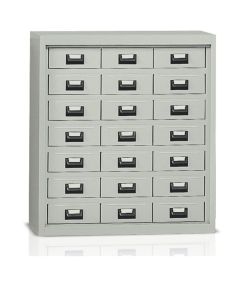
Small parts storage cabinet with 21 drawers. Dimensions: W.90 x D.35.5 x h.100 cm. Material: sheet steel.
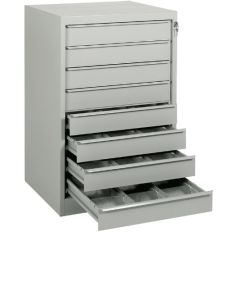
Workshop spare parts drawer unit with 8 drawers, 3 trays and 6 dividers for a total of 72 adjustable compartments. Material: premium cold-rolled sheet metal.
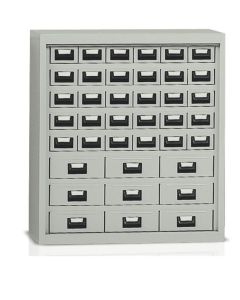
Cabinet for storing small parts and small tools. Equipped with 39 drawers with label holders. Dimensions: W.90 x D.35.5 x h.100 cm.
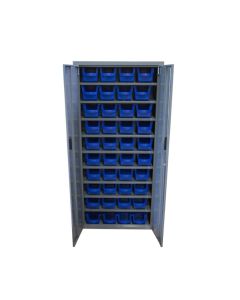
Steel workshop cabinet with 40 x 4L polypropylene bins. Dimensions 760x260x1600 mm. Equipped with lockable doors for secure storage.
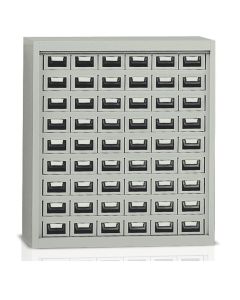
Sheet metal small parts storage cabinet. Equipped with 54 drawers. Dimensions: W. 90 x D. 35.5 x h. 100 cm.
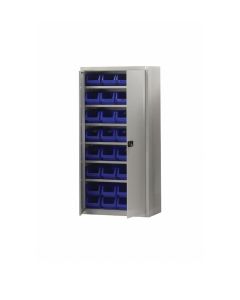
Component storage cabinet with 32 containers. Dimensions: W.100xD.45xH.200 cm
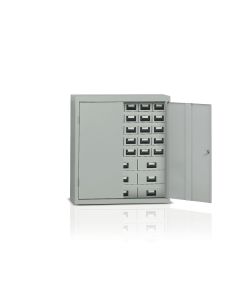
Small parts cabinet with hinged doors. With 39 drawers. Total dimensions: W.90 x D.35.5 x h.100 cm.
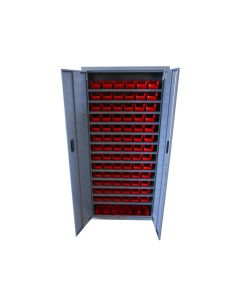
Steel small parts storage cabinet H1600mm with 84 polypropylene 1L bins. Equipped with lockable doors and a reduced depth of 260mm.
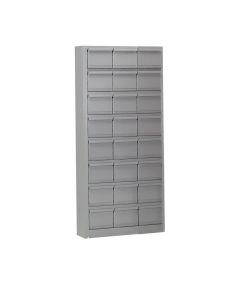
Monobloc spare parts cabinet. 24 large drawers. Dimensions: W.90xD.30xH.200 cm.
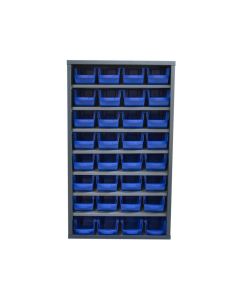
Steel small parts storage cabinet with 32 polypropylene containers (10L). Dimensions 960x400x1600 mm. Open structure for quick access.
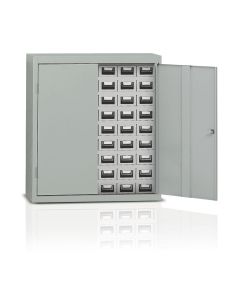
Sheet metal small parts storage cabinet. Equipped with 54 drawers. Dimensions: W. 90 x D. 35.5 x h. 100 cm.
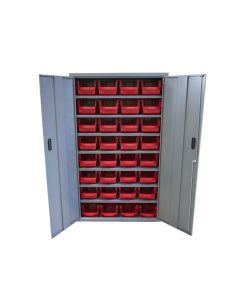
Small parts storage cabinet H972_43 in steel, 960x400x1600 mm. Includes 32 10L containers and lockable doors for safe and organized storage.
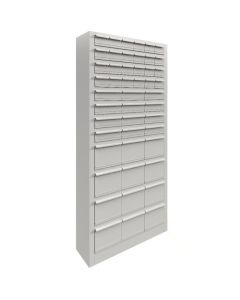
Small parts cabinet with 48 drawers of mixed sizes. Dimensions: W.90xD.30xH.200 cm
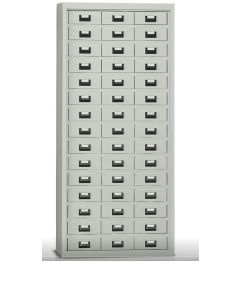
Small parts cabinet for workshops with 45 drawers. Dimensions: W.90 x D.35.5 x h.200 cm. Material: sheet metal.
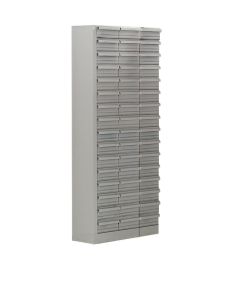
Workshop cabinets for small parts with 48 medium drawers. Dimensions: W.90xD.30xh.200 cm
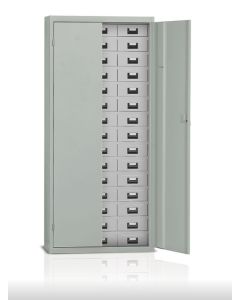
Workshop small parts storage cabinet. Dimensions: W.90 x D.33.5 x H.200 cm. No. of drawers: 45.
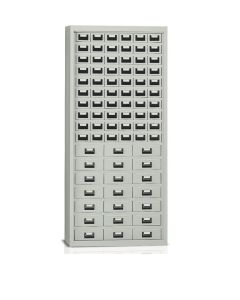
Sheet metal small parts storage cabinet. Dimensions: W.90 x D.35.5 x h.200 cm. With 60 drawers dim. 13 x 13 x h7 cm and 21 drawers dim. 26 x 30 x h9.5 cm.
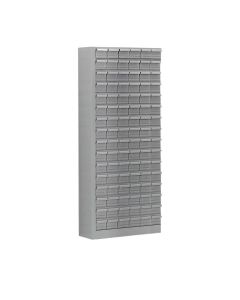
Workshop cabinet for small parts. Dimensions: W.90xD.30xH.200 cm. 96 drawers
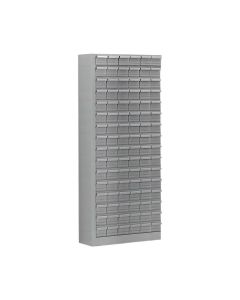
Steel sheet hardware cabinet equipped with sliding drawers with divider. Color: grey RAL 7035.
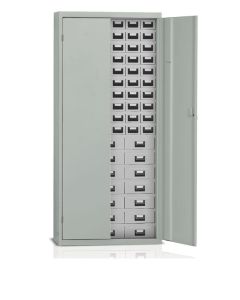
Small parts storage cabinet with hinged doors and 60 + 21 drawers. Dimensions: W. 90 x D. 35.5 x H. 200 cm.
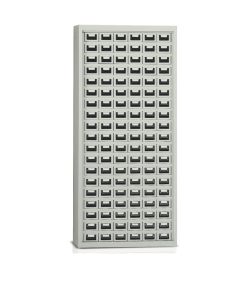
Small parts cabinet with 114 drawers. Dimensions: W.90 x D.35.5 x h.200 cm. Drawer dimensions: W.13 x D.30 x h.7 cm.
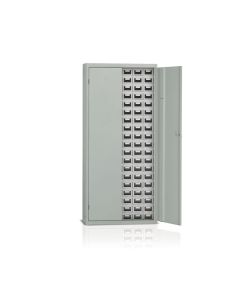
Small parts storage cabinets in sheet metal. Equipped with hinged doors and 114 drawers.
Workshop small parts cabinets represent an essential solution for the organized storage of components, spare parts, and small tools in professional environments. These specialized pieces of furniture combine structural robustness, high load capacities, and modular configurations designed to optimize workspaces, reducing search times and improving operational efficiency. Choosing a cabinet suited to your needs depends on critical variables such as the type of small parts to be stored, the volume of items, the frequency of access, and the available space in the workshop.
In fields such as hardware stores, industrial maintenance, automotive repair, and manufacturing sectors in general, small parts cabinets become indispensable elements for maintaining part traceability, preserving their integrity, and ensuring compliance with workplace safety protocols. The sheet metal or steel structure, the absence of corrosion, and ease of cleaning make these furnishings particularly suitable for humid environments or those subject to thermal variations, while key locking systems offer protection against theft or unauthorized access.
Orderly management of small parts is a critical element in the productivity of a workshop or maintenance laboratory. A specialized cabinet allows for centralizing the storage of small components, avoiding dispersion across various workbenches and significantly simplifying searches. The operational advantages are concrete: reduction of downtime during assembly or repair activities, decrease in the risk of losing or damaging parts, and improvement of inventory traceability. Furthermore, a well-organized cabinet with drawers or bins sized according to specific needs allows for the utilization of every centimeter of vertical space, a decisive factor when available floor space is limited.
From a workplace safety perspective, these units contribute to keeping work surfaces free of clutter, reducing the risk of accidents and improving the overall ergonomics of the environment. The materials used, such as cold-rolled steel and galvanized sheet metal, guarantee long-term durability and resistance to chemical agents common in industrial workspaces. Finally, the possibility of customizing the number, dimensions, and arrangement of drawers makes these furnishings extremely versatile, adaptable to both artisanal workshops and medium-to-large scale spare parts warehouses.
The catalog of workshop small parts cabinets includes various configurations, each optimized for specific contexts of use. Metal pigeon-hole shelves represent the most compact and economical solution, ideal for those needing to organize small parts in tight spaces: fixed pigeon-holes allow for immediate visualization of the contents and fast item extraction. Drawer units, on the other hand, offer greater protection from dust and allow for internal subdivision using adjustable dividers, useful when parts require isolation from one another. Cabinets with large drawers stand out for their more generous depth and width, suitable for loading bulky components such as gears, bushings, or sleeves.
Professional steel cabinets with modular bins represent the pinnacle of specialization: they feature reinforced shelves with significant capacities (8-20 kg per shelf), colored plastic bins of various capacities (from 1 to 10 liters), and often include locking systems to ensure security. Some models maintain an open structure without doors for immediate access, while others feature hinged or sliding doors, each configuration responding to different priorities between rapid accessibility and content protection. The choice of type depends on the balance between access speed, required storage volume, frequency of use, and available budget.
The selection of a workshop cabinet for small parts must start with a conscious analysis of operational needs. The first parameter to evaluate is the number and type of items to be stored: a collection of screws, washers, and nuts can be effectively managed with a 20-30 pigeon-hole shelf, while more diverse and bulky components require drawer units with adjustable compartments or cabinets with variable volume bins. Frequency of access is equally important: if picks occur dozens of times a day, an open configuration without doors speeds up operations; if the content is subject to theft or contamination, prefer closed cabinets with a key lock.
A crucial aspect is the physical space available in the workshop. Accurately measuring the height, width, and depth of the space intended for the cabinet avoids surprises during installation. Compact models (600 x 600 mm footprint) fit into narrow aisles, while 90 cm wide cabinets require significant clear wall space. Also evaluate the total weight when loaded: a 48-drawer cabinet when filled can reach several hundred kilograms, making a suitable floor and safety anchors necessary. Common mistakes include underestimating the number of drawers needed (one always tends to fill the space faster than expected) and not considering potential future needs for expansion or reconfiguration.
Workshop cabinets for small parts, while not being personal protective equipment, must still comply with recognized safety and quality standards. The main reference regulation is UNI EN 14727, which governs the safety and performance requirements for storage furniture, including aspects such as structural stability, load resistance, non-toxicity of materials, and tip-over prevention. All marketed metal cabinets must be made of cold-rolled or hot-dip galvanized steel to ensure corrosion resistance, especially in environments with high humidity or exposure to chemical vapors.
Regarding workplace safety, Legislative Decree 81/2008 (TUS) requires that furnishings used in production environments do not constitute a source of danger for workers: this means that cabinets must be stable, fixed to the wall when necessary to prevent tipping, and free of sharp edges or elements that could cause injury. Drawers must have smooth sliding guides and stop systems to prevent accidental falling, while key locks must function correctly to limit access to potentially dangerous materials. Periodic maintenance, documented through checklist records, contributes to maintaining safety requirements over time.
Explore all products in the category and compare the available solutions to find the one best suited to your operational context. From small compact shelves to professional modular cabinets, every configuration has been designed to ensure organization, efficiency, and regulatory compliance in workspaces.
Dimensions vary by model: compact shelves start at 600 x 600 x 100 mm, ideal for tight spaces, while professional cabinets reach 90-100 cm in width and up to 200 cm in height. There are intermediate configurations around 76 cm wide and 160 cm high, which represent a good compromise between capacity and space occupancy.
For an artisanal workshop working with standard spare parts and components, a cabinet with 21-40 drawers is generally sufficient. If the activity also includes kit assembly or repairs for multiple brands, we recommend at least 45-54 drawers to avoid clutter and difficulty in rapid searching.
Choose a cabinet with hinged or sliding doors that completely cover the front. If the environment is very dusty, prefer closed bins with lids instead of open drawers. Regular workplace maintenance, with daily cleaning of surfaces, also reduces accumulation.
Standard small parts drawers support light loads, generally 8-12 kg each when full. Professional steel cabinets with reinforced shelves can reach 20 kg per shelf. Always consult the technical specifications of the model to avoid overloads that would compromise the sliding guides.
Yes, especially if the height exceeds 1.5 meters. Fixing the cabinet with appropriate brackets prevents accidental tipping, a significant risk in environments with frequent movement or vibrations. Check the wall's solidity and the type of anchors suitable for the construction material.
Drawers are fixed and slide on metal guides, allowing quick access but requiring internal organization with dividers. Plastic bins are modular and removable, facilitating customization and transport of materials to the workbench. Bins are ideal for activities requiring mobility, while drawers are better for static, orderly systems.
Prices range from 100-150 euros for compact pigeon-hole shelves, up to 1,500-2,000 euros for large, high-capacity professional cabinets with numerous drawers or bins. The choice depends on the configuration, the number of compartments, and the build quality; investing in a robust cabinet guarantees long-term durability and reliability.
 English
  Italian
 French
 German
 Spanish