
mon-fri 9-13 / 14.30-18.30
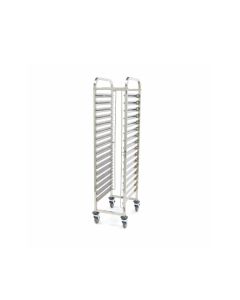
Professional stainless steel trolley for 16 GN 1/1 trays (44x61x173.5 cm). Structure with integrated handle, anti-slip rear support, bumpers and braking wheels. Quick assembly in 10 minutes.
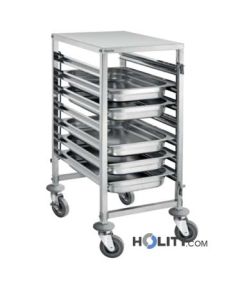
Compact stainless steel tray trolley for 7 GN 1/1 containers (45x62x101 cm). Equipped with upper worktop, safety locking system and silenced wheels.
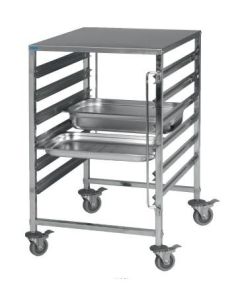
Professional stainless steel tray trolley (59x67x102 cm) for 12 GN 1/1 trays or 6 GN 2/1 trays. Robust structure with 4 braking wheels and upper work surface.
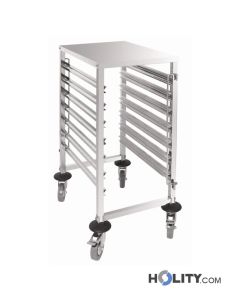
Low stainless steel tray trolley for 7 GN 1/1 trays (55x38x90 cm). Equipped with bumpers, braking wheels and wide space between levels (8 cm).
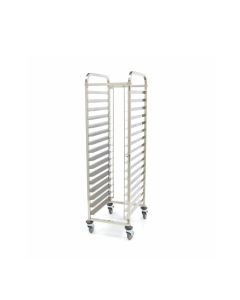
Stainless steel bakery trolley for 16 trays 60x40 cm (47.2x66x170.6 cm). Bakerynorm structure with integrated handle, anti-slip rear support, bumpers and braking wheels. Quick assembly in 10 minutes.
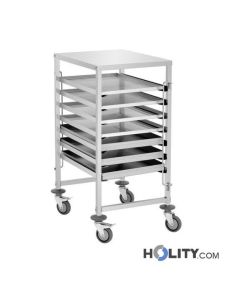
Compact stainless steel pastry trolley for 7 trays (60x40 cm). Robust structure (53x68x101 cm) with upper work surface, safety lock system and braking wheels.
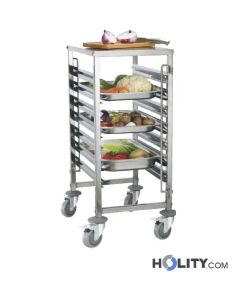
Compact stainless steel tray trolley for 7 GN 1/1 containers (38x55x95 cm). Robust structure with top worktop and braking wheels.
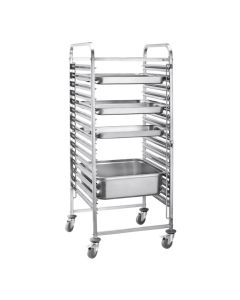
Stainless steel AISI 304 tray trolley for 16 GN 1/1 trays, mm 380x550x1700h. Equipped with 4 wheels of 125 mm, safety rod and load capacity up to 110 kg.
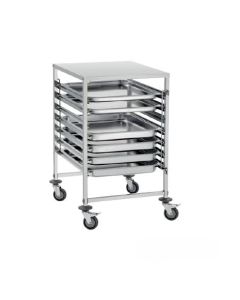
Professional nickel-chrome steel tray trolley for 7 GN 2/1 containers (65x74x101 cm). Robust structure with front/rear safety lock, top shelf and rubber braking wheels.

Professional stainless steel pastry trolley for 18 trays (60x40 cm). High-capacity vertical structure (52x66x173 cm), 150 kg load capacity and wheels with brakes.
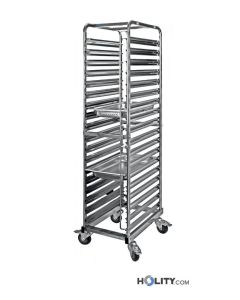
Professional stainless steel tray trolley for 18 GN 1/1 containers (39x57x173 cm). High-capacity vertical structure, 150 kg load capacity and wheels with brakes.
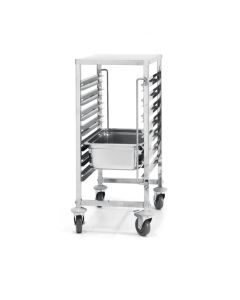
Low stainless steel trolley for 7 GN 1/1 trays with top work surface, double safety lock and braking wheels. Compact and versatile.
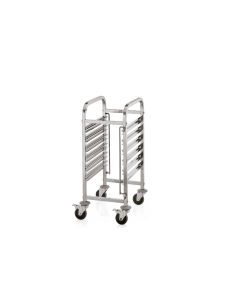
Short Description Compact tray trolley in chrome-plated steel for 6 GN 1/1 containers or 12 GN 1/1 trays (55x38x96 cm). With safety bracket, Ø 12 cm wheels and shock protection.
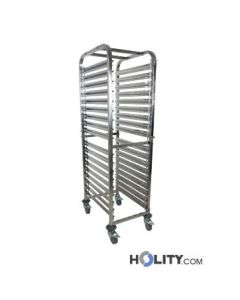
Professional XL stainless steel tray trolley for 18 GN 2/1 containers (59x67x173 cm). High-capacity vertical structure, 150 kg load capacity and silenced wheels with brake.
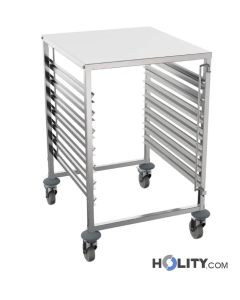
Professional stainless steel tray rack trolley for 7 GN 2/1 containers (59x67x95 cm). Compact design with top work surface, braking wheels and total load capacity of 84 kg.
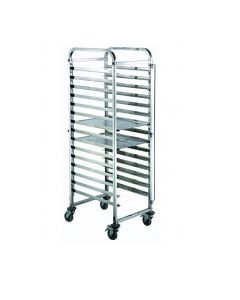
AISI 201 stainless steel bakery trolley for 15 EN 400x600 mm trays. Robust vertical structure (38x55x173 cm) with swivel wheels and parking brakes.
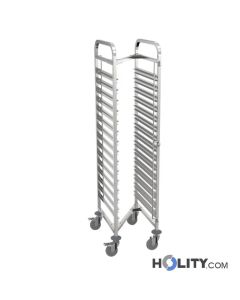
Stainless steel tray rack trolley for 15 GN 1/1 containers (38x55x170 cm). Solid structure with braking wheels, ideal for catering and canteens.
Professional stainless steel tray trolley for 14 GN 2/1 trays (45x66x182 cm). Vertical structure with multidirectional wheels and bumpers.
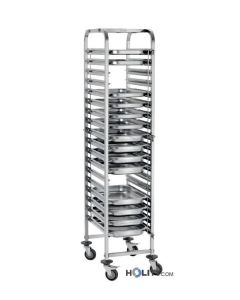
Professional nickel-chrome steel tray rack trolley for 18 GN 1/1 containers (41x61x189 cm). Robust structure with double safety lock, rubber wheels and 80 kg load capacity.
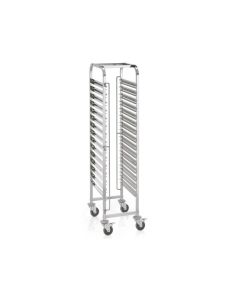
Vertical tray rack trolley in chrome-plated steel for 15 GN 1/1 containers or 30 GN 1/1 trays (55x38x171 cm). High capacity, safety bracket, and Ø 12 cm wheels with bumpers.
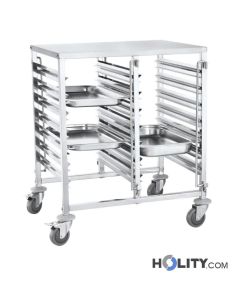
Professional double stainless steel tray trolley for 14 GN 1/1 containers (74x55x95 cm). Robust double-track structure with top work surface, load capacity 168 kg and braking wheels.
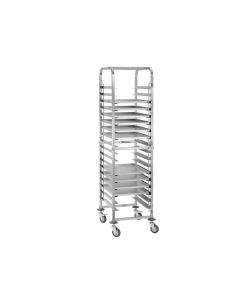
Professional stainless steel pastry trolley with high capacity (18 levels 60x40 cm). Robust structure (53x68x189 cm) with double safety lock and front/rear pass-through loading.
Stainless steel tray trolley for 8 GN 1/1 trays (45x66x94 cm). Robust structure with multidirectional wheels and bumpers for catering.
Professional stainless steel tray rack trolley for 15 GN 2/1 containers (47x62x170 cm). Robust, hygienic and agile structure with 4 wheels (2 braked).
Professional stainless steel tray trolley for 14 trays of 60x40 cm (52x72x182 cm). Robust vertical structure with multi-directional wheels.
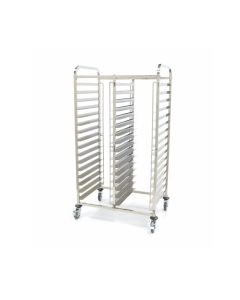
Double stainless steel pastry trolley for 32 trays 60x40 cm (98x68x173.5 cm). Double column structure with handle, rear anti-slip support, bumpers and braked wheels.
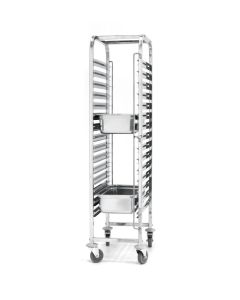
Stainless steel tray trolley for 15 GN 1/1 trays. Safety system with double stop, wheels with brakes and compact structure (44x61x171 cm).
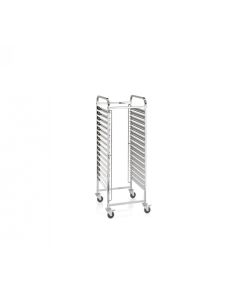
Professional tray trolley in chrome steel for 15 containers or 30 GN 2/1 trays (67x59x171 cm). High capacity, safety bracket and anti-shock wheels Ø 12 cm.
Professional stainless steel pastry tray trolley (52x72x94 cm). Capacity 8 trays 60x40 cm, multidirectional wheels and bumpers.
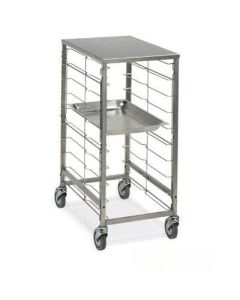
Compact stainless steel tray trolley for 9 GN 1/1 trays (42x59x87 cm). Robust square tube structure, stainless steel top shelf and swivel wheels. Ideal for small laboratories.
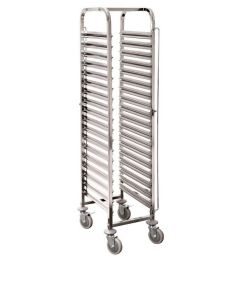
Stainless steel pastry trolley for 18 trays 60x40 cm (46x64x170 cm). With safety stop, 7.5 cm pitch and braking wheels.
Stainless steel bakery trolley for 20 trays (60x40 cm). Vertical structure (51x47x177 cm) with 125 mm wheels, ideal for laboratories and bakeries.
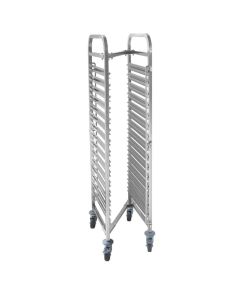
Stainless steel trolley for 15 GN 1/1 trays (44.5x61x171 cm). Space-saving nesting design, tray locking on both sides, 150 kg capacity and wheels with brakes.
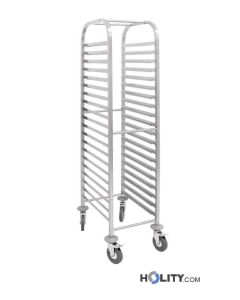
Stainless steel tray trolley for 20 GN 1/1 trays (38x55x170 cm). High-density structure, 6.8 cm pitch and swivel wheels with brakes. Robust and space-saving.
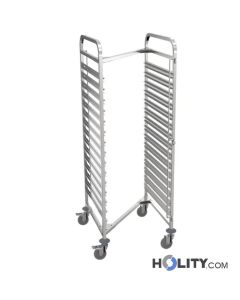
Professional stainless steel tray trolley for 15 GN 2/1 containers (59x67x170 cm). Robust structure with braking wheels, ideal for large kitchens and catering.
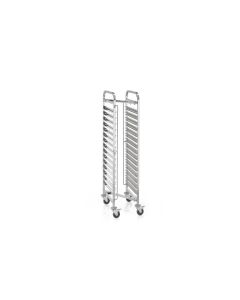
Vertical "Z"-shaped tray trolley in chrome-plated steel for 30 trays or 15 GN 1/1 containers (55x38x171 cm). Space-saving nesting design, safety bracket, and shock-proof wheels.
Double stainless steel pastry trolley for 40 trays (60x40 cm). Reinforced structure (51x80x177 cm) with 4 multidirectional 125 mm wheels.
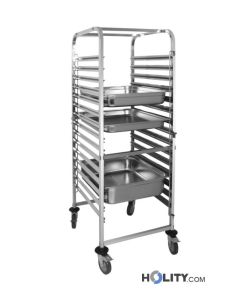
Professional stainless steel tray trolley for 15 GN 2/1 trays (68x58x171 cm). Equipped with bumpers, 8 cm spacing and braking wheels.
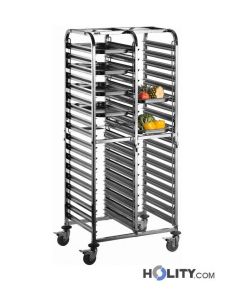
Double stainless steel tray trolley for 36 GN 1/1 trays (75x55x173 cm). Reinforced high-capacity structure, 300 kg load capacity and 4 wheels with brakes.
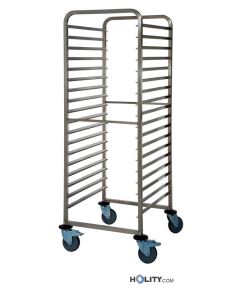
Professional high-capacity stainless steel tray trolley. Accommodates 18 trays (GN 2/1, 1/1, 2/4 formats) with a load capacity of 180 kg. Equipped with 125 mm oversized wheels.
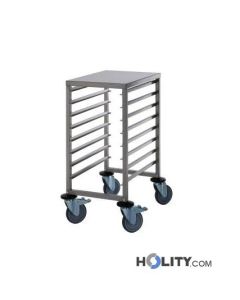
Professional stainless steel tray trolley (46x61x84.5 cm) for 8 GN 1/1 or GN 1/2 trays. Structure with worktop, anti-slip protection and Ø125 mm wheels. Supplied already assembled.
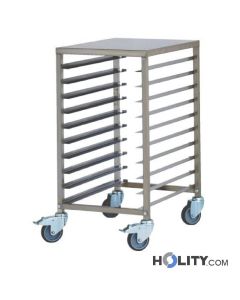
Compact stainless steel tray rack trolley (46x61x90 cm) with 10 storage levels. Professional load capacity of 180 kg, robust structure and galvanized swivel wheels.
Double stainless steel pastry trolley for 36 trays (60x40 cm). Reinforced high-capacity structure (88x60x173.5 cm), 300 kg capacity and 4 wheels with brakes.
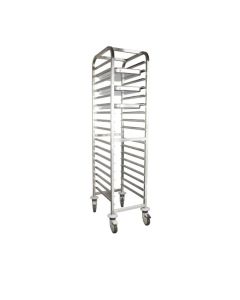
Stainless steel trolley for 17 GN 1/1 trays (37x56x172 cm) with safety bar and 4 wheels. Robust and easy to clean.
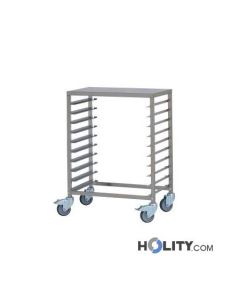
Compact pastry trolley in 1.4509 stainless steel (66x41x90 cm) for 10 trays. 180 kg load capacity, multi-format side insertion and 4 swivel wheels with brakes.
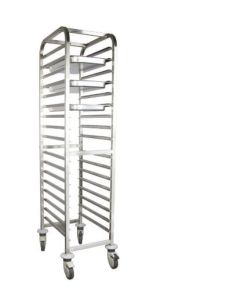
Professional stainless steel tray rack trolley for 15 trays (37x53 cm). Compact structure (42x56x160 cm) with central safety bar, 6 cm pitch and multidirectional wheels. Compliant with CE and HACCP standards.
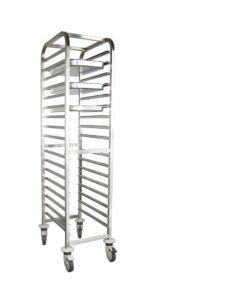
Stainless steel trolley 15 levels 60x40 cm with safety bar and wheels with brake. Compact and hygienic.
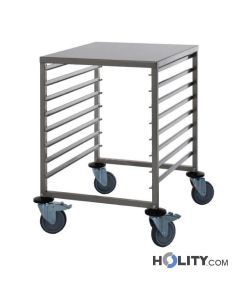
Low stainless steel tray trolley (66x73x84 cm) for 8 GN 2/1 or GN 1/1 containers. Sturdy structure with top work surface, 180 kg load capacity and protective bumpers.
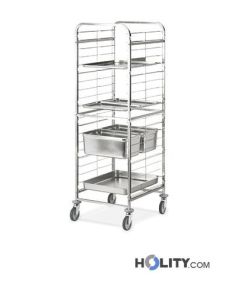
Professional stainless steel tray rack for 20 GN 1/1 trays (47x63x181 cm). Slim structure with stainless steel wire rails, 7.5 cm pitch and Ø 12.5 cm industrial wheels with bumpers.
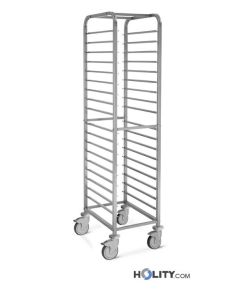
Professional heavy-duty stainless steel tray trolley for 18 GN 1/1 trays. Ultra-solid structure with anti-tip "C" guides, stop end and industrial wheels Ø 12.5 cm.
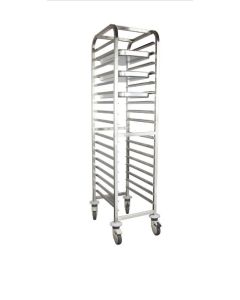
Stainless steel trolley for 17 GN 2/1 trays (58x66x172 cm) with safety bar and 4 wheels. Robust, hygienic and high capacity.
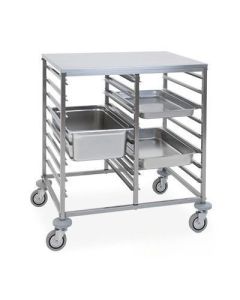
Low double-track tray trolley in stainless steel for 16 GN 1/1 trays (80x60x89 cm). Structure with anti-tip "C" guides, stainless steel top, and bumpers.
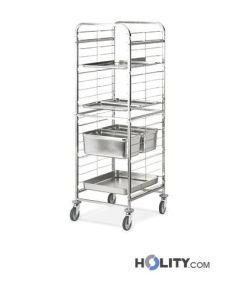
Professional XL stainless steel tray trolley for 20 GN 2/1 trays (67x73x181 cm). High-density structure with stainless steel wire runners, 7.5 cm pitch and industrial wheels Ø 12.5 cm with bumpers.
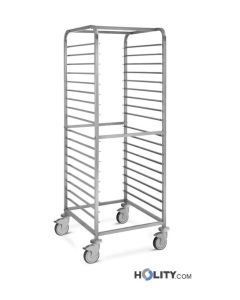
Professional ultra-solid stainless steel tray trolley for 18 GN 2/1 trays (65x73x180 cm). Reinforced structure with "C" anti-tip guides, end stop and Ø 12.5 cm industrial wheels.
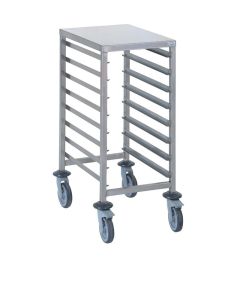
Low stainless steel tray trolley (65x44x90 cm) for 8 GN 1/1 trays. Ultra-robust welded structure, 250 kg capacity and top work surface.
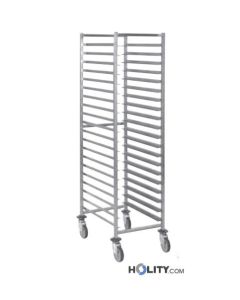
Stainless steel pastry trolley 20 levels for 400x600 mm trays. Structure with welded runners, 250 kg capacity and 125 mm industrial wheels.
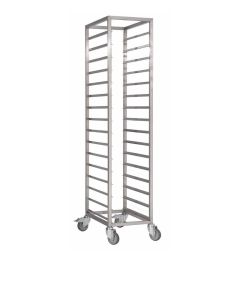
Professional 18/8 stainless steel tray trolley for 18 GN 2/1 trays. Sturdy square tube structure (62x70x180 cm) with swivel wheels and brakes.
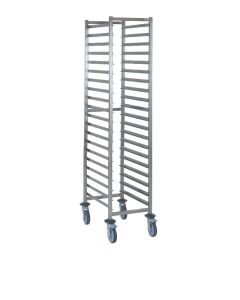
Stainless steel tray trolley for 20 GN 1/1 trays. Robust structure (45x65x165 cm), 20 kg capacity per level and wheels with bumpers. Ideal for large kitchens.
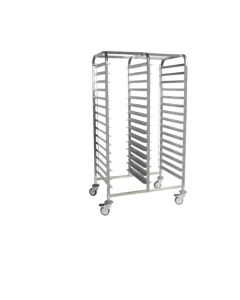
Double stainless steel bakery trolley for 30 EN 60x40 cm trays (90x63x165 cm). Double section structure, robust and hygienic.
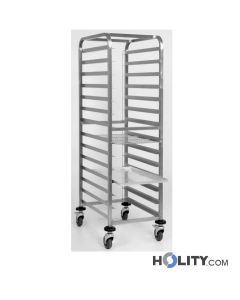
AISI 304 stainless steel pastry trolley for 14 trays (60x40 cm). Dimensions 44x63x165 cm, 10 cm pitch and braking wheels. Robust, hygienic and ideal for intensive use.
Baking Tray trolleys represent an irreplaceable logistical resource for organizing workflows in pastry laboratories, bakeries, pizzerias, and large industrial kitchens. These vertical structures are designed to maximize storage and handling capacity in small spaces, allowing the simultaneous management of dozens of preparations, from the proofing phase to baking or blast chilling. Adopting a professional baking tray trolley is not just a practical choice, but a technical necessity to ensure production continuity and food safety, preventing trays from being placed on improper or unstable surfaces.
The structure of these trolleys is designed to withstand continuous mechanical stress and sudden thermal variations, typical of moving from ovens to refrigerated cells. Thanks to the use of noble materials such as AISI 304 stainless steel, tray trolleys ensure exceptional longevity and intrinsic resistance to corrosion, maintaining their structural characteristics even after years of intensive use. Choosing high-quality equipment means optimizing production times and facilitating the work of the kitchen brigade, ensuring smooth and safe handling that preserves the integrity of gastronomic products and the health of HoReCa operators.
Integrating vertical Baking tray trolleys into the layout of a kitchen or artisanal laboratory addresses the daily challenge of space management and time efficiency. In contexts with mass production, such as canteens or large catering operations, the ability to move up to 36 trays in a single block allows for drastically faster loading and unloading of ovens, reducing downtime and optimizing the energy consumption of professional ovens. The trolley acts as a true mobile warehouse, allowing dishes to be prepared in advance and kept in logical order according to the scheduled service sequence.
Beyond logistics, stainless steel trolleys play a crucial role in preventing workplace accidents and accidental breakages. The presence of runners or fixed supports with anti-tilt systems ensures that Baking trays remain perfectly horizontal during transport, preventing liquid spills or damage to delicate products such as leavened goods or cakes. The maneuverability guaranteed by multi-directional wheels allows for agile navigation between workbenches and washing areas, transforming a potentially critical production phase into a fluid and controlled process, raising the professional standard of the entire production facility.
The range of baking tray trolleys is primarily structured according to international dimensional standards and specific industry needs. Gastronorm (GN) trolleys represent the European standard par excellence in the catering world, designed to accommodate pans and baking trays of universal sizes (such as GN 1/1 or GN 2/1), ensuring total interchangeability between ovens, blast chillers, and trolleys from different manufacturers. For the world of baking and pastry, 60x40 cm (Euronorm) standard trolleys are available, optimized for traditional baking trays and proofing boxes, often characterized by a higher number of runners to utilize the useful height effectively.
There are also specific models based on the structure's configuration: single trolleys for small laboratories, double trolleys for industrial volumes, and baking tray-holding trolleys specific for canteen service. The distinction also concerns materials: while stainless steel is the top choice for hot kitchens and wet areas, there are steel alloys enriched with nickel and chrome that offer superior toughness for extremely heavy loads. The runner configuration can vary between "L" or "U" shaped supports, the latter being particularly appreciated for the stability they offer in baking tray placement, preventing lateral movement during sudden maneuvers between kitchen departments.
Selecting the ideal baking tray trolley requires careful evaluation of production volume and the type of baking trays already in use at the facility. The primary criterion is capacity: choosing a structure that offers the correct number of levels (ranging from 8 to 36) prevents underutilization of kitchen height but also avoids overloading staff with excessive weight. It is essential to consider the pitch between shelves (the vertical space between runners), ensuring it is sufficient to accommodate more voluminous products, such as tall breads or leavened preparations, without them touching the upper baking tray and compromising aesthetics or baking.
Another decisive factor is the quality of the mobile components, particularly wheels with brakes. In laboratories with floors that are often wet or prone to slopes, the ability to stably lock the trolley is a non-negotiable safety requirement. Attention must also be paid to the ease of baking tray insertion: a professional trolley must allow rapid loading without hitches, with smoothed runners that do not damage the operator's hands or the edges of the baking trays. For those operating in environments with extreme temperatures, it is advisable to check that the wheels are made of materials resistant to heat or frost (for use in cold rooms), ensuring that bearing grease does not freeze or deteriorate, maintaining impeccable smoothness in all internal climate conditions.
Every piece of equipment for the transport and storage of food must respond to the strict hygiene protocols provided by HACCP regulations. Baking tray trolleys must be constructed with inert and non-porous materials, such as stainless steel, which allow for rapid and deep sanitization using hot water jets or professional degreasing detergents. Welds must be smooth and free of processing residues to prevent the nesting of bacterial colonies or food residues in blind corners. Food contact certification (MOCA) is an indispensable requirement that guarantees the absence of migration of harmful substances from the trolley materials to the trays and, consequently, to the food contained in them.
From a technical safety perspective, trolleys must comply with the stability parameters provided by the CE marking, ensuring that the structure does not flex or tip over under the declared maximum load. It is essential that trolleys are equipped with corner bumpers to protect the walls of the premises and ergonomic handles that facilitate pushing control, reducing the risk of accidental impacts. Scheduled maintenance, aimed at checking wheel wear and verifying the flatness of the runners, ensures that the equipment maintains the necessary safety and functionality requirements over time, protecting the entrepreneur's investment and the quality of the brigade's work, minimizing downtime and ensuring a workplace in compliance with the law.
Explore all products in the category and compare the available solutions to find the one best suited to your operational context.
The use of the Gastronorm (GN) standard guarantees total interchangeability of baking trays between equipment from different manufacturers. This allows a pan to be moved directly from the oven to the tray trolley and then to the blast chiller or refrigerated table without having to change containers, optimizing time and reducing the risk of contamination.
The capacity of a baking tray trolley varies significantly based on the model and intended use. It ranges from compact 8-level models, ideal for small laboratories, to high-capacity double trolleys that can simultaneously hold up to 36 trays, maximizing efficiency in large industrial productions or canteens.
The presence of at least two wheels with brakes is always recommended to ensure maximum safety in the kitchen. The braking system allows the trolley to be locked during loading and unloading of hot or heavy baking trays, preventing accidental movements that could cause injury or food to fall, especially on inclined floors.
For pastry and bakery, AISI 304 stainless steel is the material of choice due to its strength and ease of cleaning. However, it is important to choose trolleys with runners compatible with the Euronorm 60x40 cm standard, typical of pastry proofing and baking trays, ensuring the structure is robust enough for repeated loads.
Cleaning should be performed daily using hot water and neutral detergents or degreasers suitable for stainless steel. It is important to avoid abrasive sponges or products containing chlorine that could damage the steel's passivation. Periodic sanitization of the wheels and runners ensures compliance with HACCP hygiene and health regulations.
Yes, there are models designed specifically for direct insertion into rack ovens (rotary ovens). These trolleys feature special wheels made of phenolic resins or heat-resistant materials capable of withstanding temperatures exceeding 250 degrees Celsius without deforming or melting, ensuring smooth handling even after baking.
 English
  Italian
 French
 German
 Spanish