mon-fri 9-13 / 14.30-18.30
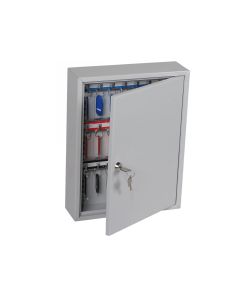
Key storage cabinet, 42 hooks, ideal for hotels and offices. Wall mounting. Dimensions: W. 27 x D. 8 x H. 35 cm.
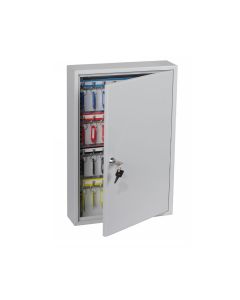
Wall-mounted key cabinet in powder-coated steel, 64 numbered hooks, 30x45x8 cm. Security guaranteed by professional cylinder lock.
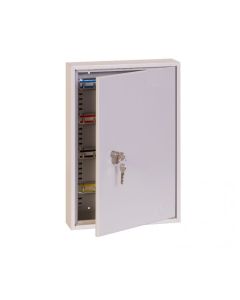
Professional powder-coated metal key cabinet, 42 hooks, euro cylinder lock, 27x8x35 cm. Wall-mounted solution for access management.
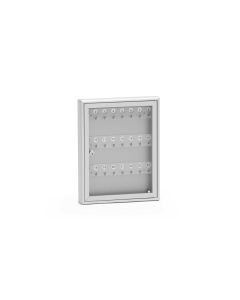
24-position key cabinet in aluminum and plexiglass, 29x37 cm. Structure with rounded corners and safety cylinder lock.
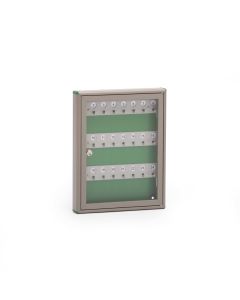
24-slot key cabinet in aluminum with galvanized back and plexiglass door. Design with rounded corners and cylinder safety lock.
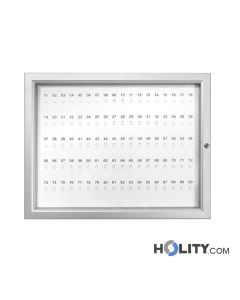
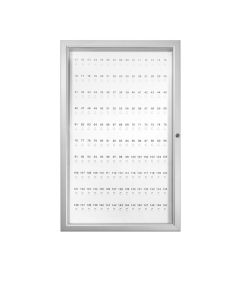
Wall-mounted key notice board in aluminum and plexiglass, 90 slots. Dimensions 43.4x54.8 cm. Lock closure for secure management in offices and schools.
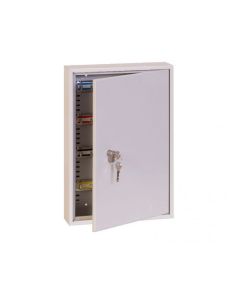
Wall-mounted key cabinet in powder-coated steel, 64 adjustable hooks, euro cylinder lock. Dimensions 30x8x45h cm.
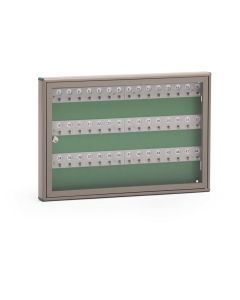
Professional key cabinet in aluminum and plexiglass, 55x37 cm. Equipped with 48 numbered hooks for quick and secure organization.
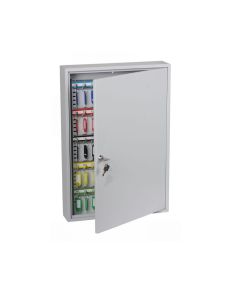
Metal key cabinet with 100 adjustable hooks and cylinder lock. Dimensions 38x8x55 cm, ideal for professional key management.
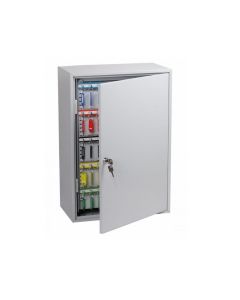
Wall-mounted steel key cabinet with 200 hooks and cylinder lock. Dimensions 38x14x55 cm. Ideal for key management in the HoReCa sector.
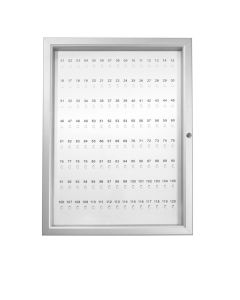
Indoor key cabinet with 120 slots for offices. Dimensions: W. 64.5 x h. 86.7 cm.
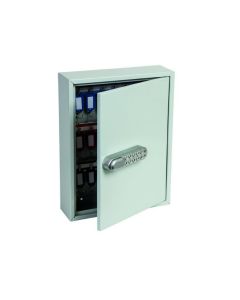
Professional painted steel key cabinet with electronic lock, 42 hooks and dimensions 27x8x35 cm. Ideal for hospitality facilities.
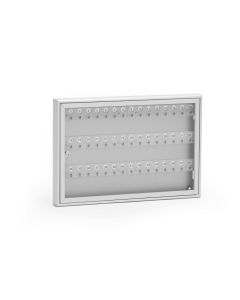
Professional key display case in aluminum and plexiglass with 48 numbered hooks. Dimensions 55x37x4 cm, ideal for access management and security.
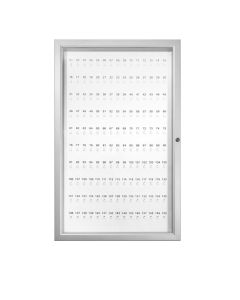
Indoor key cabinet for hotels and offices with 150 slots. Dimensions: W. 64.5 x h. 104 cm.
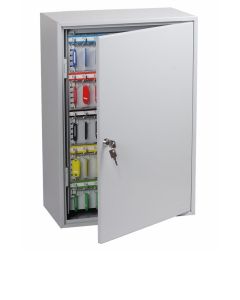
Professional steel key cabinet with 300 adjustable hooks, cylinder lock and dimensions 380x205x550 mm for intensive management.
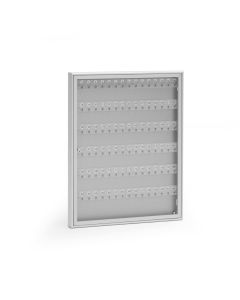
Professional 96-position aluminum key cabinet, dimensions 55x69 cm, with transparent plexiglass door and security lock.
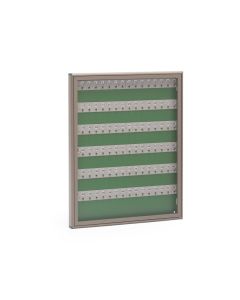
Professional key cabinet in aluminum and plexiglass, 55x69 cm. 96 numbered slots and cylinder lock. Ideal for offices and schools.
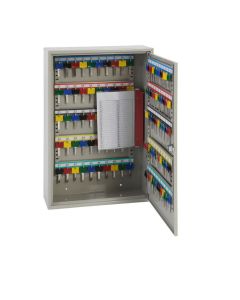
Steel key cabinet with 100 hooks, electronic combination lock and adjustable bars. Dimensions 38x14x55 cm. Color grey.
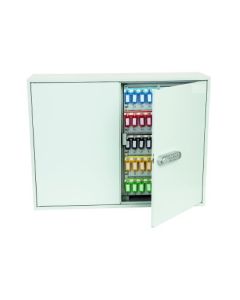
Two-door key cabinet in painted steel, 600 hooks and electronic lock. Ideal for centralized management in large facilities.
Key cabinets represent an essential organizational solution for professional environments that need to manage multiple access points: offices, hotels, accommodation facilities, warehouses, concierge desks, and rental agencies. These devices transform the chaos of scattered and poorly organized keys into an ordered, traceable, and controllable system, where each key occupies a predetermined and numbered position. Their installation is not just about the aesthetics of the space, but directly affects operational efficiency, reducing search times and preventing losses that could compromise work continuity. The choice of the right cabinet depends on the number of access points to be managed, the required security level, and the available wall space.
Adopting a key cabinet significantly affects the daily management of facilities that require capillary access control. In hospital, school, or hotel environments, the ability to instantly locate the correct key reduces the cognitive load on staff and minimizes downtime during work shifts. A well-organized cabinet with sequentially numbered hooks allows you to verify at a glance which keys are present and which are absent, facilitating security audits and movement traceability. Furthermore, the wall mounting and the robust aluminum structure guarantee a semi-permanent solution that does not take up precious space on desks or in drawers, keeping the work area clean and accessible. The immediate visibility of keys during public opening hours or in case of emergency can be critical for the functioning of entire facilities.
The added value lies not only in the physical organization, but in the prevention of economic losses due to disappearances, in the reduction of conflicts or delays related to access searches, and in the creation of a culture of responsibility among employees who must record every key movement. Facilities such as real estate agencies, car dealerships, and fitness centers find key cabinets to be an indispensable tool for maintaining administrative and operational order, especially when the number of access points to be managed exceeds dozens of units.
Key cabinets differ mainly in capacity, construction materials, and security levels. The most compact versions, with 24 or 42 hooks, are ideal for small offices, professional studios, or concierge desks where the number of access points is limited; these maintain compact dimensions (around 27-35 cm in width) and are easily installed on the wall without visually cluttering the space. Intermediate versions, between 64 and 100 hooks, represent the most versatile compromise and are used in most family-run hotels, schools, and medium-sized offices, with a typical width between 38 and 55 cm. Large cabinets, from 150 to 300 hooks, are intended for complex structures such as hotel chains, resorts, multi-department hospitals, or centralized warehouses, where the multiplicity of rooms would require multiple coordinated cabinets or a single vertical solution capable of holding all access points.
From a construction point of view, most cabinets use aluminum frames (lightweight, corrosion-resistant, and easy to clean) with transparent glass doors or galvanized sheet metal doors. The transparent door facilitates visual verification of occupied spaces without opening; the galvanized sheet metal offers greater opacity and visual protection from prying eyes, making it more suitable for contexts where confidentiality is important. Locks vary from simple traditional key mechanisms to more sophisticated electronic systems, the latter particularly common in hotels where digital access recording has become standard practice. The hooks can be made of robust plastic or galvanized metal, and are always supplied with printed sequential numbering that allows for quick connection between the key and the physical location.
Selecting the correct key cabinet starts with a detailed examination of the actual number of access points to be managed, not based on approximate estimates but on an actual count. Many decision-makers make the mistake of purchasing a cabinet that is too small and finding themselves, within a few months, with insufficient spaces as the business grows or new areas are added. Conversely, an oversized cabinet takes up space unnecessarily and is difficult to fill completely, generating a perception of disorder. The main criterion is therefore to size the model with a growth margin of 20-30% compared to current use, so as to absorb future expansions without the need to replace the entire system. The second critical aspect concerns the installation position: the cabinet must be located in a sufficiently lit area, easily accessible by authorized personnel, but protected from casual access if the context requires it.
A further selection criterion concerns the desired security level. If the facility manages keys for critical areas, reinforced rooms, safe deposit boxes, or protected spaces, a standard mechanical lock may not be sufficient; in these cases, systems with an electronic lock or high-security cylinder are strongly recommended. For hotels and tourist facilities, the possibility of integration with centralized access control systems or with digital movement recording represents a significant added value. The aesthetic style, although secondary to functionality, should not be overlooked: a cabinet with a metallic gray or stainless steel finish integrates better with modern environments, while different finishes can be chosen to adapt to the overall image of the facility. Finally, always check the mounting specifications and the thickness of the support wall, as a cabinet with hundreds of keys can reach considerable weights when fully occupied.
Although there is no specific European regulation that uniquely regulates key cabinets, these products must comply with general safety and construction standards. Firstly, if installed in work environments, the cabinet must meet workplace safety requirements, ensuring that edges, corners, and protruding components do not create risks of cuts or injury to users. The materials used must be non-toxic and not release harmful substances, especially if the cabinet is installed in schools, hospitals, or public facilities where hygiene and health requirements are rigorous. The mechanical resistance of the structure, secure wall mounting, the load capacity of the hooks, and the overall stability of the system are aspects controlled during design and must be certified by the manufacturer through CE declarations of conformity.
As for locks, if the cabinets are used in hotels or in structures where access control is of legal importance, the lock must meet specific security standards (ISO 6508 for hardness, ISO 4871 for anti-burglary performance). If the cabinet is connected to electronic tracking systems, personal data protection regulations (GDPR 679/2016) must be respected, especially if the recording of key movements is traceable to identified natural persons. In hospital environments, cabinets containing keys for medications or critical areas must comply with even stricter regulations, such as those dictated by local health authorities and the European community for clinical risk management. Periodic maintenance, including checking the functionality of the lock, the opening mechanism, and the integrity of the hooks, is a recurring operational requirement to maintain compliance and security over time.
Explore all products in the category and compare the available solutions to find the one best suited to your operational context. Each cabinet has been selected to guarantee robustness, traceability, and ease of daily use.
An effective key cabinet combines sufficient capacity for current access points, numbered hooks that facilitate quick retrieval, a robust shockproof structure, a reliable lock, and positioning in an area that is easily visually controllable. The transparency of the door allows for instant verification of occupancy status without repeated openings.
The transparent door allows for immediate visibility of occupied hooks and absent keys, reducing openings. Galvanized sheet metal offers opacity and protection from external eyes, preferable when access confidentiality is a priority. Both guarantee equivalent protection if equipped with an equivalent lock.
For small agencies, a cabinet with 42-64 hooks represents the ideal starting point. If the agency manages fewer than 30 properties, 42 hooks are sufficient with a growth margin. For 30-50 properties, 64 hooks offer operational comfort and future space without excessive clutter in the office.
It depends on the organizational structure. In hotels that integrate digital key management systems, an electronic lock facilitates automatic movement recording and an audit trail for regulatory compliance. For traditional hotels with manual management, a quality mechanical lock is generally sufficient if combined with disciplined procedures.
Purchasing a cabinet sized with a growth margin (20-30% more than current needs) is the best strategy. Alternatively, installing two or more coordinated cabinets for different areas (first floor, warehouse, pantries) promotes quick localization and reduces hook crowding in a single point.
Aluminum is lightweight, economical, and resistant to ordinary corrosion, ideal for dry environments. Stainless steel is superior in humid environments, near the sea, or in professional kitchens. Both require periodic cleaning, but stainless steel maintains its shine longer if hygiene is constant.
Yes. The sequential numbering of the hooks, combined with registers or digital tracking systems, allows you to instantly verify which key is missing and who took it. This generates accountability and significantly reduces accidental or intentional losses compared to systems without numbering.
No, it is not recommended. A key cabinet with many hooks occupied can weigh 15-25 kg. Plasterboard does not offer sufficient anchoring; a brick, concrete, or solid wood wall is required, with fastening using suitable chemical or mechanical anchors certified for the expected weight.
 English
  Italian
 French
 German
 Spanish