
mon-fri 9-13 / 14.30-18.30
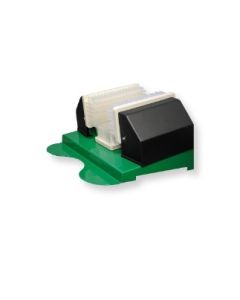
Dry shoe cleaner in painted steel with 3 brushes. Dimensions 440x390x230 mm. Cleans footwear and boots without the use of water or electricity.
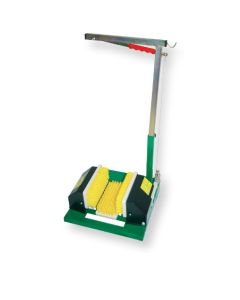
Professional manual boot washer in painted steel, 400x400 mm. Water-powered operation without electricity with 3 integrated water-fed brushes.
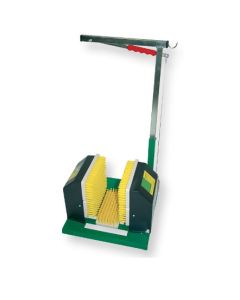
Epoxy-painted steel boot washing machine, 400x400 mm. 5 irrigated brushes with hydraulic operation without electricity.
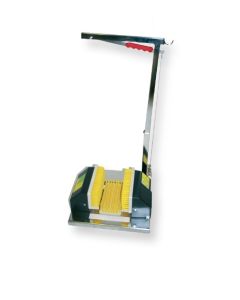
Manual stainless steel boot washer, 400x400 mm, with 3 irrigated brushes and by-pass valve. Ideal for corrosive environments and high-hygiene sectors.
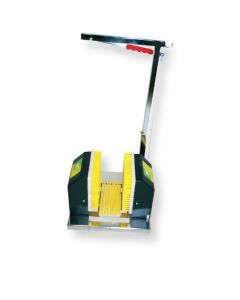
Professional stainless steel boot washer with 5 irrigated brushes. Hydraulic operation without electricity for deep hygiene in harsh environments.
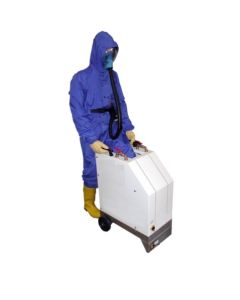
Professional boot washer machine in stainless steel and aluminum, 650x530x905 mm. 7-brush system and nozzles for intensive industrial hygiene.
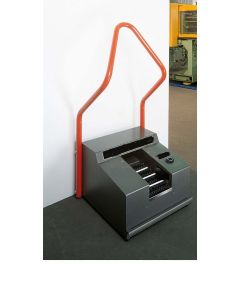
Professional sole cleaning machine with 6 nylon brushes system, 180W motor and removable dirt collection tray.
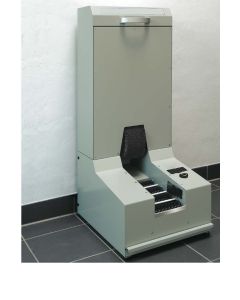
Professional sole and upper cleaner machine in RAL 7038 steel, 7 nylon brushes, silent round belt drive and compact design.
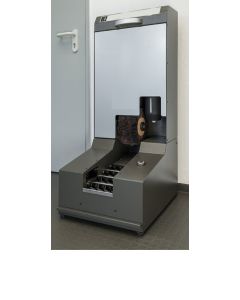
Compact steel sole cleaning machine, 460x600x1100 mm, equipped with 4 rotating brushes and polish dispenser for hygiene in professional contexts.
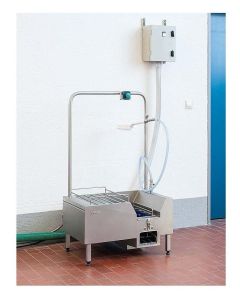
Professional boot washer in AISI 304 stainless steel (760x640x1220 mm). Wet cleaning of soles and uppers with rotating brush and EasyClean function.
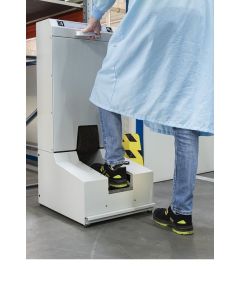
Professional industrial sole cleaner with 7 rotating brushes, integrated suction and filtering unit. Dimensions 460x600x1100 mm, dry cleaning.
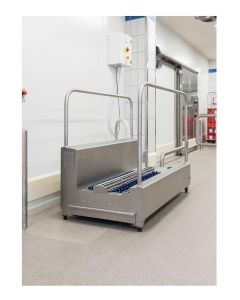
Dry boot cleaner h14230 in AISI 304 stainless steel (1440x877x1170 mm). Photocell start, 2 nylon brushes and dirt collection drawer.
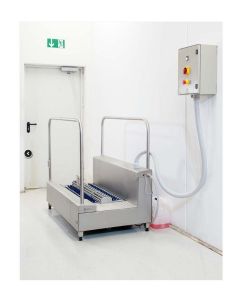
Channel-type boot washer in AISI 304 stainless steel (1420x885x1170 mm) for industrial use. Automatic start with photocells and 2 horizontal brushes.
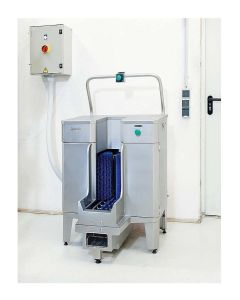
Universal stainless steel AISI 304 boot washer (770x870x1220 mm). Washes soles and legs with 3 independent brushes and rapid EasyClean system.
Professional boot washers represent essential technical solutions for sectors where hygiene and decontamination of work footwear constitute a critical requirement. These machines combine brushing systems, controlled irrigation, and containment basins to effectively remove dust, biological residues, chemical contaminants, and particulates from the soles and uppers of boots. Applications range from the food industry to barracks, from construction sites to healthcare facilities, where the spread of pathogens or pollutants must be contained through strict personnel decontamination protocols at the entrance and exit of sensitive areas.
The operation is designed to minimize operational effort: the operator simply positions the boot in the basin and activates the washing cycle, maintaining a natural ergonomic posture. The bottom basin collects excess liquid, preventing uncontrolled dispersion and splashes, while the integrated mixing system allows for the automatic dosing of high-concentration detergents and disinfectants. These devices guarantee a superior hygienic standard compared to manual methods, reducing cleaning times and significantly increasing compliance with local and international regulatory standards.
A professional boot washer offers concrete advantages that directly impact operational productivity and the safety of controlled environments. Firstly, it reduces decontamination cycle times compared to traditional methods: manual washing with a brush and bucket takes about 3-5 minutes per boot, while automated machines complete the operation in 40-90 seconds. Secondly, it ensures uniform cleaning on all sides of the footwear, eliminating blind spots caused by human manual handling and reducing the risk of cross-contamination. In the food sector, where the prevention of listeriosis and other pathogens is mandatory, this uniformity is fundamental.
A further benefit concerns work ergonomics: operators do not experience fatigue in the shoulders, back, and hands due to prolonged manual brushing, resulting in reduced staff turnover and loss of productivity due to occupational illnesses. Controlled consumption of water and disinfectants, compared to the use of unmeasured manual solutions, also generates significant economies on operating costs in the medium to long term. Finally, the traceability implicit in the automatic cycle facilitates documentation for external auditors and control bodies, creating a precise record of when and how many times each boot was processed.
The professional boot washer market is mainly divided into three functional macro-categories. The first includes manual brushing models without electrical power: these are basins equipped with 3 or 5 fixed or articulated brushes, operated by a manual water pump or a connection to the water mains with a manual opening valve. These systems, made of painted or stainless steel, represent the most economical solution and are suitable for small military structures, rural barracks, or construction sites with limited water access. They do not require power cables and have very low maintenance costs, as the brushes are the only parts subject to wear.
The second category is represented by semi-automatic and automatic models with electrical power, equipped with motors for activating rotating brushes, forced liquid detergent circulation systems, and often sensors for chemical dosing. These reach larger dimensions (length 600-700 mm, height 900-1100 mm) and are designed for medium-high work volumes in facilities such as prisons, medium-sized barracks, food plants, or hospitals. A third category, less frequent but increasingly in demand, is that of full-cycle machines with suction and filtering systems: they perfect the washing by adding a residual moisture suction phase and filtering the air dispersed during the cycle, reducing unpleasant odors and further shortening the natural drying times of the boot before reuse.
The selection of an appropriate boot washer depends on four critical variables that are rarely evaluated simultaneously by organizations. The first is the daily operational volume: a barracks with 200 soldiers accessing contaminated areas 2-3 times a day requires a machine capable of processing at least 100-150 cycles within 8 working hours, which excludes manual models. Conversely, a small construction site with 15-20 workers can manage the same boot washer even with 3 cycles per hour, making over-sizing the machine unnecessary. The second variable is the type of contaminant: boots soiled with mud and construction dust are effectively cleaned with standard brushes, while biological contaminants (blood, animal tissues) or aggressive chemicals require higher water temperatures (45-55°C) and specific disinfectants, often not compatible with painted steel basins, but manageable only in stainless steel.
The third consideration concerns available space and water-energy access: if the facility does not have a hot water connection or if the cost of creating a dedicated line exceeds 2000 euros, a manual model with cold water becomes economically rational. The fourth variable, frequently underestimated, is maintainability: simple 3-brush models in painted steel have a parts replacement cost equal to 5-8% of the purchase price and an average lifespan of 7-10 years, while 7-brush machines with a filtering system may require filter replacements every 6 months and annual technical overhauls involving costs of 10-15%. A frequent error is purchasing over-sized models to prevent future expansions: often such expansions do not occur, and the machine remains under-utilized, compromising the ROI.
The professional boot washer sector is regulated by standards that vary significantly depending on the context of use. In the food sector, Regulation (EC) 852/2004 and the subsequent Hygiene Package require that facilities for accessing food processing departments have footwear disinfection systems capable of reducing the logarithmic microbial load by at least 4-5 units (from 10^5 to 10^1 CFU/cm²). There is no unified European standard that codifies the “ideal boot washer”, but rather a series of regional protocols and international guidelines (for example, the recommendations of the EHEDG – European Hygienic Engineering & Design Group) that suggest construction specifications: smooth and non-porous surfaces, materials suitable for prolonged contact with chlorine-derived disinfectants, facilitated drainage of waste water, and geometries that prevent the formation of dead zones.
In the military and prison sectors, where boot washers are often part of broader biosecurity systems, the regulatory requirement is not standardized but is included in public tenders as technical specifications drafted by the client. However, the use of stainless steel instead of painted steel is now almost universal in these contexts to ensure a minimum durability of 10-15 years. Regarding general safety aspects, all machines supplied must comply with the Machinery Directive 2006/42/EC, guaranteeing the automatic braking of the washing cycle if the basin is opened during operation, protection against entrapment, and instructions for use. An often-overlooked requirement is waste management: waste water rich in disinfectants and biological residues cannot be discharged directly into the sewer without pretreatment in many municipal administrations; therefore, the choice of a machine with easily emptied collection basins or integrated decantation systems becomes a regulatory consideration, not just a practical one.
Explore all products in the category and compare the available solutions to find the one best suited to your operational context. Whether you need to equip a small facility or an industrial hub, our professional painted and stainless steel boot washers offer the technical flexibility needed to integrate into your decontamination processes.
A manual boot washer uses a water pump operated by the user and fixed brushes, requiring about 3-5 minutes per boot. An automatic model features electric motors for brush rotation and forced circulation systems, completing the cycle in 40-90 seconds. Automatic models are more efficient for high volumes (over 50 cycles/day), while manual ones remain cost-effective for small facilities with limited water access.
Yes, but with limitations. Cold water is effective for dust and mud, but less efficient against biological contaminants and fat-protein residues. Reg. EC 852/2004 does not prescribe water temperature but recommends high-concentration detergents and disinfectants when using cold water. In some plants, cold cycles are followed by a hot cycle (45-55°C) to ensure full compliance.
A standard cycle consumes between 8 and 15 liters of water, depending on the model and the duration of the wash (usually 60-90 seconds). Simpler manual models consume less (6-10 liters), while machines with a filtering and recirculation system reduce consumption to 5-7 liters per cycle thanks to the controlled reuse of the detergent liquid.
Stainless steel is superior for durability (10-15 years vs 7-10 years) and resistance to aggressive disinfectants, but it costs 30-40% more. Painted steel is sufficient for non-corrosive environments and standard disinfectants (diluted sodium hypochlorite). For food sectors with high hygiene standards or frequent washing, stainless steel is recommended.
Three brushes (1 top and 2 side) are sufficient for standard cleaning of construction and military boots. Five or more brushes are preferable for biological contaminants or sticky residues. Models with 7 brushes add frontality and coverage of the upper, useful for sectors with very high hygiene standards, but they increase maintenance complexity.
Waste water usually cannot be discharged directly into the sewer due to the high chemical (disinfectants) and biological load. Common solutions include collection in storage tanks with periodic emptying by specialized companies, or the installation of decantation and pre-filtration systems integrated into the machine. Check local discharge requirements with the municipal technical office.
Yes, but with precautions. Stainless steel machines withstand external temperatures down to -10°C/-15°C, while painted steel ones require protection from the elements. In very cold climates, a water recirculation system with a heating element is necessary to maintain operating temperature and prevent pipes from freezing. Seasonal maintenance increases significantly.
 English
  Italian
 French
 German
 Spanish