
mon-fri 9-13 / 14.30-18.30
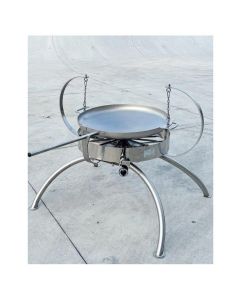
Gas tilting pan h1051_02 in 304 STAINLESS STEEL (Ø 600 mm, 11 kW). Ideal for catering and show cooking, it combines high productivity with a strong visual impact.
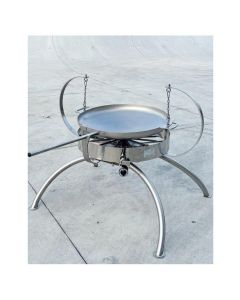
Gas tilting pan h1051_03 in 304 STAINLESS steel (Ø 700 mm, 11 kW). Ideal for catering and show cooking, it combines high productivity and scenic impact.
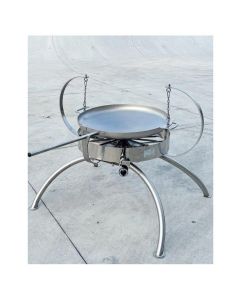
Tilting gas pan h1051_04 in 304 STAINLESS STEEL (Ø 800 mm, 14 kW). Ideal for catering and show cooking, it combines high productivity and a spectacular effect.
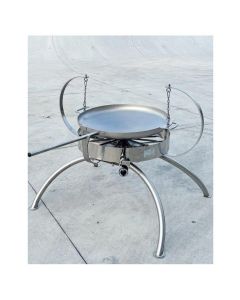
h1051_05 gas tossing pan in 304 STAINLESS STEEL (Ø 100 cm). 14 kW burner and tilting frame with chains. Ideal for catering and spectacular show cooking.
The professional tilting bratt pan represents a fundamental cooking tool within high-performance kitchens, canteens, cooking centers, and dynamic operational contexts such as street food events. Designed to guarantee high volumetric capacity and thermal uniformity, this equipment allows for multiple culinary techniques in a single bowl, from braising to deep browning, up to prolonged simmering of large quantities of food.
The integration of a manual or motorized tilting mechanism makes unloading preparations and subsequent sanitizing operations extremely easy. Known in the professional catering field also by the terms large tilting pan or tilting skillet, its structural versatility allows for significant optimization of production times and energy consumption, ensuring homogeneous results and high quality standards on substantial volumes.
Adopting a large tilting pan in your professional cooking line allows you to centralize different types of preparation within a single high-performance machine, reducing overall footprint and optimizing workflows in the kitchen. The main technical advantage lies in the ability of the bottom to distribute heat uniformly over the entire surface, avoiding local overheating points that could compromise the organoleptic quality of the food. In itinerant activities and street food events, where operational space is limited and sales volumes are concentrated in short periods, using the tilting skillet guarantees the production continuity necessary to serve hundreds of hourly portions of first courses, risottos, fried foods, or stews without suffering performance drops.
In addition to operational versatility, the possibility of operating the tank tilting up to accentuated angles facilitates the rapid and complete emptying of cooking liquids and the finished product into Gastronorm containers, eliminating waste and reducing the physical effort of operators. The robust stainless steel structure guarantees superior mechanical resistance in the face of intensive and continuous work rhythms, significantly reducing cleaning times between one production cycle and the next and maintaining rigorous hygiene standards.
The options within the range differ primarily by the power supply system, the nominal capacity of the tank, and the movement mode of the tilting mechanism. Electric variants integrate high-efficiency armored heating elements located below the bottom of the tank, offering extremely accurate and constant thermal control, ideal for delicate or prolonged cooking at a controlled temperature. On the other hand, the gas tilting bratt pan uses high thermal efficiency steel burners that ensure an exceptionally fast achievement of the operating temperature, making this type particularly appreciated in mobile contexts and outdoor street food where it is necessary to operate in the absence of high-power three-phase electrical connections.
From a dimensional point of view, volumes vary from compact 50-liter tanks to industrial structures over 120 liters, structured with high-conductivity composite steel bottoms such as bimetallic coupled or mild iron for perfect browning. The discharge system can be based on a manual handwheel mechanism with worm screw operation, highly reliable and free of electrical maintenance needs, or on a motorized electro-mechanical system with integrated push-button panel, recommended for large-tonnage machines where the weight of the loaded tank requires maximum ergonomics of use.
Selecting the appropriate equipment must be based on a precise analysis of the required hourly production volumes and the prevailing type of menu served by the restaurant or mobile stall. For entities active in itinerant catering such as food trucks or setups for gastronomic events, purchasing a tilting skillet powered by LPG represents the most autonomous and high-performance solution, guaranteeing readiness for use and total independence from rigid electricity distribution networks. It is crucial to evaluate the thickness and material of the tank bottom: an austenitic stainless steel bottom guarantees maximum resistance to corrosion and ease of cleaning with chemical products, while the presence of a bimetallic composite bottom is preferable for those who need to brown large quantities of meat or stew without the food sticking to the surface.
A recurring error during the evaluation phase is underestimating the space necessary for the tank tilting operations and the positioning of trolleys or containers for collecting cooked food. It is essential to verify that the external dimensions of the unit allow for easy circulation of operators and compliance with safety distances from other cooking lines. Furthermore, the choice between a large tilting pan with a balanced insulated lid and a basic model significantly affects initial heating times and overall energy efficiency, reducing heat loss into the work environment.
Compliance of tilting bratt pans requires mandatory adherence to European regulations regarding suitability for food contact and industrial machine safety. The steels used in making the surfaces in direct contact with food must meet the requirements set by Regulation EC 1935/2004, ensuring the absence of migration of harmful substances even in the presence of highly acidic ingredients or those subjected to prolonged high temperatures. In models equipped with gas supply, the equipment must compulsorily display certification according to the GAR Directive 2016/426 with thermocouple safety systems that block the fuel supply in case of accidental extinguishing of the pilot flame.
From a workplace safety perspective, the basin lifting mechanism must include devices for automatically stopping the heating as soon as the tank begins the tilting phase, avoiding the risk of dry overheating and safeguarding the operator from accidental splashes. Cleaning and extraordinary maintenance operations must be able to take place in total safety thanks to adequate electrical protection ratings (at least IPX4 or IPX5 for the external casing) that allow for washing surfaces with water jets without causing short circuits or infiltration into internal live components.
Explore all the products in the category and compare the available solutions to find the one best suited to your operational context.
The tilting bratt pan is a high-capacity professional cooking equipment equipped with a tilting mechanism for the container. It allows for cooking, stewing, braising, and frying huge quantities of food, facilitating the discharge of the product and liquids through the gradual tilting of the steel tank.
In street food events, the tilting skillet allows for the quick preparation of hundreds of portions of first or second courses in small spaces. The heating speed, high thermal yield, and ease of rapid emptying optimize customer waiting times during peak flow periods.
Gas models offer speed in reaching temperature and maximum autonomy for itinerant services in the absence of strong power lines. Electric versions guarantee millimetric thermal control of the tank, making them ideal for prolonged cooking, delicate stews, and fixed indoor laboratories.
The stainless steel bottom ensures maximum hygiene and resistance to acidic corrosion from food. However, bimetallic composite bottoms with an iron or copper core offer significantly superior heat conduction, uniform across the entire surface, ideal for deep browning of meat.
Cleaning is carried out by tilting the tank to discharge the washing water into the drainage channels. The external casing with IPX5 waterproof protection allows the use of moderate water jets and professional degreasing detergents without damaging the electrical components or the burners underneath.
For small businesses or food trucks, 50 to 60-liter models are suitable. School canteens, hospitals, or large catering services require tanks from 80 up to 120 liters, capable of satisfying the simultaneous production of hundreds of meals per single production cycle.
 English
  Italian
 French
 German
 Spanish