
mon-fri 9-13 / 14.30-18.30

Electric heater with 2000W PTC element, adjustable handle and dual power. Ideal for workshops and residential environments up to 20 m².

2000W electric hot air generator with stainless steel heating elements and IPX4 protection. Compact and versatile for workshops and construction sites.
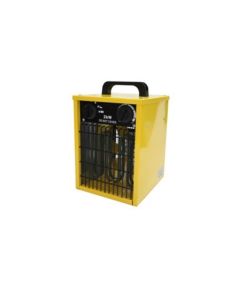
2 kW single-phase electric fan heater for surfaces up to 20 m². Compact IPX4 splash-resistant structure, ideal for workshops and construction sites.
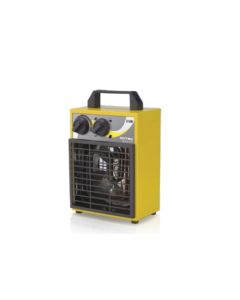
Professional 2 kW electric fan heater in stainless steel. Portable and compact, ideal for 24h continuous heating in industrial environments.

3000W electric hot air generator in stainless steel. Dimensions 27x25.5x40 cm, IPX4 protection, ideal for professional heating and construction sites.
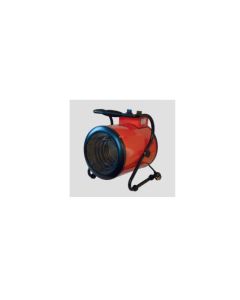
Professional 3000W stainless steel electric hot air generator, compact and adjustable, ideal for workshops and construction sites up to 40 m².

Professional H958_41 stainless steel fan heater, 3000W. Ideal for 30 m², with adjustable tilt flow and precision capillary thermostat.

Manual gas forced air heater h923_23, 15 kW. Ultra-lightweight and compact model with an airflow of 320 m3/h, powder-coated steel shell, and integrated safety systems.

15 kW LPG gas hot air generator, compact 38x19x30.5 cm structure, special nozzle for complete combustion and piezoelectric ignition.
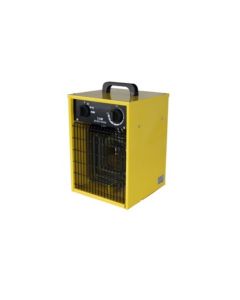
Three-phase 5 kW electric fan heater for industrial use. Compact IPX4 structure, dimensions 27x25.5x40 cm. Ideal for quickly heating up to 48 m².
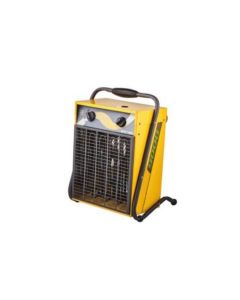
Electric hot air generator H958_21 in stainless steel (28x39x22 cm). 4.5 kW adjustable power, ideal for 24h continuous use in technical environments.

Manual gas hot air generator h923_24 with adjustable power from 18 to 30 kW. Compact and lightweight model with an air flow of 650 m3/h, steel body, and integrated safety systems.

LPG gas hot air generator (30 kW) with high oxygen supply nozzle, piezoelectric ignition and air flow of 650 m³/h.
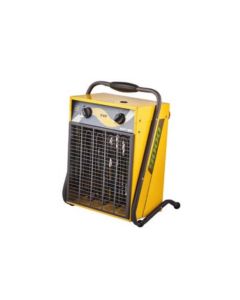
H958_22 hot air generator in stainless steel, 9/6 kW. Airflow 850 m³/h, portable and designed for continuous 24h industrial heating.
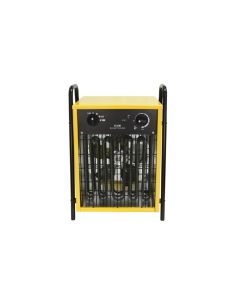
Professional 9,000 W stainless steel hot air generator. Heats up to 80 m² with high-precision capillary thermostat. Dimensions 49x30x35.5 cm.

Portable electric hot air cannon H958_42 in stainless steel, 9000W. Professional heating for 80 m² with adjustable flow and thermostat.
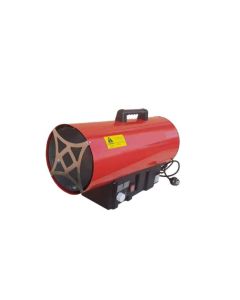
50 KW LPG gas hot air generator in steel, with electronic ignition and integrated thermostat for heating ventilated environments.

Gas hot air generator for warehouses h923_26 with adjustable power from 30 to 50 kW. Air flow rate 650 m³/h, piezoelectric ignition, stainless steel burner and epoxy powder-coated casing.
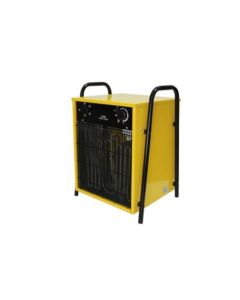
Professional 15 kW three-phase electric fan heater in metal. 120 m² coverage, IPX4 protection and high air flow for industrial environments.
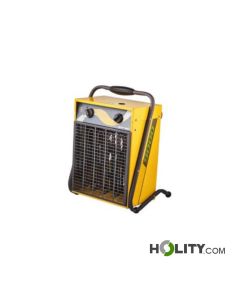
H958_23 industrial hot air generator in stainless steel, power 15 kW, flow rate 1100 m³/h. Portable fan heater for continuous heating.

Professional 15kW electric heater in metal and stainless steel, 400V three-phase power supply, 1100 m³/h flow rate, ideal for workshops and construction sites.
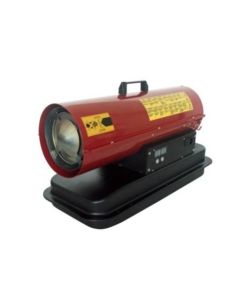
19.8 kW stainless steel diesel hot air generator, with 20L tank and integrated thermostat for heating ventilated areas.

Battery-powered gas hot air generator h923_25 with adjustable power from 18 to 30 kW. Powered at 18 VDC with a 5.2 Ah lithium-ion battery, air flow rate of 650 m3/h and integrated safety systems.
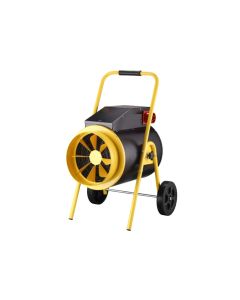
15 kW industrial electric heater in stainless steel. 120 m² coverage, adjustable airflow and precision capillary thermostat.
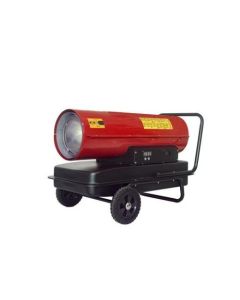
Professional 30.2 kW diesel/kerosene hot air generator with stainless steel chamber, wheels and integrated thermostat for ventilated environments.
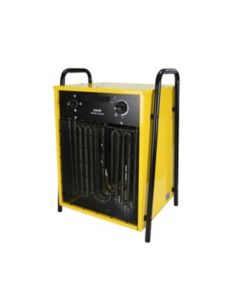
Professional 22 kW electric fan heater, three-phase power supply, 180 m² coverage. Robust yellow structure with IPX4 protection and 2867 m³/h air flow.

17.5 kW diesel hot air generator in stainless steel, ideal for industrial heating and construction sites. Portable, with IPX4 protection and 20L tank.
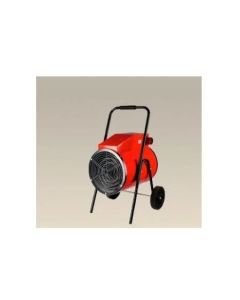
30kW three-phase stainless steel electric heater, ideal for workshops and construction sites. 400 m² coverage, wheeled with IPX4 protection.
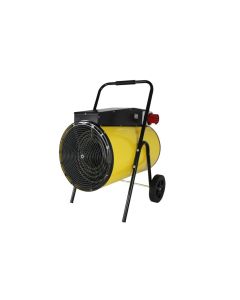
30 kW industrial electric heater in stainless steel for areas up to 240 m². Airflow 3,481 m³/h and precision capillary thermostat.

Professional 60.7 kW diesel hot air generator with 1500 m³/h airflow and 68L tank. Continuous heating for industrial contexts.
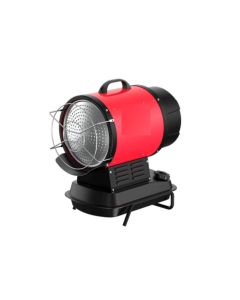
20 kW industrial infrared hot air generator h923_21. Equipped with stainless steel radiant disks, 10.5 L tank and integrated safety systems. Weight: 18 Kg.

30.6 kW industrial diesel hot air generator. Compact steel structure, 39L tank and integrated thermostat for workshops and warehouses.

97.2 KW stainless steel diesel hot air generator. Robust, with 110L tank and thermostat, ideal for large ventilated environments.

52.5 kW diesel hot air generator in stainless steel. Flow rate 2500 m³/h and 55L tank, ideal for high-efficiency industrial heating.
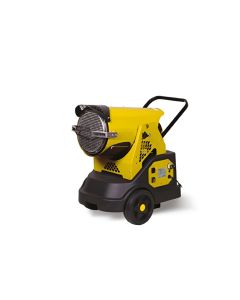
Infrared diesel heat generator in AISI 430 stainless steel. Direct heating without air movement, 43L tank and high autonomy.

82.9 kW stainless steel diesel hot air generator. Ideal for large industrial spaces, it guarantees over 14 hours of continuous autonomy.

Industrial infrared hot air generator h923_22 of 42 kW. Featuring a vertically adjustable reflector, fiber-ceramic chamber, 55 L tank, and electronic flame control.
Industrial hot air generators represent a fundamental solution for heating large environments such as warehouses, storage facilities, construction sites, and production structures. These devices use various combustion and energy technologies – electric, gas, diesel – to produce controlled and directionally distributable hot air flows. The choice of generator depends on the size of the space, the degree of thermal insulation, expected operating costs, and the availability of energy infrastructure. In industrial environments where maintaining adequate temperatures is critical for goods preservation, personnel comfort, or specific production processes, these heaters become strategic investments that directly influence operational efficiency.
The advantages of installing an industrial hot air generator go beyond simple heating. These devices offer superior heating speed compared to traditional fixed systems, allowing operational temperatures to be reached in reduced times, a crucial factor in environments where every minute of inactivity generates significant costs. The portability of many models allows for flexible positioning within the workspace, with the possibility of directing the airflow towards specific areas where heating is a priority. Furthermore, modern generators integrate temperature control systems via thermostats and automatic protections against overheating, reducing the risk of damage to structures and ensuring prolonged operation without continuous supervision.
From an economic perspective, industrial generators allow for energy consumption containment compared to turning on centralized systems for entire company areas. Many production realities use them as a complementary solution during seasonal transition phases or as a backup system in case of primary system failure. Their construction reliability, with a robust steel frame and components sized for intensive operational cycles, guarantees continuity of operation even in hostile environments or with constant vibrations.
Three main categories of industrial hot air generators stand out on the market, each with specific usage profiles. Electric heaters represent the most widespread solution for environments with a stable three-phase connection; they operate without direct emissions, do not require dedicated external ventilation, and are easily controlled via a switch or thermostat. Available in powers ranging from 2 kW up to 30 kW and beyond, they adapt to both small spaces and medium-sized warehouses. The most compact models are used in workshops, laboratories, and temporary construction sites, while high-capacity electric cannons serve widespread heating in large areas. Their energy efficiency is inherently high, as all energy consumed is converted into heat without combustion losses.
Gas generators (propane and butane) and diesel ones represent alternatives when an electrical connection is not available or when high performance with reduced operating costs is needed. Gas models are compact, portable, and ideal for construction sites and temporary situations; they work with piezoelectric ignition and do not require power outlets. Diesel generators, on the other hand, offer maximum power for very vast spaces and prolonged periods of operation, with integrated tanks from 20 to 68 liters that guarantee operational autonomy for many hours. The latter, however, present greater maintenance complexity, require well-ventilated spaces for flue gas exhaust, and are subject to stricter fuel storage regulations. Finally, portable infrared heaters represent a specialized niche: they use quartz lamps to directly radiate people and objects instead of heating the ambient air, proving useful in contexts where localized heating is preferable.
The selection of an industrial hot air generator requires a structured evaluation of technical and operational parameters. The first element to consider is the required thermal power, expressed in kilowatts, directly related to the size of the space, the degree of thermal insulation, and losses through doors, windows, and frames. An empirical rule suggests about 50-100 W per cubic meter of volume, but this estimate varies significantly based on external climatic conditions and the air exchange rate. A 500 sqm warehouse with a height of 4 meters (2000 m³) might need a 9-15 kW generator in temperate zones, while in harsh climates this figure doubles. It is also fundamental to evaluate the type of power supply available: if a stable three-phase supply is not present, a gas or diesel generator becomes mandatory. The air flow rate (expressed in m³/h) influences the speed of heat distribution; higher values cover large areas quickly but generate turbulence, while moderate flow rates guarantee a more homogeneous distribution.
Common mistakes include unnecessary oversizing (which increases costs and consumption) and purchasing models that are not robust enough for environments where vibrations and mechanical stress are constant. It is necessary to verify the presence of protections such as a safety thermostat, overheating protection and, for portable models, solid wheels that resist uneven floors and obstacles. If the generator will operate in humid areas or with water splashes (construction sites, processing laboratories), it is essential to check the IPX4 protection degree or higher. For fixed or semi-fixed installations, the availability of robust handles and the possibility of bracket mounting facilitate installation and maintenance. Last critical factor: operational noise, measured in decibels; in contexts where acoustic comfort is a priority (for example, warehouses with frequent passage of personnel), prefer models with integrated acoustic insulation or choose lower powers distributed over multiple units.
Industrial hot air generators are subject to regulations that vary based on the type of power supply and intended use. For electric models, compliance with Directive 2006/42/EC (Machinery Directive) is mandatory; the device must be accompanied by CE marking, declaration of conformity, and an instruction manual. The technical standard EN 60335-2-30 specifies safety requirements for domestic and professional heaters, including electrical insulation tests, overcurrent protection, and temperature limiting thermostats. For gas models, EN 89 (portable gas heaters) applies, governing ignition safety, automatic shutdown systems, and carbon monoxide emissions. Diesel generators must comply with EN 12098-5 and specific regulations on the containment of polluting emissions in closed environments.
At the installation level, most jurisdictions require that environments where combustion generators (gas and diesel) operate have sufficient natural or forced ventilation to guarantee the evacuation of combustion products. For closed spaces, it is advisable to carry out a risk assessment related to carbon monoxide concentration and oxygen reduction. Generators with thermal power exceeding 100 kW may be subject to communications to local environmental authorities. In temporary construction sites, the safety manager must include hot air generators in the risk assessment of the operational plan, in particular by checking the positioning relative to flammable materials and evacuation routes. Finally, it is good practice to subject the devices to periodic certified inspection and maintenance, especially before the winter season, to ensure the absence of gas leaks, the integrity of the pipes, and the correct functioning of the protection systems.
Explore all the products in the category and compare the available solutions to find the one best suited to your operational context. From compact single-phase models to three-phase industrial cannons, from gas combustion to infrared technology, our catalog covers the entire range of heating needs in professional and industrial environments.
The electric generator does not produce emissions and does not require external ventilation; ideal for closed spaces with a three-phase connection. The diesel generator offers absolute portability and high performance (up to 60+ kW) with prolonged autonomy, but requires well-ventilated spaces and more complex maintenance. Operating costs depend on local energy and fuel prices.
It depends on the height, thermal insulation, and construction losses. A standard 400 sqm warehouse with a height of 4 meters (1600 m³) typically needs 8-12 kW in temperate zones, up to 18-20 kW in harsh climates or with poor insulation. We recommend a technical evaluation of heat loss before purchasing.
Modern gas generators are designed for environments with natural or forced ventilation. In completely closed spaces, it is essential to ensure air exchange to avoid carbon monoxide accumulation. Always check the protection degree and consult the manufacturer’s instructions regarding ventilation requirements.
IPX4 indicates the degree of protection against liquid ingress: the device resists water splashes from any direction, but not immersion. It is suitable for construction sites and humid areas, not for direct washing or exposure to concentrated water jets. For very humid or temporarily floodable environments, check for higher-grade specifications.
Levels range from 65-75 decibels for compact models to 80-90 dB for high-capacity cannons. In contexts where noise is critical (warehouses with permanent staff), choose models with integrated acoustic insulation or distribute heating over multiple lower-power units to decrease the perceived acoustic level.
For professional models, a thermostat is highly recommended and present in most modern products. It allows maintaining the target temperature without continuous manual intervention, also protecting against accidental overheating. Always verify compatibility with the required power before purchasing.
Before the winter season: check fuel lines, clean the atomization nozzle, check the ignition system, and perform a dry run test. During use: weekly check of the tank level. At the end of the season: empty residual diesel or treat with stabilizer to avoid crystallization.
Yes, but with specific precautions. Position the generator at a minimum distance of 1-2 meters from flammable materials, solvent liquids, and dusts. Choose models with overheating protection and a safety sensor. For ATEX environments (explosive risk zones), request special certifications from the manufacturer.
 English
 Italian
 French
 German
 Spanish