
mon-fri 9-13 / 14.30-18.30
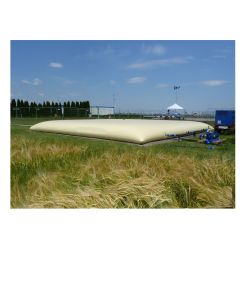
Flexible tank for drinking water. Volume: 1 m³. Coating material: PVC.
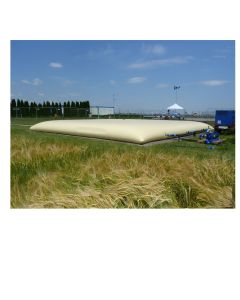
Flexible tank for drinking water. Volume: 5 m³. PVC coating.
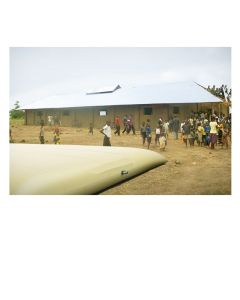
Flexible tank for drinking water. Volume: 10 m³. Length: 5.83 m.
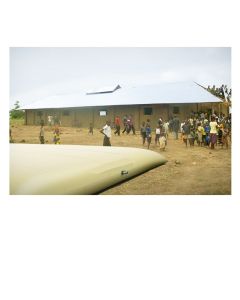
Flexible tank. Ideal for storing drinking water. Volume: 15 m³.
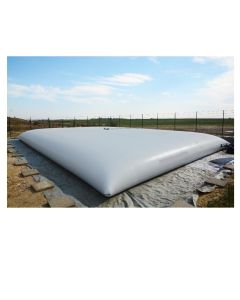
Flexible tank for drinking water. Volume: 20 m³. Length: 5.83 m.
Flexible tanks represent a versatile and reliable solution for liquid storage in both temporary and permanent contexts, operating in the agricultural, industrial, and civil sectors. These tanks, made with technical fabrics and PVC coatings, guarantee total protection of the contents and adapt to multiple applications: from the storage of drinking water to the collection of effluents, from the preservation of liquid fertilizers to fire-fighting reserves. Their robust structure and ISO 9001 certified materials ensure regulatory compliance, resistance to extreme temperatures, and containment capacities up to 300, 400, and even 2000 cubic meters depending on the model.
Flexible tanks offer significant operational advantages compared to traditional fixed solutions. Their modular nature allows for rapid installation on any flat and horizontal surface, without the need for masonry work or complex anchoring systems, significantly reducing setup times and costs. This makes them particularly suitable for agricultural contexts where seasonality determines variable storage needs, as well as on construction sites, temporary water treatment plants, and industrial facilities requiring management flexibility.
Application versatility represents a further advantage: the same tank can be used for drinking water, effluents, fertilizers, or chemicals, by choosing the appropriate model and respecting specific regulatory constraints. Materials resistant to extreme temperatures and chemical aggression guarantee prolonged durability even in critical environments, while the recyclable composition of many models meets the growing needs for environmental sustainability. Furthermore, the cost per unit of volume stored is generally lower than that of rigid metal tanks, favoring economic rationalization in long-term projects.
Maintenance practicality is a key element in choosing these solutions. Since they are devoid of complex mechanical parts, flexible tanks require limited periodic checks and do not necessitate expensive structural repair interventions. If necessary, replacement is easy, as is transport thanks to the low weight when empty. For the agro-livestock sector and food processing industries, compliance with materials for food contact makes these tanks a mandatory choice, ensuring protection against contamination and compliance with HACCP regulations. Their landscape invisibility, especially when positioned in protected areas, also contributes to preserving the aesthetic and environmental aspect of the installation contexts.
The range of flexible tanks available in the catalog includes various construction configurations and intended uses, each optimized for specific applications. Models for drinking water are built with technical fabric and PVC coating certified for food contact, ensuring the absence of migration of harmful substances. Tanks for liquid fertilizers maintain the same structure but are specifically tested for resistance to corrosive chemical and organic products; the hydrophobic coating protects both the structure and the surrounding environment from infiltration. Effluent tanks represent a category of their own, often made of 100% recyclable technical canvas with PVC coating: this solution is particularly suitable for domestic drainage water, agri-food waste, and industrial discharges, as it allows eco-compatible disposal at the end of its useful life.
Fire-fighting reserve tanks constitute a specialized type, equipped with hydrophobic coating and materials capable of withstanding severe thermal cycling, from negative winter temperatures to summer heat. Volumes vary from 1 cubic meter for specific applications up to 300-400 cubic meters for central storage systems, with intermediate models (5, 10, 15, 20 cubic meters) covering the most frequent range in agriculture and small-medium industry. Some extra-large models reach 2000 cubic meters, meeting the needs of large industrial settlements or agricultural consortia. The choice between different sizes depends not only on the volume to be stored but also on the frequency of liquid turnover, the availability of installation space, and the access requirements for inspection and maintenance.
Selecting the most suitable flexible tank requires a systematic evaluation of multiple factors. Firstly, it is essential to precisely identify the nature of the liquid to be stored: drinking water, water for technical use, fertilizers, chemicals, effluents, or others. This choice determines the coating material and the level of certification required. Secondly, the necessary volume must be calculated considering not only immediate needs but also seasonal peaks and safety reserves: undersizing leads to overflow and leaks, while oversizing generates economic inefficiency and excessive space occupancy. The frequency of content turnover influences the choice: frequent cycles require easy access systems and geometries that facilitate emptying.
The available installation area represents a critical constraint: the ground must be perfectly flat, horizontal, and free of sharp objects, to avoid localized stresses that compromise the integrity of the tank. Sloping, sandy soils or those with outcropping rocks require preliminary preparation with leveling, compaction, and the laying of protective geotextile. The space must also allow access from two or three sides for periodic visual inspection and, if necessary, maintenance interventions. The local climate influences the choice of coating: environments with intense UV require additional protection, while areas with very low temperatures need materials capable of maintaining flexibility even at -20 °C or lower. The availability of anchoring systems or protection from the elements (sheds, covers) determines the overall durability.
Flexible tanks for drinking water must comply with Legislative Decree 31/2001, which regulates the quality of water intended for human consumption, and European directives on materials for food contact (Regulation (EC) 10/2011). This compliance is certified through global and specific migration tests, which verify the absence of release of harmful substances into the contained liquid. ISO 9001 certification of the production process guarantees qualitative consistency and construction traceability, requirements now requested by almost all public administrations and major private clients. For tanks intended for effluents, national and regional environmental regulations govern containment and the prevention of infiltration into the ground, often requiring a secondary containment tray and a minimum distance from groundwater sources.
Occupational safety regulations (Legislative Decree 81/2008) imply that installation must take place in conditions of complete stability, with support surfaces prepared according to standard protocols. For environments subject to phytosanitary or industrial controls, additional certifications may be requested regarding compatibility with specific products or the traceability of the material composition. Fire-fighting reserve tanks must respect the accessibility and static pressure criteria provided by local fire departments, often related to the UNI 11017 standard and regional building regulations. Accompanying documentation must include a technical data sheet with material composition, certificates of conformity, installation and maintenance instructions, as well as data relating to volumetric capacity, weights, and dimensional tolerances. In the case of export or transfer between regions, check local regulatory compatibility, as some environmental constraints may vary territorially.
Explore all the products in the category and compare the available solutions to find the one most suitable for your operational context. Each proposed flexible tank model is selected for reliability, regulatory compliance, and value for money.
Drinking water tanks are made of materials certified for food contact and PVC coating compliant with Legislative Decree 31/2001, preventing the migration of harmful substances. Effluent tanks use 100% recyclable technical canvas with standard PVC coating, designed to contain domestic and industrial wastewater without compromising the hygienic safety of the environment.
A 10 m³ flexible tank has an external length of approximately 5.83 meters and width-depth proportions that vary depending on the configuration. It is advisable to provide at least 50-70 cm of free space on all sides for inspection and maintenance, thus requiring a total space of approximately 7 × 6 meters on a flat surface.
Once filled, flexible tanks should not be moved due to the critical weight of the contained liquid (1 m³ of water weighs 1 ton). Moving is only possible when they are completely empty and deflated, an operation that requires ventilation and must be carried out by specialized personnel with appropriate equipment.
Most flexible tanks maintain structural integrity between -20 °C and +60 °C. However, fire-fighting reserve tanks are certified to tolerate more severe fluctuations. Extreme external temperatures do not directly affect the content if the liquid is stored, but repeated thermal cycles can accelerate the aging of the coating.
For small and medium-volume tanks (up to 20 m³) on stable surfaces, anchoring is not always mandatory if the ground is flat and correctly prepared. However, in windy areas or on slopes, anchoring systems (metal strips, cables) are strongly recommended to prevent movements and lateral stresses that compromise integrity.
The typical useful life is 10-15 years if properly maintained, with protection from UV and atmospheric factors. Material aging is accelerated by prolonged direct solar exposure, extreme thermal cycles, and contact with aggressive chemicals. Annual inspections allow for the identification of signs of deterioration before critical failures occur.
Authorizations depend on the intended use, volume, and location. Installations for drinking water in civil structures require municipal regulatory compliance; tanks in protected areas or near groundwater sources may require environmental authorization. Agricultural tanks for fertilizers do not require permits in most cases, unless they exceed local threshold volumes.
The ideal base consists of: compaction of the natural soil, spreading of fine sand (3-5 cm) for leveling micro-reliefs, non-woven geotextile for protection against sharp objects and edges, and an additional layer of finishing sand (2-3 cm). This sequence protects the coating from punctures and uniformly distributes the load of the contained liquid.
 English
 Italian
 French
 German
 Spanish