
mon-fri 9-13 / 14.30-18.30
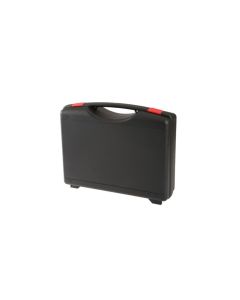
Industrial polypropylene case, resistant, ideal for the safe transport of tools and products. Equipped with 2 front latches. Dimensions: approx 275 x 230 x 83 mm. Weight: 0.40 kg. Color: black.
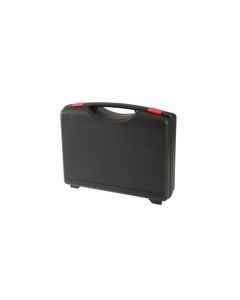
Industrial case in resistant polypropylene, ideal for the safe transport of tools and equipment. Equipped with 2 front closures for optimal protection. Dimensions: approx. 395 x 295 x 106 mm. Weight: 0.70 kg. Color: black.
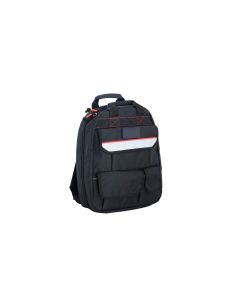
Tool bag with adjustable shoulder straps and large internal pocket. Dimensions: W. 31 x D. 12 x H. 39 cm.
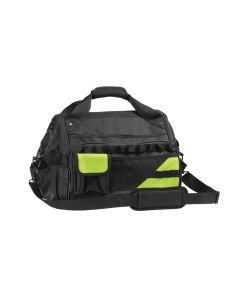
Tool bag made of resistant technical fabric, with padded shoulder strap and multiple pockets. Dimensions: W 46 x D 29 x H 32 cm.
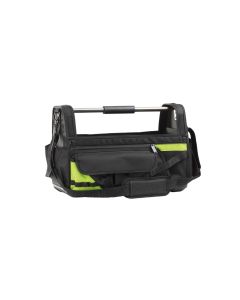
Heavy-duty technical fabric tool bag with velcro cover, multiple pockets and padded shoulder strap. Dimensions: L 50 x D 26 x H 36 cm.
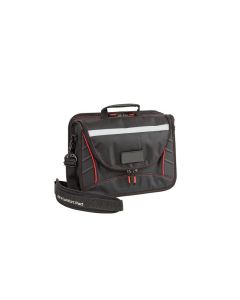
Professional work bag equipped with a rubber grip handle and adjustable shoulder strap. Dimensions: W. 40 x D. 13 x H. 31 cm.
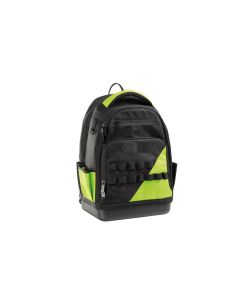
Tool backpack in durable technical fabric with rigid plastic base, multiple pockets and laptop compartment. Dimensions: W 31 x D 22 x H 46 cm.
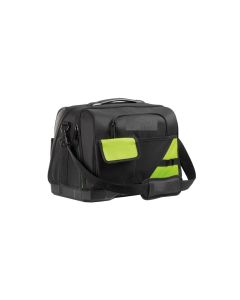
Tool bag in resistant technical fabric, with rigid base and large compartments. Dimensions: W 45 x D 25 x H 33 cm.
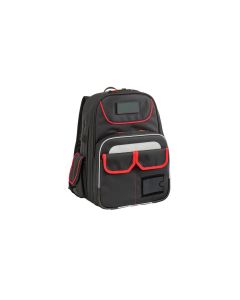
Tool bag with central area with pockets and lockable zip. Dimensions: W. 30 x D. 14 x H. 40 cm.
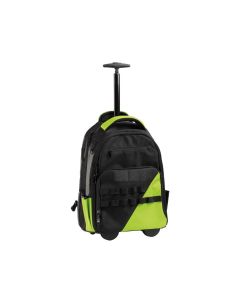
Tool backpack with double compartment, heavy-duty technical fabric and integrated wheels. Dimensions: W 35 x D 20 x H 52 cm.
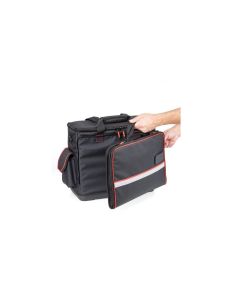
Professional work bag with vertical access for laptop up to 15.6" and tools. Dimensions: W. 42 x D. 20.5 x H. 36 cm.
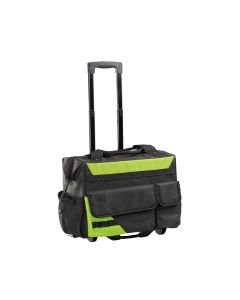
Tool trolley made of durable technical fabric with telescopic handle and large tool compartment. Dimensions: W 47 x D 33 x H 27 cm.
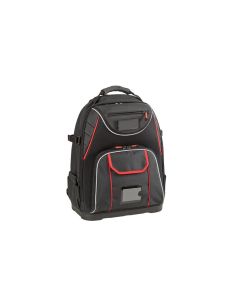
Tool carrier backpack with internal and external pockets. Dimensions: W. 37 x D. 20 x H. 50 cm.
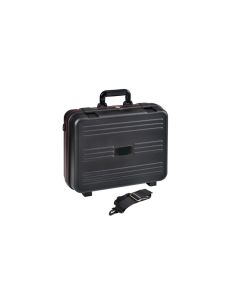
Tool case with 2 lateral closures and adjustable shoulder strap. Dimensions: W. 43 x D. 15.6 x H. 34 cm.
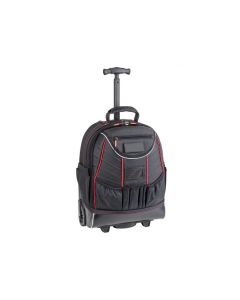
Tool backpack with two front pockets for documents and accessories. Dimensions: W. 36 x D. 20 x H. 48 cm.
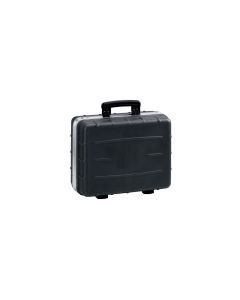
Tool case with 3 metal rear hinges and 2 key locks. Dimensions: W. 46.5 x D. 21.5 x H. 35.2 cm.
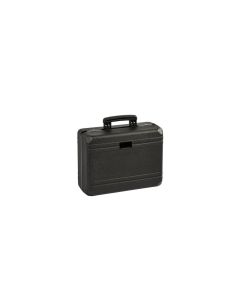
Tool bag with polyethylene shells with built-in feet, roto-moulded. Dimensions: W. 42.2 x D. 18.5 x H. 32.7 cm.
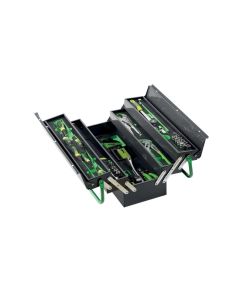
Toolbox with 104 high-quality tools, equipped with 5 separate compartments. Dimensions: approx. W. 43 x D. 16 x H. 20 cm.
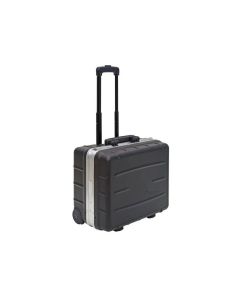
Tool case with 3 rear metal hinges. Dimensions: L. 46.5 x W. 25.5 x H. 35.2 cm.
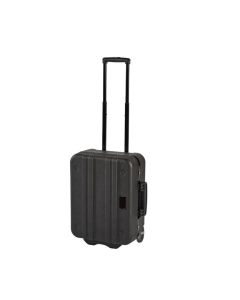
Tool case with 2 TSA approved locks with key. Dimensions: W. 45.3 x D. 18.5 x H. 34.5 cm.
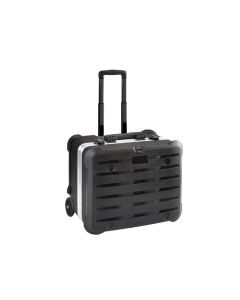
Tool trolley case with document pocket. Dimensions: W. 47 x D. 32 x H. 39 cm.
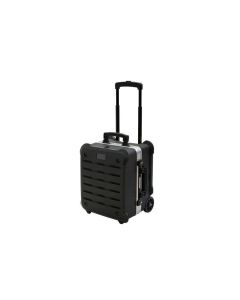
Tool trolley equipped with Ø 120 mm diameter wheels with waterproof shielded ball bearings. Dimensions: W. 39 x D. 34 x H. 47 cm.
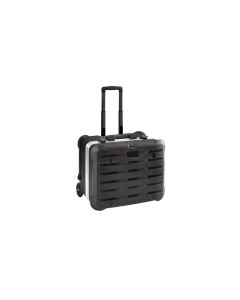
Tool case with telescopic handle and ball-bearing wheels. Dimensions: W. 47 x D. 32 x H. 39 cm.
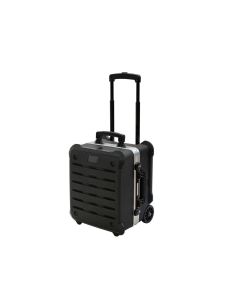
Tool trolley with two ergonomic rubber-coated handles and 2 approved TSA locks. Dimensions: W. 39 x D. 34 x H. 47 cm.
Professional tool bags represent an essential solution for anyone needing to transport and organize tools safely and practically. These professional containers are aimed at electricians, plumbers, craftsmen, technicians, and site operators who require mobility without compromising tool protection. The available range spans from rigid polypropylene boxes to sophisticated trolley cases with wheels, including ergonomic backpacks and bags in resistant technical fabric. Each type is designed to meet specific needs: from the light transport of a few tools to the complete management of entire professional kits. The correct choice of bag directly affects productivity, reducing search times and minimizing the risk of tool damage.
In the contemporary professional context, build quality, capacity, and durability are not secondary details but critical elements that influence daily operational efficiency. The materials used—polypropylene, industrial technical fabrics, roto-molded polyethylene—guarantee resistance to wear, protection from impacts, and ease of cleaning. Modern finishes include padded straps, ergonomic handles, organized compartments, and reliable closing systems. The availability of modular solutions allows professionals to adapt the internal configuration to their needs, increasing flexibility and management autonomy on construction sites and in workshops.
The use of a professional tool bag offers tangible benefits that go beyond simple convenience of movement. First and foremost, tool protection increases significantly: rigid containers and resistant technical fabric bags minimize contact with external elements, preventing scratches, dents, and corrosion. For professionals working on construction sites, scaffolding, or in harsh environments, the ability to protect considerable economic investments in instrumentation becomes a decisive factor. Secondly, internal organization allows for quickly locating each tool: dedicated compartments, thematic pockets, and specialized slots reduce search times and increase operational efficiency. A technician who doesn’t waste time looking for a wrench among dozens of crowded tools gains direct productivity.
From an ergonomic point of view, modern tool bags are designed with special attention to loads and posture. Padded shoulder straps, adjustable straps, and rubber handles prove crucial during prolonged work, reducing muscle fatigue and the risk of injury related to incorrect posture. Even backpacks and trolleys with wheels distribute weight evenly, allowing workers to maintain freedom of movement and protecting the back from unnecessary stress. Functional versatility represents an additional value: a briefcase with a shoulder strap can be worn as a backpack during travel, placed on the ground as a stable support during work, or dragged by the handle in tight spaces. This adaptability makes the bag a multi-functional tool capable of accompanying the professional through different work scenarios without having to resort to alternative solutions.
The market offers a wide structural variety of tool bags, each optimized for specific usage contexts. Rigid polypropylene cases represent the most economical and essential solution: made of two shells molded in thermoplastic material, equipped with a central handle and fixed internal compartments, they are aimed at those who need to transport light and small-volume tools. They guarantee impact protection thanks to structural rigidity, but offer little flexibility in internal configuration and limited load capacity. Technical fabric cases, on the other hand, combine practicality with resistance: made of high-density synthetic fibers, often with a rigid plastic base, they allow for better adaptability to spaces and a more natural weight distribution. These containers generally feature a padded shoulder strap and external pockets for quick access, ideal for technicians who move frequently between different work points.
Tool backpacks are the ergonomically superior solution for those who need to keep their hands free during travel: equipped with double adjustable shoulder straps, padded back pockets, and in some cases dedicated compartments for laptops or documents, they distribute the load on the shoulder’s natural structure. Wheel trolleys instead handle the transport of significant loads on flat surfaces: equipped with a telescopic handle, wheels with ball bearings, and large compartments, they allow for dragging even dozens of kilograms of equipment without direct physical effort. Cases with TSA locks add a higher level of security for professionals who move frequently between different sites or who work in contexts where theft is a real concern. Finally, cases with complete tool kits already integrate a selection of quality tools, aimed at those starting an activity or needing a standardized basic set.
Selecting the most suitable tool bag requires a systematic evaluation of technical and operational factors. First, consider the total volume and weight of the tools to be carried regularly: a compact 320x150x135 mm polypropylene case is suitable for small maintenance kits, while a 47x32x39 cm trolley is necessary when the set of tools exceeds 15-20 kilograms. Analyzing the space available in vehicles or work environments is equally relevant: a backpack easily fits into compact cars and tight site spaces, a trolley requires more surface area but facilitates transport on stairs or uneven ground thanks to the ability to tilt and the support of the wheels. A second criterion concerns the frequency and distance of movements: those who move several times a day between distant work points benefit enormously from a light bag with a shoulder strap, while those who stay on the same site for hours may prefer a more capacious though heavier case.
An additional selection element concerns materials and expected durability: polypropylene offers lightness and impact resistance at low costs, but technical fabric with a rigid base guarantees greater longevity and protection from moisture in prolonged outdoor environments. Tool accessibility is an undervalued factor: a bag with thematic compartments (for screws, bits, cables) allows for quickly identifying the tool without having to empty the entire container, a critical aspect during interventions where every minute of inefficiency translates into additional costs. Those working on exposed sites (rain, dust, humidity) should prioritize solutions with robust closures and waterproof materials; those in controlled environments can opt for less hermetic but more ergonomic configurations. Common mistakes include buying a bag that is too large (which encourages messy tool accumulation), or too small (forcing frequent trips to retrieve tools). The balanced choice answers the question: “Which 15-20 tools do I use daily?” and selects a solution that comfortably contains them with minimal unused space.
In the professional and industrial context, tool bags must meet a series of technical standards that guarantee safety of use and regulatory compliance. The ISO 4651 standard defines the requirements for transport containers in terms of mechanical resistance, structural stability, and component durability. The materials used—polypropylene, polyethylene, synthetic fabrics—must have certifications of non-toxicity and compliance with the European RoHS and REACH directives, essential when the transported tools come into contact with food or medical environments. Locks, if present, must comply with specific reliability standards, while integrated wheels must comply with axial and dynamic load standards that attest to their declared load-bearing capacity. For those purchasing for work contexts at height or on scaffolding, impact resistance and the strength of the handle attachment become critical factors verifiable through standardized drop tests.
An often overlooked aspect concerns CE marking and declarations of conformity: although many tool bags do not fall into categories of devices subject to mandatory certification, their manufacture according to good industrial practices (ISO 9001) guarantees construction quality and process repeatability. Reliable supply companies document material resistance tests, seam strength, and the stability of internal supports. For specific applications—such as in the medical sector where sterilization or decontamination is required—it is necessary to verify that materials withstand thermal and chemical cycles without altering. Environmental compliance is gaining increasing importance: recyclable materials and low-impact production processes are increasingly an explicit requirement in public tenders and corporate sustainability certifications. Documents such as technical data sheets, test protocols, and durability warranties attest to compliance with standards and offer legal protection to the client in case of defect or inadequacy of use.
Explore all products in the category and compare the available solutions to find the one best suited to your operational context.
The polypropylene case offers structural rigidity and maximum impact protection, ideal for light loads and occasional transport. The technical fabric bag guarantees greater lightness, flexibility in the internal configuration, and superior load capacity, suitable for daily work and frequent moves between different sites.
A tool backpack with padded shoulder straps is the optimal choice: it distributes the weight over the body’s natural structure, keeps hands free during movement, and adapts to any work environment. A valid alternative is a technical fabric shoulder bag with organized compartments for quick access to tools.
Calculate the total volume of your tools used daily and select a bag with a capacity at least 20-30 percent higher. A 320x150x135 mm box holds 6-8 liters, a medium backpack 25-35 liters, and a trolley over 50 liters. Avoid choosing containers that are too large, which encourage cluttered accumulation.
Modern trolleys with 120 mm wheels and ball bearings handle flat and slightly bumpy surfaces well, but they are not ideal for steep stairs or very irregular terrain. In these contexts, a backpack or a case that can be easily lifted during difficult passages is preferable.
TSA (Transportation Security Administration) locks are approved for airport checks, allowing security personnel to open and relock the bag without damaging it. They represent a suitable solution for professionals who frequently travel by plane with their own personal equipment.
 English
 Italian
 French
 German
 Spanish