
mon-fri 9-13 / 14.30-18.30
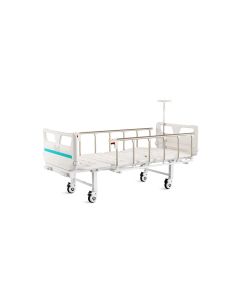
Manual 3-section hospital bed with 2 cranks, foldable aluminum side rails, PP platform, Ø127 mm wheels, stainless steel IV pole, fixed height 50 cm, 200 kg capacity.
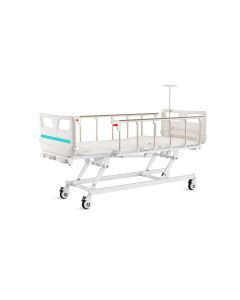
Manual hospital bed with 4 sections and 3 cranks, height 42-73 cm, folding aluminum side rails, 200 kg capacity, equipped with IV pole and drainage hooks.
Pack of 6 pieces
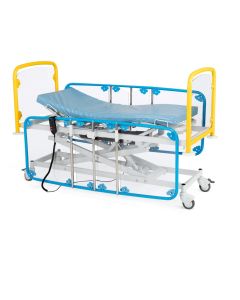
€9,530.10 VAT excl.Pediatric hospital bed in epoxy steel, 160×60 cm, 100 kg capacity, adjustable backrest and thigh section, for pediatric clinics and departments.
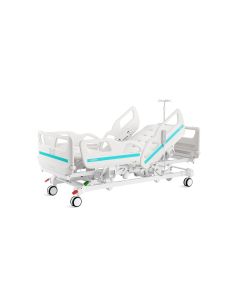
Hospital electric bed with variable height 45.5-74.5 cm, polypropylene platform, UL/ROHS/EN motorization, Trendelenburg, autoregression 10+9 cm, detachable dampened side rails, 250 kg maximum load.
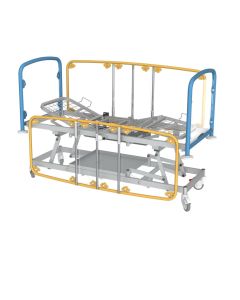
Hospital bed in steel with Trendelenburg positions, 160×60 cm, capacity 100 kg. For clinics and hospitals.
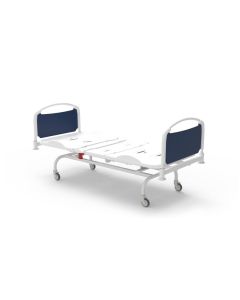
Motorized hospital bed for clinics and nursing homes. Steel frame, 4 articulated sections, motorized backrest and femoral section, servo-assisted leg section, 4 braked wheels, quick CPR release.
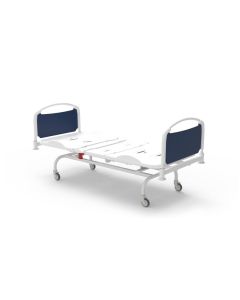
Motorized stainless steel hospital bed with 4-section bed base, motors for backrest and thigh sections, swivel wheels, perimeter bumpers, and quick CPR release.
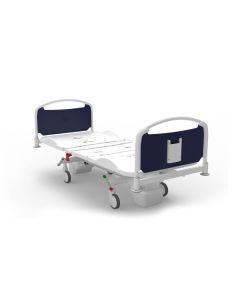
Motorized hospital bed with painted steel frame, 4-section bed base, adjustable height and articulations, motorized femoral and backrest sections, Trendelenburg positions, CPR maneuver. 202×88.8 cm.
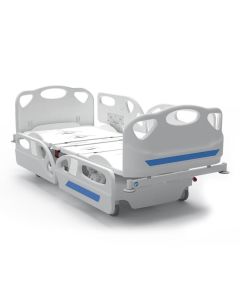
4-section motorized hospital bed with stainless steel frame, anti-crush motors, complete adjustments and rapid sanitization system.
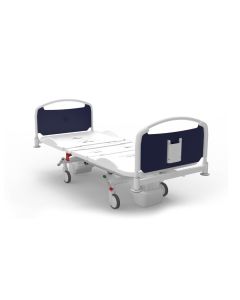
Motorized stainless steel hospital bed with 4-section platform, adjustable height and backrest, directional wheels, and CPR function.
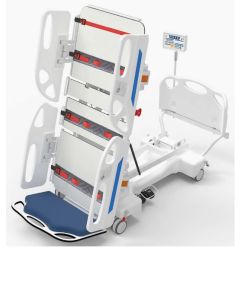
Motorized hospital bed with tilting function, integrated weighing system, and passive mobilization for bedridden patients. Steel frame, HPL bed platform, touch screen controls.
Hospital beds represent one of the most critical medical devices within hospitals, clinics, rehabilitation facilities, and assisted living residences. These specialized furnishings combine the ergonomic needs of the patient with the operational requirements of healthcare personnel, facilitating care maneuvers, sanitization, and continuous monitoring of the patient. Choosing the correct type of hospital bed directly affects the quality of care, the prevention of pressure ulcers, and the psychophysical well-being of the patient during their stay. Whether for high-complexity acute care facilities, intensive care units, pediatric areas, or long-term care environments, each operational context requires specific construction features, movement functionalities, and differentiated safety levels.
A modern hospital bed offers tangible advantages in both daily care management and the long term. Motorized height adjustment significantly reduces the physical strain on nursing staff during assistance maneuvers, preventing injuries from biomechanical overload. The ability to independently adjust each section of the mattress — backrest, femoral, feet — allows for the attainment of therapeutic positions such as Trendelenburg and Reverse Trendelenburg, which are fundamental in cardiorespiratory emergency situations or for specific clinical protocols. Hospital beds equipped with integrated motorization also facilitate a rapid transition from a lying position to a semi-seated position, a crucial element for patients with respiratory or circulatory impairments.
From the perspective of sanitization and hospital infection control, the materials used in modern beds — primarily stainless steel, thermoforming polyester mesh, and removable panels — guarantee ease of deep cleaning and disinfection. The absence of hard-to-reach areas and compatibility with broad-spectrum disinfectants reduce the risk of environmental contamination. For patients, the comfort derived from integrated anti-decubitus systems, side protection rails, and ergonomic positioning promotes rest and accelerates the healing process, reducing complications related to prolonged immobility.
The range of hospital beds available on the market is divided into several categories, each responding to specific clinical needs. Manual crank beds represent the most economical solution and are still common in medium-complexity care contexts; characterized by manual operation via worm screw systems, they allow for the adjustment of the backrest section and sometimes the femoral section using dedicated cranks. Users report that these models are reliable in facilities with budget limitations, although they require more effort from operators. Motorized electric beds are the standard in modern hospital facilities: equipped with independent motors for each section, they allow for simultaneous or selective adjustment of positioning via wireless remotes or controls integrated into the headboard. This category is further divided into 3-4 section models depending on the required functional complexity.
There are also specialized constructions for specific environments: pediatric beds have smaller dimensions, reinforced structures for limited loads, and safer containment systems; bariatric beds offer capacities exceeding 200 kg with reinforced steel frames and oversized motors; tilting beds combine traditional functionality with motorized systems that bring the patient from a lying to a vertical position, facilitating weight-bearing on the lower limbs during rehabilitation. Some models incorporate integrated digital weighing systems, useful for continuous monitoring of weight variations without transferring the patient. The choice of type depends on the epidemiological profile of the patients, the prevailing clinical procedures, and the specific mobility and motorization needs of the facility.
The selection of an appropriate hospital bed must first consider the clinical context of use. In intensive care or therapy units, where emergency interventions and rapid maneuvers are frequent, complete motorization with independent section adjustment and high operating speeds is essential. Long-term care facilities or local hospitals may benefit from simpler configurations with partial or manual motorization, reducing purchase and maintenance costs. The maximum load capacity of the bed must be evaluated in relation to the patient population: general hospitals often operate with standard beds of 150-180 kg, while bariatric wards or facilities with an elderly population with a high body mass index require models with a capacity exceeding 200 kg.
Frequently underestimated critical aspects include the ergonomics of the headboard and footboard, which must be sufficiently spaced to allow easy lateral movement of the patient, and the configuration of the swivel wheels, which must guarantee stability during maneuvers and effective locking during procedures. Compatibility with standard accessories — protection rails, perimeter bumpers, traction systems — is a determining factor as it affects operational versatility over time. The presence of integrated medical gas cylinder holders in the headboard, anchoring points for auxiliary handling systems, and a bed base surface suitable for dynamic anti-decubitus mattresses are elements that emerge as priorities for patients at risk of complications associated with prolonged bed rest. Finally, do not underestimate the technical support offered by the supplier and the availability of spare parts: a hospital bed is a multi-year solution whose long-term reliability depends on the ability to intervene quickly in the event of a failure.
Hospital beds fall under the category of medical devices and must comply with a series of European and national regulations that guarantee safety, construction quality, and functional performance. The EN 60601-2-38 standard regulates hospital beds and similar medical equipment from the perspective of electrical safety, interference prevention, and patient protection from thermal and mechanical risks. CE marking constitutes recognition of compliance with European directives and is a mandatory prerequisite for marketing within the EU. Fundamental construction requirements include: surfaces free of sharp edges, non-toxic and biocompatible materials, wheel locking systems that function even with a bedridden patient, and opening and closing mechanisms free of pinch points.
At a national level, the Italian Ministry of Health requires technical evaluation of critical medical equipment by notified bodies, particularly for motorized devices with complex functionality. Italian hospital facilities also operate according to specific safety protocols, such as patient fall risk management — regulated by regional and corporate guidelines — which affect the functional specifications required for beds, such as the minimum reachable height and the effectiveness of side protection systems. The cleaning and disinfection of hospital beds must comply with healthcare-associated infection (HAI) prevention standards, requiring material tolerance to repeated cycles of exposure to broad-spectrum detergents and disinfectants. Some technical standards also require regular monitoring of structural integrity, particularly the welding of steel frames, through scheduled periodic inspections.
Explore all products in the category and compare available solutions to find the one best suited to your operational context.
Manual beds require the use of cranks to change position and height, involving greater physical effort for staff. Motorized models offer adjustment via remote controls, reducing operator fatigue and ensuring more precise and faster positioning, essential in high-complexity clinical environments.
Standard hospital beds support 150-180 kg. For bariatric patients or those with a high body mass index, reinforced models are available with capacities up to 250 kg and special steel frames with a high moment of inertia.
The bed base and ABS panels are removable and washable in deep cycles. The steel or stainless steel structure tolerates broad-spectrum disinfectants. It is essential to reach difficult areas such as joints and mechanisms, following corporate protocols for preventing hospital infections.
Beds with complete motorization reach Trendelenburg (head down), Reverse Trendelenburg (feet down), semi-seated, and recumbent positions. Some configurations also allow partial verticalization, fundamental in rehabilitation and early mobilization protocols.
Pediatric beds have specific dimensions (typically 160x60 cm) and reduced capacities, designed for pediatric patients. They are not recommended for adults for both safety and comfort reasons; it is necessary to select models appropriate to the patient's weight and height.
Removable side protection rails, perimeter bumpers, dynamic anti-decubitus mattresses, vertical traction bars, oxygen and medical air outlets integrated into the headboard, and supports for auxiliary positioning systems represent the most common accessories.
Motorized beds require monthly visual inspection of the structure, wheels, and cables. Scheduled preventive maintenance must take place at least annually to verify the integrity of the welds, functionality of the motors, and correct locking of the adjustment mechanisms.
The digital weighing system allows for monitoring weight variations without transferring the patient, reducing fall risks and patient discomfort. It is particularly useful for critical patients, bariatric patients, and in fluid management protocols in intensive care.
 English
 Italian
 French
 German
 Spanish