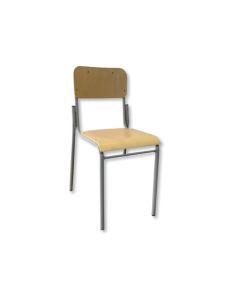
mon-fri 9-13 / 14.30-18.30
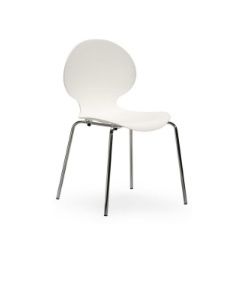
Stackable school chair in polypropylene and chromed steel. Seat height: 38 cm.
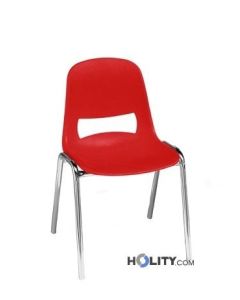
Pack of 10 pieces
€231.80 VAT excl.Affordable children’s chair with a round tube frame and polypropylene shell. Available in various colors. Shell dimensions: W.32 x D.37 x H.31.5 cm.
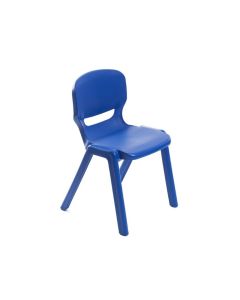
Monobloc school chair in polypropylene, seat height 38-40 cm. Ergonomic, stackable and UV resistant for indoor and outdoor use.
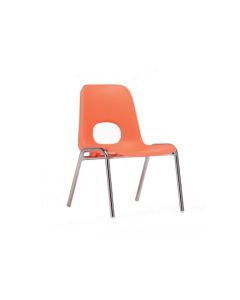
School chair for primary and secondary school in self-extinguishing polypropylene and chrome-plated steel. Seat height 34 cm, stackable and Class 1 certified.
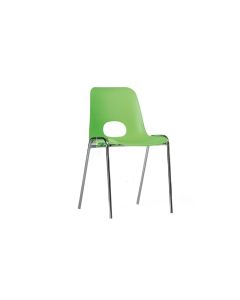
Stackable school chair for primary and secondary school in self-extinguishing polypropylene and Ø 18 mm chrome structure. Robust and Class 1 certified.
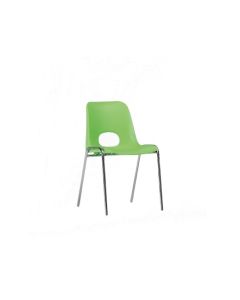
Stackable school chair in self-extinguishing polypropylene and chrome-plated steel, seat height 42 cm, designed for primary and secondary classrooms.
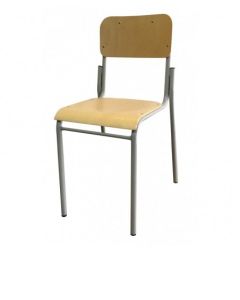
Pack of 5 pieces
€150.00 VAT excl.School chair for students (primary/secondary) in steel and beech plywood, 40x40x46 cm. Robust, silent and compliant with UNI EN 1729-1.
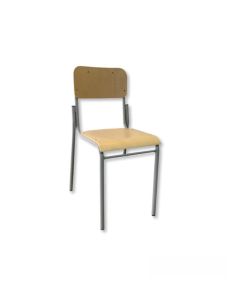
Pack of 4 pieces
€120.00 VAT excl.Beech wood school chair for primary schools. Structure in Ø 22 tubular. Made in Italy.
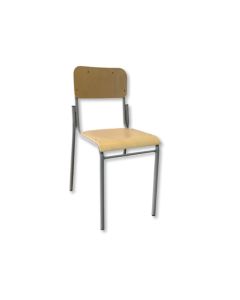
Beech wood chair for secondary schools. Height 46 cm. Size 6.
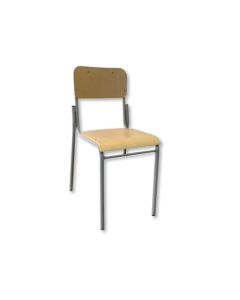
Beech wood school chair. Height 38 cm. Size 4.
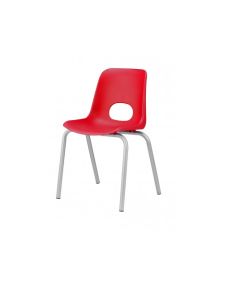
Pack of 4 pieces
€127.12 VAT excl.School chair with polypropylene seat. Dimensions: H.66 x D.41 x W.33 cm. Seat height: 38 cm. Size 4
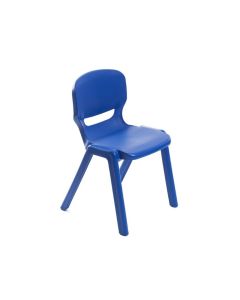
Stackable school chair in monoblock polypropylene (W 51 x D 48.5 x H 80.5 cm). UV and weather resistant, ideal for classrooms and outdoor areas.
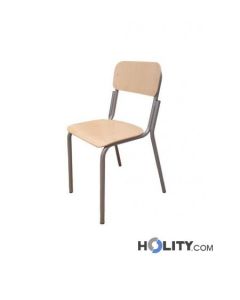
Pack of 15 pieces
€513.00 VAT excl.Primary school chair with beech wood seat. Size 3.
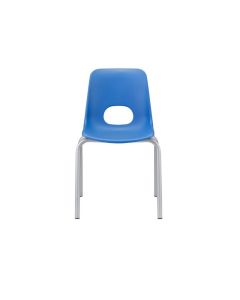
Pack of 4 pieces
€139.84 VAT excl.School chair in polypropylene with grey painted steel legs. Dimensions: H.76 x D.48 x W.36 cm. Seat height: 43 cm. Size: 5
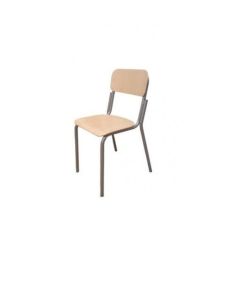
Pack of 15 pieces
€526.50 VAT excl.Beechwood school chair height 43 cm. Size 5.
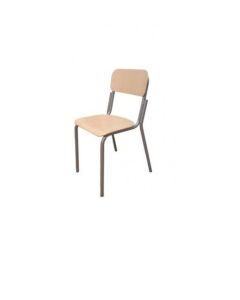
Pack of 15 pieces
€526.50 VAT excl.School chair in beech wood. Height 38 cm. Size: 4.
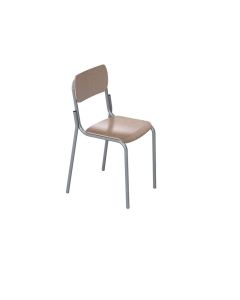
Pack of 10 pieces
€351.00 VAT excl.Secondary school desk height 46 cm. Size 6.
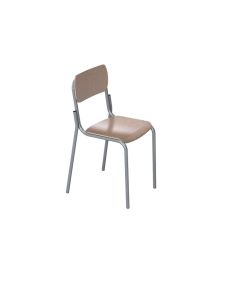
Pack of 10 pieces
€351.00 VAT excl.School chair in beech wood. Seat height 43 cm. Size 5
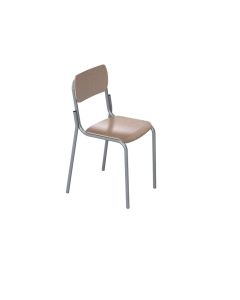
Pack of 10 pieces
€351.00 VAT excl.Beech wood school chair seat height 38 cm. Size 4
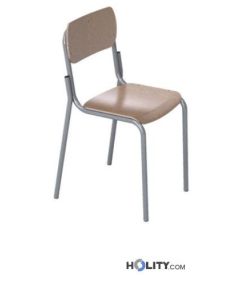
Pack of 10 pieces
€351.00 VAT excl.Stackable wooden student chair. Height 35 cm. Size 3
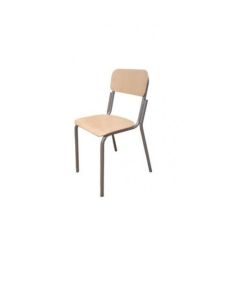
Pack of 13 pieces
€468.00 VAT excl.Secondary school chair in beech wood. Height 46 cm. Size 6.
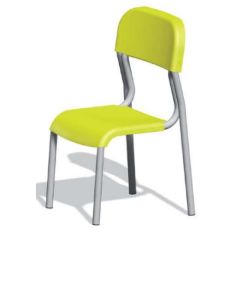
Pack of 20 pieces
€720.80 VAT excl.Fire-retardant stackable polypropylene chair. Seat height: 30 cm. Available in black painted, gray painted or chrome.
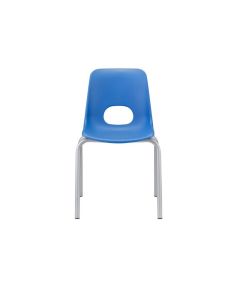
Chair for secondary schools with polypropylene shell. Height 46 cm. Size 6
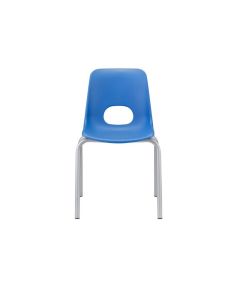
Polypropylene school chair seat height 43 cm. Size 5.
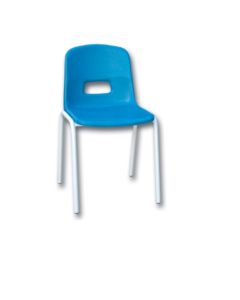
Pack of 3 pieces
€109.14 VAT excl.Ideal chair for 1st and 2nd grade primary school classes. 100% Made in Italy. Available in multiple colors.
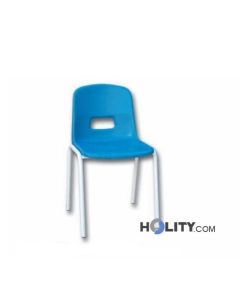
Pack of 3 pieces
€109.14 VAT excl.Stackable chair with single polypropylene shell. Available in various colors. 100% Made in Italy.
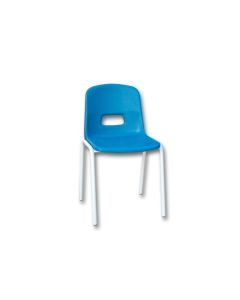
Student chair h172_257 in polypropylene and Ø 25 mm white tubular frame. Stackable, noise-reducing, in various colors. Dimensions: 40 x 40 x h 45 cm.
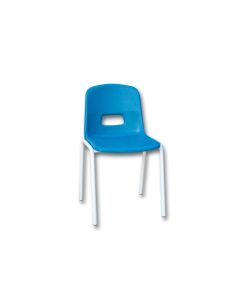
School chair h172_256 in polypropylene and Ø25 mm tubular frame. Stackable, with anti-noise tips and various colors. Dimensions: 36 x 36 x h 43 cm.
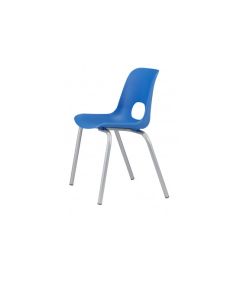
Pack of 4 pieces
€152.56 VAT excl.School furniture chair with polypropylene seat. Dimensions: H.78 x D.51 x W.36 cm. Seat height: 46 cm. Size: 6.
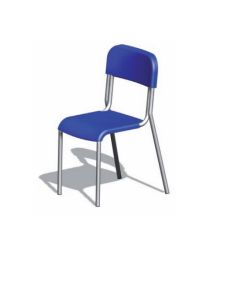
Pack of 20 pieces
€803.20 VAT excl.Fire-retardant school chair with stackable structure in Ø 25 mm tube available in chromed, black painted or grey painted. Seat height: 38 cm. Italian product.
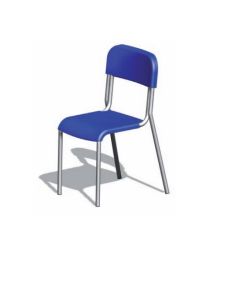
Pack of 20 pieces
€803.20 VAT excl.Polypropylene school chair. Seat height: 46 cm. Frame available in black painted, grey painted and chrome-plated.
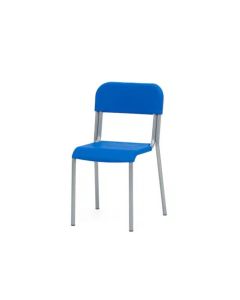
Size 6 school chair in steel and polypropylene (40x40x46 cm). Ergonomic, stackable and designed for intensive use in educational settings.
Pack of 10 pieces
€417.20 VAT excl.School chair in copolymer polypropylene. Chair height: 34 cm.
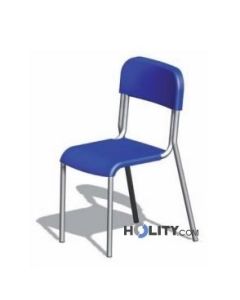
Pack of 20 pieces
€837.40 VAT excl.Stackable chair for schools and communities with Ø 25 mm tube frame. Seat height: 46 cm. Class 1 self-extinguishing certification.
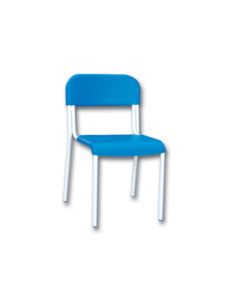
Polypropylene school chair. Seat height 43. Size 5
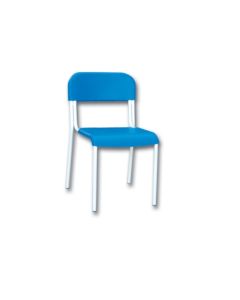
Pack of 3 pieces
€127.14 VAT excl.Plastic seat and backrest. Stackable. Size 6. Height 46 cm
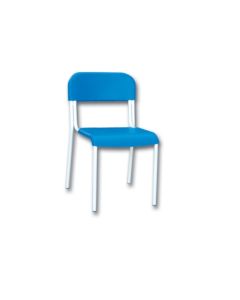
Pack of 3 pieces
€127.14 VAT excl.School chair size 3. Height 35 cm.
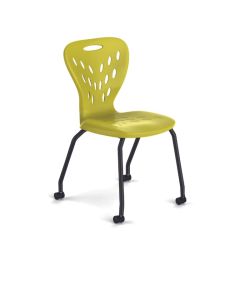
Ergonomic multi-purpose chair in green polypropylene with a tubular structure, adjustable height, and wheels. Stackable up to 5 units to optimize space.
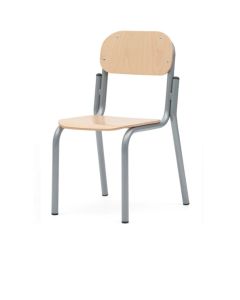
School chair in steel and beech plywood, size 3. 25 mm structure, stackable, dimensions 32x32x35 cm for classrooms and libraries.
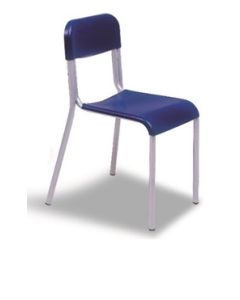
Size 6 school chair in blue polypropylene and metal, dimensions 39x39 cm. Stackable model for optimization of collective spaces.
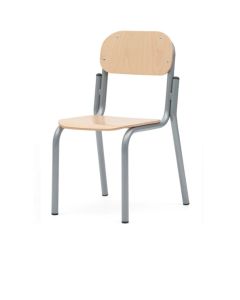
School chair size 4 with Ø25 mm steel structure and beech plywood shell. Stackable design for space optimization.
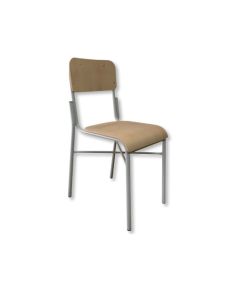
Secondary school chair with cross-reinforcement. Height 46 cm. Size 6
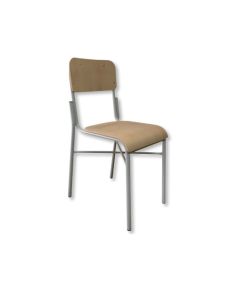
School chair in beech wood with cross reinforcement. Height 43 cm. Size 5
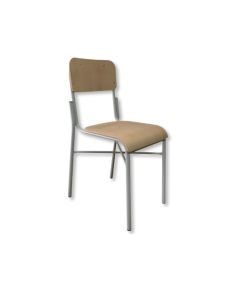
Beech wood chair with cross reinforcement. Height 38 cm. Size 4.
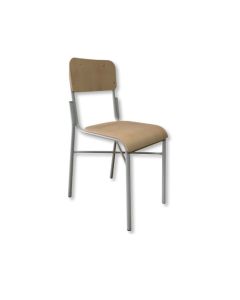
School chair for primary school with cross reinforcement. Height 35 cm. Size 3
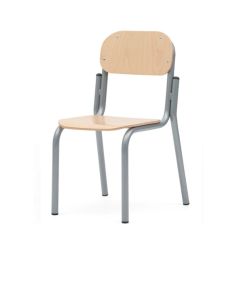
Size 5 school chair in steel and beech plywood. Durable structure and stackable seat to optimize educational spaces.
Pack of 10 pieces
€482.20 VAT excl.Beechwood chair for primary and secondary schools. Stackable structure. Size: 3.
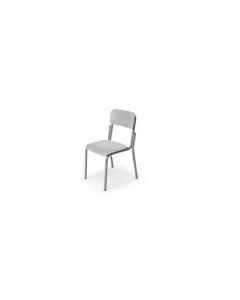
Pack of 10 pieces
€486.00 VAT excl.Stackable chair for schools. Shell and seat in beech. Height: 38 cm.
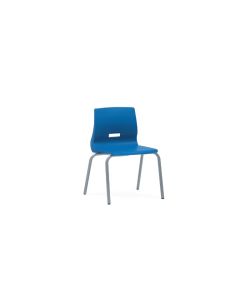
Size 6 school chair with polypropylene monocoque and Ø25 mm steel structure. Ergonomic, stackable and ideal for students from 11 years old.
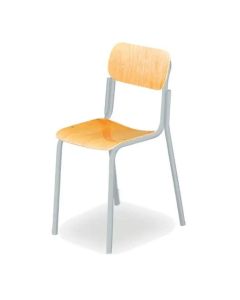
Primary school chair (seat height 38 cm). Steel structure, ergonomic beech seat. Stackable up to 10 pieces. Complies with UNI EN 1729.
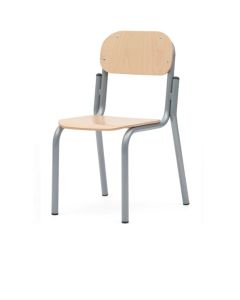
School chair in Ø25 mm steel and beech plywood, size 6, dimensions 40x40x46 cm. Robust structure with stackable seat.
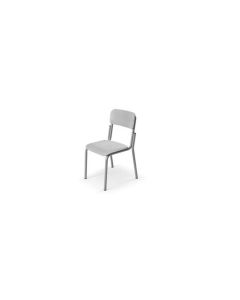
Pack of 10 pieces
€497.10 VAT excl.Stackable chair for primary schools. Beech seat and backrest. Chair size: 5.
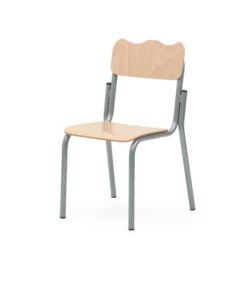
Stackable school chair in beech and steel Ø25 mm, size 5 (h 43 cm). Durable structure designed for intensive use in classrooms.
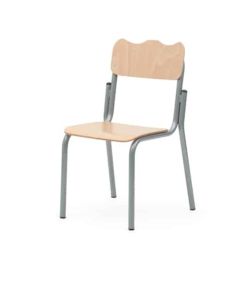
School chair size 4 with backpack holder function, Ø25 mm tubular steel frame and beech seat. Robust, ergonomic and stackable.
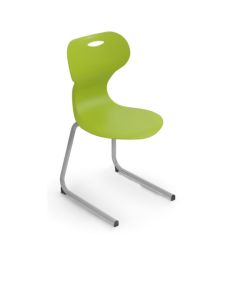
Ergonomic school chair in polypropylene and metal, size 6 for heights 159-188 cm, equipped with integrated handle and anti-scratch feet.
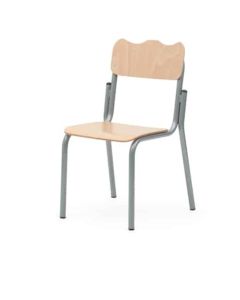
Secondary school chair in beech and steel Ø25 mm, size 6, stackable for the optimization of spaces in intensive educational contexts.
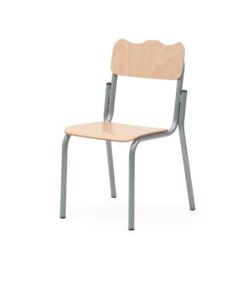
Size 3 school chair in Ø25 mm steel and beech, with integrated backpack hook and stackable structure for space optimization.
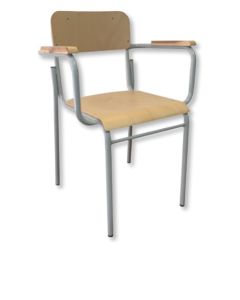
Armchair for school teacher’s desk. Dimensions: W.40 x D.44 x seat h. 46 cm. Material: wood and metal.
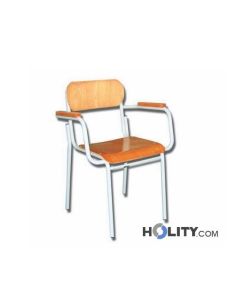
Pack of 3 pieces
€157.50 VAT excl.Wooden teacher’s armchair with steel structure equipped with noise-reducing tips. 100% Made in Italy.
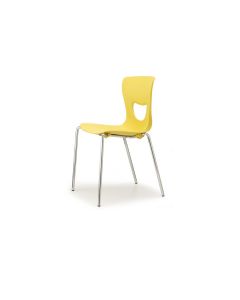
Pack of 4 pieces
€228.80 VAT excl.Secondary school chair in polypropylene and chrome steel. Available in various colors. Dimensions: W.43 x D.51 x H.81 cm.
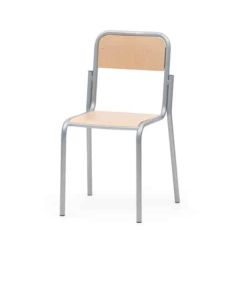
Primary school chair in steel and beech, size 3. Stackable structure with recessed seat and backrest for maximum resistance.
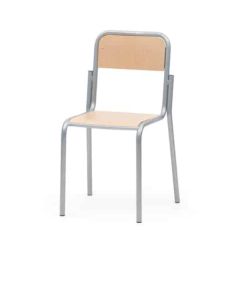
Recessed school chair with Ø25 mm steel structure and beech shell. Size 5, stackable design for the optimization of educational spaces.
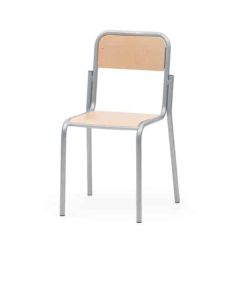
School chair in beech wood and Ø25 mm steel, size 4. Recessed structure and stackable design for maximum resistance and optimization.
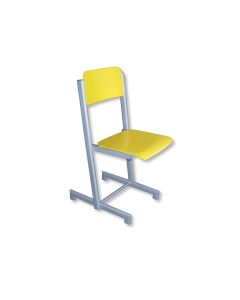
School chair in curved beechwood. Oven-baked polyacrylic painting. Height 46 cm. Size 6.
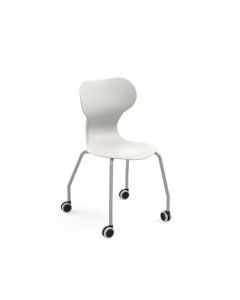
Ergonomic school chair H872_39 in polypropylene and metal. Seat height 46 cm, with Ø65 mm wheels, ideal for students over 12 years old.
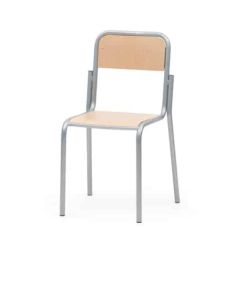
Secondary school chair with Ø25 mm steel frame and beech wood seats. Size 6, dimensions 40x40x46 cm, stackable and robust design.
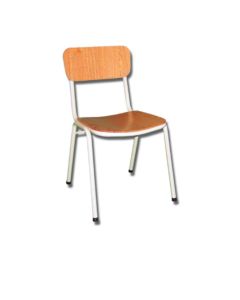
Secondary school chair in laminated wood. Height 46 cm. Size 6.
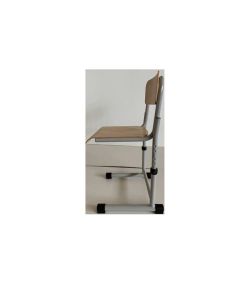
Height-adjustable school chair from 35 cm to 46 cm.
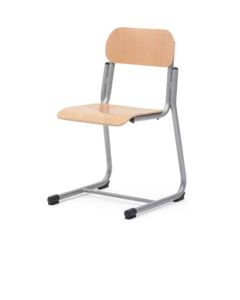
Size 3 school chair with “C” shaped Ø28 mm steel structure and beech plywood shell. Dimensions 32x32x35 cm, resistant and stackable.
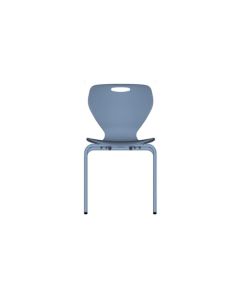
Ergonomic chair for primary and secondary school h979_43, size 4. With multi-color polypropylene monoblock shell, powder-coated steel structure, and non-slip feet. Seat height 380 mm, stackable.
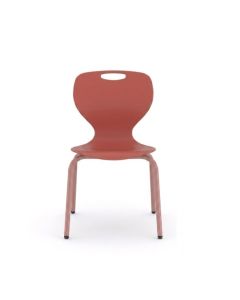
Ergonomic chair for primary and secondary school h979_42, size 3. With multicolored monoblock polypropylene shell, powder-coated steel frame and non-slip feet. Seat height 350 mm, stackable.
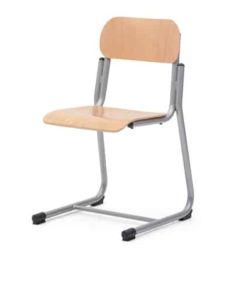
Size 5 school chair in beech plywood and Ø28 mm steel, featuring a C-shaped cantilever structure for high resistance.
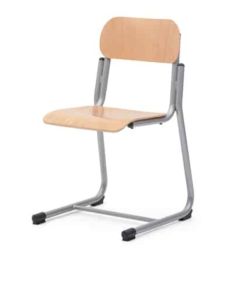
Size 4 school chair in beech plywood and steel Ø28 mm. Ergonomic sled structure, height 38 cm, ideal for intensive educational environments.
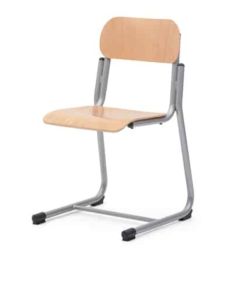
School chair for secondary schools in Ø28 mm steel and beech plywood, size 6, height 46 cm, characterized by a C-shaped sled structure.
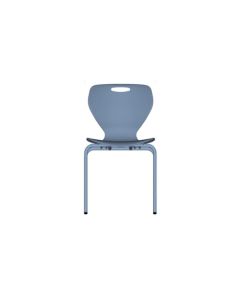
Ergonomic chair for secondary school h979_45, size 6. Equipped with a monoblock multicolour polypropylene shell, powder-coated steel frame, and non-slip feet. Seat height 460 mm, stackable.
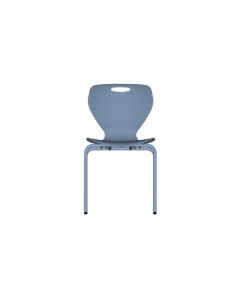
Ergonomic chair for primary and secondary school h979_44, size 5. Equipped with a multicolored monobloc polypropylene shell, powder-coated steel structure, and non-slip feet. Seat height 430 mm, stackable.
Pack of 5 pieces
€396.00 VAT excl.Adjustable chair with beech plywood seat and backrest. Frame color: aluminium.
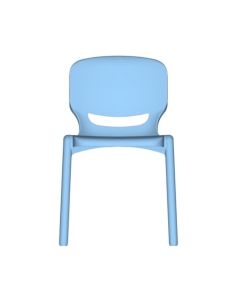
Monoblock school chair h979_48 in double-walled polypropylene, characterized by an ergonomic design with rounded profiles without sharp edges. Stackable, washable, and high-resistance model for indoor and outdoor use.
Pack of 10 pieces
€808.50 VAT excl.Beech wood chair for primary school. Size 6. Height: 46 cm.
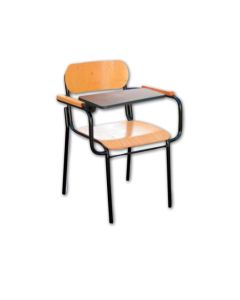
School chair with swivel tablet arm. Beech wood seat, backrest and armrests. Height 46 cm
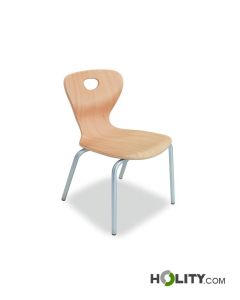
Professional school chair in beech wood and steel, 40x40x46 cm, size 6. Ergonomic and UNI EN 1729 compliant for primary and secondary schools.
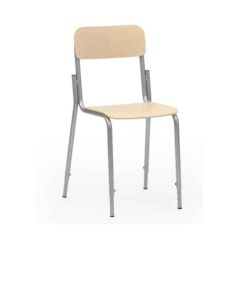
Height-adjustable school chair with steel structure and beech seat. Double structural reinforcement, dimensions 32x32 cm, sizes 2-3.
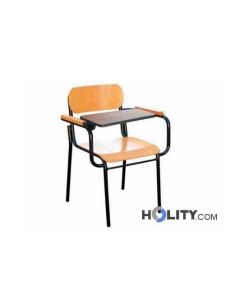
Pack of 2 pieces
€170.26 VAT excl.Beech school chair equipped with writing tablet, armrests and noise-cancelling tips. 100% Made in Italy.
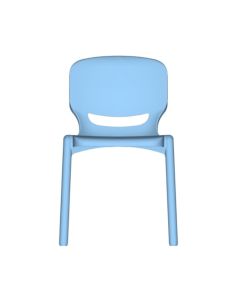
Monobloc chair for secondary school h979_49 in double-walled polypropylene, with an ergonomic design and rounded profiles without sharp edges. Stackable model, washable and high resistance for indoor and outdoor use. Size 5.
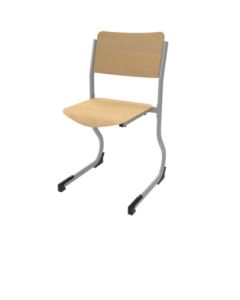
Pack of 5 pieces
€431.70 VAT excl.Chair for primary and secondary school with adjustable height: 38 cm, 43 cm, 46 cm. Seat in beech plywood and legs in painted metal.
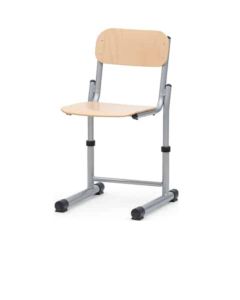
Adjustable school chair in steel and beech with a single-column C-structure, heights 35-51 cm, ideal for primary and secondary schools.
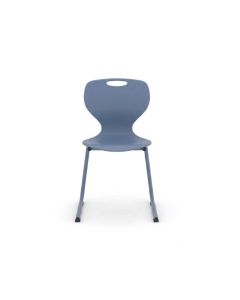
Ergonomic cantilever chair for primary and secondary school h979_46. Equipped with a one-piece single-color polypropylene shell, epoxy steel cantilever structure, and non-slip texture. Seat height: 380 mm.
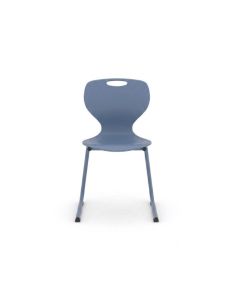
Ergonomic cantilever chair for primary school h979_47, size 5. Featuring a single-color polypropylene monobloc shell, epoxy steel cantilever structure, and a seat height of 43 cm.
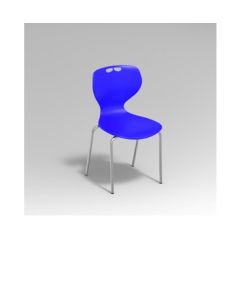
Primary school chair with blue polypropylene shell and metal structure, size 5, dimensions 43x43 cm. Durable and easy to sanitize.
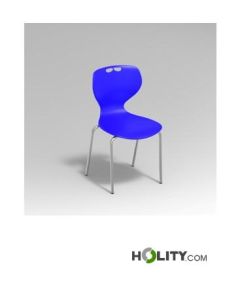
Blue polypropylene secondary school chair with metal structure ø 22 mm. Size 6, dimensions 43x43 cm. Lightweight and resistant.
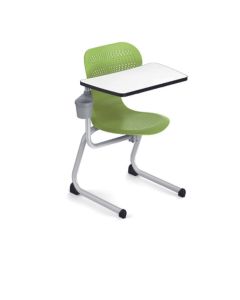
Ergonomic metal chair with swivel work surface (850x460x460 mm). Stackable, with ventilated backrest and anti-scratch pads for offices.
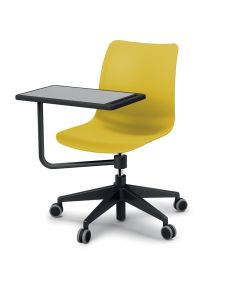
Primary school chair with wheels. Total height between 65 and 75 cm.
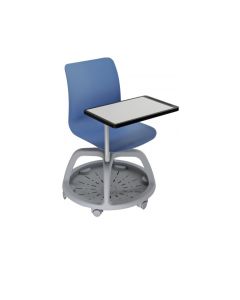
Multifunctional chair with writing desk and swivel seat. Dimensions: H.65 x D.63 x W.45 cm. Size 5
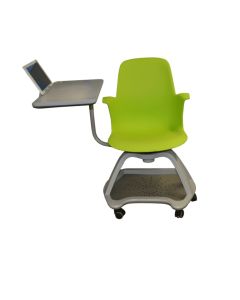
Ergonomic multimedia chair in recyclable nylon with 90° rotating top. Base dimensions Ø 540 mm, ideal for dynamic classrooms and coworking.
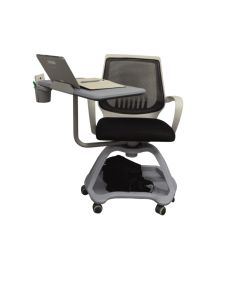
Ergonomic multimedia chair with mesh backrest, padded seat and 360° rotating surface with tablet slot. Mobile and versatile for dynamic classrooms.
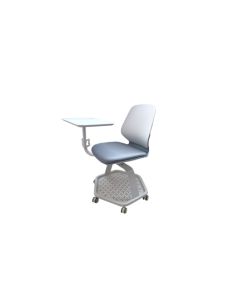
Professional school chair with 360° rotating tablet, Ø 32 mm steel structure and PU wheels. Ergonomic and inclusive for every user.
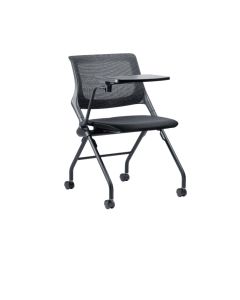
Folding multimedia chair in steel and carbon with 440x360mm sliding worktop, casters and storage compartment for educational and professional environments.
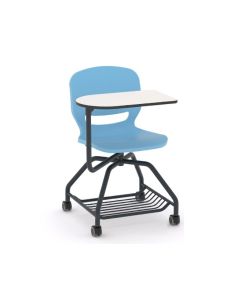
Secondary school chair h979_50 with 360° swivel tablet in Compacmel. Ergonomic model on wheels with lower storage grid, Graphite RAL 7021 structure and seat height 460 mm (T6).
Equipping classrooms for compulsory and higher education requires a meticulous selection of seating that combines structural strength, postural ergonomics, and flexibility of use. The primary and secondary school chairs collected in this category are designed to meet the daily demands of high-rotation educational environments, ensuring students stable support during long lesson hours. These are not just simple pieces of furniture, but fundamental tools for the musculoskeletal health of students, sized according to European standards to correctly accompany physical growth at every stage of the educational path, from elementary schools to universities.
In a constantly evolving educational context, professional school chairs must be able to adapt not only to traditional classrooms but also to dynamic spaces such as multimedia laboratories, libraries, and meeting rooms. The range spans from classic beech plywood seating to modern self-extinguishing polypropylene single-shells, including stackable versions to optimize cleaning operations and multimedia models equipped with integrated accessories. Every solution is conceived to minimize injury risks thanks to rounded profiles and non-toxic materials, while ensuring simplified logistical management for public bodies and private institutions that require robust and long-lasting supplies.
Adopting specific technical seating for primary and secondary education is a choice driven by the need to guarantee safety and durability standards that generic products cannot sustain. These chairs are built to resist constant dynamic loads and rough handling, typical of school environments, thanks to reinforced tubular steel frames and wear-resistant finishes. Mechanical stability is designed to prevent accidental tipping, while the shape of the backrest, with an ideal inclination between 95° and 110°, promotes a correct posture that reduces fatigue and significantly improves student concentration levels during educational activities.
In addition to the ergonomic aspect, these seats offer immediate operational advantages for school staff in charge of tidying up. Many models are stackable or nestable, allowing the floor to be quickly cleared for daily sanitation of the rooms or to reconfigure the classroom for laboratories and group activities. The use of materials such as self-extinguishing polypropylene or laminated wood treated with non-toxic paints ensures a healthy environment, free of splinters or sharp edges, fully responding to accident prevention protocols. Choosing professional seating therefore means investing in furniture that protects the physical integrity of students and optimizes the management costs of the school facility in the long term.
The range is divided into several macro-families designed to meet the specific needs of various study cycles and different functional areas of the school. Plastic (polypropylene) chairs are among the most widespread due to their extreme lightness and practicality: available in various bright colors, they are often made in an ergonomic single-shell with painted or chromed metal structures, ideal for intensive use and frequent movement. Wooden chairs, mainly made of beech plywood, represent the choice of excellence for those who desire a traditional aesthetic and a warmer tactile sensation, while maintaining excellent levels of robustness thanks to stackable steel frames.
For environments that require greater versatility, such as multi-purpose classrooms or adult training courses, height-adjustable chairs are available, capable of covering different ranges (e.g., 35–46 cm) with a single model. A cutting-edge segment is represented by ergonomic multimedia seating, equipped with integrated accessories such as 360° swivel writing tablets, under-seat storage compartments, tablet slots, and swivel casters. These are fundamental for collaborative teaching and use in computer labs, where student mobility and the availability of a mobile work surface allow each seat to be transformed into a complete and self-sufficient study station.
The primary criterion for selecting the correct seat is identifying the dimensional size (3, 4, 5, or 6) suitable for the age group of the students. A chair that is not proportioned to the height of the desk is not only uncomfortable but can compromise the student's postural development, forcing them into unnatural positions. For primary school, sizes 3 and 4 are usually recommended, while for secondary school and university, sizes 5 and 6 are the standard reference. When the school population is heterogeneous, it is advisable to evaluate adjustable models, which allow the seat to be adapted to different users with simple mechanical operations, always guaranteeing correct foot placement on the ground.
A second decision factor concerns the context of use: for standard classrooms, the ease of stacking and quick cleaning of polypropylene are unbeatable advantages. If, on the other hand, the goal is to furnish a library or a multimedia classroom, the addition of wheels and writing tablets can drastically improve the functionality of the space. Attention must also be paid to construction details, such as the diameter of the metal tube (usually Ø 18 mm or higher to guarantee solidity) and the type of finish of the edges, which must be strictly rounded. Avoiding superfluous accessories in front-of-class teaching contexts helps maintain order and optimize space between rows, while choosing multiple packs for large supplies can facilitate logistics and the initial setting up of school complexes.
Chairs for school use must be produced in full compliance with European technical standards regarding the safety and ergonomics of furniture for educational institutions. The requirements stipulate that every surface in contact with the student must be free of imperfections, splinters, or pinch points; the edges of the seat and backrest must be rounded with precise radii of curvature to avoid accidental impact trauma. Lateral and rear stability is tested to prevent tipping during dynamic use. Furthermore, it is essential that the materials used are fire-retardant or self-extinguishing, reducing the fire load within the classrooms, in compliance with current directives for public building construction.
Chemical safety is equally high priority: the painting and protective treatments of the wood must be non-toxic and free of heavy metals, guaranteeing absolute healthiness even in the case of prolonged contact. The marking of the dimensional size via standardized color codes facilitates the correct pairing with desks, ensuring that the posture suggested by the backrest (between 95° and 110°) is correctly maintained. School managers and purchasing managers must always demand the technical data sheets of the products, verifying that the robustness of the frame and the quality of the plywood or polypropylene are suitable to sustain the continuous use typical of a school, minimizing maintenance needs and guaranteeing a safe learning environment in every respect.
Explore all the products in the category and compare the available solutions to find the one most suitable for your operational context.
School chairs are classified into numbered sizes (usually from 3 to 6) based on student stature. Each size corresponds to a specific seat height from the ground, allowing the chair to be correctly matched to the desk to ensure feet rest firmly on the floor and the back receives proper support.
Polypropylene chairs are extremely lightweight, impact-resistant, and very easy to clean, making them ideal for high-rotation classrooms. They are often produced in self-extinguishing versions and allow for higher stacking, facilitating daily tidying and sanitizing operations in school rooms.
This specific range of inclination is designed to support the natural curvature of the spine during writing and listening. A backrest that is too vertical or too reclined would cause muscle tension; this angle instead promotes a dynamic and comfortable posture, improving student focus over long periods.
Yes, if used in the correct contexts such as multimedia labs or libraries. These seats are equipped with durable and stable swivel casters that facilitate mobility between computer stations. However, for traditional classrooms with front-of-class teaching, fixed seats are often preferred to ensure greater order and stability.
It means the frame design allows one chair to be placed on top of another vertically. This feature is vital for school logistics, as it allows classroom space to be cleared for activities other than traditional lessons or for storing large quantities of chairs in a warehouse using minimal space.
Beech plywood seats are treated with resistant transparent varnishes. For routine maintenance, a damp cloth with neutral detergents is sufficient. It is important to periodically check the integrity of the edges and the state of the floor glides to avoid scratching the floors, ensuring a long life for the natural material.
Generally, chairs with a tablet or swivel work surface are more suitable for secondary school, university, or meeting rooms. In primary school, students usually require a larger and more stable work surface, provided by traditional desks, to easily manage notebooks and drawing materials.
 English
  Italian
 French
 German
 Spanish