
mon-fri 9-13 / 14.30-18.30
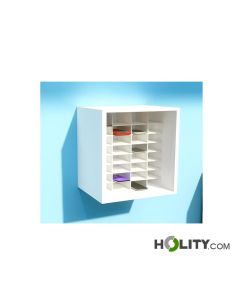
32-compartment smartphone locker in 18 mm melamine with ABS edges, dimensions W40 x D30 x H41 cm, white color customizable on request.

Wall-mounted mobile phone locker cabinet with 32 compartments, 18 mm melamine structure, customizable colored door with cylinder lock. Dimensions: W40 x D32 x H41 cm.
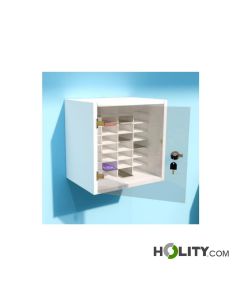
Wall-mounted smartphone storage cabinet in 18mm melamine with a transparent plexiglass door. 32-device capacity, cylinder lock, dimensions W40×D32×H41cm.

1x10 compartment column cell phone locker in 8/10 mm steel. Padlockable lock for each compartment, wall mounting. Dimensions W20xD20xH155 cm.
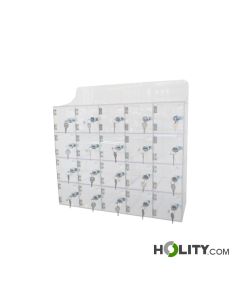
H972_90 phone storage locker in transparent acrylic with 20 individual compartments, independent locks and master key. Wall mounting. Ideal for offices, schools and professional environments.

10-compartment steel mobile phone locker, anti-theft closure, painted gray RAL 7035, for schools. Dimensions 30×35×175 cm. UNI EN 16121/16122 standard.
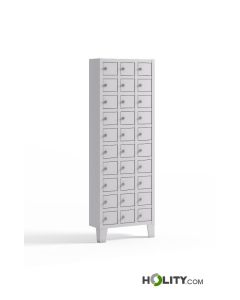
Mobile phone locker 30 doors (3x10) in 8/10 mm steel with padlockable locks, wall fixing, for schools and collective environments. Dimensions W 54 x D 20 x H 155 cm.
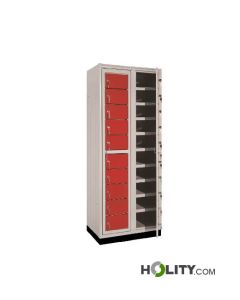
Security locker in 6/10 mm profiled steel with 20 compartments for smartphones. Single or padlockable locks, anti-burglary hinges, accident-prevention base. Dimensions 60x35x175 cm, gray RAL 7035.
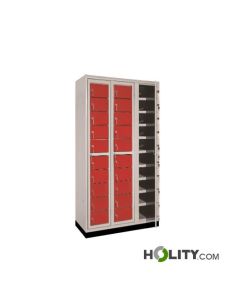
Professional smartphone storage locker with 30 compartments measuring 15x11.8 cm. 6/10 mm steel structure, double key locks, UNI certified for school environments.
The integration of smartphone lockers in primary and secondary schools addresses a growing need for order and discipline management in the digital age. These devices are not simple containers, but strategic tools for creating a learning environment free from technological distractions, where student concentration returns to being the top priority. Thanks to a solid and secure structure, security lockers allow teaching staff to centralize the storage of phones at the start of lessons, drastically reducing classroom cyberbullying and the improper use of social media during explanations, while fostering real peer socialization during breaks.
Our professional range has been developed to withstand the intense pace of educational institutions, offering solutions ranging from single-column models for small classes to multi-column structures for large university campuses. The use of certified materials such as painted steel and anti-corrosion aluminum ensures that every investment lasts over time, maintaining the aesthetics and functionality of the locks. Each compartment is designed to house the latest generation of smartphones, ensuring protection against bumps and scratches thanks to refined internal finishes and, in specific models, charging systems that transform storage time into an added service opportunity for students.
The adoption of a centralized storage system for mobile devices offers tangible advantages from both a pedagogical and organizational perspective. Firstly, the reduction of distractions allows teachers to maintain a constant instructional flow, avoiding the continuous interruptions caused by notifications or furtive screen use under the desk. This approach not only improves average academic performance but also educates young people in a conscious and detached use of technology, defining clear boundaries between study time and free time. The presence of a dedicated locker conveys a signal of professionalism and order, reflecting positively on the school's reputation.
From a security standpoint, the use of numbered compartments with independent locks eliminates the risk of accidental theft or device swaps, frequent problems when phones are left unattended in backpacks or collected in common boxes on the teacher's desk. The physical protection guaranteed by the metal shells protects devices, which are often very expensive, from accidental drops or crushing. Furthermore, for schools promoting digital transition projects, these lockers serve as a fundamental logistical hub, allowing the management of not only personal phones but also the school's hardware equipment, ensuring that every device is always located, protected, and, if necessary, correctly powered overnight.
The variety of models available allows for the configuration of the storage area according to the specific architecture of the school. Single-column lockers are ideal for placement within individual classrooms, next to the teacher's desk or at the entrance, occupying minimal floor space. For common areas, such as corridors or halls, multi-column configurations offer higher storage density, allowing hundreds of students to deposit their cell phones quickly before lessons begin. Modular models, on the other hand, offer maximum flexibility: new modules can be added over time as the school population increases or new teaching sections are created.
A fundamental distinction lies in the access system: lockers with combination locks are the most requested for autonomous management, as they relieve the administration office of the burden of managing and duplicating hundreds of physical keys. For those who prefer more traditional control, models are available with cylinder locks and double keys or handles designed for use with personal padlocks. Finally, technologically advanced models integrate USB charging stations inside each compartment, equipped with forced or passive ventilation systems to dissipate heat generated by batteries, ensuring maximum electrical safety and preventing overheating of sensitive smartphone components.
Choosing the ideal model must start with a careful analysis of the school demographics and available space. If the goal is placement in high-traffic corridors, it is essential to opt for models with a reinforced base and wall mounting, to prevent any risk of tipping due to accidental bumps or overcrowding during class changes. For primary schools, where devices are generally fewer but require more teacher-guided management, compact lockers with transparent doors can facilitate immediate visual monitoring of device presence without having to open every single compartment.
Another fundamental criterion concerns maintenance and ease of cleaning. In school environments, hygiene is a priority: choosing materials with non-toxic coatings and smooth surfaces allows for quick and frequent sanitization without damaging the locker's aesthetic finish. It is also advisable to evaluate the internal size of the compartments: with the trend toward increasingly larger smartphones, compartments that are too small may quickly become obsolete. Verifying the presence of permanent and indelible numbering on the compartments is a technical detail that simplifies daily life, avoiding confusion among users and ensuring that each student instantly recognizes their assigned slot at the beginning of the school year.
School furniture intended for storing electronics must meet rigorous safety standards. The structures must be manufactured in compliance with European regulations on the safety of office and contract furniture, ensuring the absence of sharp edges or cutting parts that could cause injury. In the case of electrified models with integrated charging, CE marking compliance is mandatory, as is the presence of certifications on electrical safety and electromagnetic compatibility. Ventilation systems must be designed to comply with fire prevention requirements, ensuring that critical heat accumulation does not occur within the metal structure.
Furthermore, the management of personal data and privacy (GDPR) is an indirectly linked aspect: the use of closed lockers ensures that private notifications appearing on screens are not visible to other students, protecting the confidentiality of personal communications. The choice of materials such as first-grade steel treated with epoxy powders also guarantees compliance with Minimum Environmental Criteria (CAM) for the sustainability of public furniture. Holity.com exclusively selects manufacturers who document material traceability and finish safety, offering school administrations the necessary peace of mind to pass inspections by safety monitoring bodies in work and study environments.
Explore all products in the category and compare the available solutions to find the one best suited to your operational context.
Installing dedicated lockers helps eliminate digital distractions during lessons, fostering concentration and academic performance. Additionally, it ensures the physical security of devices, protecting them from theft or damage that could occur if left in backpacks, and promotes a climate of discipline and order within the institution.
For managing a large number of students, combination locks are the most recommended as they eliminate the issue of lost keys. Alternatively, padlockable handles allow students to use their own personal padlock, making them responsible for managing their own space and reducing maintenance costs for the school.
Yes, there are specific models equipped with USB ports or standard electrical outlets inside each compartment. These lockers are designed with special ventilation slots to allow air circulation and dissipate the heat generated during charging, ensuring that device batteries do not overheat during storage.
Absolutely yes. The lockers are made of high-quality sheet steel with reinforced thickness and anti-theft internal hinges. The epoxy powder coatings also make them resistant to scratches and the daily wear and tear typical of crowded school corridors, maintaining a solid and secure structure over the long term.
Thanks to the vertical design and column structure, these lockers take up very little depth (usually between 15 and 25 cm). This makes them perfect for installation along corridors without obstructing student flow or escape routes, while ensuring a high storage capacity for devices.
Most models feature progressive numbering applied directly to the doors or frames. This system facilitates quick retrieval of one's device at the end of lessons or during breaks, reducing confusion and waiting times in front of the lockers, especially in schools with many students.
Yes, by opting for modular and stackable models, it is possible to add new columns to existing ones at any time. This flexibility allows the school to plan the investment over time, adapting the storage capacity to the actual needs of the classes without having to replace the entire existing furniture.
 English
  Italian
 French
 German
 Spanish