mon-fri 9-13 / 14.30-18.30
Pack of 2 pieces
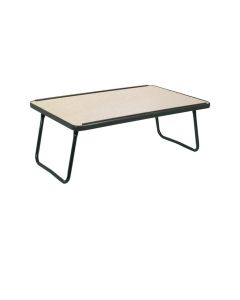
€58.24 VAT excl.Steel and plastic laminate bed tray. Dimensions: W.605xD.390xH.240 mm
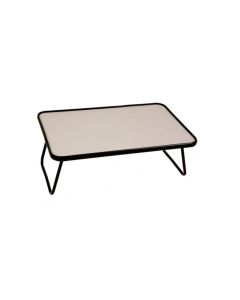
Bed tray with folding legs. Dimensions: 605x39xh.24 cm
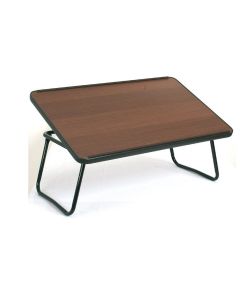
Pack of 2 pieces
€70.56 VAT excl.Bed tray with folding legs and reclining top in 3 positions.
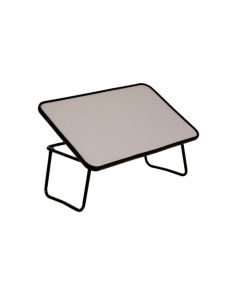
Bed tray with folding legs. Dimensions: 60.5x39xh.24 cm
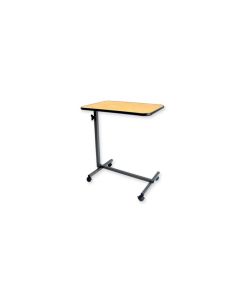
Pack of 4 pieces
€183.88 VAT excl.Overbed table with steel structure ideal for patient care. Height: from 72 to 110 cm. Adjustable angle.
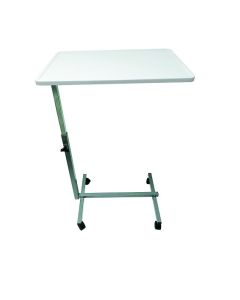
Overbed dining table for the disabled and elderly. Adjustable height. Dimensions: W67 x D40 x H71-116 cm.
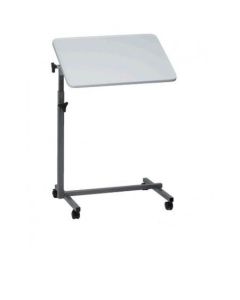
Overbed table with grey painted steel frame. Height adjustable via knob from 70 to 117 cm. Top dimensions: 60 x 40 cm. Made in Italy.
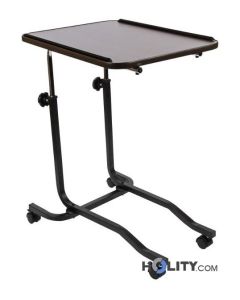
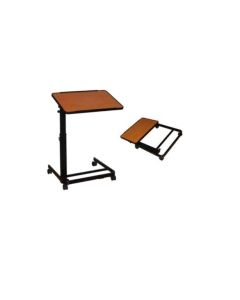
Tilting hospital table equipped with four swivelling wheels. Height adjustable from 72 to 110 cm. Top dimensions: 41 x 55 cm.
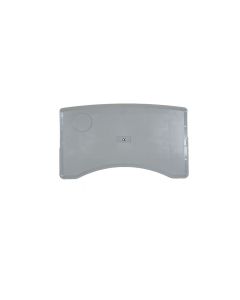
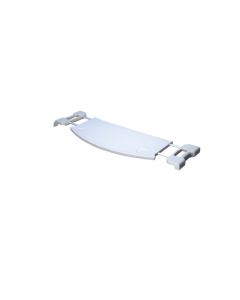
Bed tray made of plastic material. Dimensions: 545x375 mm.
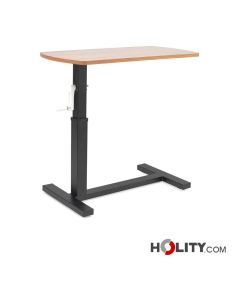
Pack of 3 pieces
€191.31 VAT excl.Overbed table with crank handle. Maximum load: 25 kg.
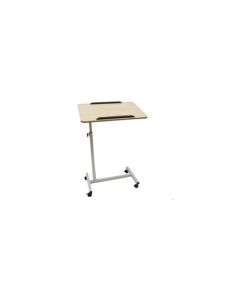
Tilting overbed table. Adjustable height from 70 to 117 cm. Top dimensions: 60x40 cm.
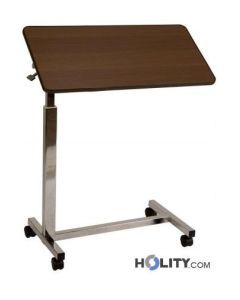
Tilting bed table with chrome-plated steel frame adjustable in height (via lever) from 77 to 111 cm. Top dimensions: 76.5 x 39 cm. Made in Italy.
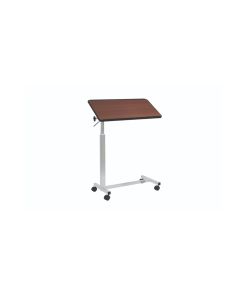
Overbed table for patients with wheels and adjustable height. Available in two different colors. Height: from 78 to 110 cm.
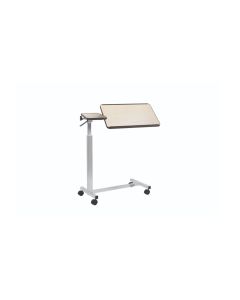
Bed table with double top and automatic lifting. Height adjustable from 74 to 119 cm.
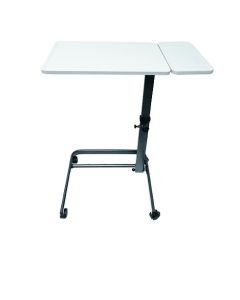
Adjustable height bedside table. Base with wheels. Dimensions: W82 x D40 x H71-93.
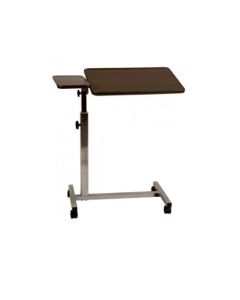
Tilting table with two surfaces, one fixed and one tilting
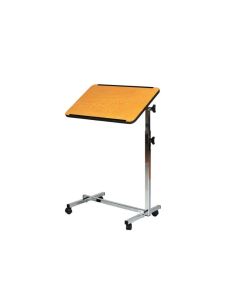
Tilting overbed table in steel and laminate, height adjustable (73-112 cm). Top with raised edges and tilting up to 90 degrees.
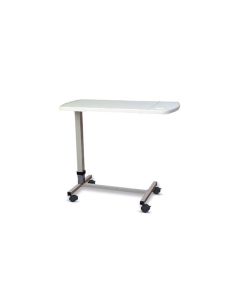
Height-adjustable overbed table with painted steel structure. Dimensions: W. 77 x D. 39 x h. from 72 to 113 cm.
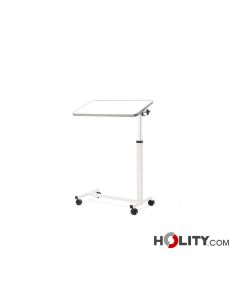
Overbed table with height-adjustable tilting top and painted steel frame. Dimensions: W. 76 x D. 38 x H. from 75 to 120 cm.
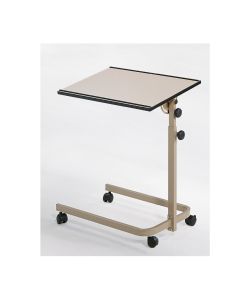
Overbed table on wheels, made of painted steel. Adjustable height
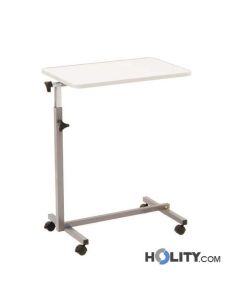
Hospital bedside table with manual height adjustment from 72 to 115 cm. Tilting top in unlimited positions. Castors: Ø 45 mm.
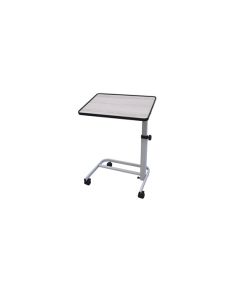
Pack of 2 pieces
€249.38 VAT excl.Overbed table with white painted steel structure. Height: from 61 to 94 cm. Easily foldable.
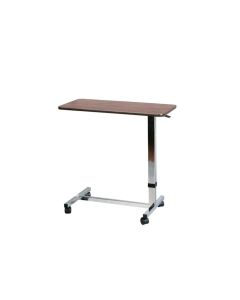
Professional steel and wood bedside table, height adjustable 70-107 cm with continuous automatic mechanism and U-base for healthcare use.
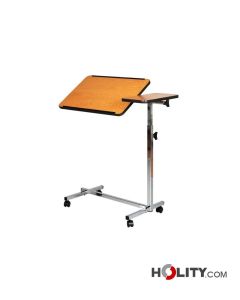
Professional chrome-plated steel overbed table with split top (81x38.5 cm). Height adjustable, ideal for healthcare assistance and patients.
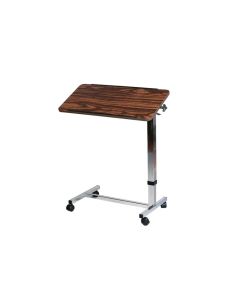
Professional H708_44 overbed table in steel and laminate, 80.5x38.5 cm. Adjustable height and tilting top for care and hospitalization.
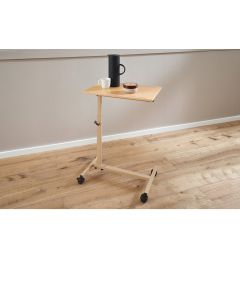
Overbed table with adjustable height. Tilting support surface. Table height adjustment: 80 ÷ 113 cm.
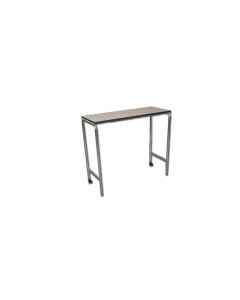
Overbed table with polished aluminum tubular structure. Dimensions: 110 x 42 x h 93 cm.
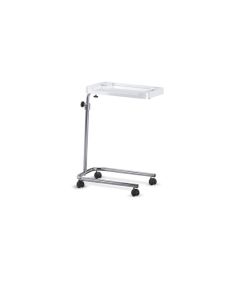
Overbed table for patient care with chrome-plated steel tube structure. Height adjustable from 75 to 114 cm.
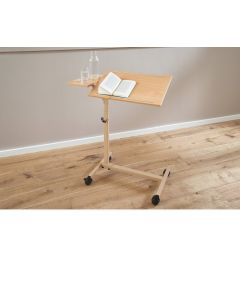
Overbed table with tilting support surface and fixed section. Adjustable height: 80 ÷ 113 cm.
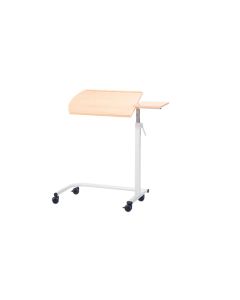
Bedside table with high-pressure laminated beech wood overbed table. Dimensions: W. 93.5 x D. 40 x H. from 84.5 to 136.5 cm.
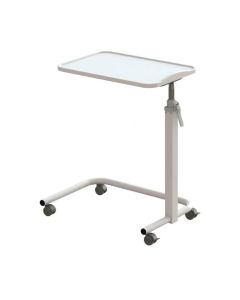
Overbed table h919_49 with adjustable height (780-1200 mm) in steel and polystyrene with 600x400 mm top, 4 wheels and containment edge.
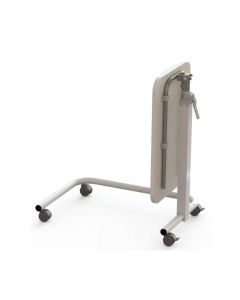
Overbed table h919_51 with adjustable height (780–1200 mm) and downward foldable top. Made of steel and polystyrene with wheels. Dim: 695×470 mm.
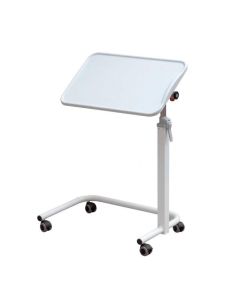
Overbed table h919_50 with adjustable height (780-1200 mm) and 30° tilting top in steel and polystyrene with edge and wheels. Dim: 695x470 mm.
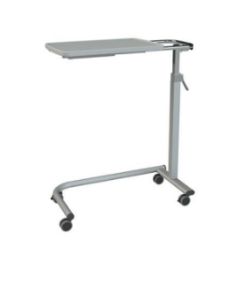
Pack of 6 pieces
€1,970.10 VAT excl.Overbed table. Steel structure and ABS top. Dimensions: W. 60-83.2 x D. 43.8 x h. 87-136 cm
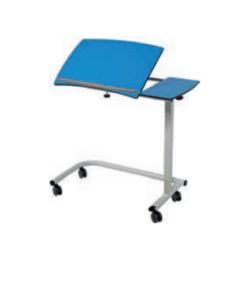
Adjustable height overbed table. Dimensions: W. 85-99 x D. 43.9 x h. 72-117 cm.
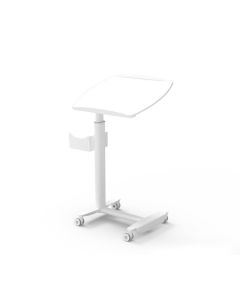
Overbed table for nursing homes. Thermoformed polystyrene top 42 x 55 cm. Adjustable height 83-110 cm.
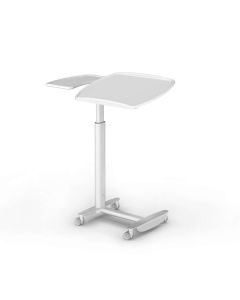
Overbed table for clinics and hospitals. Adjustable height from 83 to 110 cm. With double support surface.
Overbed tables represent an essential category in medical furnishing and spaces intended for hospital, home, and residential care. These pieces of furniture perform a crucial practical function for bedridden patients, the elderly, and people with disabilities, facilitating access to meals, medications, personal belongings, and work tools directly from the bed without the need for movement. The construction versatility of modern overbed tables, which includes height-adjustable solutions, tilting surfaces, mobile carts, and fixed trays, allows them to adapt to multiple contexts of use: from private healthcare facilities to nursing homes, from specialized clinics to home environments where it is necessary to guarantee autonomy and comfort to people with reduced mobility.
The choice of an appropriate overbed table directly affects the quality of life during convalescence and the operational safety of the nursing staff. A well-sized and stable product reduces the risk of accidents, facilitates care maneuvers, and allows the patient to maintain a certain level of independence in daily actions. For this reason, our catalog offers a wide range of solutions, each designed to respond to specific functional needs and spatial constraints.
A well-designed overbed table offers multiple operational and well-being advantages for those in conditions of prolonged bed rest. Firstly, it facilitates access to meals and drinks without requiring movement efforts from the patient, preserving nutritional autonomy even in the post-operative recovery phase or during acute illnesses. The ability to adjust the height allows healthcare personnel to adapt the table to different body sizes and patient positions, avoiding incorrect postures that could compromise functional recovery. Furthermore, a mobile table with wheels allows for the easy transport of diagnostic tools, medications, and consumables, optimizing nursing work times. From a psychological point of view, ensuring the patient’s ability to serve themselves independently contributes to maintaining dignity and self-esteem during a period of fragility.
In home care contexts, overbed tables prove particularly useful for the elderly living alone or with limited family support, allowing them to access meals and medications without depending completely on a caregiver. Facilities such as retirement homes and hospitals appreciate these furnishings for their robustness, ease of sanitization, and durability over time. Structural stability is decisive: a table equipped with a wide base and adequate counterweights does not wobble under the weight of a loaded tray, reducing the risk of spills and falls. Models with a tilting top add therapeutic value, allowing positions that promote blood circulation or facilitate swallowing during meals.
The overbed table market is divided into several categories, each characterized by specific construction solutions and materials. Simple bed trays constitute the most economical and compact solution: made of painted steel or plastic laminate, with or without folding legs, they represent the ideal choice for environments with limited space or for short hospital stays. These trays are distinguished by their ease of cleaning and portability, although they do not offer height adjustment. Tilting tables represent an intermediate level of complexity: equipped with a steel frame (chrome-plated or painted) and height adjustable via a knob or lever, they allow the angle of the top to be varied in multiple positions, adapting to the needs of different patients. Meal service carts and overbed tables with double tops are more sophisticated solutions, often equipped with swivel wheels and an automatic lifting system, ideal for high-traffic hospital contexts or for patients with significant mobility limitations.
Important construction variants concern the adjustment system: some models use a simple manual knob, others employ ergonomic levers, while the most advanced have spring mechanisms for semi-automatic lifting, which reduces the operator’s muscular fatigue. The dimensions of the top vary considerably, from small trays 54×37 cm up to service tables 82×40 cm, allowing them to hold different quantities of food and tools. The depth of the top affects stability when loads are placed eccentrically: wider tops (38-40 cm) guarantee better weight distribution. The materials of the top range from stainless steel for aseptic environments, to melamine or PVC laminates for home applications, each with its own advantages in terms of hygiene, durability, and thermal comfort.
Choosing the appropriate overbed table must consider several technical and contextual parameters. Firstly, evaluate the scope of use: healthcare facilities with high patient turnover require robust and easily sanitizable products, while home care may prioritize compact and foldable solutions. Adjustable height is a discriminating criterion when the table must serve patients with different body sizes or for situations where the bed itself has a non-standard height; most hospital models allow variations between 70-120 cm, covering almost all cases. Checking the maximum capacity is essential: simple tables support 15-25 kg, while robust solutions reach 30-40 kg. If the patient requires greater gestural independence, opt for tilting tops that reduce the access angle to the tray.
Spatial footprint represents a practical constraint often underestimated: folding tables or tables with retractable legs allow space to be cleared once the meal is finished, fundamental in narrow rooms or with evacuation routes up to standard. If the patient is seriously infirm, the mobility of the table via wheels facilitates nursing maneuvers and positioning relative to the bed. Common errors include underestimating the height of the bed compared to the table: a height that is too low forces the patient to bend down with effort, while an excessive height makes it difficult to access food. For elderly patients with tremors or poor coordination, prioritize tops with containment edges that reduce the risk of spills. Finally, consider the ease of cleaning: materials with smooth surfaces, free of recesses, speed up sanitization between one patient and another, crucial in multi-user environments. The medical-health certification of the product and compliance with safety regulations are essential checks.
Overbed tables intended for medical and hospital contexts are subject to specific European regulations that guarantee safety of use and construction quality. The UNI EN 60601-1 standard addresses the general safety of medical devices, establishing requirements for structural stability, the absence of dangerous edges, the biocompatibility of materials in contact with the patient, and mechanical resistance to cyclic stress. Static stability is verified by applying horizontal pushing forces to the structure, with tolerances that guarantee that the table does not tip over even under abnormal conditions of use. The materials used, especially the support surface, must be easily sanitizable: melamine, stainless steel, and antimicrobial laminates meet these criteria, while untreated woods are discouraged. The maximum capacity must be clearly indicated by permanent labeling, as well as the instructions for use in the local language.
For products intended for the hospital environment, compatibility with patient lifting and transport systems is a relevant aspect: the table must not hinder the movements of the bed, armrests, or traction systems. Some models are certified for use in operating rooms, where the requirements for sterilizability and absence of contaminants are even stricter. European Directive 2014/30/EU regulates electromagnetic immunity for motorized tables, ensuring that radio interference from medical equipment does not compromise operation. For purchases in the public sector, it is common to request CE marking and, in some cases, ISO 13485 certifications that attest to compliance with superior quality standards. Always verify the presence of such certifications and request technical documentation from the supplier before purchase, particularly if the table will be used in an accredited healthcare context.
Explore all the products in the category and compare the available solutions to find the one best suited to your operational context. Each table is selected according to criteria of quality, safety, and functionality: consult the technical data sheets and contact our team to receive personalized advice based on your specific needs.
A bed tray is a fixed solution, without height adjustment, ideal for short meals or light home applications. A tilting overbed table offers adjustable height (usually 70-120 cm) and a top that reclines in multiple positions, making it more versatile for hospital contexts where patients with different needs are served.
The capacity depends on the use: simple trays support 15-25 kg, suitable for standard meals. Robust tables reach 30-40 kg, recommended if the patient also rests their arms, diagnostic equipment, or requires assisted movements. Always check the product label for the exact value.
Use neutral detergents or hospital-grade disinfectants on melamine, laminate, or stainless steel surfaces. Avoid abrasive tools that damage the finish. For models with folding legs, also clean critical areas where dust accumulates. Dry completely to avoid corrosion and stains.
Yes, if equipped with swivel wheels with integrated brakes. Stability is guaranteed by the wide base and low center of gravity of the design. Before each use, check that the brakes are engaged. Hospital-certified models are tested to maintain stability even with eccentric loads.
A standard hospital bed is 75-80 cm high. The table should allow adjustment at least between 70-110 cm, so that the support surface is slightly above the mattress level (5-10 cm) to facilitate access without effort. Always adjust according to the individual patient’s body size.
Only models specifically certified for aseptic environments, made of stainless steel, sterilizable, and free of bacteria receptacles. Standard domestic tables do not meet microbiological requirements. Always request documentation of compliance with the UNI EN ISO 13485 standard before use in specialized departments.
The manual model is economical and reliable for occasional use. Automatic lifting (spring or motorized) reduces operator fatigue during frequent manipulations and allows the patient to independently adjust the height. Evaluate the budget and frequency of use: in high-turnover facilities, the automatic version pays back the initial investment.
 English
 Italian
 French
 German
 Spanish