
mon-fri 9-13 / 14.30-18.30
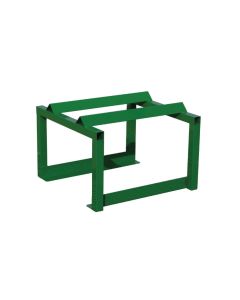
Support frame for 1 horizontal 220 l drum. Metallic tubular structure with anti-corrosion treatment for outdoor use. Dimensions: W 60 x D 60 x H 38 cm. Complies with ISO 3864.
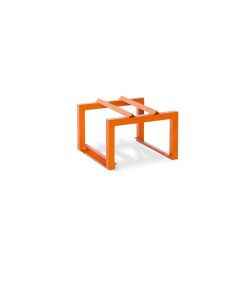
Drum support structure. Suitable for 1 drum of 200 liters. Dimensions: W. 60 x D. 60 x h. 38 cm.
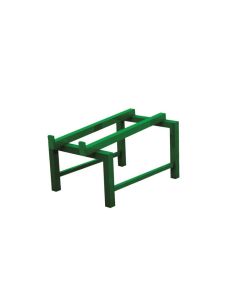
Support frame for 1 horizontal inclined 220 l drum. Metal tubular structure with anti-corrosion treatment for outdoor use. Dimensions: 80 x 60 x H 45/38 cm.

Stackable support for horizontal storage of 1 x 200-liter drum. Steel structure, capacity 225 kg, dimensions 78x60x75h cm.
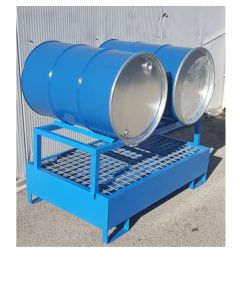
Horizontal painted steel support for storing 2 x 200-liter drums. Stackable structure with a capacity of 450 kg.

Horizontal support for 2 drums of 220 lt. Metal tubular structure with anti-corrosion treatment for outdoor use. Dimensions: W 118 x D 60 x H 38 cm. Compliant with ISO 3864.
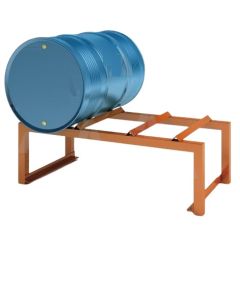
Drum support structure in tubular steel. For 1 drum of 200 lt. Dimensions: W. 60 x D. 60 x h. 38 cm. Load capacity: 300 kg.
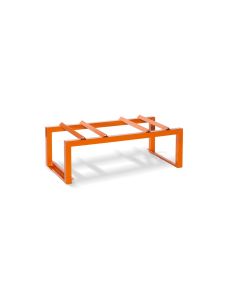
Drum rack structure. Suitable for 2 x 200-litre drums. Dimensions: W. 118 x D. 60 x H. 38 cm.

Steel tubular drum storage structure. For 2 drums of 200 l. Dimensions: W. 118 x D. 60 x H. 38 cm. Load capacity: 600 kg.
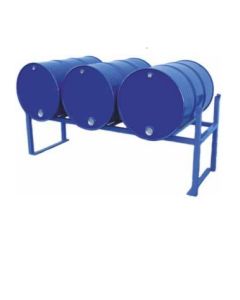
Stackable painted steel support for the storage of 3 x 60-liter drums. Dimensions 134x60x75 cm, 450 kg load capacity and space-saving structure.

Painted steel drum support for 3 x 200-liter drums. Stackable structure with 680 kg load capacity and dimensions 200x60x75 cm.

Tubular drum support. Ideal for 3 drums of 60 liters. Dimensions: W. 118 x D. 60 x h. 38 cm.

Rack for 3 drums of 60 L. Made of tubular steel. Dimensions: W. 118 x D. 60 x H. 38 cm. Capacity: 600 kg.

Support for 2 drums of 200 liters, in steel. Dimensions: W. 150 x D. 70 x h. 85 cm. Capacity: 1500 kg.
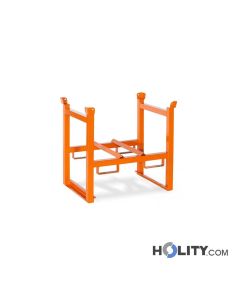
Drum storage structure. Ideal for 1 x 200-litre drum. Dimensions: W. 83.5 x D. 60 x h. 75 cm.

Tubular drum rack ideal for 2 x 200-litre drums. Dimensions: W. 133.5 x D. 60 x h. 75 cm.

Drum support structure. Ideal for two 200-litre drums. Load capacity 500 kg.
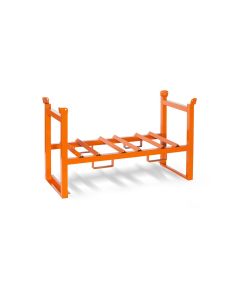
Storage support. Ideal for 3 drums of 60 liters. Dimensions: W. 133.5 x D. 60 x H. 75 cm.
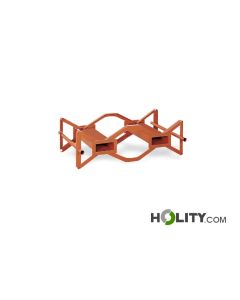
Tubular drum support structure. Load capacity: 500 kg. For drums with a 60 cm diameter.

Support for 2 x 200 litre drums in painted and galvanized steel. Load capacity 1500 kg, includes a 240 litre collection sump for environmental safety.

Drum support structure. Ideal for 3 x 200-litre drums. Stackable 1+1.
Drum supports represent a fundamental solution for the safe management of storage and handling of containers in industrial environments, warehouses, workshops, and spaces with high environmental compliance requirements. These structural systems allow for the horizontal positioning of drums, optimizing access for tapping and decanting operations, reducing working times and the risks of hazardous liquid spills. The choice of the correct solution depends on the required load capacity, drum dimensions, and the configuration of the available space. Each model is designed to ensure stability, environmental safety, and compliance with industry regulations, representing a durable investment even in difficult operating conditions.
The use of structured drum supports significantly improves safety conditions in work environments by eliminating risks resulting from the disorderly accumulation of containers and the difficulty of accessing tapping points. Proper support allows drums to be positioned at an ergonomic height, reducing operator fatigue during the liquid extraction and transfer phases. Furthermore, the cage structure protects the drums from accidental impacts and contact with other equipment, extending the container's life and maintaining the integrity of the seal. These systems are particularly advantageous in contexts where environmental management is a critical factor: many supports are compatible with watertight sump pallets, which catch accidental leaks and prevent soil or water contamination.
Handling with a forklift becomes simpler thanks to forklift-compatible models, which allow multiple drums to be moved without resorting to improvised solutions. In confined spaces, stackable systems multiply vertical storage capacity, freeing up floor space and maintaining operational order. Time savings in logistical management translate into a reduction in overall operating costs and better scheduling of production or distribution activities.
The range of available drum supports covers different configurations to adapt to any storage need. Single-drum models accommodate a single 200-liter container with load capacities ranging from 225 kg up to 300 kg, occupying a minimum floor space of approximately 60 x 60 cm. These supports are ideal for laboratories, small workshops, or environments where space is limited and order rotation is frequent. Double and triple-drum models allow storage to be consolidated while increasing space efficiency: a support for two 200-liter containers reaches capacities up to 1500 kg, while versions for three 60-liter drums offer a compact alternative solution. Dimensions vary from 60 x 60 cm up to configurations of 150 x 70 cm at the base, with heights starting from 38 cm for low models up to 85 cm or more for elevated ones.
Construction materials are primarily steel, powder-coated with a RAL 2004 (orange) finish to ensure corrosion resistance and visibility in industrial environments. Some models feature additional galvanization for applications in humid or corrosive environments. The structural configuration is based on welded tubing, which offers an optimal combination of lightness and rigidity. Locking hooks are integrated into the design, allowing for the secure fastening of the drum without the need for additional straps. Special models include versions with an incorporated 240-liter sump pallet, which ensures environmental compliance according to strict regulations for handling hazardous substances.
The first consideration in choosing a drum support concerns the total load capacity required: it is necessary to multiply the number of drums by the specific weight of the liquid contained, adding the weight of the container itself (about 20-25 kg for an empty 200-liter metal drum). A recurring error is to consider only the nominal load capacity without verifying if the structure is suitable for repetitive loading and unloading cycles. A support intended to undergo frequent movement must have a load capacity at least 30% higher than the maximum expected static load. The number of drums to be stored determines the choice between single, double, or triple-drum models; however, the frequency of access to the containers must also be evaluated. If a single drum needs to be extracted quickly, a compact multi-drum support might be inconvenient, while a separate modular configuration offers greater flexibility.
The dimensions of the available space and the ceiling height influence the decision between low and high supports. Models at 38 cm height occupy less vertical space but require more bending during tapping operations, while supports at 75-85 cm height reduce fatigue but require more lateral clearance. A crucial aspect concerns compatibility with mechanical handling: if drums must be moved frequently with a forklift, it is mandatory to choose forklift-compatible models with loading pockets designed for this purpose. The presence of a sump pallet underneath is essential if the environment is subject to environmental audits or if liquids classified as hazardous or polluting are stored. In contexts where visual order is a priority, supports with RAL 2004 orange painting facilitate rapid identification of the storage station and reduce the risk of collision with other equipment.
The design and production of drum supports must comply with specific technical regulations that guarantee structural safety and environmental protection. The UNI EN ISO 3691-4 standard concerns the mechanical handling of loads and defines the design requirements for equipment intended to be lifted by forklifts; forkliftable supports must comply with these specifications to avoid instability during transport. The Machinery Directive 2006/42/EC requires that any support structure be designed with a minimum safety coefficient, verified through mechanical resistance calculations and, if necessary, through experimental static and dynamic load tests. Standards for wear and corrosion resistance, particularly important for humid or chemically aggressive environments, are governed by the UNI EN ISO 1461 standard for galvanization and by powder coating specifications in accordance with ISO 12944.
Regarding environmental protection, the management of integrated sump pallets must comply with Legislative Decree 152/2006 (Italian Environmental Code), which regulates the containment of hazardous substances. When handling flammable liquids, classified according to the CLP Regulation (Classification, Labelling, Packaging), it is necessary to verify that the support does not generate sparks or heat through friction, thus ensuring a design that excludes critical contact points. CE certification of conformity is mandatory and must be accompanied by a declaration of conformity issued by the manufacturer. Operators who will use the support must receive training on the manual handling of loads according to Legislative Decree 81/08, even if the support significantly reduces the risks associated with improvised lifting.
Explore all the products in the category and compare available solutions to find the most suitable one for your operational context. Choosing the correct support ensures safety, efficiency, and regulatory compliance over time.
The single-drum support holds a single 200-liter container and is ideal for tight spaces or environments where drums are frequently accessed. Multi-drum supports (double or triple) consolidate the storage of multiple containers into a single structure, increasing the total load capacity up to 1500 kg and reducing the overall footprint per square meter of warehouse space.
Forkliftable models are specifically designed to be lifted by forklifts. They feature shaped loading pockets that distribute weight evenly, ensuring stability during vertical transport. Before using a support, always check the manufacturer's instructions for compatibility with mechanical handling.
The declared load capacity includes both the weight of the full drums and that of the support structure. For repetitive applications with frequent loading cycles, it is recommended to use a support with a nominal capacity at least 30% higher than the maximum expected static load to avoid material fatigue.
A sump pallet is an integrated tank under the support that catches accidental liquid leaks, preventing environmental contamination. It is mandatory for the handling of hazardous, flammable, or toxic substances, according to European environmental regulations and the Italian Environmental Code (D.Lgs. 152/2006).
Yes, stackable supports are designed to be piled vertically (generally 1+1 configuration), multiplying vertical storage capacity without increasing floor space. However, it is necessary to verify that the floor can withstand the total concentrated load.
Powder-coated steel with a RAL 2004 finish offers a good compromise between mechanical strength and corrosion protection. For particularly humid or chemically aggressive environments, it is preferable to choose supports with additional galvanic zinc coating or stainless steel.
The supplier must provide the CE Declaration of Conformity and the technical manual with mechanical resistance data. Check that the support has undergone static load tests according to the Machinery Directive 2006/42/EC and that it bears the visible conformity mark on the structure.
Yes, 60-liter drums weigh approximately 50 kg when full (compared to 200 kg for 200-liter ones), so the load capacity and geometry of the support vary. A triple-drum support for 60-liter drums is more compact and lighter than a double-drum support for 200-liter drums, while offering similar volumetric storage capacity.
 English
  Italian
 French
 German
 Spanish