
mon-fri 9-13 / 14.30-18.30
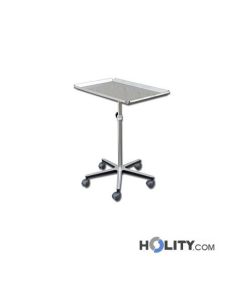
Mayo table for operating room in stainless steel.
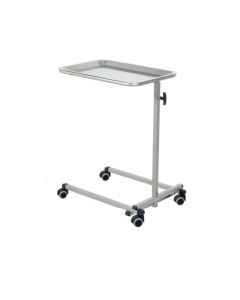
Pack of 3 pieces
€648.00 VAT excl.Steel instrument table for operating rooms. Adjustable height: from 750 to 1200 mm.
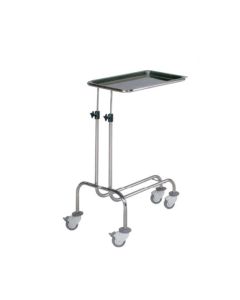
Pack of 3 pieces
€670.50 VAT excl.Instrument table for operating rooms. Adjustable height from 750 to 1200 mm.
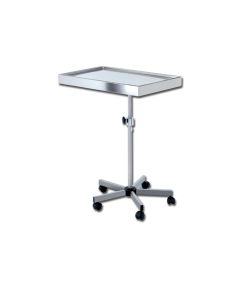
Instrument table in stainless steel with adjustable height and removable tray.
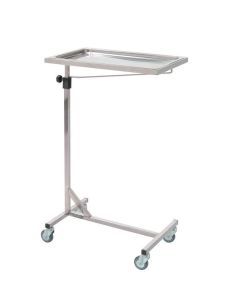
Instrument table for hospitals and clinics. Adjustable height from 102 to 130 cm. Tray dimensions: 59 x 39 x 2.5 cm.
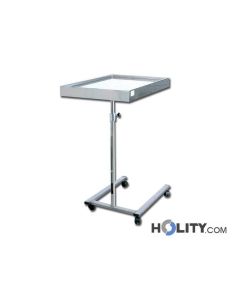
Mayo table for operating room in stainless steel. Adjustable height from 90 to 115 cm.
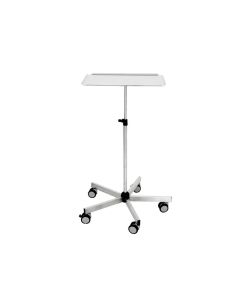
Polished stainless steel Mayo instrument stand. Adjustable height: from 950 to 1350 mm. Swivel castors Ø 75 mm.
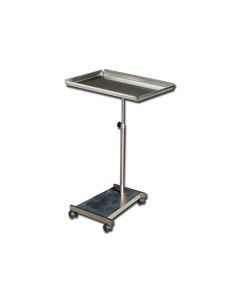
Instrument table for operating rooms with removable stainless steel tray.
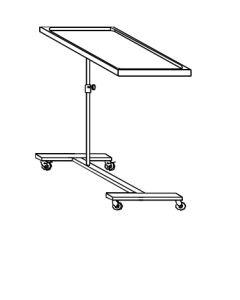
Mayo table for operating room in AISI 304 stainless steel, removable tray and adjustable height 87-120 cm. Equipped with safety antistatic wheels.
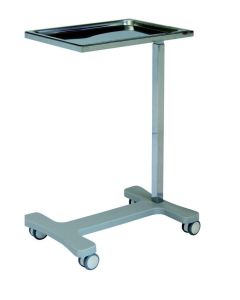
Mayo table for operating room. Dimensions: W.70 x D.45 x adjustable height from 95 to 135 cm.
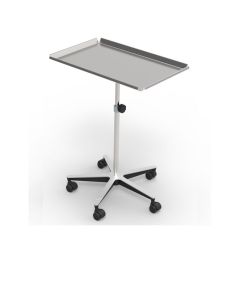
Operating room mayo stand in AISI 304 stainless steel and aluminum, height-adjustable with 5-spoke base and tray with open corners.
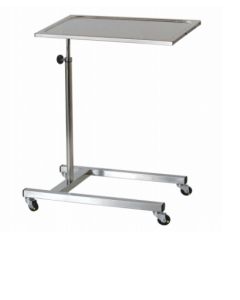
Mayo table for hospitals and clinics. Material: 18/10 stainless steel. Adjustable height from 83 to 130 cm.
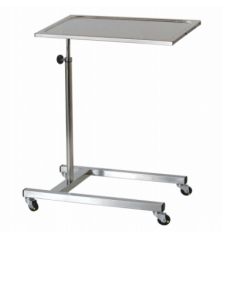
Instrument table for operating rooms with tilting tray. Adjustable height from 83 to 130 cm.
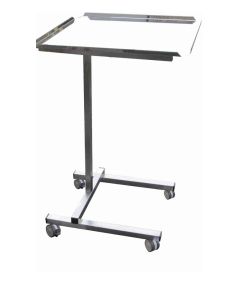
Mayo instrument table, height adjustable. Material: stainless steel. Dimensions: W60 x D40 x H96/152 cm.
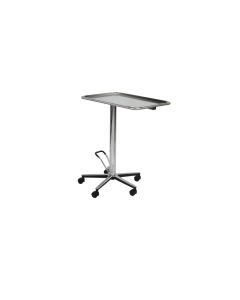
Professional Mayo table with fixed AISI 304 stainless steel tray, hydraulic adjustment 85-120 cm and 5-wheel base for surgical environments.
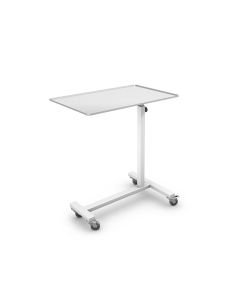
Professional Mayo table for surgical instruments in stainless and painted steel, adjustable height 85-130 cm, ideal for operating rooms and clinics.
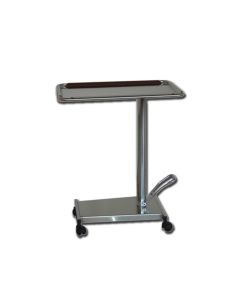
Instrument table for operating rooms. Adjustable height from 85 to 120 cm.
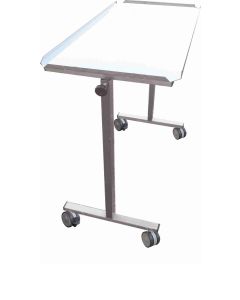
Mayo bridge instrument table, height adjustable. Dimensions: W77 x D44 x H91/147 cm.
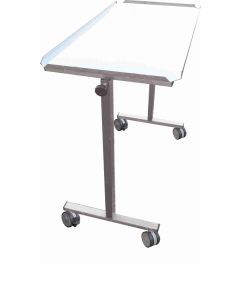
Operating room instrument table. Material: stainless steel. Dimensions: L90 x D60 x H91/147 cm.
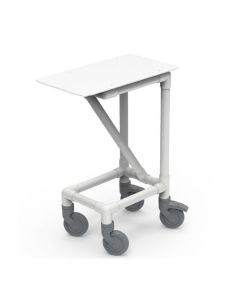
Mayo MR Safe table in PVC (608x338x815 mm) for MRI sites. Non-magnetic support for the arm during infusion.
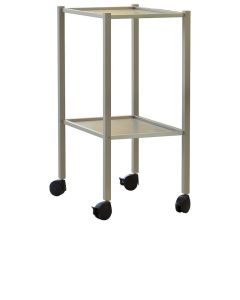
MR compatible (3T) anodized aluminum instrument table, 650x450 mm, with 2 shelves and wheels, ideal for sensitive diagnostic environments.
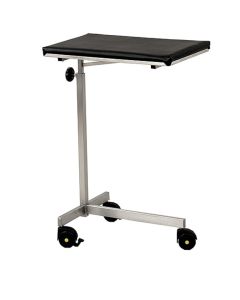
Stainless steel instrument table with three wheels. Top dimensions: W.600xD.400 mm
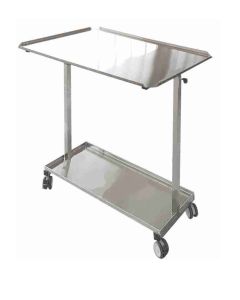
Bridge-style instrument table. Adjustable height. Dimensions: W77 x D44 x H91/147 cm.
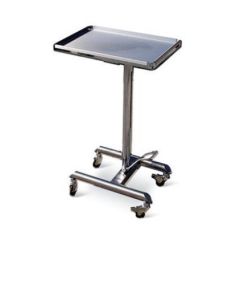
Stainless steel Mayo trolley for instrument support. Height adjustable from 89 to 124 cm
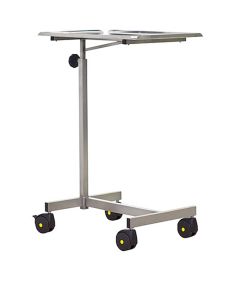
Stainless steel Mayo instrument table. Height adjustable from 840 to 1435 mm
Stainless steel Mayo table for operating rooms, 640x440 mm tray and 83-130 cm adjustable height. 30 kg capacity and antistatic conductive wheels.
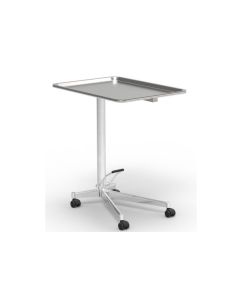
Instrument table with 4-star die-cast aluminum base. Elevation range via hydraulic pump: from 870 mm to 1210 mm.
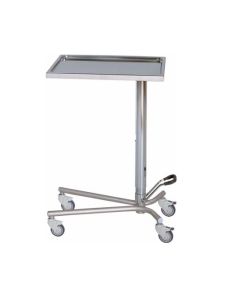
Operating room instrument trolley with fixed top and adjustable height.
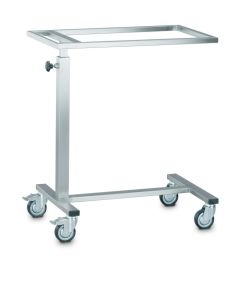
Stainless steel Mayo table for operating rooms, height-adjustable (715-1200 mm) with a base on antistatic wheels and integrated push handle.
Polished stainless steel surgical instrument table with height adjustable via screw from 950 to 1350 mm.
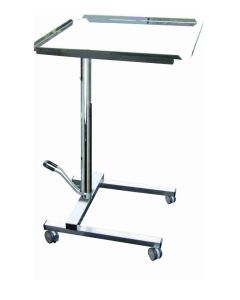
Instrument table for clinics and hospitals. Material: AISI 304 stainless steel. Dimensions: W60 x D40 x H80/113 cm.
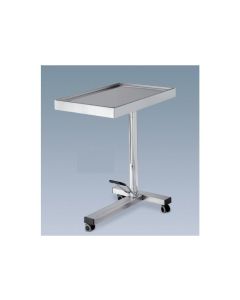
Professional stainless steel Mayo table with T-base and 70x45 cm tray. Hydraulic foot pedal adjustment for maximum surgical ergonomics.
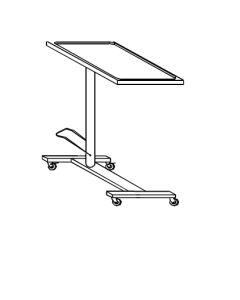
Professional Mayo stand in AISI 304 stainless steel with hydraulic foot pedal adjustment, 80x50 cm removable top and antistatic wheels.
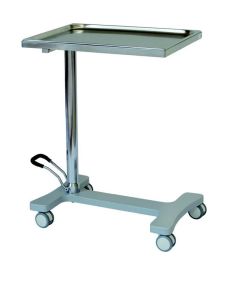
Instrument table for hospitals. Dimensions: W.80 x D.53 x adjustable height from 85 to 127 cm
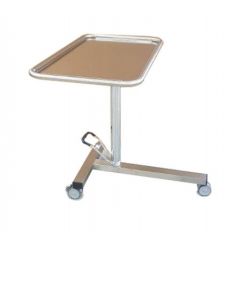
Mayo instrument table with T-base and adjustable height. Dimensions: W80 x D50 x H90/123 cm
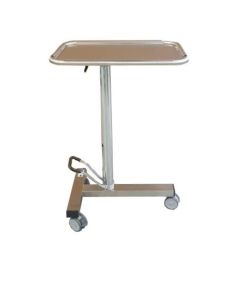
Instrument trolley with revolving tray and adjustable height. Dimensions: W60 x D40 x H90/123 cm
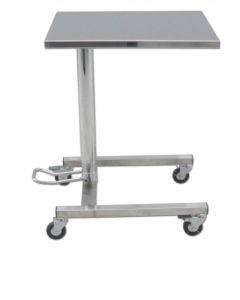
Instrument table for hospitals. Hydraulically adjustable height from 80 to 120 cm. Tray dimensions: 60 x 43 cm.
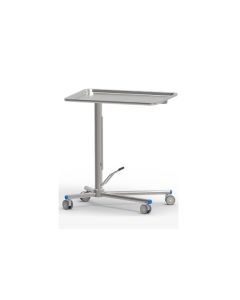
Instrument table with stainless steel base and chrome-plated steel pump
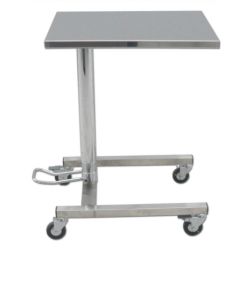
Instrument table for operating rooms. Tray dimensions: 75 x 50 cm. Height adjustable by hydraulic cylinder.
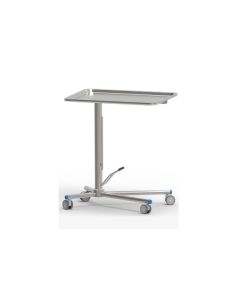
Mayo Table instrument tray with single-movement pump and fixed top for operating room.
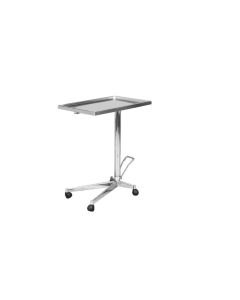
Mayo table with hydraulic foot pump. Adjustable height: 900 mm to 1250 mm. Max load: 24 kg.
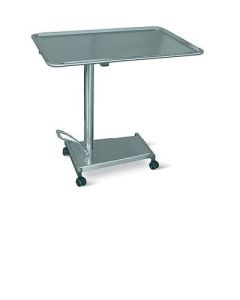
Stainless steel mayo table with pedal for height adjustment. Dimensions: W90 x D60 x H85/120 cm
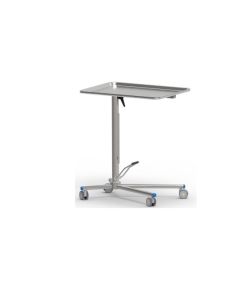
Instrument table for operating rooms with 18/10 AISI 304 Stainless steel base and chrome-plated steel pump
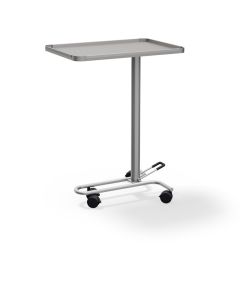
Stainless steel Mayo table for operating rooms. Tray dimensions: 60 x 40 cm. Total dimensions: W60 x D40 x H83/117 cm
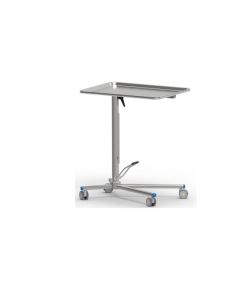
Instrument table for operating room with AISI 304 steel base and chrome-plated steel pump
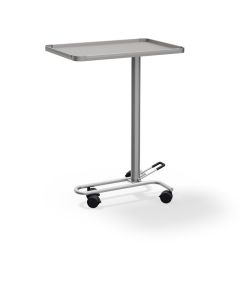
Mayo table for transport and support of surgical instruments. With height adjustable via piston. Dimensions: W70 x D50 x H 83/117 cm
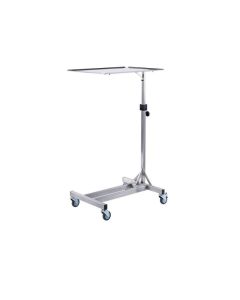
Polished stainless steel Mayo stand with 50 x 70 cm tray. Adjustable height from 95 to 135 cm.
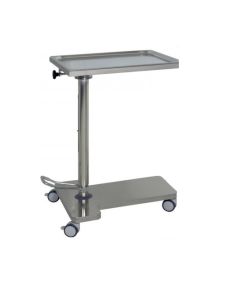
Instrument table with rotating top and height-adjustable with pedal.
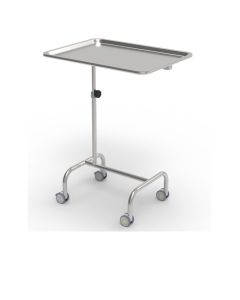
Mayo table in AISI 304 stainless steel for surgery, manual elevation 800-1300 mm, removable tray 650x530 mm and antistatic safety wheels.
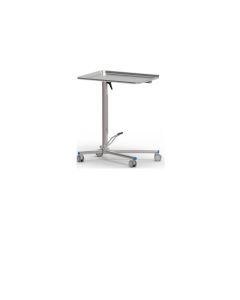
Mayo table in AISI 304 stainless steel with adjustable height and removable top. Ideal for surgery and veterinary medicine, 30 kg capacity, on wheels.
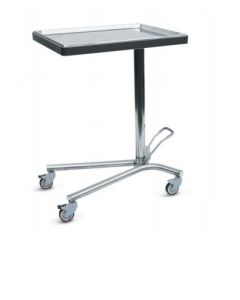
Stainless steel Mayo instrument table with removable and swivel tray. Dimensions: W66 x D54 x H88/122 cm
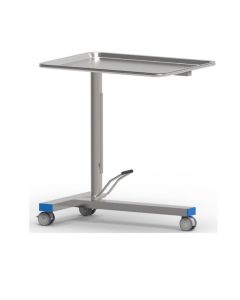
Mayo table in AISI 304 stainless steel with hydraulic elevation and removable top for operating rooms. Dimensions 78x58 cm, capacity 30 kg.
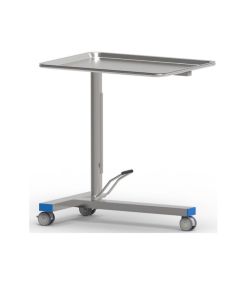
AISI 304 stainless steel Mayo table for operating rooms, hydraulic foot-pedal elevation (91-127 cm) and 75x55 cm fixed top on antistatic wheels.
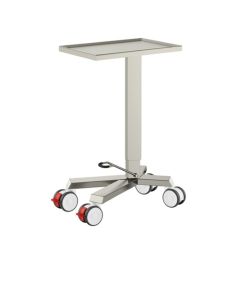
Professional Mayo table for operating rooms with hydraulic pump, 60x40 cm top and 50 kg load capacity. Anti-tip base and antistatic wheels.
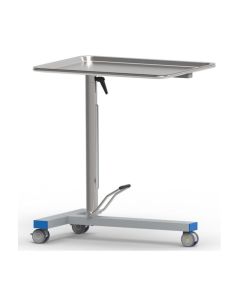
Mayo instrument table for hospitals. Material: 18/10 AISI 304 stainless steel. Dimensions: W78 x D58 x h93.5-130 cm
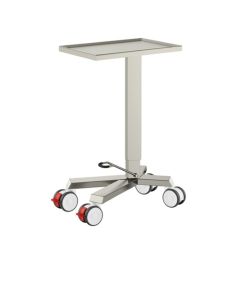
Professional Mayo table in AISI 304 stainless steel, 70x50 cm top with hydraulic adjustment and antistatic wheels for operating rooms.
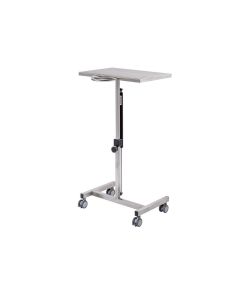
Polished stainless steel Mayo stand trolley. Tray dimensions: 600 x 400 mm. Adjustable height: 750-1150 mm.
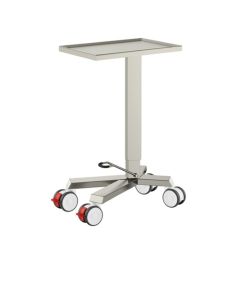
Professional Mayo table in AISI 304 stainless steel, 80x60 cm, with hydraulic pedal adjustment and removable top with 50 kg load capacity.
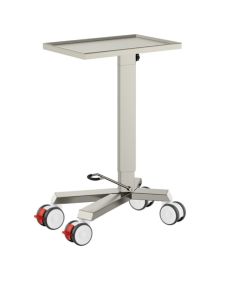
Professional AISI 304 stainless steel instrument table with 60x40 cm rotating top, hydraulic adjustment, and electrically conductive wheels.
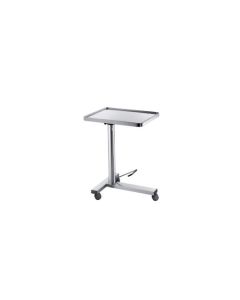
Stainless steel instrument trolley for operating rooms, with a 640x440 mm rotating top and hydraulic height adjustment via foot pedal.
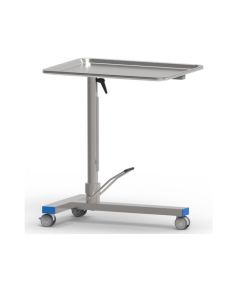
AISI 304 stainless steel Mayo table for operating rooms, with removable top and hydraulic foot pedal elevation. 30kg load capacity, antistatic base.
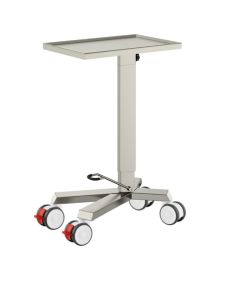
Professional stainless steel instrument table 70x50 cm, with hydraulic adjustment, rotating tray, and electrically conductive wheels.
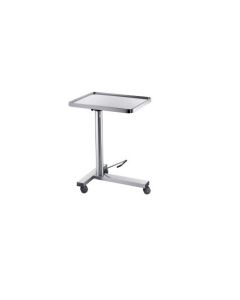
Stainless steel surgical instrument Mayo stand with hydraulic foot pedal adjustment. 74x54 cm tray, 30 kg capacity, rounded edges.
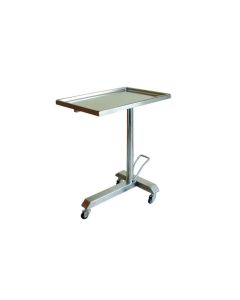
Stainless steel instrument table with hydraulic foot pump for height adjustment. Height: 900 to 1250 mm.
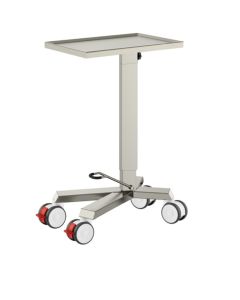
Professional Mayo table in AISI 304 stainless steel with hydraulic adjustment, 80x60 cm top and rotating tray for surgical instrument support.
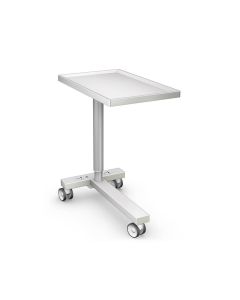
Electric Mayo table in stainless steel h964_09. Height adjustment 92-132 cm, 360° rotating top and rechargeable battery for maximum ergonomics.
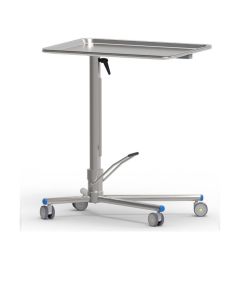
Mayo table in AISI 304 stainless steel for the operating room. Foot-operated hydraulic elevation (935-1300 mm), rotating top and twin antistatic wheels.
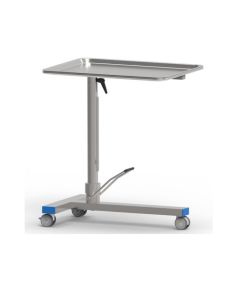
Professional AISI 304 stainless steel instrument table with hydraulic foot pedal elevation, removable deep-drawn top, and antistatic base.
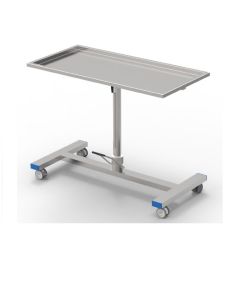
Surgical instrument table in AISI 304 stainless steel, hydraulic foot pedal adjustment and removable 1200x550 mm tray with antistatic wheels.
Mayo tables represent a fundamental element of operating room furniture in any healthcare facility that performs surgical procedures. These instrument stands, characterized by adjustable height and a stainless steel tray, allow nursing staff and surgeons to keep surgical instruments within reach during procedures. The choice of the right Mayo table directly affects the efficiency of the surgical team and patient safety, reducing downtime between procedures and ensuring optimal sterility throughout the entire process.
Available in various construction configurations—from three-wheel bases to professional solutions with hydraulic pumps—these tables adapt to very different operational needs. The design versatility of modern Mayo tables allows them to be effectively integrated into cramped environments and operating rooms of varying sizes, while always maintaining high standards of hygiene and ease of maintenance.
The use of a Mayo table compliant with international standards significantly improves the organization of the surgical space. During surgery, staff need quick access to instruments without moving away from the sterile field, and a correctly designed table reduces the risk of cross-contamination. Height adjustability represents a concrete advantage for adapting the table to the operator’s height, preventing muscle fatigue and incorrect postures that could compromise gestural precision during delicate procedures.
In terms of operational practicality, stainless steel Mayo tables offer simplified cleaning and superior resistance to common hospital detergents, as well as autoclave sterilization cycles. Antistatic wheels, featured in more advanced models, ensure safe movement even in environments with sensitive electromedical equipment. The load capacity, generally between 25 and 50 kilograms, is sufficient for most standard surgical instruments while maintaining structural stability during operational maneuvers.
The catalog includes essential models with a three-wheel base, ideal for facilities with limited space or to increase ease of movement. These tables, characterized by simple construction, feature a fixed stainless steel tray with dimensions between 60x40 cm and 70x45 cm. Alongside these are more sophisticated solutions equipped with a five-star base, which guarantee superior stability during positioning in crowded environments. Models with hydraulic or manual adjustment allow the height to be extended from 750 mm to over 1400 mm, covering the needs of operators of different builds and physical configurations.
A specific category concerns MRI-compatible Mayo tables, built in anodized aluminum and designed for magnetic resonance environments where ferromagnetic materials are prohibited. Bridge models, with a tilting tray and surface dimensions exceeding 90 cm in length, are used in major surgery centers where the number of instruments in use simultaneously is high. Some tables feature a removable tray, facilitating the passage through the autoclave and rapid replacement between successive procedures, while others maintain a fixed surface to ensure secure anchoring of the instruments.
The decision between a basic solution and a professional model depends on the surgical volume of the facility and the number of procedures managed daily. An operating room performing routine procedures, such as minor plastic or ophthalmic surgeries, will benefit from simple, easy-to-handle tables with small trays. Conversely, general surgery or trauma departments, where procedures require numerous instruments of varying sizes, need models with larger trays and robust structural stability. A critical aspect is assessing the available space in the operating room: compact three-wheel models adapt to confined environments, while bridge solutions occupy more surface area but offer a superior operating surface.
A frequent error consists of underestimating the importance of height adjustability, selecting models with limited range that do not adapt to the anthropometric variability of the team. The load capacity must be verified against the average weight of the instruments used, also considering the weight of the tray itself. MRI compatibility is essential only for facilities with dedicated magnetic resonance, but it significantly reduces the table’s versatility in other surgical contexts. Finally, it is prudent to check the availability of spare parts (wheels, gaskets, hydraulic pumps) from the supplier, ensuring operational continuity in case of scheduled or extraordinary maintenance.
Mayo tables for operating rooms must comply with the UNI EN ISO 6930 standard, which establishes safety and performance requirements for surgical furniture. This standard prescribes static and dynamic load tests, certifying that the table easily supports the declared maximum weight without permanent deformation. The stainless steel used must be AISI 304 or higher (AISI 316), ensuring corrosion resistance and compatibility with steam sterilization cycles in autoclaves at temperatures up to 134°C. Surfaces in contact with the sterile environment must be washable and disinfectable with standard hospital detergents, without porosity that could favor bacterial colonization.
Structural stability is regulated in relation to the number of wheels and the base configuration: three-wheel models require a triangular base with angles not less than 45°, while five-star solutions must guarantee a stability radius such as to avoid tipping during movement or when the load is eccentric. The wheels, if antistatic, must dissipate electrostatic charges in accordance with the UNI EN ISO 6356 standard. A further requirement concerns adjustment systems: hydraulic pumps and locking mechanisms must be tested for resistance to 10,000 extension-retraction cycles without loss of functionality. Accompanying documentation must contain routine and extraordinary maintenance instructions, mandatory check intervals, and safe disposal procedures at the end of life.
Explore all the products in the category and compare the available solutions to find the one best suited to your operational context. Each model is selected according to international standards of quality and reliability in the healthcare sector.
Three-wheel tables occupy less space and are more maneuverable in small environments, but have lower stability when the load is distributed eccentrically. Five-star models offer greater structural stability, better resist lateral stresses, and are preferable in crowded operating rooms where the table is subject to accidental impacts during movement.
Yes, it is fundamental. The height range allows the table to be adapted to the operator’s height, preventing incorrect postures and muscle fatigue during long procedures. A table adjustable between 750 and 1400 mm adapts to operators of different builds, improving surgical efficiency and reducing ergonomic risks for nursing staff.
AISI 316 is superior to AISI 304 in environments with high salinity or corrosivity, as it contains molybdenum which increases resistance. For most standard operating rooms, AISI 304 is sufficient and more economical, but if the facility is located near coastal areas or uses very aggressive detergents, AISI 316 is the preferable choice.
MRI compatibility means the table is built from non-ferromagnetic materials (anodized aluminum), allowing use in magnetic resonance environments without interference. It is only needed if the facility has a dedicated MRI; otherwise, it is not necessary and limits structural performance compared to standard stainless steel models.
Routine maintenance (deep cleaning, wheel inspection, lubrication) should occur monthly. Extraordinary maintenance with verification of the hydraulic system is recommended every 12 months or after 10,000 adjustment cycles. Manual adjustment systems require less frequent but still annual checks to verify the absence of excessive mechanical play.
It can stay in the operating room if the hygienic structure of the room allows it (dedicated spaces for positioning). However, good practices involve moving it to dedicated areas for cleaning and surface sterilization between procedures. The tray must always undergo decontamination after each use, regardless of the room configuration.
Most Mayo tables support between 25 and 50 kilograms, certified according to ISO 6930. The maximum weight depends on the specific model: professional tables with a five-star base and hydraulic pump reach 50 kg, while compact three-wheel models stay around 25-30 kg. It is essential to check the declared capacity in the technical manual before purchase.
Antistatic wheels are strongly recommended if sensitive electromedical equipment (monitors, medical gas cylinders, high-frequency instruments) is present in the operating room. In environments without critical equipment, standard wheels are sufficient. Electrostatic dissipation prevents accidental damage to sensitive devices and reduces risks related to charges accumulated during movement.
 English
  Italian
 French
 German
 Spanish