
mon-fri 9-13 / 14.30-18.30
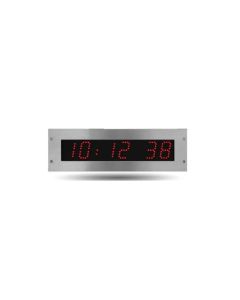
Recessed operating room clock. Afnor movement. Dimensions: W.420 x D.45 x H.130 mm.
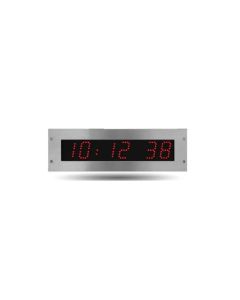
Seconds counting clock for operating room. Movement operation: polarized pulse receiver.
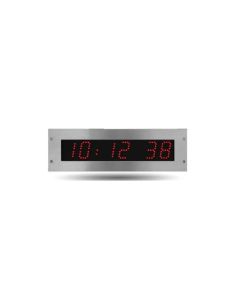
Seconds counter wall clock for operating rooms. Independent movement. Dimensions: W.420 x D.45 x H.130 mm.
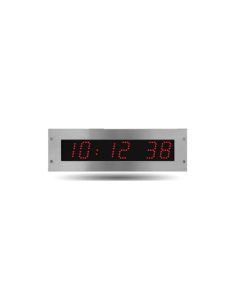
Wall-mounted operating room clock. Power supply via LAN network. Dimensions: W.420 x D.45 x H.130 cm.
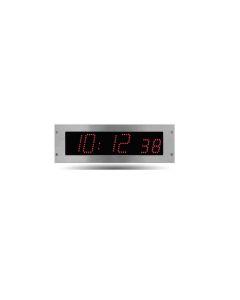
Wall clock for operating room. Power supply: 110/230 VAC. Dimensions: W.460 x D.45 x H.147 mm.
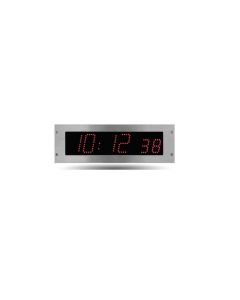
Operating room LED stopwatch clock. Movement: polarized pulse receiver.
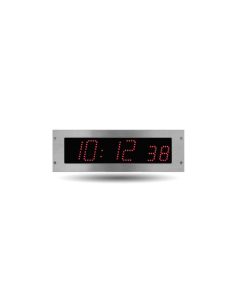
Professional operating room clock. Independent movement.
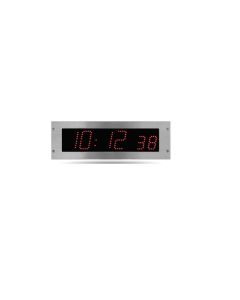
Professional clock for operating room. Operation: NTP. Dimensions: W.460 x D.45 x H.147 mm.
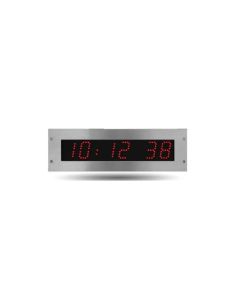
Operating room clock with keyboard. Afnor movement. Dimensions: W.420 x D.45 x H.130 mm.
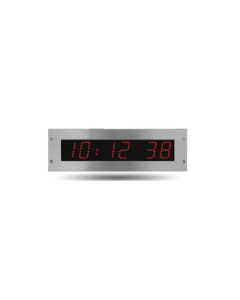
Built-in operating room clock with keyboard. Dimensions: W.420 x D.45 x H.130 mm.
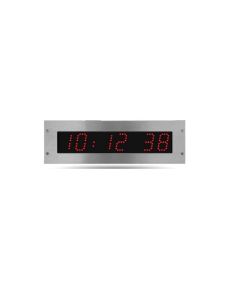
Recessed digital LED clock for operating room. Independent movement. Dimensions: W.420 x D.45 x H.130 mm.
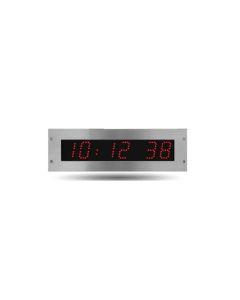
Operating room clock with keypad. Power over Ethernet. Dimensions: W.420 x D.45 x H.130 mm.
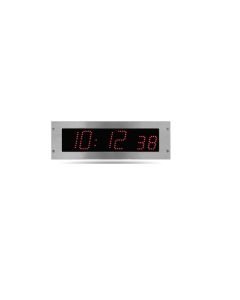
Wall clock for operating room with keypad. Red LED. Dimensions: W.460 x D.45 x H.147 cm.
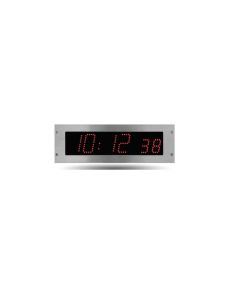
Wall clock for operating rooms. Operation: polarized pulse receiver. Dimensions: W.460 x D.45 x H.147 mm
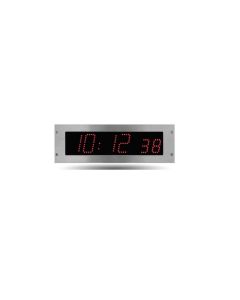
Professional clock for operating room. Independent movement. Dimensions: W.460 x D.45 x H.147 mm.
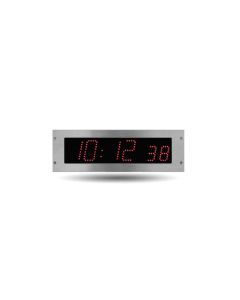
Built-in operating room clock. Independent movement. Dimensions: W.460 x D.45 x H.147 mm.
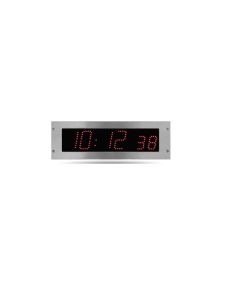
Operating room clock with keyboard. Power supply: PoE. Dimensions: W.460 x D.45 x H.147 cm.

Wall-mounted operating room clock with needle second counter. Satin-finish AISI 304 stainless steel case.

Recessed clock for operating rooms. With hand-operated second counter and quick reset device.
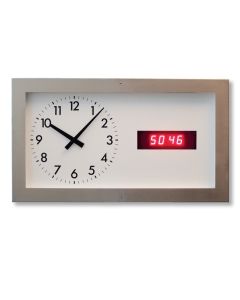
Digital clock with seconds counter for operating rooms. Dimensions: 592 x 115 x 315 mm.
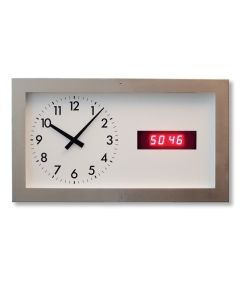
Built-in digital seconds counter clock. Ideal for operating rooms in hospitals and clinics. Dimensions: W. 635 x h. 360 mm.
Operating room clocks represent essential instruments in the contemporary surgical environment, where precise time management constitutes a critical element for patient safety and procedural efficiency. These specialized devices must guarantee immediate visibility and unambiguous reading of minutes and seconds, often in varying lighting conditions and from considerable distances within the operating room. Their reliability depends on accurate synchronization mechanisms, materials compliant with hospital standards, and construction configurations specifically designed for sterile environments.
In complex healthcare facilities, operating room clocks perform functions that go beyond simple time measurement: they support the monitoring of surgery duration, facilitate coordination between surgical teams, and allow compliance with critical anesthesiological protocols. In addition to operative intervals, these instruments also find application in diagnostic laboratories, dental practices, sterilization areas, and intensive care centers, where temporal precision remains a fundamental requirement. The choice of the appropriate model requires an understanding of the technical specifics, the available power modes, and the regulatory compliance required by the destination healthcare facility.
The choice of a specialized clock for the operating room directly determines the quality of time management during surgical procedures. A suitable device ensures optimal visibility regardless of the operator’s position, the degree of ambient lighting, and the required sterility conditions. Professional operating room clocks offer millisecond-precise synchronization, eliminating time drifts that could impact pharmacological protocols or critical timing for anesthetic safety. Rapid reading is facilitated by generous dimensions, sharp color contrasts, and fonts that are easily distinguishable even with peripheral vision, essential characteristics when the surgeon’s attention remains focused on the operative field.
Beyond the functional aspect, modern operating room clocks integrate flexible power modes: from classic electrical mains to LAN systems, up to PoE (Power over Ethernet) solutions that simplify installation in complex healthcare environments. Resistance to humidity, ease of surface sanitization, and the absence of hollow corners where dirt or microorganisms can accumulate represent critical construction considerations for sterile environments. Furthermore, many models incorporate rapid reset mechanisms for the second hand, a feature that allows for instantaneous synchronization of the device when two operating rooms must coordinate simultaneous actions or when it is necessary to restart timing after a procedural pause.
The catalog of operating room clocks is primarily divided into three installation categories: wall-mounted models with perimeter brackets, recessed devices that integrate into the wall structure or suspended panels, and clocks fixed on dedicated supports for environments where structural modification is discouraged. From the mechanism point of view, there are analog solutions with mechanical or synchronized hands, digital seven-segment LED clocks, and high-resolution LCD displays. Analog models maintain their validity thanks to their immediacy of reading and lack of dependence on complex electronic interfaces, while digital systems offer extreme precision, ease of electronic resetting, and integration with centralized hospital systems.
Movement modes represent a significant construction differentiation: independent drive clocks (totally autonomous), polarized pulse receivers synchronized via a dedicated signal, devices with Afnor movement (French synchronization standard), and NTP (Network Time Protocol) solutions that connect to centralized synchronization servers. Dimensions typically vary from lengths of 420 mm to 640 mm for standard models, up to larger formats for facilities where the observation distance is high. Construction materials include satin-finished stainless steel (AISI 304), medical ABS, and transparent polycarbonate for the main body, with selection based on the degree of humidity and the sterilization protocols adopted by the hospital facility.
The selection of an operating room clock requires a preliminary analysis of the available hospital infrastructure and the synchronization protocols already implemented. If the facility has a centralized NTP system, acquiring clocks compatible with this protocol ensures automatic synchronization and reduced maintenance over time. If the operating room is equipped with signaling through polarized pulses or Afnor movement, it is essential to select models equipped with compatible receivers to avoid uncontrolled time drifts. An operating room where centralized synchronization infrastructures are not available can still operate effectively with independent drive clocks, although this choice entails responsibility in periodic verification of the mechanism’s accuracy.
Visibility represents a primary decision criterion often underestimated: clocks positioned at a distance of more than three meters from the operative field require larger dimensions and sharper color contrast. Models with red LED digital second hands offer superior visibility in varying lighting environments, while traditional analog versions are better suited to contexts where reading must occur via peripheral vision without direct concentration. For operating rooms subject to sterilization protocols with plasma gas or hydrogen peroxide, it is essential to verify that the clock surfaces are completely smooth, free of cracks, and made of materials certified to withstand exposure cycles to these agents. Finally, the power mode must align with the distribution configuration of the room: if power via a dedicated LAN network is provided, selecting compatible models avoids the need for adapters; where only standard 110/230 VAC power is available, opting for devices on this line is pragmatic.
Operating room clocks must comply with a multiplicity of international standards that guarantee safety, accuracy, and compatibility with controlled healthcare environments. The European standard EN ISO 13849-1 provides guidelines on the safety of control systems, applicable to the synchronization mechanisms and displays of hospital clocks. Furthermore, ISO 14644 standards define the requirements for cleanliness and sterilizability for sterile environments, implying that the clock’s surfaces, edges, and materials must allow for effective cleaning without particle entrapment. Compliance with Directive 2014/30/EU (Electromagnetic Compatibility) ensures that the device does not generate interference with surrounding medical equipment, a critical aspect in operating rooms where heart monitors, infusion pumps, and anesthesiological systems operate in proximity.
From the point of view of temporal precision, the Italian hospital sector frequently refers to specifications that require a maximum drift of ±2 seconds over 12 hours, a threshold that differs slightly from international standards such as IEC 60601-1 dedicated to medical devices in the strict sense (often inapplicable to clocks, which are not classified as active medical devices). Biocompatibility certification of materials in contact with surfaces potentially exposed to blood or bodily fluids remains a growing requirement, especially for operating rooms dedicated to specialized surgery. Many manufacturers voluntarily provide CE certification as a Class I or II medical device, a guarantee that the product has undergone a technical assessment compliant with Italian and European legislation. Finally, any clock intended for public facilities must comply with the environmental sustainability and energy saving criteria provided for by Italian public health tenders, a consideration particularly relevant for models powered by direct current.
Explore all products in the category and compare the available solutions to find the one best suited to your operational context. Each model is described in technical detail, allowing you to evaluate installation methods, power sources, and compatibility with existing synchronization systems in your healthcare facility.
Analog clocks with hands allow for intuitive time reading at a glance and do not depend on critical electrical power; digital LED models offer greater precision, are readable from a greater distance in varying lighting conditions, and allow for instantaneous resetting of the second hand via a button or remote commands synchronized with the hospital system.
Synchronization depends on the type of movement: NTP models connect directly to the hospital network server via LAN cable; devices with Afnor movement or polarized pulse receivers require a dedicated signal from a synchronization control unit; independent drive clocks require periodic manual verification of accuracy and mechanical adjustment through access to the movement.
Satin-finished AISI 304 stainless steel and medical ABS are suitable materials for environments where low-temperature sterilization processes are used; it is essential that the instrument be free of hollow corners, cracks, and areas where contamination can nest, and surfaces must be completely smooth and easily sanitized with detergents approved by hospital protocols.
If a LAN network is not available, select models powered by standard 110/230 VAC or PoE (Power over Ethernet) devices that can function through the existing hospital data network; alternatively, completely independent clocks with backup batteries guarantee continuity even in the event of a power failure, a less frequent but valid solution for critical contexts.
For long distances, clocks with a minimum length of 460-600 mm and a red LED digital second hand offer optimal visibility; the color contrast between the display and the frame must be maximized (preferably a dark background with light characters); analog models in this scenario require significant diameter hands and very large numbers to ensure readability from the operator’s peripheral vision.
Precision verification should occur at least twice a year for independent drive clocks, comparing the device with an atomic stopwatch or the hospital computer system clock; clocks synchronized via NTP do not require manual calibration if the centralized system is correctly configured; mechanical maintenance is limited to visual inspection of surfaces and replacement of backup batteries according to the manufacturer’s schedule.
In most cases, operating room clocks are not classified as active medical devices, but rather as auxiliary equipment; however, many manufacturers voluntarily seek CE certification for EMC compliance and electrical safety; always consult the product’s technical certificate and verify that it complies with EN ISO 13849-1 and IEC 60601-1-2 for electromagnetic compatibility in a medical environment.
 English
  Italian
 French
 German
 Spanish