
mon-fri 9-13 / 14.30-18.30
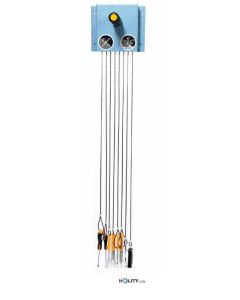
Tool holder support for bike maintenance. Wall mounting. Available in multiple colors.
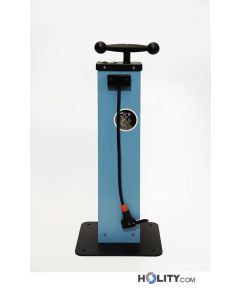
Inflation station for bikes and e-bikes. Compatible with all valve types. Available in various colors.
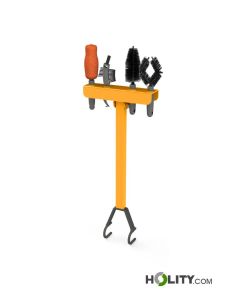
Bike wash station. Available in various colors. Dimensions: W.320 x D.80 x H.825 mm.
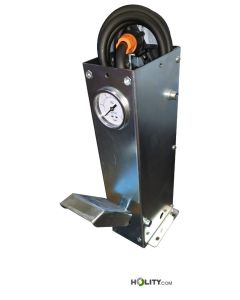
Foot pump for inflating E-bike tyres. Dimensions: L. 114 x D. 120 x h. 310 mm.
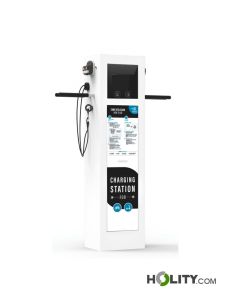
Bike/scooter charging and maintenance station with 2 interlocked Schuko sockets, 2 USB ports and 24 tools. Dimensions: W 400 x D 300 x H 1550 mm.
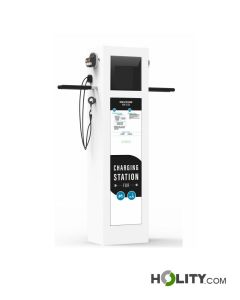
Station for charging and maintenance of bikes and scooters. With 2 interlocked Schuko sockets, 2 USB ports and 24 tools. Dimensions: W 400 x D 300 x H 1550 mm.
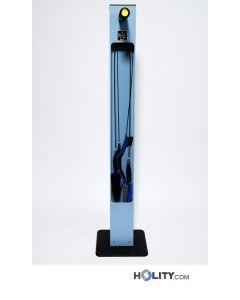
Bike wash station with tools. Fixing: to be bolted. Dimensions: W.30 x D.30 x h.150.6 cm.
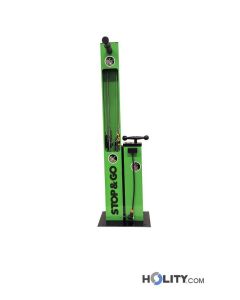
Bicycle maintenance station with tire inflation pump. Available in various colors
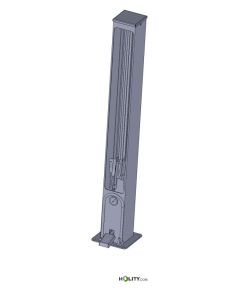
Aluminum E-bike repair station. Galvanized sheet metal base. Dimensions: W. 240 x D. 240 x h. 1498 mm
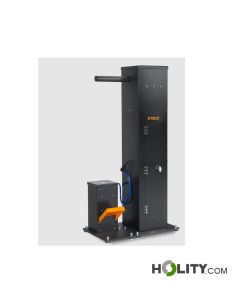
Bike maintenance station. Available in various colors. Dimensions: W.390+250xD.390xH.1200 mm.
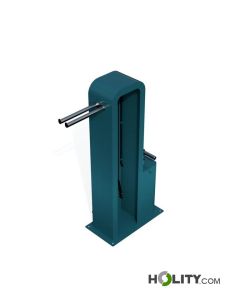
Steel station with tools and pump, for bike maintenance. Dimensions: L 95.2 x D 35 x H 140.5 cm.
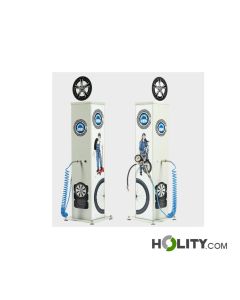
Maintenance station with compressor for bike maintenance. Available in different colors. Dimensions: W.390 x D.390 x H.1200 mm.
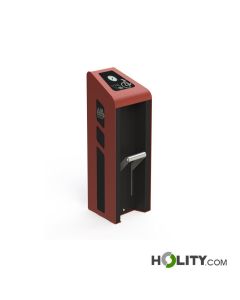
Bicycle inflation station. With pressure gauge and multi-valve. Dimensions: W.290 x D.317 x H.800 mm.
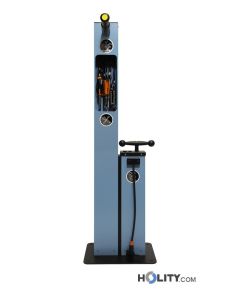
Bicycle maintenance and tire inflation station. Retractable tool set. Available in multiple colors.
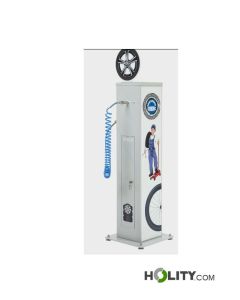
Bike maintenance totem with tool kit and compressor. Dimensions: W.390xD.390xH.1200 mm.
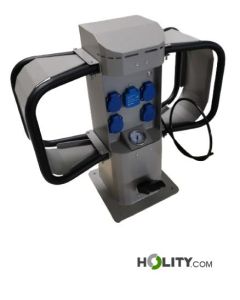
Electric and pneumatic charging support column. For 4 E-bikes. Dimensions: W. 270 x D. 618 x H. 606 mm.
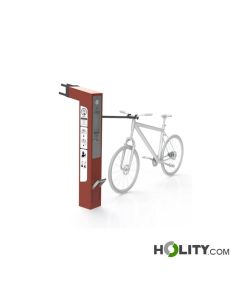
Bicycle maintenance station with air pump. Dimensions: 1500 x 200 x 570 mm.
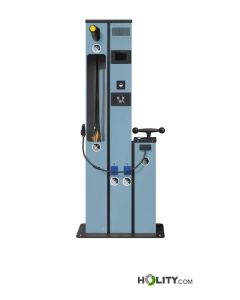
Aluminum smart station for E-Bike maintenance and charging, equipped with tools, pump, and sensors for environmental monitoring.
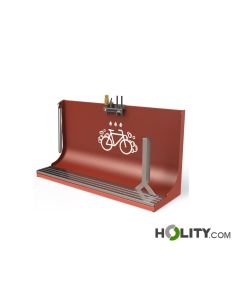
Bicycle wash station made with robust materials. Dimensions: W.2010 x H.1135 mm.
The integration of infrastructure dedicated to electric and traditional micro-mobility represents a fundamental pillar in the development of modern urban furniture and bike-friendly hospitality today. Bicycle maintenance stations are not just simple mechanical supports, but real technical assistance stations designed to withstand intensive stress in public and private environments.
These structures offer users the possibility to carry out emergency repairs, mechanical adjustments, and tire inflation in total autonomy, promoting a culture of sustainable mobility based on efficiency and road safety. Choosing a professional repair station requires a careful analysis of construction materials, integrated equipment, and resistance to atmospheric agents, factors that determine the longevity of the investment over time.
The installation of a bicycle repair station responds to a growing need for capillary services for urban cyclists and cycle tourists. In contexts where the bicycle becomes the primary means of transport, the presence of a fixed assistance point guarantees the continuity of travel even in the event of minor technical failures. The adoption of this equipment raises the quality standard of accommodation facilities, public parks, corporate centers, and railway stations, creating an ecosystem favorable to soft mobility that reduces the gap between the use of the car and that of the bicycle.
From a technical point of view, the utility of these stations lies in their ability to offer tools that a cyclist rarely carries during daily journeys, such as high-pressure pumps with a pressure gauge or sets of specialized keys. The robustness of the structure and the fastening of tools via coated stainless steel cables prevent vandalism and premature wear, ensuring that the service remains operational 24 hours a day without the need for constant supervision by the space manager.
In addition to mechanical functionality, these stations play a crucial role in territorial enhancement and in obtaining specific certifications for active tourism. A municipality or a hotel structure that invests in bike repair stations communicates a tangible commitment to sustainability, attracting a target audience attentive to the quality of the services offered. The presence of a bicycle lifting support integrated into the station also allows for ergonomic operation, avoiding uncomfortable positions and facilitating the cleaning or lubrication of the transmission even for the less experienced.
In the corporate sphere, encouraging bike-to-work through the installation of maintenance points contributes to the well-being of employees and the improvement of the ESG corporate rating, demonstrating concrete attention to reducing emissions related to commuting. The versatility of these stations also makes them suitable for mountain contexts along cycle paths, where the mechanical stress on mountain bikes or e-bikes requires frequent checks during the journey.
The technological and construction variants of the stations are mainly divided based on the level of service intended to be offered and the environmental context of installation. Standard versions are generally made of galvanized or stainless steel, treated with corrosion-resistant and UV-resistant powder coatings, ideal for prolonged outdoor exposure. There are compact models that exclusively include the manual inflation system and basic tool sets, perfect for high-density urban areas where space is limited.
Conversely, advanced repair stations can integrate e-bike charging systems, with protected Schuko sockets and battery compartments, transforming the station into a multifunctional hub for electric mobility. These models are often equipped with rubber-coated universal supports so as not to scratch the bicycle frame, allowing the vehicle to be lifted to work comfortably on derailleurs or brakes, ensuring stability even for heavy models such as modern pedal-assisted bikes.
Another fundamental distinction concerns the equipment of tools integrated inside the machine body. Professional configurations include flat-head and Phillips screwdrivers, Allen key sets, adjustable wrenches, tire levers, and Torx keys, all secured with retractable or spiral cables to minimize bulk. Some types of bicycle maintenance stations feature a modular design that allows for the replacement of individual worn components without having to remove the entire structure, a non-negligible advantage for long-term economic management.
There are also specific solutions for washing bicycles, equipped with low-pressure water delivery systems and integrated brushes, often located near MTB trails or interchange cycle stations. The choice between a single-column model and a horizontal station depends on the available surface and the expected user flow, considering that vertical models offer the best signage visibility, acting themselves as an information totem for passing cyclists.
The identification of the ideal model must start from a rigorous analysis of the expected workload and the geographical location of the installation. In coastal areas or areas with high humidity, it is imperative to opt for structures in AISI 316 stainless steel, the only material capable of effectively countering salt spray and preventing oxidative processes that would make the station unusable in a few months. For urban contexts subject to potential vandalism, it is instead advisable to select models with reinforced casings and magnetic or key locking systems for the tools, although the “open” configuration remains the most appreciated for its immediacy of use.
A decision criterion that is often underestimated concerns the quality of the integrated inflation pump: a steel piston with a pressure gauge protected by shatterproof glass ensures a longer life compared to cheap plastic systems. It is essential to verify that the inflation head is universal, i.e., compatible with Presta, Schrader, and Dunlop valves, so as not to exclude any category of user, from the professional on a racing bike to the family with city-bikes or children’s bicycles.
A common mistake to avoid is the purchase of stations lacking safety certifications or protection systems for the user’s hands during maintenance phases. It must be ensured that the tool cables are of adequate length to reach every part of the vehicle without forcing, but not excessively long to risk entanglement or tripping. Furthermore, the ease of routine maintenance of the station itself is a critical factor: the possibility of easily accessing the internal compartment for replacing the pump gaskets or for cleaning the pressure gauge guarantees an always efficient service.
Aesthetic impact and visibility must also be considered: the adoption of signaling colors or the addition of personalized logos can improve integration into the urban landscape and increase recognition of the service by the public. Finally, the choice of the ground fixing system must be compatible with the existing flooring, preferring flanged bases with hidden safety bolts to guarantee maximum structural stability under mechanical stress during the most complex repair operations.
The installation of bicycle maintenance stations must comply with precise guidelines regarding product safety and the occupation of public space. Although there is no single European standard dedicated exclusively to these stations, they must comply with CE conformity requirements and general directives on product safety (2001/95/EC). It is essential that the structure does not have sharp edges, entrapment points, or moving parts that could cause injury to the end user.
In the public sphere, positioning must respect the rules of the Highway Code and local regulations on urban furniture, ensuring that the presence of the station does not obstruct pedestrian flow or road visibility. Correct signaling through dedicated signage contributes to creating a safe and well-defined stopping area, integrating the station into the Sustainable Urban Mobility Plan (SUMP) of the relevant municipality.
A crucial regulatory aspect concerns accessibility, in line with regulations for overcoming architectural barriers. The station must be positioned on a flat, solid, and easily reachable surface, with enough maneuvering space around the structure to allow use even by people with reduced mobility or who use handbikes. Regarding models equipped with electrical components for charging e-bikes, compliance with the IEC EN 61851-1 standard is mandatory, which governs electric vehicle charging systems, ensuring protection against direct and indirect contact.
The conformity of the materials used, especially regarding non-toxic coatings and the recyclability of metallic components, also responds to the minimum environmental criteria (CAM) required in Public Administration tenders. Relying on certified products ensures not only the legal protection of the body or the private installer but also guarantees that the infrastructure has been tested to withstand significant static and dynamic loads, preventing dangerous structural failures.
Explore all the products in the category and compare the available solutions to find the one best suited to your operational context.
Repair stations offer the maximum benefit if placed along busy cycle paths, near modal interchange hubs like railway stations, or close to refreshment points and bike-friendly accommodation facilities. It is essential to choose well-lit and visible areas to discourage vandalism and ensure the safety of users during evening hours.
A complete standard set usually includes a set of Allen keys from 2 to 8 mm, a Phillips and a flat-head screwdriver, an adjustable wrench, tire levers, and Torx keys. These tools are fixed to the structure via coated stainless steel cables to allow for all types of emergency mechanical adjustments.
Base models for mechanical maintenance and inflation are totally manual and do not require any utilities. However, if you opt for advanced versions with e-bike charging or washing systems, it is essential to provide a certified connection to the electrical grid or a connection to the water network with a relative wastewater drainage system.
Maintenance involves periodic verification of the wear status of the tool cables, lubrication of the inflation pump head, and checking the pressure gauge. In case of exposure to harsh or saline climates, regular cleaning of metal surfaces with specific products for steel is recommended to preserve shine and prevent surface stains.
High-quality stations are equipped with universal inflation heads designed to adapt automatically or via integrated adapters to Presta valves, used on racing bikes, and to Schrader or Dunlop valves, common on mountain bikes and city-bikes, ensuring support for every type of cyclist.
Hot-dip galvanized steel with powder coating represents the most common option for its good quality-price ratio and resistance. However, for installations in maritime zones or areas subject to heavy pollution, AISI 304 or 316 stainless steel is the superior technical choice as it guarantees absolute protection against galvanic and chemical corrosion.
Certainly, most professional structures allow customization through the application of high-resistance stickers or laser engraving. This option is particularly suitable for public bodies or companies that wish to strengthen their image linked to sustainability and provide clear information on the ownership and management of the free service.
 English
  Italian
 French
 German
 Spanish