
mon-fri 9-13 / 14.30-18.30
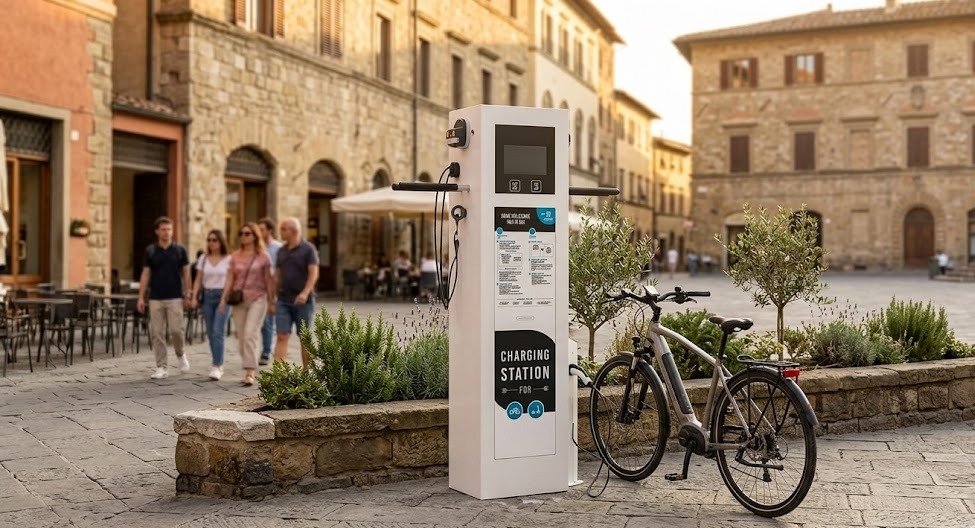
The integration of micro-mobility infrastructure, both electric and traditional, is now a key pillar in the development of modern street furniture and cycle-oriented tourism accommodations. Choosing the right bike maintenance station isn't simply a decorative addition, but a strategic investment aimed at promoting sustainable mobility, improving road safety, and offering a high perceived value service for residents and guests. Whether you're a municipal administration designing a cycle path, an ESG-conscious company encouraging bike-to-work, or a Bike Hotel, having a professional and durable repair station is essential. This buying guide is designed to help you navigate the various models in our catalog, analyzing materials, functionality, and dimensional parameters to identify the perfect, long-lasting solution.
In the street furniture market, bicycle repair stations are mainly differentiated based on the level of mechanical or technological service they intend to offer the user.
These are the classic and most widespread models, focused on emergency mechanical repairs and tire pressure restoration.
Advantages: Extremely compact and completely manual vertical structures, which do not require any electrical or water connection. They offer a complete set of universal tools securely anchored with coated stainless steel cables and a pump with a protected pressure gauge.
Disadvantages: They provide a service limited to basic mechanical interventions only, without support for charging electric vehicles.
Ideal for: Rest points along cycle paths, historic centres, train stations, urban parks and schools.
Advanced variants that transform the simple repair column into a real multifunctional hub for 360-degree cycling mobility.
Advantages: They can integrate modules for the electric charging of e-bikes via IP55 protected Schuko sockets or integrated systems for washing the bike with low-pressure water supply and suitable brushes.
Disadvantages: They require technical preparations and connections to local systems (electricity or water), as well as a higher purchase budget.
Ideal for: Bike Hotels, farmhouses, structured intermodal exchange hubs and e-bike charging stations near mountain bike routes.
To set up an efficient bicycle maintenance area and avoid sizing errors or premature component degradation, it is essential to analyse the technical parameters and geometric measurements that can be set using the site filters.
Integration into public land requires a careful study of the overall dimensions to ensure accessibility for all users and not hinder pedestrian flow. Our filter system allows for millimetric profiling:
As this is unattended outdoor furniture, the choice of metal is crucial to the longevity of the investment. Hot-dip galvanised and powder-coated steel offers excellent value for money and protection from UV rays. However, for installations in coastal areas subject to salt spray or in highly polluted areas, AISI 304 or AISI 316 stainless steel is the only technical choice to prevent galvanic and chemical corrosion. The tools included (screwdrivers, Allen keys, Torx keys, tire levers) must be secured with retractable or spiral steel cables to prevent vandalism.
The pump unit is the most stressed component of the station. It is essential to ensure that the piston is made of steel, combined with a pressure gauge protected by shatterproof glass. To ensure maximum inclusiveness, the inflation head must be universal and compatible with Presta (road bike), Schrader (mountain bike), and Dunlop (city bike) valves.
The columns must comply with the CE conformity requirements and the General Product Safety Directive (2001/95/EC), ensuring the absence of sharp edges or points where hands could be trapped. In public contexts, the installation must be coordinated with the Highway Code and local regulations so as not to obstruct pedestrian paths, respecting the Minimum Environmental Criteria (CAM) required for public administration tenders. Finally, the station must be positioned on a flat and solid surface, ensuring the necessary maneuvering space even for users with reduced mobility or who use handbikes.
Cycle paths and urban public parks: The use of compact vertical columns in galvanized steel painted in high-visibility signal colors is recommended. The priority in this case is immediate "open" accessibility, maximum impact resistance and a robust pump with a universal head suitable for all types of urban users.
Bike Hotels, Agritourism and Tourist Reports: The ideal choice is multifunctional stations equipped with lifting support and, preferably, low-pressure washing systems or e-bike charging modules. Customizing the structure with your business logo strengthens the green image of the brand, offering a premium experience much appreciated by cycle tourists.
Corporate hubs and university campuses: To support corporate mobility plans and bike-to-work, standard mechanical maintenance stations positioned within covered cycle parking areas are perfect. They help raise the company's corporate ESG rating and provide employees with the tools they need to resolve minor daily breakdowns before returning home.
Don't let the soft mobility infrastructure in your city or accommodation facility fall short. Enhance your cyclist-friendly rest areas with the professional selection of bike maintenance stations available on Holity.com. Our online catalog offers certified, vandal-proof solutions covering a flexible price range from 0 to 10,000 euros to effectively respond to small private projects as well as large public procurement orders.
Use our side navigation sliders to configure the ideal height, depth, and length for your new bike repair station down to the millimeter. If you are a public administration, a designer, or a company and need a dedicated quote for multiple quantities, technical support for drafting specifications, or information on compliance with CAM criteria, contact our customer service today for a customized consultation.
 English
  Italian
 French
 German
 Spanish