
mon-fri 9-13 / 14.30-18.30
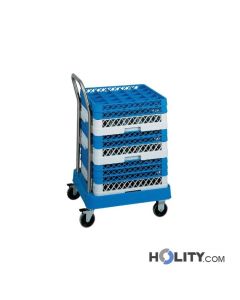
Dishwasher basket trolley in ABS with multi-directional wheels. Dimensions: 53 x 56 x H.92 cm.
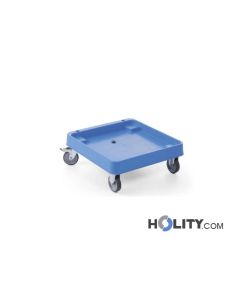
Dishwasher basket transport trolley made of polypropylene. Dimensions: W. 57.5 x D. 54.5 x H. 21 cm.
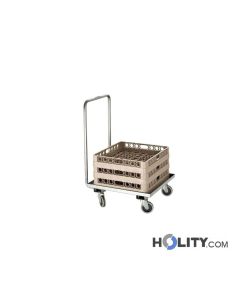
Nickel-chrome steel dishwasher basket transport trolley with transport surface. Dimensions: W.515 x D.640 x H.925 mm.
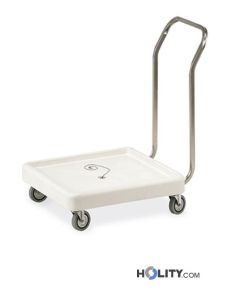
Trolley for transporting dishwasher baskets. Polyethylene base and stainless steel handle. Suitable for 51 x 51 cm baskets.
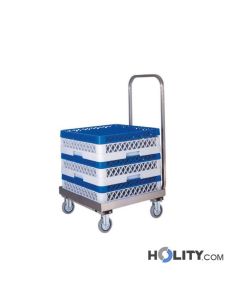
Dishwasher basket trolley with stainless steel drip tray and handle. Dimensions: 52 x 58 x H. 96 cm.
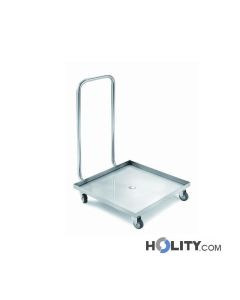
Stainless steel dishwasher basket transport trolley with handle. Dimensions: W.520 x D.580 x H.800 mm.
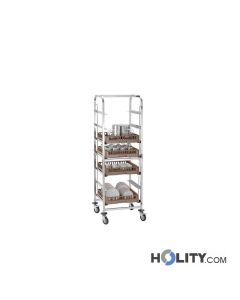
Stainless steel dishwasher basket trolley with 4 wheels. Suitable for baskets with dimensions 500 x 500 mm.
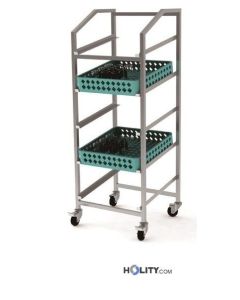
Trolley for transporting dishwasher baskets. Capacity: 5 baskets. Dimensions: W55 x D51 x H152 cm.
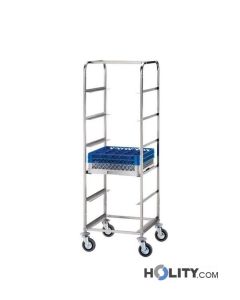
Dishwasher basket transport trolley with stainless steel tubular structure 50x50 cm. Dimensions: 65 x 65 x H.170 cm.
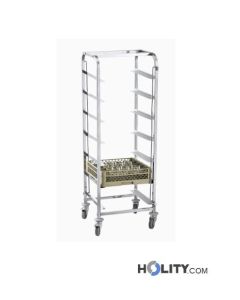
Dishwasher basket trolley with 7 levels. Dimensions: W. 55 x D. 55 x H. 170 cm.
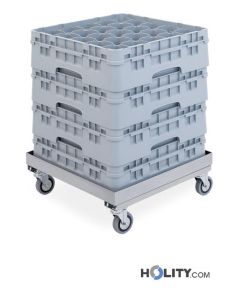
Trolley for dishwasher racks measuring 51 x 51 cm. Total dimensions: W52 x D52 x H19 cm.
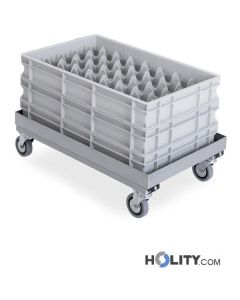
Wheeled base for transporting dishwasher racks. Material: stainless steel. For 61 x 41 cm racks.
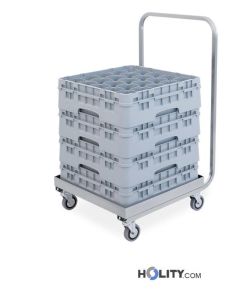
Dishwasher rack trolley in stainless steel. Suitable for inserting 51 x 51 cm crates.
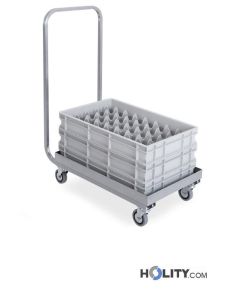
Trolley for transporting dishwasher racks. Material: stainless steel. Suitable for 61 x 41 cm racks.
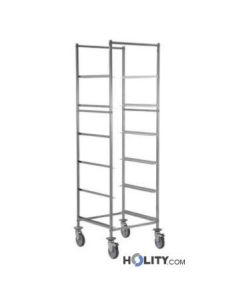
Stainless steel dishwasher basket trolley: Capacity: 5 dishwasher baskets. Dimensions: W.610 x D.570 x H.1800 mm.
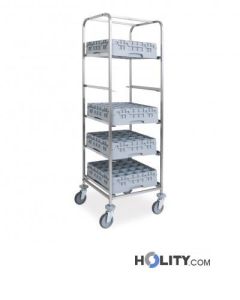
Stainless steel dishwasher basket rack. For 51 x 51 cm baskets. Dimensions: W64 x D60 x H184 cm.
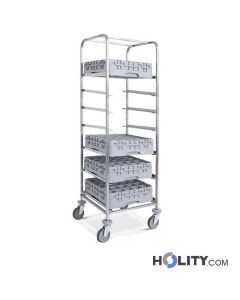
Dishwasher basket transport trolley. Suitable for baskets measuring 51 x 51 cm.
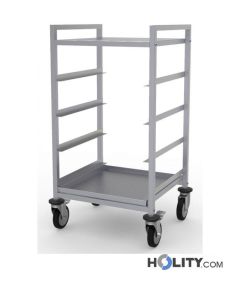
Trolley for dishwasher baskets. Material: stainless steel. Dimensions: W55.5 x D50 x H106 cm.
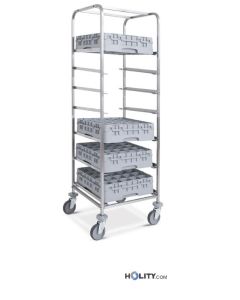
Dishwasher basket trolley. Equipped with 7 sets of runners designed for 51 x 51 cm baskets.
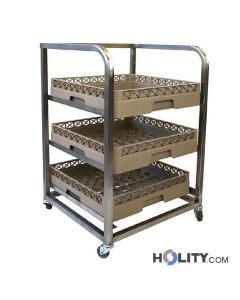
Stainless steel dishwasher rack trolley. Dimensions: W. 62.6 x D. 58.8 x h. 83.9 cm.
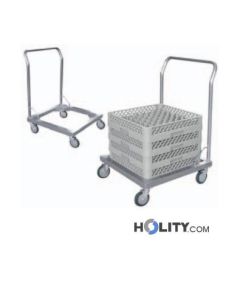
Dishwasher basket transport trolley. Dimensions: W. 60 x D. 60 x h. 88 cm.
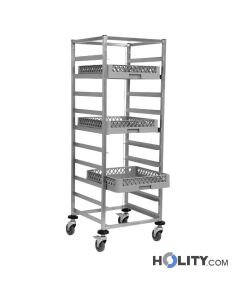
Dishwasher basket transport trolley. Dimensions: W. 51 x D. 53 x h. 166 cm
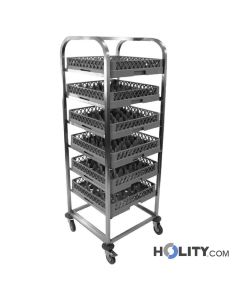
Stainless steel dishwasher basket holder for 50 x 50 cm baskets. Dimensions: W.62.6 x D. 58.8 x h. 162.1 cm.
Dishwasher basket transport trolleys represent a fundamental logistical solution for managing workflows in the dishwashing area of restaurants, canteens, hotels, and hospitals. This professional equipment is designed to transform the movement of clean or dirty dishes into a smooth, organized, and safe process, drastically reducing downtime between the washing cycle and the repositioning of dishes in the relevant departments. The use of a professional basket trolley allows for the optimization of often tight operational spaces in washing zones, allowing for the vertical stacking of baskets and ensuring superior protection against accidental breakage due to manual and unstable handling of dishes.
The structure of these trolleys is designed to withstand the most severe environmental conditions, characterized by high levels of humidity, heat, and frequent contact with steam and aggressive chemical detergents. Thanks to the use of noble materials such as AISI 304 stainless steel, the trolleys ensure exceptional durability and intrinsic resistance to corrosion and rust, maintaining impeccable hygiene standards over time. Choosing equipment dedicated to basket transport means investing in staff health, minimizing risks related to manual load handling and increasing the overall productivity of the kitchen, ensuring that every phase of the dish recovery cycle takes place according to criteria of maximum logistical efficiency and technical compliance.
The adoption of professional basket trolleys within an industrial kitchen or a canteen responds to the primary need to rationalize work behind the scenes, eliminating bottlenecks in the washing area. The most immediate advantage lies in the protection of the operator’s physical integrity: transporting stacks of baskets full of ceramics and glass is an operation that, if carried out manually, involves heavy stress on the spine and joints. A well-balanced trolley allows for the simultaneous movement of a high number of baskets with a natural and effortless push, drastically reducing the risk of workplace injuries and absences due to musculoskeletal pathologies, in line with directives on ergonomic safety in the workplace.
In addition to staff health, the use of these trolleys guarantees greater environmental hygiene and systematic order. Preventing baskets from being placed directly on the wet floor of the dishwashing area prevents cross-contamination and facilitates cleaning operations of kitchen surfaces. Basket trolleys also serve as temporary storage stations, allowing for the organization of dishes by type or intended use before distribution in the dining room. The presence of non-marking swivel castors ensures rapid and silent movement, allowing for the replenishment of buffets or service stations even during peak hours without causing noise disturbance to guests, thus ensuring impeccable operational continuity and a work environment that is always professional and quality-oriented.
The range of trolleys for handling dishwasher baskets is divided into various technical configurations designed to adapt to specific load volumes and storage needs. Platform trolleys represent the most agile and versatile solution: they consist of a robust base, with or without a push handle, ideal for stacking several baskets on top of each other and transporting them in bulk to storage areas. In contrast, vertical basket rack trolleys are equipped with a tubular structure with integrated support rails; this model allows for individual access to each basket without having to dismantle the entire stack, making it extremely useful for natural drying or for the rapid sorting of different dishes.
The variants also differ in load capacity and dimensions compatible with international standards for industrial dishwashers, such as the classic 50x50 cm format. Some models are designed without a handle to allow the stacking of the trolleys themselves when not in use, optimizing space in warehouses or under clearing tables. Materials vary from stainless steel, preferred for its indestructibility and aseptic properties, to hybrid solutions with reinforced components for heavy loads. Each type is equipped with multi-directional wheels, often fitted with circular bumpers at the corners to avoid damage to furniture and walls during fast maneuvers, ensuring that the equipment adapts perfectly to both small restaurants and large hospital complexes or corporate canteens.
The selection of the ideal basket trolley must be guided by the analysis of the washing flow of your activity and the maneuvering spaces available in the dishwashing area. If the kitchen manages a high turnover of dishes in a short time, it is preferable to opt for models equipped with an ergonomic handle, which offer greater leverage and more precise guidance in narrow corridors. It is essential to verify dimensional compatibility with the baskets in use: although the 50x50 cm format is the standard, there are baskets for glasses or special equipment that may require wider support bases or specific center-to-center rails. Attention must also be paid to the dynamic load capacity of the wheels: trolleys intended to transport heavy ceramic plates require shielded steel ball bearings to ensure fluidity even under maximum stress.
Another decision criterion concerns ease of maintenance and sanitization; in a humid environment, models with smooth surfaces and no dead corners facilitate the removal of lime and bacterial residues. For those operating in areas where visual order is a priority, vertical structure trolleys offer more rational management, allowing you to monitor the drying status of each level at a glance. Always evaluate the quality of the materials: AISI 304 stainless steel is a guarantee of a long-term investment, as it does not fear oxidation resulting from dishwasher steam. Finally, do not underestimate the importance of stability: a trolley with a low center of gravity and wheels equipped with reliable braking systems prevents accidental tipping of the load, protecting staff safety and the fragility of the dishes transported during the busiest moments of service.
Every piece of equipment used in the professional washing area must meet rigorous hygiene and safety standards, in compliance with HACCP protocols. Basket trolleys must be made of non-toxic materials resistant to bacterial proliferation, ensuring that contact with washing vapors does not generate migration of harmful substances. Stainless steel is the material of choice because it allows for deep sanitization and resists the corrosive action of chemical detergents. Workplace safety regulations (D.Lgs 81/08) also require that equipment for manual handling of loads be designed to reduce physical effort, promoting correct posture and preventing strains or injuries due to insufficient maneuverability or structural failure.
The CE marking certifies that the product meets the stability and mechanical resistance requirements provided by European directives. The swivel castors must be certified to support the declared load without deforming and must ensure low rolling resistance even on wet surfaces. For hospital environments or school canteens, operational noise requirements are equally important to ensure environmental comfort. Regular maintenance, aimed at checking the tightness of the wheels and verifying the flatness of the platform, ensures that the basket trolley maintains its safety and functionality requirements over time, protecting the hospitality facility’s investment and ensuring a work environment that is always in line with the most modern technical and legal regulations of collective catering.
Explore all the products in the category and compare the available solutions to find the one best suited to your operational context.
AISI 304 stainless steel offers superior resistance to rust and corrosion, frequent conditions in the washing area due to steam. It is an extremely hygienic material, easy to sanitize and capable of withstanding heavy loads without deforming, guaranteeing multi-year durability even in intensive use contexts such as canteens and hospitals.
The choice depends on the use: models with a handle offer greater ergonomics and ease of guidance in long or narrow corridors, reducing physical effort. Models without a handle, on the other hand, are ideal for storage under worktops or when it is necessary to stack the trolleys themselves to save space when they are not in use.
Most professional trolleys are designed for the universal standard 50x50 cm format, used in hood or conveyor dishwashers. However, there are adaptable models or models with open platforms that allow for different sizes or shapes of baskets, ensuring great operational flexibility in the kitchen.
Stacking capacity depends on the weight of the dishes contained, but usually, it is possible to safely load from 5 to 8 stacked baskets on a professional platform. It is essential not to exceed a height that would compromise the stability of the trolley during turning maneuvers to avoid the risk of the load tipping over.
Yes, professional trolleys are fitted with swivel castors with supports that are often galvanized or made of steel and treads in synthetic materials resistant to humidity and chemical agents. The bearings are designed to maintain fluidity of movement even on wet floors, ensuring a silent and safe push.
To comply with HACCP standards, trolleys must be cleaned daily with hot water and neutral degreasing detergents. Thanks to the stainless steel structure, it is possible to use steam jets or professional disinfectants to eliminate bacteria and lime residue, drying surfaces thoroughly to maintain the material’s brilliance.
 English
  Italian
 French
 German
 Spanish