mon-fri 9-13 / 14.30-18.30
Medical waste management represents a critical responsibility for hospitals, clinics, laboratories, and medical practices. This waste, characterized by potential biological, chemical, and physical hazards, requires collection, containment, and disposal systems specifically designed to protect both operational staff and the environment. Compliance with national and international regulations is mandatory, and the use of suitable equipment significantly reduces the risks of contamination and cross-infection.
Solutions for medical waste management include specific containers, automatic emptying systems, segregation devices, and auxiliary equipment that facilitate workflow in critical areas. Every product must meet international standards such as UNI EN ISO norms, ensuring durability, hygiene, and ease of use in high-density operational environments. A conscious choice of this equipment improves organizational efficiency and creates superior safety conditions for operators and patients.
Professional medical waste management systems offer concrete benefits on multiple fronts: personnel safety, prevention of transmissible diseases, regulatory compliance, and optimization of disposal costs. A non-certified container or an unsuitable collection system exponentially increases the risks of accidental needle sticks, exposure to pathogens, and environmental contamination. Healthcare workers exposed to these risks require protection through validated equipment and standardized procedures. Furthermore, facilities using certified solutions reduce insurance claims and maintain a reputation for excellence in safety operations management.
From an organizational perspective, professional equipment significantly simplifies daily work: ergonomic containers reduce fatigue, automatic emptying systems minimize manual handling of potentially infectious waste, and appropriate segregation facilitates differentiated disposal. In high-pressure environments such as emergency rooms, operating theaters, and intensive care units, these factors directly impact team productivity and quality of care. Preventive maintenance of equipment also ensures operational continuity and long-term investment depreciation.
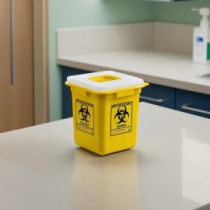
The medical waste management catalog includes three macro-categories of products, each meeting specific operational needs. Medical waste containers are available in various capacities (from 30 to 100 liters), made of high-density polyethylene or stainless steel, with pedal, manual, or automatic closing systems. These containers are segregated by waste type: general waste, potentially infectious waste, cytotoxic, and pharmaceutical waste. Sharps containers constitute a specialized category, designed with openings that allow for the insertion of sharp material but prevent its extraction, often equipped with post-filling safety lock systems.
Bag emptying machines represent the most significant technological evolution: these automatic devices extract the content from drainage bags in a controlled environment, minimizing staff exposure. They differ in processing capacity (from 50 to 500 bags per day), disinfection technology (heat, ultraviolet, steam), dimensions, and integration with traceability IT systems. Some units include weighing functionalities, automatic cataloging, and report generation for regulatory audit needs. The choice between these types depends on the volume managed, the available space, and the desired level of automation.
Correct selection starts with an analysis of your operational reality: how much medical waste is generated daily? What are the prevalent types (infectious, cytotoxic, radioactive, chemical)? What space is available to place the containers? Is the flow continuous or concentrated at certain times? A recurring mistake is undersizing the containment capacity, creating hazardous situations when the vessel is full. A 500-bed hospital will generate completely different amounts of infectious waste than an outpatient clinic, and the appropriate solution must scale accordingly. Consulting manufacturers' technical sheets is essential: they must specify the maximum volume, materials used, certifications held, and operating temperatures.
In the decision phase, it is also necessary to evaluate integration with existing flows: if the facility already owns an emptying machine, the new container must be compatible. If the goal is to reduce manual labor, an investment in automatic systems is justified only if the staff has technical management skills. Another critical aspect concerns maintenance frequency and spare parts availability: obsolete equipment or those at the end of their support cycle could create unexpected operational blocks. Consulting specialized suppliers directly allows aligning the solution with budget and implementation timelines, avoiding rushed purchases that prove inadequate after a few weeks of use.
In Italy, medical waste management is governed by Legislative Decree April 3, 2006, n. 152 (Environmental Consolidation Act) and the Ministry of Health Decree of March 18, 1998. These decrees classify medical waste into specific categories, require documented traceability, define waste separation methods, and mandate the use of specialized disposal companies. Every healthcare facility must designate a waste management manager and maintain an updated load and unload register. Containers must bear visible markings (biohazard symbols, labeling), be easily identifiable, and undergo periodic integrity checks.
Reference technical standards include UNI EN 23644:2007 for sharps containers (intended for needles and sharp material) and the UNI EN ISO 14971 series for risk management. At the international level, WHO and CDC standards provide recommendations on storage distances, ventilation of segregation areas, and space hygiene. Furthermore, many facilities must comply with accreditation standards (JCI, ISO 9001, etc.) that include specific requirements on waste management. Correct documentation of compliance is essential to pass health inspections and regulatory audits; always consult current legislation in your territory and, in case of doubt, contact the competent authorities (ASL, ARPA).
Explore all products in the category and compare the available solutions to find the one most suitable for your operational context. Choosing suitable equipment guarantees staff protection, regulatory compliance, and long-term organizational efficiency.
A general container does not comply with the UNI EN ISO standards required for healthcare environments. Specific containers have thicker walls, certified safety closures, visible biohazard markings, and puncture-resistant materials. Using non-certified containers exposes the facility to regulatory sanctions and staff to serious biological risks.
Sizing depends on the daily volume of waste, the frequency of emptying, and space availability. A rule of thumb suggests planning for at least three filling cycles before disposal. For a medium-sized facility, consult historical waste generation data or request a technical assessment from a specialized supplier to avoid critical undersizing.
Essential certifications include CE for machine safety (Directive 2006/42/EC), UNI EN ISO 14971 for risk management, and compliance with local disinfection regulations. Always verify that the certificate of conformity is provided by the manufacturer and that maintenance calibration and periodic checks required by hygiene standards are available.
AISI 304 stainless steel or higher resists humidity and corrosion better than standard polyethylene. However, high-density polyethylene with specific treatments is sufficient in most contexts if subjected to regular maintenance. Also consider cost: stainless steel has a higher initial price but superior durability in critical environments.
Radioactive waste requires specific marked containers, storage in dedicated areas with appropriate shielding, and documented traceability according to regional ARPAE regulations. It should never share space with ordinary infectious waste. Contact the facility's radiation protection officer and specialized radioactive disposal suppliers before implementing new processes.
Containers should be visually inspected at least weekly to check integrity and markings. Automatic machines require monthly maintenance (filter cleaning, seal checks) and certified annual technical assistance. Maintaining a preventive maintenance register is mandatory for regulatory audit and compliance traceability purposes.
Accurate segregation systems reduce the volumes destined for special disposal by keeping general waste separate (lower cost). An automatic emptying machine reduces the number of bags to be disposed of thanks to compaction. Consult multiple authorized disposal companies to compare rates and evaluate the ROI of the proposed solution over 2-3 years.
 English
  Italian
 French
 German
 Spanish