
mon-fri 9-13 / 14.30-18.30
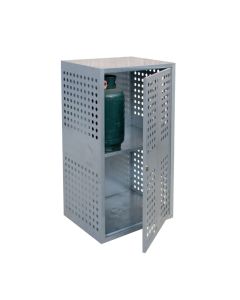
Outdoor LPG cylinder cabinet in hot-dip galvanized steel, mm 840x690x1500h. Flexible storage for 4 cylinders of 33 lt or 10 of 11 lt, with removable shelf and lockable closure.
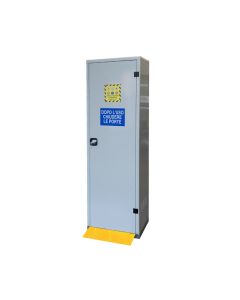
Modular safety cabinet for gas cylinders in P02 steel gray RAL 7038, with fire-stop grids and reinforced galvanized bottom. Dimensions: 575 x 500 x H 1850 mm.
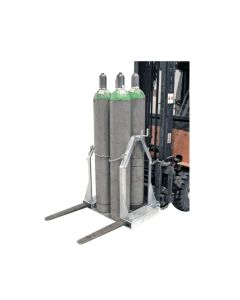
Forkliftable cage for 4 gas cylinders of 50 lt. Dimensions: 500x860x1080h mm. Hot-dip galvanized steel frame with safety chains, load capacity 350 kg.
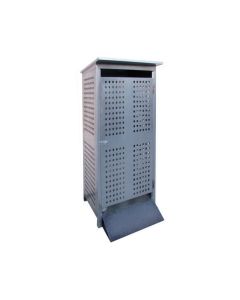
Outdoor cabinet for 2 gas cylinders in hot-dip galvanized steel, 600x400x2000h mm. Robust monobloc with ramp, overhanging roof and padlock closure.
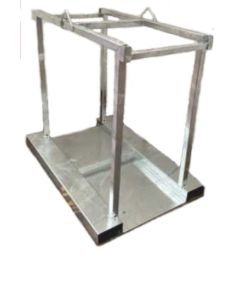
Galvanized steel gas cylinder storage pallet. W. 80 x D. 120 x H. 115 cm. Capacity: 8 cylinders Ø 23 cm.
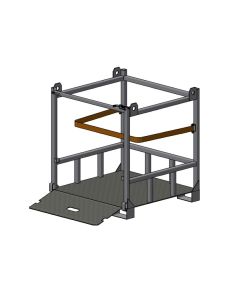
Galvanized pallet for 12 cylinders with folding ramp, ratchet strap and lifting eyes. Capacity 1200 kg, ideal for handling with crane or forklift.
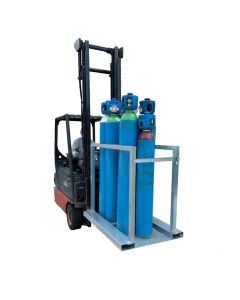
Forkliftable cage for 8 gas cylinders of 50 lt. Dimensions: 860x1170x1115h mm. Galvanized steel frame for storage and handling with a forklift.
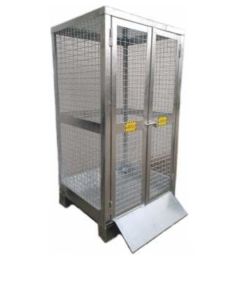
Gas cylinder storage container in galvanized carbon steel. W. 95 x D. 90 x h. 120 cm. Capacity: 4 cylinders.
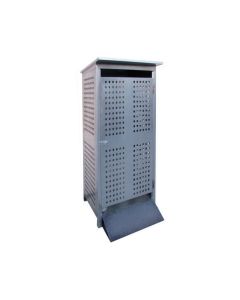
Outdoor cabinet for 4 gas cylinders in hot-dip galvanized steel, 600x600x2000h mm. Robust monobloc with ramp, protruding roof and padlock closure.
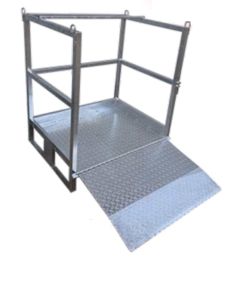
Galvanized checkered steel gas cylinder container with ramp. W. 108 x D. 84 x H. 126 cm. For 9/12 cylinders Ø 23 cm.
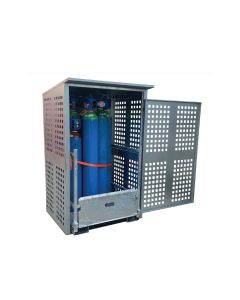
Outdoor storage cabinet for 9/12 gas cylinder cage. Dimensions: 1200x1300x2000h mm. Without base, 12/10 galvanized steel, ramp included, and 865 kg capacity.
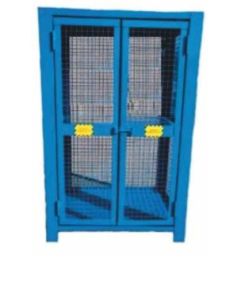
Container for gas cylinders in painted carbon steel for 9/12 cylinders. W. 110 x D. 100 x h. 210 cm.
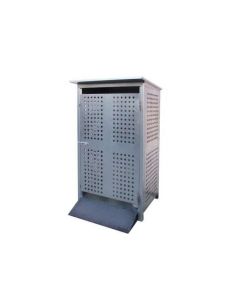
Cabinet for 12 outdoor gas cylinders. Dimensions: 1200x950x2000h mm. 12/10 galvanized steel, ramp included, lockable closure and 865 kg capacity.
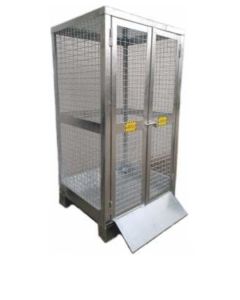
Galvanized steel gas cylinder box for the industrial sector. W. 110 x D. 100 x H. 210 cm. Capacity: 9/12 cylinders.
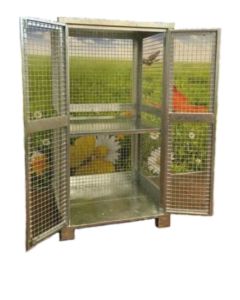
Painted steel gas cylinder storage. Galvanized internal shelf. W. 110 x D. 100 x h. 210 cm. Capacity: 9/12 cylinders.
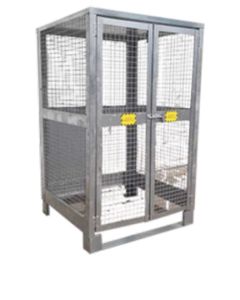
Gas cylinder container without floor. L. 155 x D. 121 x h. 220 cm. In painted steel. For 12/24 cylinders.
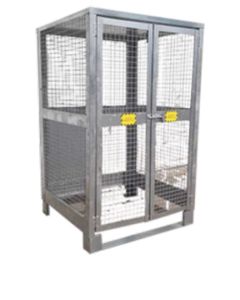
Galvanized gas cylinder storage without base. W. 155 x D. 121 x h. 220 cm. For 12/24 cylinders.
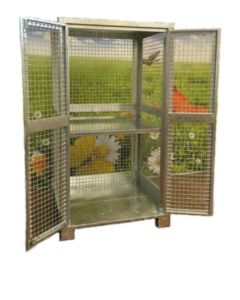
Galvanized steel gas cylinder container. Removable internal galvanized shelf. W. 110 x D. 100 x h. 210 cm. Capacity: 9/12 cylinders.
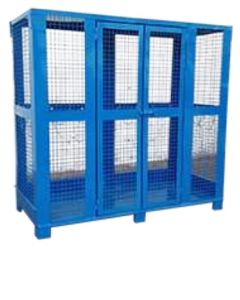
Cylinder storage box for 18/24 cylinders, in painted carbon steel. L. 220 x D. 100 x h. 210 cm.
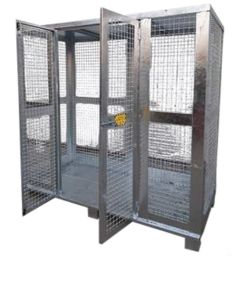
Container for cylinders capacity 18/24 cylinders, in galvanized carbon steel. W. 220 x D. 100 x h. 210 cm.
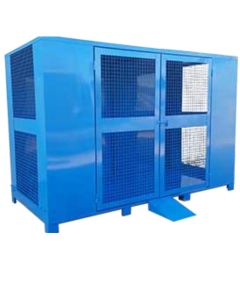
Gas cylinder storage box in painted carbon steel. W. 280 x D. 150 x h. 210 cm. Storage: 48 cylinders.
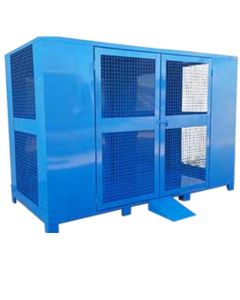
Galvanized carbon steel gas cylinder storage unit. W. 280 x D. 150 x h. 210 cm. Storage: 48 cylinders.
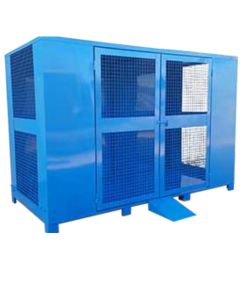
Painted steel cabin for storage of 78 cylinders. L. 320 x D. 150 x h. 210 cm.
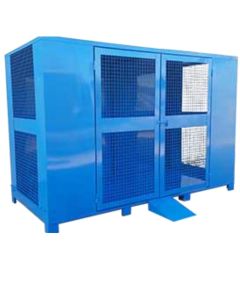
Galvanized carbon steel box for storage of 78 cylinders. W. 320 x D. 150 x H. 210 cm.
Gas cylinder storage and containers represent critical infrastructure for the safe storage of compressed gases in industrial environments, workshops, warehouses, and production plants. These containment systems are designed according to stringent technical regulations to prevent risks related to leaks, accidental spills, and deterioration of the cylinders due to impacts or adverse environmental conditions. Choosing a storage unit that complies with current standards is not only a matter of regulatory compliance, but an essential preventive measure to protect company assets, personnel health, and the integrity of the surrounding environment. The available range spans from compact solutions on platforms for a few containers to large-capacity cabins capable of housing dozens of cylinders, allowing for efficient logistical stock management.
The uncontrolled management of gas cylinders involves significant risks: content leaks, environmental contamination, damage to surrounding structures, and potential accidents involving personnel. A dedicated storage unit allows for centralized storage, reducing the proliferation of containers in various work areas and simplifying periodic safety checks. A cylinder container or box offers passive protection by retaining any gas leaks within the structure itself, preventing their dispersion into the environment. Furthermore, modern storage units are equipped with natural or forced ventilation systems that guarantee constant air circulation, avoiding the accumulation of potentially explosive gases. For companies operating in sectors such as welding, oxy-fuel cutting, chemical production, or the healthcare sector, investing in a certified storage unit represents a differentiating factor in operational safety.
An additional advantage lies in handling: most models are compliant with mechanical handling via forklift, pallet truck, or lift trucks, reducing manual handling times and the associated ergonomic risks. Structural stability ensures that cylinders remain fixed during transport, avoiding oscillations and impacts that could damage valves or cause leaks. Controlled and organized access to cylinders also improves material traceability, a requirement increasingly demanded in regulatory contexts and by internal company audits.
The proposal for cylinder storage differs mainly based on capacity, construction materials, and accessory features. Cylinder pallets represent the most compact and economical solution, ideal for companies with limited volumes or space; these models typically house between 4 and 12 standard diameter cylinders (23 cm) and use a galvanized steel base to ensure liquid drainage and compatibility with standard handling systems. Medium-capacity containers (from 9 to 24 cylinders) constitute the most common segment and offer a balance between protection, footprint, and cost; many of these feature a closed structure on three or four sides with an integral or removable floor, some completed by adjustable internal shelves to divide spaces and other folding ramps to facilitate loading and unloading. Large-volume storage cabins, designed to house 48, 78, or more cylinders, represent the solution for high-density centralized warehouses; these models occupy considerable floor space but allow for concentrated stock management and simplify control protocols.
From a construction standpoint, the main distinction concerns the coating material and surface preparation. Hot-dip galvanized steel offers natural protection against corrosion, particularly appreciated in humid environments or those exposed to atmospheric agents; this galvanization process gives the metal a gray or white protective patina that self-regenerates in case of surface scratches. Painted steel, on the other hand, provides a cleaner and more orderly appearance, ideal for environments requiring controlled aesthetics; however, the paint requires periodic maintenance in case of damage. Some models combine both approaches: painted main structure and galvanized internal parts or shelves to optimize durability at critical points. The choice between an integral floor and no floor affects compatibility with pre-existing drainage systems and ease of cleaning.
The first selection criterion is the average inventory of cylinders that the company intends to store centrally. Consideration must be given not only to the number of cylinders currently in stock but also to growth forecasts for the coming years and the frequency of stock rotation. A slightly oversized dimensioning allows for handling seasonal peaks without the need for additional storage in non-dedicated areas. The second parameter is the available space: the storage unit must integrate into the plant layout without compromising traffic or access to emergency equipment. It is essential to verify if the intended area allows for mechanical handling with company machinery and if the dimensions of the chosen model do not cause bottlenecks in corridors or obstacles to escape routes. The third factor is the installation environment: indoor, semi-covered, or totally exposed environments influence the choice of material. In coastal environments or those with high humidity, galvanized steel is preferable to standard paint.
A further decision element is the type of cylinders that will be stored. Although standard models are designed for 23 cm diameter cylinders, some companies use cylinders of different sizes or even larger volume cylinders. In these cases, it is important to check compatibility and, if necessary, opt for models with removable or adjustable dividers. The presence of folding ramps is advantageous if cylinders are loaded by operators, while eyebolts and ratchet straps are indispensable for handling via crane or lifting systems. A common mistake is overlooking the importance of ventilation: a storage unit without air openings can become a trap if gas leaks from a damaged cylinder. Models with side slits or controlled openings guarantee natural circulation, while some suppliers offer versions with an auxiliary fan for critical situations.
The storage of gas cylinders is governed by a complex regulatory framework that integrates European directives, national technical standards, and local regulations. The EN 12284 standard constitutes the main reference for cylinder gas containers; it specifies criteria for design, mechanical resistance, explosion protection, and ventilation requirements. According to this standard, a container must be able to retain at least 10% of the content by volume if a single cylinder were to completely lose its gas. CE compliance is an essential requirement for market placement and the attached technical documentation must demonstrate compliance with safety parameters. In Italy, Legislative Decree 230/95 and subsequent amendments regulate the management of radioactive materials and dangerous substances, while for specific gases such as oxygen, acetylene, or methane, additional directives regarding hazard classification apply. Companies must also adhere to the provisions of the Consolidated Law on Safety (D.Lgs. 81/08), which mandates risk assessment, personnel training, and periodic checks.
From a practical point of view, recurring requirements concern the availability of technical data sheets, pressure test certificates, installation manuals, and declarations of conformity. Many storage units require a stable foundation (concrete or flat surface), while others can be placed on a grid or porous floor as long as they do not obstruct the natural drainage of liquids. Labeling must be clear and visible, with indications relating to the type of gas stored, maximum capacities, emergency instructions, and supplier contact details. Some municipalities or local entities require additional authorizations for the installation of gas storage, especially if located near inhabited or sensitive areas. It is advisable to check beforehand with the competent bodies (Fire Department, Municipalities, environmental authorities) before proceeding with installation. The absence of power outlets or ignition sources in the immediate vicinity of the storage unit is a requirement of good practice, as is the availability of dedicated fire prevention devices and hazard signage complying with current standards.
Explore all the products in the category and compare the available solutions to find the one best suited to your operational context.
The pallet is an open and compact structure, ideal for small quantities and controlled indoor environments. The closed container offers greater protection, contains any gas leaks, and guarantees controlled ventilation, essential for outdoor storage or high-traffic environments. The choice depends on volume, environment, and company regulatory requirements.
Yes, many models have adjustable or removable dividers that allow for organizing cylinders of different diameters. It is important to check the technical specifications of the chosen model and ensure that the total capacity is not exceeded, also considering the total weight that the structure can support.
Galvanized steel is recommended for humid, coastal, or directly exposed environments, as galvanization offers intrinsic protection against corrosion. Painted steel is ideal for controlled and indoor environments, but requires preventive maintenance to maintain the integrity of the paint over time.
Medium and large capacity containers are designed for mechanical handling via forklift, pallet truck, or lift trucks, as weight and size make manual transport impractical. All Holity models have anchoring points and eyebolts compatible with standard lifting equipment attachments.
Checks depend on local regulations and the classification of the storage unit. In general, it is necessary to visually inspect the structure for damage, check the integrity of ventilation systems, verify the seal of gaskets, and ensure correct signage. Some entities require annual certifications: contact the local Fire Department for specific requirements.
Yes, models without a floor comply with EN 12284 and Italian regulations, provided they are installed on a solid and draining base. They are particularly suitable for installation on gratings or when natural liquid drainage is important. The choice depends on the environmental context and cleaning and maintenance preferences.
Yes, galvanized steel models are designed to resist environmental exposure and the action of atmospheric agents. However, it is advisable to check the extreme weather forecasts for the area and consider adding a temporary cover during very rainy seasons. Painted steel outdoors requires more maintenance and additional protection.
Count the cylinders currently stored, estimate monthly consumption, and multiply by the number of months of desired autonomy. Add a margin of 20-30% to handle seasonal peaks and safety stocks. If uncertain, contact an expert: incorrect sizing can lead to excessive inventory or non-compliant storage in improper areas.
 English
  Italian
 French
 German
 Spanish