
mon-fri 9-13 / 14.30-18.30
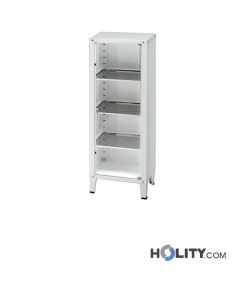
Enameled steel medicine cabinet with tempered glass door, 3 adjustable shelves, dimensions W52 x D35 x H138 cm, lock with key.
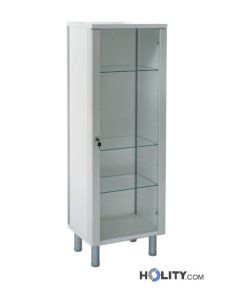
Medicine cabinet in melamine-faced wood with aluminum and 5 mm tempered glass door, 3 adjustable shelves, lock. Dimensions 510x400x1500 mm.
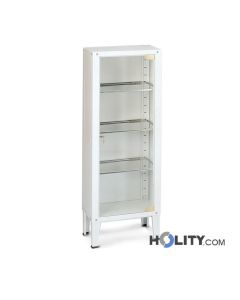
Medicine cabinet in painted steel with tempered glass door and lock. Adjustable shelves. 53x36x144 cm.
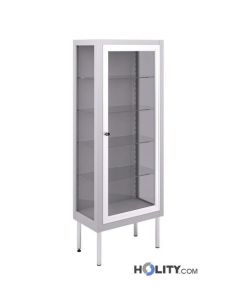
Painted steel medicine cabinet for medical offices, glass door with adjustable shelves, key lock, 60x35x160 cm.
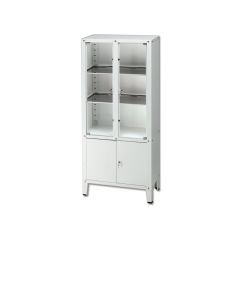
Enameled steel medicine cabinet, 2 compartments with tempered glass and sheet metal doors, adjustable shelves, key lock, 75x37x164 cm.
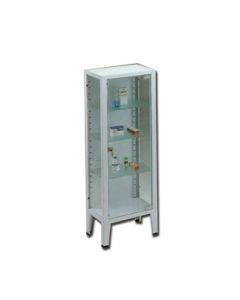
1-door medicine cabinet in painted steel and tempered glass, adjustable shelves, dimensions 53x36x144 cm. For medical practices and hospitals.
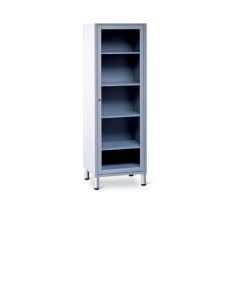
Steel medicine cabinet with tempered glass door and lock, 4 adjustable shelves, 60×40×180 cm. For hospitals, clinics, and nursing homes.
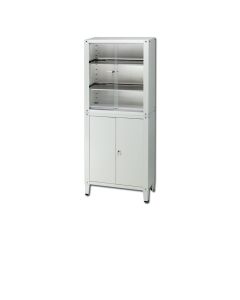
Steel sheet cabinet with 2 compartments for medicine storage. Upper sliding glass doors and lower hinged doors. Lockable. 79×36×186 cm.
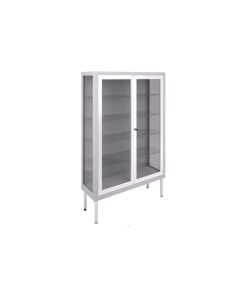
Medicine display cabinet with 4 crystal shelves, painted steel structure, glass doors, key lock, 100x35x160 cm.
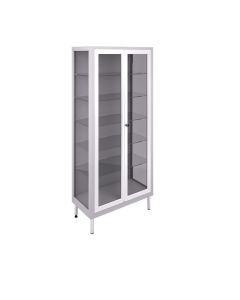
Medical display cabinet in painted steel with 5 glass shelves, hinged door with lock, dimensions 80x40x180 cm.
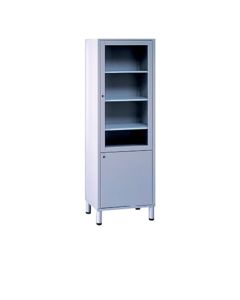
Medicine storage cabinet in painted pressed sheet metal with tempered glass upper door and 3 adjustable shelves. Lower steel door with lock. Dimensions 600x400xh.1800 mm.
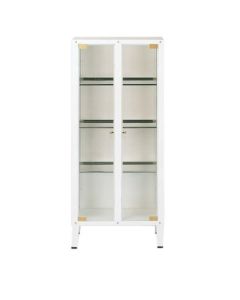
Medicine cabinet in painted steel with 2 tempered glass doors and 3 adjustable stainless steel shelves. Lock and rubber seals. 75x38x169 cm.
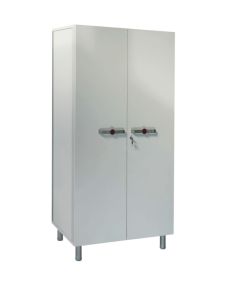
Medicine cabinet in melamine wood and aluminum, 2 lockable doors, 4 adjustable shelves, 930×600×1980 mm.
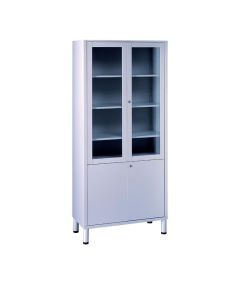
Medicine cabinet in painted pressed sheet metal with tempered glass and steel doors. 3 adjustable shelves, lock. 800x400xh.1800 mm, 66 kg.
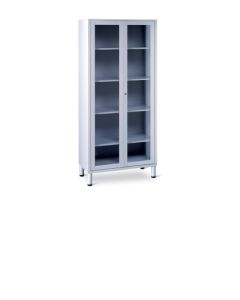
Painted steel medicine display cabinet, 4 adjustable shelves, tempered glass doors with lock, 80x40x180 cm.
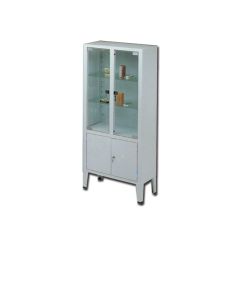
Medicine cabinet in painted steel, 4 doors (2 glass, 2 steel), 2 adjustable shelves. Dim. 75x38x169 cm. For clinics and medical offices.
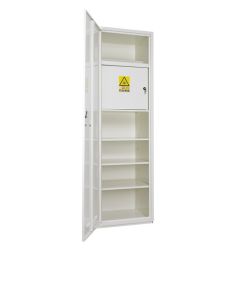
Steel cabinet for medicine storage and first aid, 56×54.5×182.5 cm, 1 compartment, 3 shelves, double lock with narcotics safe.
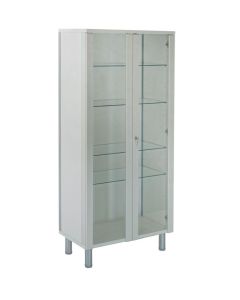
Medicine cabinet in melamine-faced wood with 2 tempered glass doors, 4 adjustable shelves, lock, steel feet. Suitable for clinics and doctor’s offices.
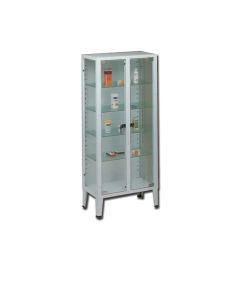
Pharmaceutical cabinet in painted steel with tempered glass, 4 adjustable glass shelves, rubber feet. Dimensions: 75x38x169 cm. Weight 47 kg.
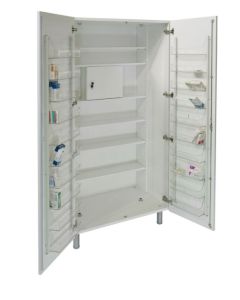
Medicine cabinet for medical practices in melamine wood with aluminum structure, 270° swing doors, 20 transparent containers, 8 adjustable shelves and lock. Dimensions 930×600×1980 mm.
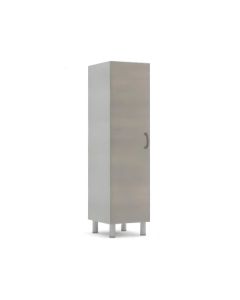
H527_24 liquid cabinet in E1 particle board with scratch-resistant MDF door. 5 non-toxic plastic trays, washable surfaces, adjustable steel feet. 65x45x200 cm.
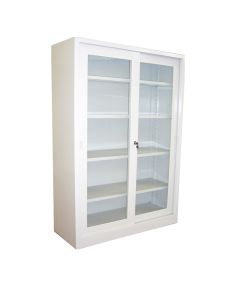
Medicine cabinet in epoxy sheet metal with sliding glass doors, lock and 4 adjustable shelves. Dimensions 120×45×200 cm.
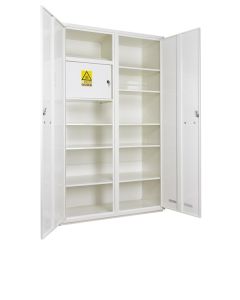
Steel medicine cabinet with 2 lockable doors, 5 shelves and a narcotics safe. Dimensions 110x54.5x182.5 cm. For clinics, factories and work environments.
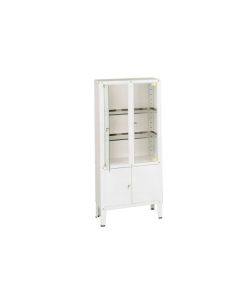
Medical showcase cabinet for medicines in powder-coated steel with 2 glass doors and 2 sheet metal doors, 3 adjustable stainless steel shelves, 75x38x169 cm, compliant with regulations.
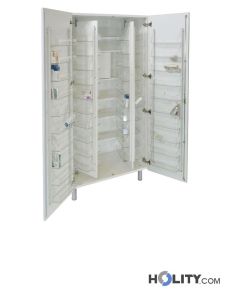
Pharmaceutical cabinet in wood and aluminum with 2 270° doors, 60 transparent containers and adjustable shelves. 91×60×200 cm.
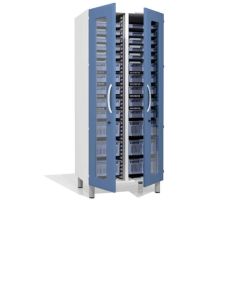
Medical display cabinet in wood conglomerate coated in bi-laminate, 920x660x2110 mm, 270° doors, cylinder lock, dustproof seal, 4 adjustable feet.
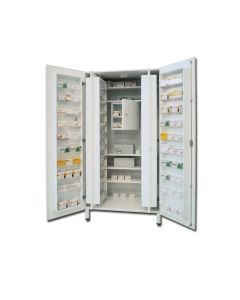
Medicine cabinet 100x60x195 cm in 20 mm melamine, 60 compartments, narcotics safe with lock, 180° rotating doors, painted steel frame.
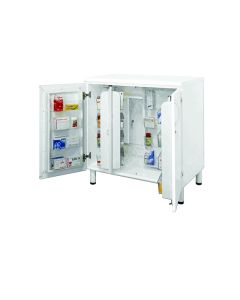
Monoblock 20mm melamine medicine cabinet, 24 compartments with thermoformed containers, espagnolette lock, adjustable feet, 90x60x91.5cm.
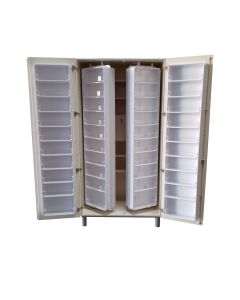
Medicine cabinet in wood conglomerate, 2 doors 270°, 60 internal compartments, narcotics locker, 5 adjustable shelves, steel base 1000x600x2020 mm.
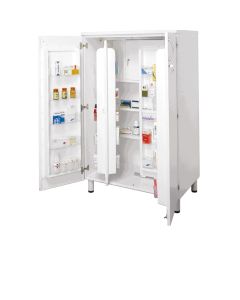
Monobloc melamine medicine cabinet 20mm, scratch-resistant white, 30 compartments, narcotics lock, adjustable feet. 90x60x148 cm.

White melamine monoblock medicine cabinet, 90x60x200 cm, 60 medicine compartments, narcotic locker with lock, 6 adjustable shelves, 270° hinges.
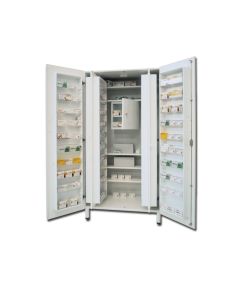
Medicine cabinet with 48 compartments, 5 adjustable shelves, narcotics safe, 2 external 180° doors and 2 internal 90° doors, white bilaminate, painted steel.
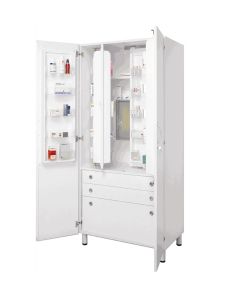
Monobloc medicine cabinet in white melamine, 90x60x200 cm, with 30 compartments, 3 drawers, lockable narcotics safe and anti-trauma handles.

Bilaminate medicine cabinet for pharmacies and clinics. Two doors (lockable and glass), 24 compartments, 6 ISO trays at different heights, 3 drawers. Dimensions: 96×66×195 cm.
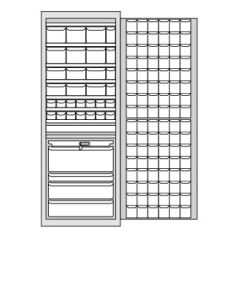
Medicine cabinet with key lock, 735×660×2000 mm, modular structure for hospitals and RSA. Equipped with 16 tilting rows, assorted containers, shelves, and drawers with digital lock.
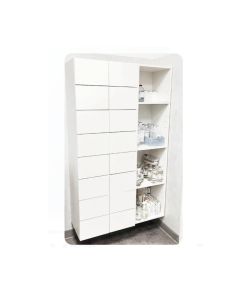
Wall-mounted laminate pharmacy cabinet for operating rooms. Equipped with an open compartment with shelves and 16 drawers with push-pull system. Dimensions: W 100 x D 35 x H 170 cm.
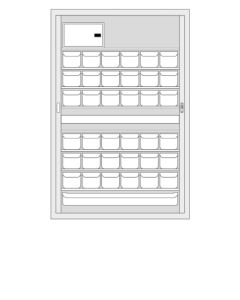
Hospital drug storage cabinet, 36 slots with narcotics safe, tambour closure with code lock, anti-corrosive steel.
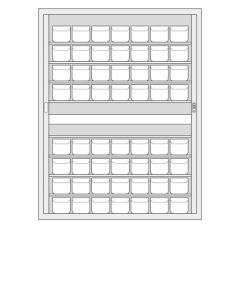
Medicine cabinet in 10/10 steel, 56 compartments, sliding shutter, 8 fixed shelves + 1 telescopic. For hospitals and healthcare facilities.
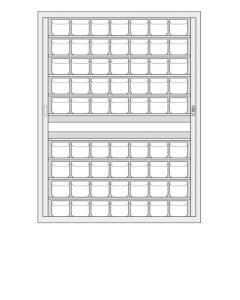
63-compartment medicine cabinet, 10/10 anti-corrosive steel, PVC curtain closure, code lock, telescopic shelf.
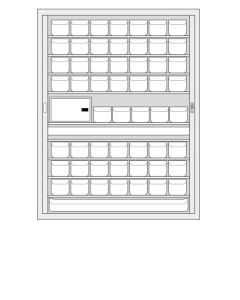
54-slot hospital medication cabinet, anti-corrosive steel, narcotics safe, PVC tambour door closure, code lock.
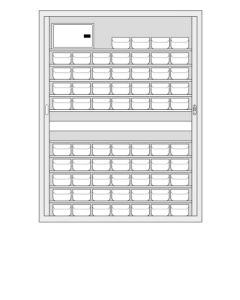
Hospital pharmacological cabinet 67 slots with narcotics safe, shutter closure with code lock, anti-corrosive steel.
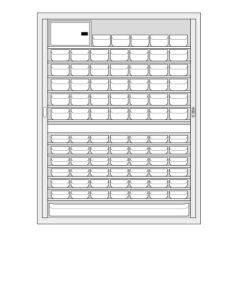
82-slot drug cabinet for healthcare facilities, 10/10 anticorrosive steel, narcotics safe, PVC curtain with code lock.
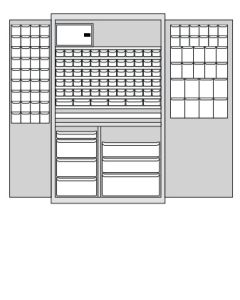
Medical cabinet in steel 1200x660x2000 mm with safe for toxic products, 60 containers, 7 shelves, drawers and key lock for pharmacies and healthcare facilities.
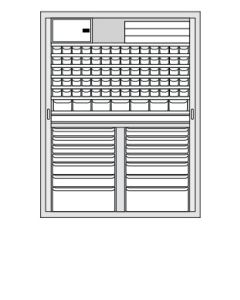
Medicine storage cabinet with key lock and double sliding tambour door. Dimensions W. 1550 x D. 535 x H. 2000 mm. Equipped with a narcotics safe, 14 containers, and 14 drawers for complete organization.
Medicine cabinets and display cases represent an essential solution for the safe and organized storage of medicines in healthcare environments, clinics, pharmacies, and medical practices. These systems combine storage functionality with controlled visibility, ensuring rapid accessibility to drugs while maintaining strict hygiene and safety standards in compliance with current regulations. The correct choice of a cabinet or display case directly affects the management of pharmaceutical inventory, the prevention of medicine deterioration, and the regulatory compliance of the facility.
The structures available in our catalogs range from compact solutions for small clinics to large-capacity systems intended for hospital facilities and medium-sized pharmacies. Each model is designed considering principles of ergonomics, material durability, and ease of sanitization, which are decisive factors in environments where microbiological control and systematic cleaning are daily operational priorities.
A cabinet or display case dedicated to medicines guarantees protection from environmental factors that compromise the integrity of the medicinal product: direct light, temperature variations, and excessive humidity. These specialized containers maintain stable storage conditions, significantly reducing the risk of chemical-biological degradation of the active molecules present in the preparations. Controlled storage extends the useful life of medicines and preserves therapeutic efficacy, reducing economic waste and improving the return on healthcare investments. Furthermore, the structure with display windows or closed doors allows for immediate visualization of the content without uncontrolled exposure, accelerating retrieval times in clinical emergency situations.
From a management perspective, these systems facilitate the logistical organization of medicines according to standardized protocols: separation between prescription and over-the-counter drugs, segregation of narcotics or controlled substances in dedicated and locked compartments, categorization by active ingredient or pathology. The locking mechanism represents a critical safety element, preventing unauthorized access and reducing the risk of theft, adulteration, or improper use. Medical practices, pharmacies, and clinics that implement certified pharmaceutical storage systems also demonstrate greater compliance in regulatory inspections and more traceable documentation for internal audits.
The market offers a complex variety of construction solutions. Single-door cabinets represent the entry category, ideal for clinics with limited storage volume, characterized by small dimensions (lengths usually between 50 and 80 cm) and compact depths. Double or multi-door display cases extend the loading capacity through sliding or hinged doors, maintaining frontal visibility and easy access to the shelves. Cabinets with mixed doors (a combination of glass and sheet metal) represent a compromise between visual exposure and protection from external manipulation. Systems with rotating shelving optimize internal space through rotation, particularly suitable for contexts where the footprint is critical. Models with pull-out drawers or trays facilitate categorization and rapid retrieval of medicines divided by therapeutic category or clinical destination.
In addition to the structural geometry, the constituent materials vary: painted steel guarantees durability, corrosion resistance, and ease of sanitization using chemical detergents; melamine-faced wood offers a more pleasant aesthetic and surface smoothness suitable for contexts where the visual aspect affects the patient’s perception; wood particle board panels offer an acceptable cost-performance balance for facilities with a limited budget. The shelves are generally made of tempered glass (mechanical resistance and transparency), steel (higher load), or melamine wood (aesthetic-functional compromise). Some models include locked internal compartments for narcotics, thus responding to regulations directly from the design stage. Dimensions vary from small formats of approximately 50x35x138 cm up to large industrial cabinets over 200 cm in height and over 60 cm in depth.
Selection begins with the evaluation of the average pharmaceutical volume managed: a small medical practice with limited shifts requires a compact single-door display case, while a pharmacy with dozens of references and daily rotation needs modular or multi-compartment cabinets. Consider the number and type of medicines to be stored, distinguishing between solid forms (tablets, vials), liquids (bottles, flasks), and delicate preparations requiring specific light protection. Physical access is a decisive factor: medical clinics benefit from frontal-central hinged doors for speed of retrieval; pharmacies prefer open shelving or sliding doors where the operator accesses from a specific side without obstacles. Check if local regulations prescribe forced compartmentalization for controlled substances: some jurisdictions require an integrated safe with double locks, others accept a separate adjacent cabinet.
An often underestimated aspect is the thermal stability of the location: environments subject to temperature fluctuations (non-air-conditioned rooms or rooms exposed to solar radiation) require cabinets with superior thermal insulation or those located in shaded areas. The depth of the shelf must correspond to the length of the most voluminous medicine containers: errors in this evaluation generate dead spaces and logistical inefficiency. Adjustable shelves on a rack system are recommended as they allow for dynamic adaptation without structural interventions. For pharmacies, the frontal visibility of displayed drugs is competitive: cabinets with entirely tempered glass doors, although requiring more frequent maintenance, improve the customer experience and accelerate visual product recognition. Where narcotics represent a significant fraction of the inventory, invest in certified models with a multi-compartment internal cabinet, avoiding the separate purchase of additional safes. Finally, consult sanitization requirements: smooth surfaces, rounded corners, and water-repellent materials simplify daily disinfection according to hospital protocols.
The storage of medicines is regulated by stringent national and international regulations. In Italy, Legislative Decree 193/2006 (privacy code) and specific ministerial circulars dictate the methods of storage, traceability, and access to medicines, particularly those subject to prescription. The regulation on controlled substances (narcotics and psychotropics) requires storage in lockable containers, often in double compartments, according to the indications of the Local Health Authority. Healthcare facilities (hospitals, polyclinics) are required to comply with the ISO 14644 standard on environmental sterility in pharmaceutical preparation areas, with indirect implications on the choice of cabinets that are easily sanitized and made of antistatic materials where required. Fire resistance is prescribed in some regional regulations for facilities housing guests or critical departments.
From a construction point of view, structural solidity is certified through load tests according to EEC standards: a medicine cabinet must support at least 300-400 kg of distributed drugs, with a safety margin. Ease of hygiene is implicit in hospital standards: absence of sharp edges, airtight joints between panels, non-toxic coatings, phthalate-free materials. Some regional jurisdictions include periodic audits on storage methods, checking dimensional compliance, the presence of identification labels, separation between pharmaceutical classes, and the integrity of seals. Documentary traceability is increasingly required: photographing the interior of the cabinet at standardized intervals, recording movements of controlled substances using appropriate paper or digital registers, constitutes correct practice even where not mandatory. Always consult the territorial regulatory body (ASL, Professional Order) for specific constraints of your jurisdiction, as requirements vary between municipalities and regions.
Explore all the products in the category and compare the available solutions to find the one best suited to your operational context. Our catalog includes over forty certified models, from compact display cases for micro-environments to industrial cabinets for hospital pharmacies, each equipped with detailed technical specifications and verified regulatory compatibility.
A display case is characterized by transparent doors (tempered glass) on one or more sides, allowing immediate visibility of the contents without opening. A cabinet has opaque doors in sheet metal or melamine wood, offering greater protection from light and external viewing. Display cases are preferred in pharmacies for visual marketing, while cabinets are used in clinics and hospitals for privacy.
Dimensions vary according to use. Compact models for clinics range between 50-60 cm in width, 35-40 cm in depth, and 140-180 cm in height. Medium category cabinets reach 80-100 cm in width and 200 cm in height. Hospital pharmacies use modular systems from 120+ cm in width. Always check the available space and the floor’s load-bearing capacity before purchasing.
Organize medicines by therapeutic category or in alphabetical order by active ingredient. Maintain temperatures between 15-25°C, protect from direct light by placing the cabinet in shaded areas. Segregate narcotics in separate locked compartments. Check expiration dates regularly and label all containers with the date of receipt. Disinfect shelves monthly with appropriate detergents.
Maintenance is minimal. Clean external surfaces and glass weekly with a neutral detergent and a soft cloth. Lubricate hinges and locking mechanisms every 6 months. Check the integrity of the seals and the locking system. If the cabinet has locks, check their operation regularly. Do not use aggressive solvents on painted parts.
Not recommended. Permanent temperatures above 25-30°C degrade many drugs, particularly biologicals and lyophiles. If the environment is not air-conditioned, install the cabinet in the coolest point (north corner, away from windows), protect with an external heat-reflective curtain, or consider local air conditioners. Monitor internal temperature with a datalogger to verify compliance.
Estimate the average number of pharmaceutical references managed (active ingredients x forms x dosages), multiply by the average unit volume of each container (standard packaging occupies approximately 50-100 cm³). Add 20-30% buffer space for new acquisitions and stock rotation. Consult your main supplier to evaluate the average number of packages in stock daily, then compare with the net volume of the cabinet indicated by the manufacturer.
Yes, as long as they meet European standards for solidity (load test) and hygiene. However, hospital pharmacies and facilities with narcotics require additional specific compliance certifications: consult the Professional Register of Pharmacists and the local ASL for a list of pre-approved products, avoiding non-compliant purchases that could generate non-conformities in regulatory audits.
 English
  Italian
 French
 German
 Spanish