
mon-fri 9-13 / 14.30-18.30
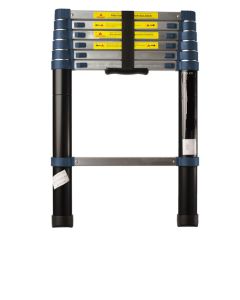
Professional telescopic ladder in anodized aluminum, 7 rungs, height 200 cm. Load capacity 150 kg, compact design for transport in small spaces.
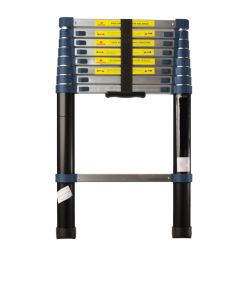
Professional telescopic ladder in anodized aluminum, height 260 cm and capacity 150 kg. Modular opening system and minimum overall dimensions when closed.
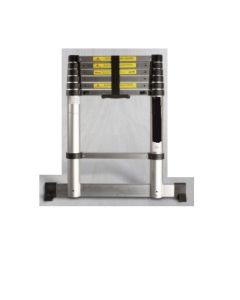
Multi-purpose aluminum ladder 2 meters, 150 kg capacity, EN 131 compliant. Lightweight, equipped with stabilizer and anti-wear rubber protections.
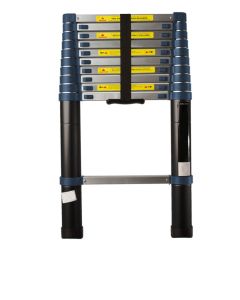
Anodized aluminum telescopic ladder, height 320 cm, 11 rungs. Compact structure compliant with EN131 with step-by-step modular opening system.
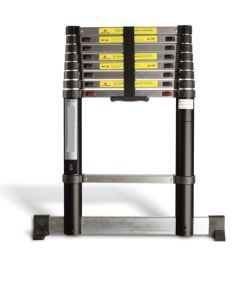
Anodized aluminum telescopic ladder 260 cm, 9 anti-slip rungs and soft-close safety system. Compact and ideal for maintenance.
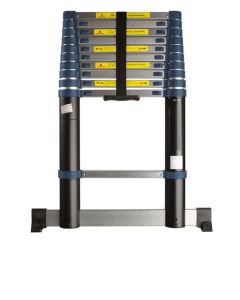
3.20 meter professional telescopic ladder in anodized aluminum. Compact design and non-slip steps, ideal for frequent transport.
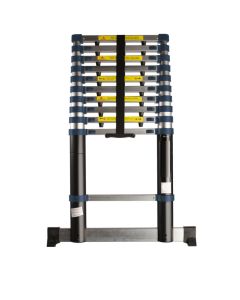
Anodized aluminum telescopic ladder, height 3.20 m, 11 rungs. Compact design EN131 certified, ideal for portability and tight spaces.
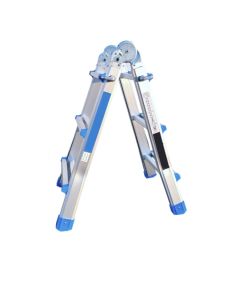
Multipurpose telescopic ladder in anodized aluminum, 2x5 steps, height 3.03m. Professional compact structure compliant with EN 131 standard.
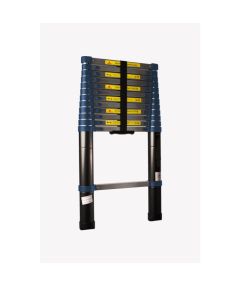
Professional telescopic ladder in anodized aluminum, height 380 cm. Compact structure with 13 non-slip rungs, compliant with EN 131 standards.
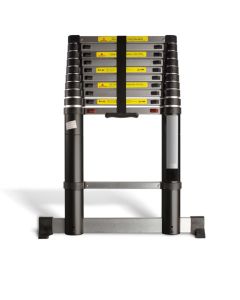
320 cm anodized aluminum telescopic ladder. 150 kg capacity, 11 non-slip rungs and soft-close system for maximum safety.
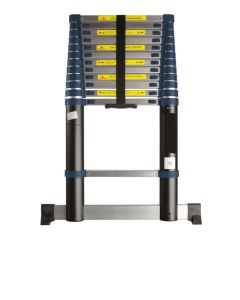
Professional telescopic ladder in anodized aluminum, 13 non-slip rungs, height 3.8m. Compact and EN 131 certified for capacities up to 150kg.
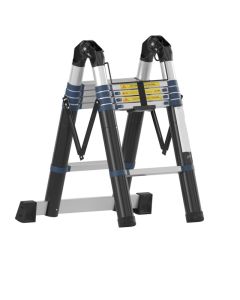
Professional 3.2-meter anodized aluminum telescopic ladder, folding and compact, EN 131 certified for maximum operational safety.
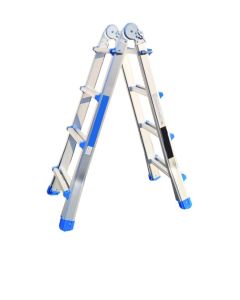
Multipurpose telescopic ladder in anodized aluminum (4.13 m). 2x7 non-slip steps and locking system for intensive professional use.
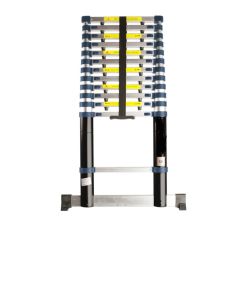
Professional 3.8m telescopic ladder in anodized aluminum, 13 non-slip steps and 150kg load capacity. Compact, lightweight and EN 131 certified.
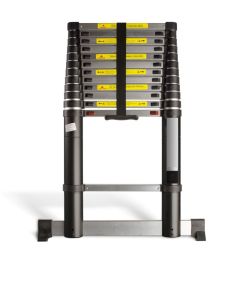
Professional telescopic ladder in anodized aluminum, 380 cm, 150 kg capacity, 13 non-slip steps and safety soft-close system.
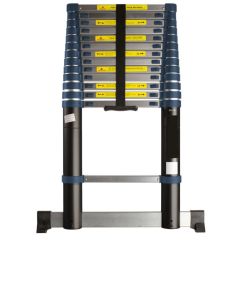
Professional 4.1-meter telescopic ladder in anodized aluminum, 14 non-slip steps, EN 131 certified, extremely compact and portable.
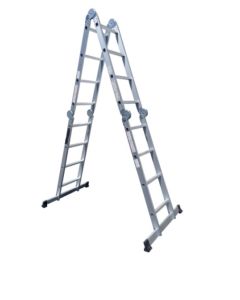
Professional 4x4 anodized aluminum telescopic ladder. Max height 460 cm, capacity 150 kg. Compact and EN 131 certified for intensive use.
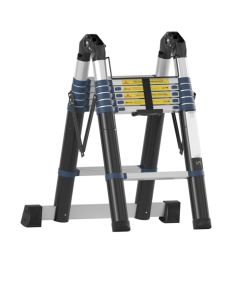
Professional telescopic ladder in anodized aluminum, 3.8 m. Load capacity 150 kg, compact for transport and certified according to EN 131 standard.
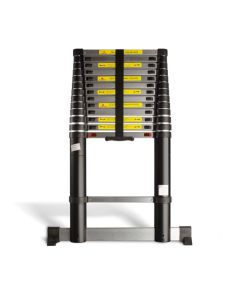
Professional telescopic ladder in anodized aluminum, height 410 cm. 150 kg load capacity, 14 non-slip steps and soft-close system.
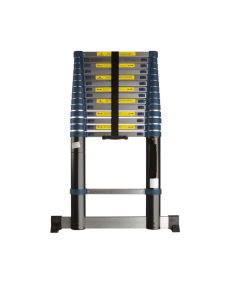
Professional telescopic ladder in anodized aluminum, height 4.4m, 15 non-slip steps, load capacity 150kg, EN 131 certified and ultra-compact.
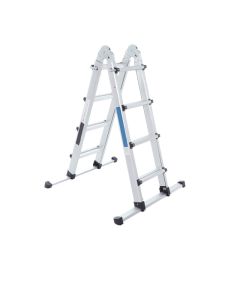
Professional 4.1-meter telescopic ladder in anodized aluminum, 2x6 non-slip steps and EN 131 certified safe locking system.
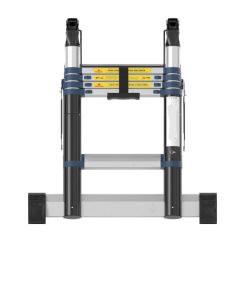
Professional telescopic ladder in anodized aluminum, height 3.2 m. Compact structure 2x5 anti-slip rungs, capacity 150 kg and EN 131 standard.
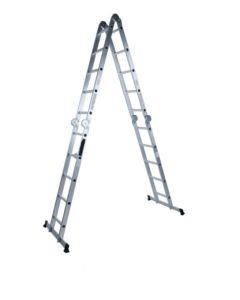
Multi-purpose ladder in anodized aluminum with 4x5 non-slip steps. Maximum height 570 cm, 150 kg capacity and EN 131 compliance for professional use.
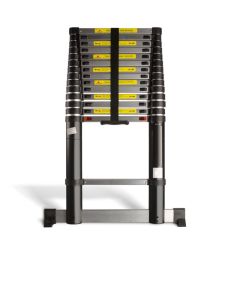
440 cm anodized aluminum telescopic ladder, 150 kg capacity. Soft-close system and EN131 compliance for professional use.
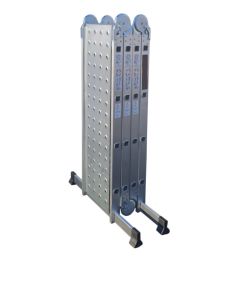
Multipurpose anodized aluminum ladder 460 cm high with 150 kg load capacity. Includes two platforms and non-slip steps. Compliant with EN 131 standard.
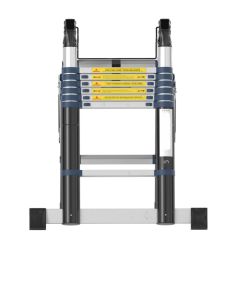
Professional anodized aluminum telescopic ladder, height 4.4m, 2x7 non-slip rungs. Compact and safe with 150kg load capacity.
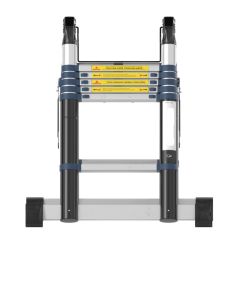
Professional telescopic ladder in anodized aluminum, height 3.8 m, with 2x6 non-slip steps. Compact and EN 131 certified for intensive use.
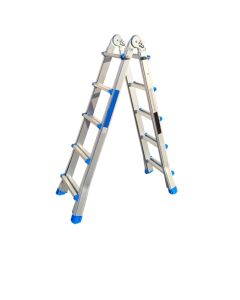
Professional telescopic ladder in anodised aluminium, height 5.3 m, load capacity 150 kg. Compact and safe structure compliant with EN 131 standards.
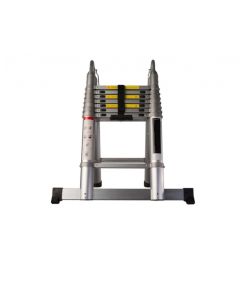
Professional 3.2-metre telescopic ladder in anodized aluminium, 150 kg load capacity, 10 non-slip steps and EN 131 safety certification.
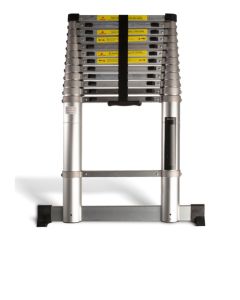
Professional telescopic ladder in anodized aluminum, 410 cm. EN 131 certified, 14 non-slip rungs, extremely compact and maneuverable.
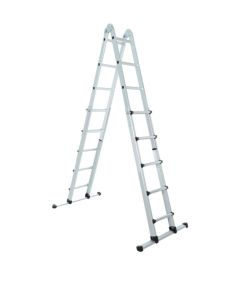
Multipurpose anodised aluminium ladder, maximum height 555 cm, load capacity 150 kg. Folding configuration certified EN 131 for professional use.
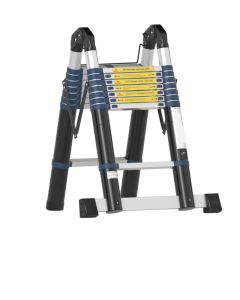
Professional telescopic ladder in anodized aluminum, height 5 m, capacity 150 kg. Compact design and EN 131 certification for intensive use.
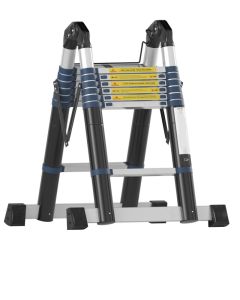
Professional telescopic ladder in anodized aluminum 4.4 meters. Load capacity 150 kg, EN 131 certified, compact for easy transport and storage.
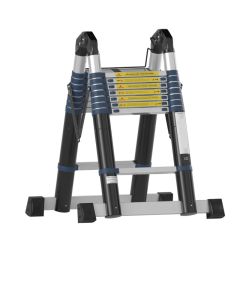
Professional telescopic ladder in anodized aluminum, 5 meters height, 150 kg capacity, EN 131 certified with space-saving compact design.
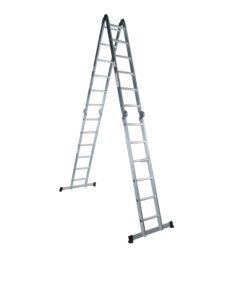
Professional articulated ladder in anodized aluminum (4x6 rungs), maximum height 670 cm, load capacity 150 kg, and compliance with EN 131 standards.
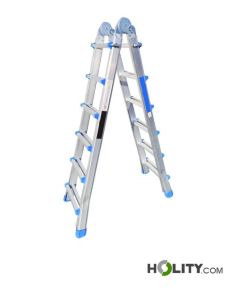
Professional telescopic ladder in anodized aluminum, height 5.87 m, 2x10 non-slip rungs. Secure locking system and EN 131 certification.
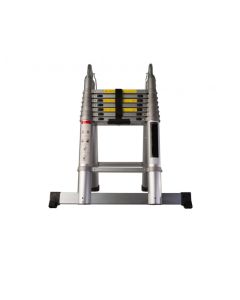
Professional 3.8-meter anodized aluminum telescopic ladder, space-saving folding structure with ribbed non-slip steps.
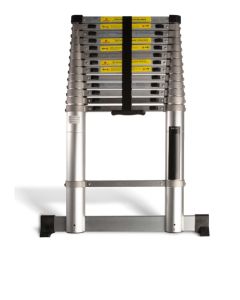
440 cm anodized aluminum telescopic ladder, 150 kg load capacity, step-by-step modular opening system for maximum agility in confined spaces.
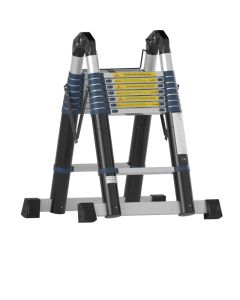
Professional anodized aluminum telescopic ladder, 5 meters. 150 kg load capacity, EN 131 certified, compact for transport and storage.
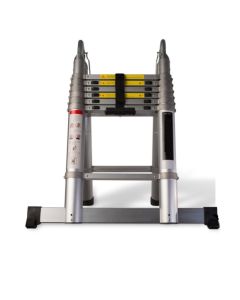
Professional telescopic ladder in anodized aluminum, height 4.4m and capacity 150kg. Compact folding structure EN 131 certified.
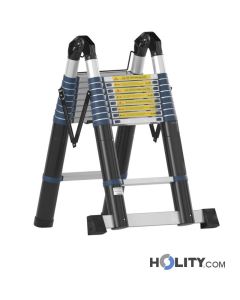
Professional telescopic ladder in anodized aluminum, 5.6 m extension, 150 kg load capacity. Compact (97 cm closed) with ribbed anti-slip steps.
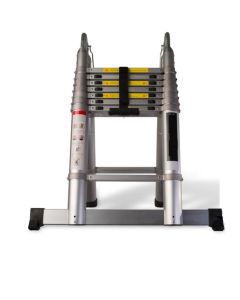
Professional 5-meter anodized aluminum telescopic ladder, 2x8 steps configuration, EN 131 certified and ultra-compact for transport.
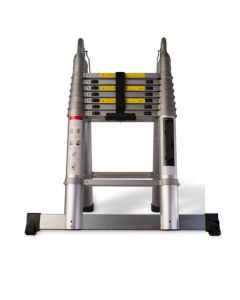
Professional telescopic ladder in anodized aluminum, height 5.6 m, 2x9 non-slip steps configuration. Compact, safe and EN 131 certified.
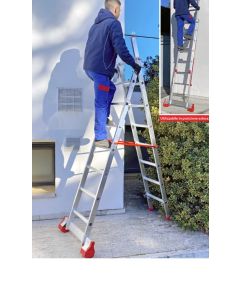
Professional aluminum ladder with 2 elements, 7+8 rungs. Configurable as stair-mode or A-frame, lightweight (12 kg) and certified according to EN 131 standard.
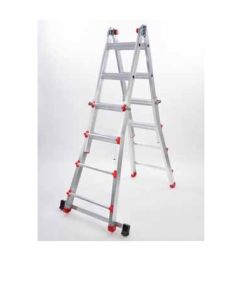
Professional aluminum telescopic ladder, 4+4 step configuration, 150 kg capacity. Compact when closed (1.29 mt) for maximum portability.
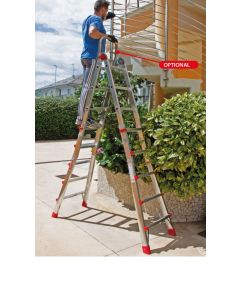
Professional 8+8 rungs aluminium telescopic ladder. 150kg capacity, 4.7m working height. Configurable in 4 positions, lightweight and ultra-compact.
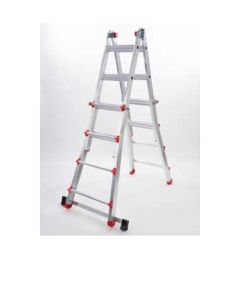
Professional 10-step aluminum telescopic ladder. Versatile structure with steel hinges, 1.59 m closed height and EN 131 compliance.
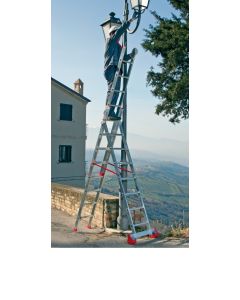
Professional multi-purpose aluminum ladder with 3 sections (6+7+7 rungs). Configurable in leaning, A-frame, or stairwell mode. Compliant with EN 131.2 standard.
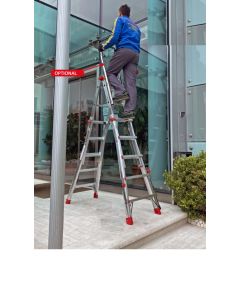
Professional aluminum telescopic ladder 8+8 steps. Working height 5.8 m, 4 modes of use and aeronautical technology guaranteed for 10 years.
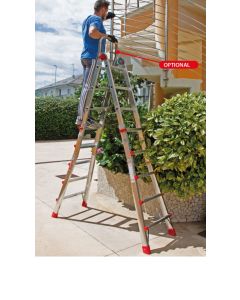
10+10 rungs aluminum telescopic ladder. 150kg capacity, 4.7m working height. 4 modes of use, EN 131.2 compliant for intensive professional use.
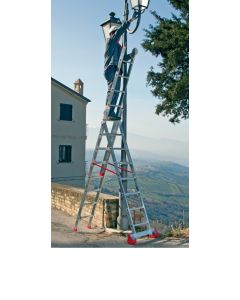
Professional multi-purpose 3-section ladder (7+8+8 rungs) in reinforced aluminum. Stairway, stepladder or leaning use. Capacity 150 kg. Made in Italy.
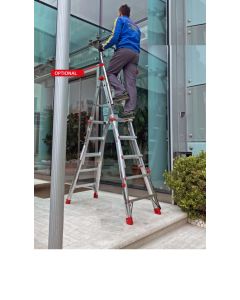
Professional 12+12 step aluminum telescopic ladder, max height 5.8 m. 4 usage configurations, aeronautical technology and EN 131.2 standard.
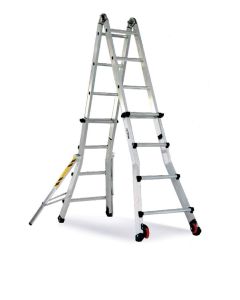
Professional aluminum telescopic ladder 8+8 steps, equipped with adjustable levelers and foldable stabilizers for heavy-duty use.
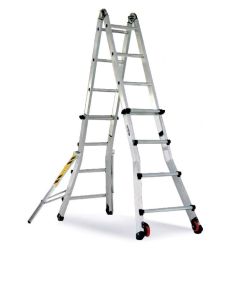
Professional aluminium telescopic ladder with 10+10 rungs, foldable stabilizers, integrated levelers and compliance with EN 131 standard.
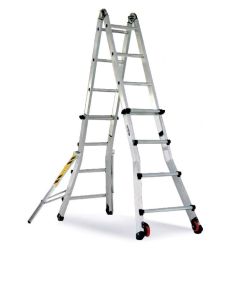
Professional telescopic ladder in extruded aluminum 12+12 rungs, equipped with foldable stabilizers and levelers for irregular surfaces.
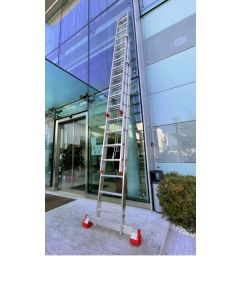
Professional 3-element aluminum rope-operated ladder (12+12+12 rungs). Working height 9.9 m, load capacity 150 kg and assisted lifting system.
Telescopic ladders represent a versatile and indispensable solution for anyone operating in environments where reaching significant heights with practicality and safety is required. These work tools combine compactness when folded with remarkable vertical extension once opened, making them ideal for building maintenance, cleaning, installations, and interventions of all kinds. A professional telescopic ladder must guarantee structural stability, corrosion-resistant materials, and compliance with European safety regulations. Their widespread use in the HoReCa, industrial, and urban maintenance sectors confirms how essential they have become in the landscape of work equipment.
Telescopic ladders offer an immediate practical advantage: they occupy little storage space compared to traditional fixed ladders, yet reach considerable heights when fully extended. This makes them particularly appreciated in contexts where mobility is a priority, such as maintenance interventions in residential buildings, plant inspections, work on facades, and cleaning of high surfaces. Simplified transport allows professionals to carry the equipment with them without excessively burdening vans or vehicles, reducing travel times and increasing overall site productivity. Furthermore, the telescopic structure reduces the risk of damage compared to traditional ladders, as the elements overlap, protecting each other during loading and unloading.
From an operational standpoint, telescopic ladders allow for work in confined spaces where a traditional step ladder or leaning ladder would be bulky or impractical. Interior environments, narrow corridors, existing stairs, and areas with obstacles become accessible thanks to their lean configuration. The variability of reachable height — from compact two-meter versions to professional models exceeding six meters — allows procurement managers to choose the most suitable solution without having to stock multiple types of ladders. This flexibility also translates into a reduction in assessment errors during the work planning phase, as a single ladder can cover different height needs.
In the telescopic ladder market, there are mainly three construction categories: single versions (a single extendable stile), multi-purpose ladders (with double or triple sections allowing different configurations), and models with additional platforms or trays. Single telescopic ladders are the most common and lightweight, ideal for those needing a portable solution without compromising on practicality. Materials vary mainly between die-cast aluminum, anodized aluminum, and specialized alloys, with the latter offered for environments where corrosion is a critical factor. Anodized aluminum guarantees superior protection against oxidation, significantly extending the tool's useful life, especially in environments with high humidity or exposure to chemical solutions. The steps almost always feature a non-slip finish, made of rubber or structured plastic, a fundamental element for operator safety during work at height.
Multi-purpose ladders, available in configurations such as 2x5, 2x6, 2x7 up to 4x6, allow the product to be positioned across two levels or used as a leaning ladder, making them extremely versatile for complex jobs. These models generally weigh from 15 to 25 kilograms and have a nominal load capacity of 150-180 kg, a critical figure for evaluating whether they can support the operator along with tools. Folding versions represent a particular subgroup: when not in use, they reduce to surprisingly compact dimensions (often under 100 cm in length), while maintaining significant vertical extensions once opened. Some professional models also include lateral stabilization elements, such as stabilizer bars or height-adjustable non-slip feet, to ensure secure support even on irregular or slightly inclined surfaces.
The choice of a telescopic ladder must begin with an analysis of the heights actually required. Many procurement managers make the error of overestimating their needs, purchasing excessively extended ladders that are difficult to handle and require more storage space. A practical rule is to evaluate the maximum height to be reached with a safety margin of 30-50 centimeters relative to the work point, without fully extending the product in routine situations. A second criterion concerns the weight of the operator and tools: the manufacturer's declared capacity must exceed the actual expected load by at least 20-30%. If your average staff member weighs 85 kg and needs to carry 15 kg of tools, a ladder with a 120 kg capacity would be insufficient; a 150 kg one would represent the recommended minimum. The material is an aspect that depends on the environment: humid environments, near water sources, or where corrosive solutions are used require anodized aluminum; for indoor work in dry environments, standard aluminum may be adequate at lower costs.
An element frequently overlooked is the configuration of the rungs. Some models feature closely spaced rungs, particularly useful for operators who prefer a greater sense of security, while others space the rungs by 30-35 centimeters to better adapt to a natural human stride. Those working in public areas or with strict safety protocols should prefer ladders with EN 131 certification, the European standard that includes repeated static and dynamic load tests. Finally, the practicality of opening and closing plays a non-secondary role: some models require two hands and a certain amount of coordination, while others feature more intuitive mechanisms. For those who often work alone or in conditions of fatigue, this characteristic can significantly influence the final choice. An on-site inspection of your construction site or work environment, with concrete verification of available heights and spaces, always remains the most reliable method for orienting yourself toward the correct product.
In Italy and the European Union, telescopic ladders must comply with the EN 131-1:2007 regulation and subsequent updated versions. This standard specifies construction requirements, resistance tests, structural stability, and behavior in the event of partial failure. Compliance involves concentrated load tests, distributed load tests, torsion resistance, and verification of the anti-slip properties of the extension mechanisms. Furthermore, every ladder must indelibly display the maximum allowed load, the year of manufacture, and the manufacturer's name. In the context of workplace safety, Legislative Decrees 81/2008 (Safety Consolidation Act) and subsequent ones establish that every company using ladders must provide employees with instructions for use, training courses, and maintain documentation of equipment compliance. Non-compliant ladders cannot legally be used in professional contexts, as their use would constitute a violation of accident prevention regulations.
Critical aspects emerging from operational practice include the periodic control of extension mechanisms, which must occur at least annually in high-use environments, and the verification of the integrity of non-slip rungs, which tend to wear over time. Many industry organizations recommend a visual check before each use: the absence of deformations in the frame, the smooth sliding of the extendable segments, and the grip of the locking systems at full extension. In the case of use in environments with a risk of falling from height (heights exceeding 2 meters), safety regulations may require additional personal protective equipment, such as harnesses and anchors, regardless of the ladder's certification. The ladder's certification therefore remains a necessary but not sufficient condition; the operational context and risk assessment remain decisive for use compliant with regulations.
Explore all products in the category and compare the available solutions to find the one best suited to your operational context. From compact single telescopic ladders to professional multi-purpose versions, our catalog covers every height and configuration need, guaranteeing quality, regulatory compliance, and reliability in maintenance, cleaning, and work-at-height operations.
A single telescopic ladder features a single stile that extends vertically, ideal for reaching heights in a standard configuration. A multi-purpose ladder (2x5, 2x7, 4x6) offers two or more independent sections that can be angled relative to each other, allowing you to position it across two different levels or use it as a self-supporting A-frame ladder. Multi-purpose ladders are more versatile but generally heavier.
The maximum capacity varies from model to model, with typical values between 120 and 180 kg. This limit includes the operator's weight plus tools and materials carried. It is essential to check the data on the product label and never exceed it, as it represents the parameter tested according to the EN 131 standard.
Evaluate the maximum height you need to reach and subtract about 30-50 cm as a safety margin. If you need to reach 3 meters, a ladder extendable up to 3.2-3.5 meters is appropriate. Avoid buying excessively tall ladders for sporadic use, as they will be difficult to transport and store.
Yes, if your environment has high humidity, proximity to salt water, or exposure to chemical agents. Anodizing protects against corrosion and extends the tool's life by 5-10 years compared to untreated aluminum. For dry indoor environments, standard aluminum may be sufficient.
The main standard is EN 131-1:2007. In Italy, Legislative Decree 81/2008 obliges the employer to provide instructions, train staff, and maintain compliance documentation. Visually check before use: intact frame, functioning locking mechanisms, secure non-slip rungs. For work at height over 2 meters, evaluate additional protection like harnesses.
Perform a visual inspection before every use. Formal annual maintenance is recommended in high-use environments, with verification of extension mechanisms and cleaning of segments. In case of corrosive environments, increase the check frequency to every 6 months. Replace non-slip rungs if worn.
No, a unless the model features height-adjustable non-slip feet. Uneven or sloping ground compromises stability and increases the risk of tipping. If necessary, use a multi-purpose ladder positioned across two levels, or evaluate specific levelers under the feet before climbing.
Dimensions vary by model. A single ladder extendable up to 2-2.5 meters stores in about 60-80 cm of length. Larger models and multi-purpose versions require more space, from 100 to 160 cm. Check storage dimensions before purchasing if space is limited.
 English
  Italian
 French
 German
 Spanish