
mon-fri 9-13 / 14.30-18.30
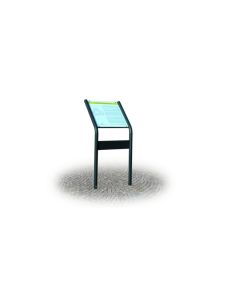
Galvanized steel information lectern for public spaces. 40x40 cm panel with transparent plexiglass, Ø40 mm tube structure, non-toxic painting, for inground installation. H.120 cm.
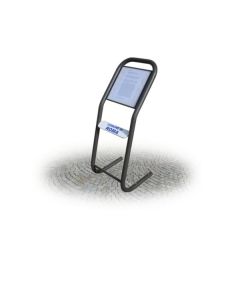
Galvanized steel information panel for street furniture, 48x100 cm, with transparent plexiglass protection for 40x40 cm signs, floor mounting.
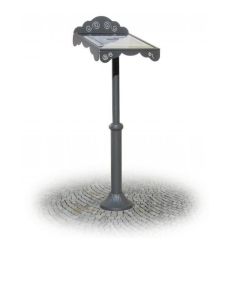
Lectern for public spaces in galvanized steel and aluminum, 120 cm high, with plexiglass sheet and 35×35 cm board. In-ground fixing.
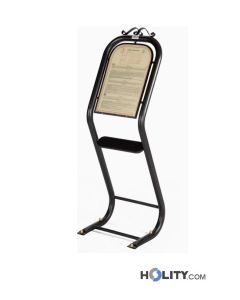
Urban furniture lectern in galvanized steel with polycarbonate panel. Height 127 cm, accessible to people with walking difficulties. Suitable for historic centers and squares.
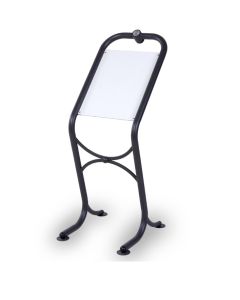
Lectern for urban furniture in galvanized steel and polycarbonate, 48x55x125 cm, robust structure for historic centers and public spaces.
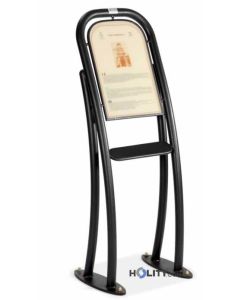
Galvanized steel lectern for public spaces, 125x50x36 cm, painted metallic gray, with transparent polycarbonate reading surface and shaped lower plate.
Galvanized steel information lectern for urban furniture, 80x120 cm, with display board and transparent polycarbonate sheet, designed for ground mounting.
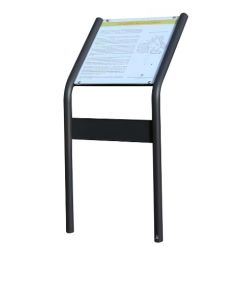
Galvanized steel lectern for embedding. 390x400 mm panel with lower plate. Height 1.2 m above ground, Ø48 mm tube structure.
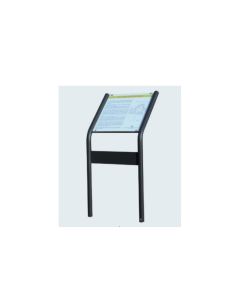
Galvanized steel lectern with round tube, 400x400 mm silk-screened panel, lower plate for logo, anchor bolt installation.
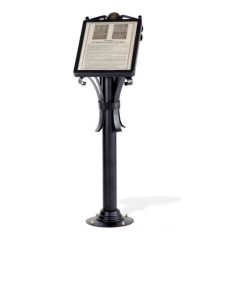
Lectern for urban furniture in galvanized steel, baroque style, 89mm column, 38x39cm reading surface, 124cm height, 20kg, gunmetal metallic epoxy finish.
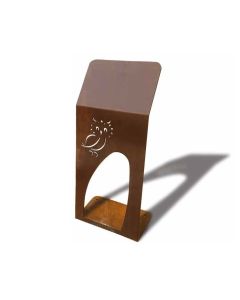
Lectern for public spaces in COR-TEN steel, 45 x 25 x H109 cm, display area 40 x 40 cm, corrosion-resistant, laser-shaped, angled for readability.
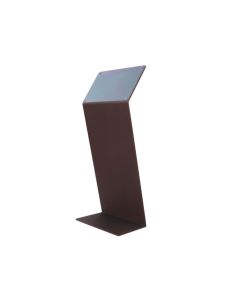
Urban furniture lectern in shaped steel with CORTEN finish, 50x30 cm panel protected by 4 mm polycarbonate, floor-level anchoring for public spaces and nature trails.
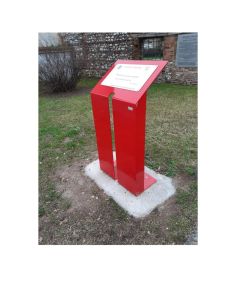
Single-sided lectern in painted galvanized steel for public spaces. Dimensions 55x30.6x108 cm. Laser-shaped structure, stainless steel hardware.
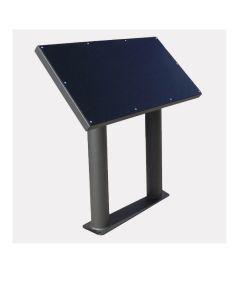
Lectern for urban furniture in painted galvanized steel, 100x50 cm, anchor fixing, for parks and paths.

Information lectern for street furniture in galvanized steel, 800×540×2000 mm, to be bolted down, with bent base and reinforcements. Screen-printed panel not included.
The installation of lecterns for public spaces represents a strategic choice for improving visual and informative communication within collective contexts, whether they are exhibition areas, conference centers, accommodation facilities, or places of worship. These supports are not mere furnishing elements, but functional tools designed to guarantee maximum readability of catalogs, menus, brochures, or service communications, while maintaining an aesthetic consistent with the surrounding environment. The selection of a professional lectern requires a thorough analysis of user flow dynamics and specific consultation needs, as an inadequate support can compromise the accessibility of information and the image of the facility itself.
Adopting high-quality display solutions allows for the orderly management of paper materials, avoiding visual clutter and protecting documents from wear and tear resulting from intensive use. Modern lecterns integrate ergonomic solutions that facilitate prolonged reading, offering calibrated inclinations and standardized heights for use by a diverse audience. Structural robustness and base stability are fundamental parameters to guarantee safety in high-traffic areas, where the risk of accidental impacts is constant. Investing in professional information systems means raising the quality standard of hospitality and optimizing the interaction between the institution and the visitor through a design oriented towards communicative clarity.
The integration of professional lecterns within public spaces responds to a primary need for orientation and information that cannot be satisfied by improvised supports. In contexts such as hotels, restaurants, or museums, the lectern serves as an immediate point of reference for the visitor, providing quick answers to common questions without the need for direct staff intervention. The stability of these elements, often guaranteed by weighted bases or ground-fixing systems, ensures that the support remains in position even in crowded situations, preserving the integrity of the displayed content. Furthermore, the use of materials such as stainless steel, brass, or anodized aluminum provides superior mechanical resistance and durability over time that amply justifies the initial investment compared to cheap solutions.
Another decisive advantage lies in the application versatility of contemporary models, ranging from lecterns for ceremonies to those intended for outdoor menu consultation. The ability of these tools to ennoble information is evident: a document presented on a correctly inclined support and protected by an anti-glare frame immediately acquires superior authority. This aspect is crucial for proximity marketing and institutional communication, where the perception of attention to detail directly affects user trust. The ease of updating content is a further practical benefit, allowing for the replacement of information sheets or posters in moments thanks to snap or magnetic opening systems, thus ensuring communication that is always up-to-date and orderly.
The landscape of lecterns for public spaces is divided into several construction variants, each optimized for a specific use scenario. Floor-standing pedestal lecterns are the most common, characterized by a single or double vertical structure supporting an inclined surface; these models can be made of wood for classic and solemn environments, or metal and methacrylate for modern and minimalist contexts. There are also specific versions for outdoor use, equipped with lockable notice boards and sealing gaskets to protect documents from atmospheric agents, essential for restaurants or natural parks. The distinction between fixed models and those adjustable in height or inclination allows the support to be adapted to the different ergonomic needs of speakers or occasional readers.
In addition to structural differences, variants are distinguished by the document containment system: ranging from a simple supporting surface with bookends, typical of conference lecterns, to snap frames that lock the sheet under a protective PVC film. Materials play a predominant aesthetic and functional role: satin-finished steel is ideal for sterile or contemporary environments thanks to its ease of cleaning, while plexiglass offers a transparency that does not visually weigh down the space, appearing almost invisible and putting the message in total focus. For digital applications, hybrid solutions are emerging that are designed to house tablets or touch screens, combining the physical structure of the traditional lectern with the potential of interactive multimedia communication.
The selection of the ideal lectern must start from a rigorous analysis of the environmental context and the expected frequency of use. A common mistake is underestimating the weight of the base: in high-traffic areas, a lectern that is too light risks being easily overturned, creating dangers for people’s safety. It is therefore essential to check that the center of gravity of the support is low and that the base has non-slip rubber pads or provision for bolting. Another decisive criterion is the format of the display surface; although the A4 standard is the most requested, in museum or conference settings it may be necessary to opt for A3 formats or higher to allow easy reading at a distance or to accommodate complex floor plans and charts that require a larger surface.
An aspect often overlooked concerns integrated lighting: in environments with soft light, such as theater entrances or dining rooms, purchasing a lectern equipped with battery-powered or wired LED light is indispensable to make the text readable without straining the eyes. Furthermore, the ease of maintenance of materials must be considered; for example, brass requires constant cleaning to avoid oxidation, while stainless steel or powder coatings are much more resilient and suitable for intensive use with minimal intervention. Evaluating in advance whether the content will change daily (as in the case of menus) or if it will be permanent (wayfinding signage) will guide the choice toward quick-closing systems or, conversely, toward more closed structures protected against vandalism or theft of the displayed material.
Although there is no single regulation dedicated exclusively to lecterns, these products must respond to general product safety requirements and guidelines on the removal of architectural barriers. In public spaces, it is essential that the lectern does not have sharp edges or cutting parts that could cause accidental injuries, respecting safety regulations in workplaces and public attendance areas. Regarding accessibility, the height of the reading surface should be calculated to allow viewing even for people in wheelchairs, avoiding excessive inclinations that generate annoying reflections or blind spots. Material compliance is equally important: the use of non-toxic paints and fire-retardant materials is a requirement often requested in technical specifications for public and collective supplies.
In specific contexts such as hospitals or canteens, materials must comply with sanitization protocols, allowing the use of chemical detergents without undergoing surface degradation. For models intended for outdoor use, certification of wind resistance and IP protection for any electrical components (lights or monitors) are binding technical parameters to guarantee operational continuity in safety. It is always advisable to request technical data sheets certifying the origin of the materials and CE compliance, especially when the lectern integrates electrical power systems. Durability and repair
For outdoor use, it is essential to opt for materials resistant to corrosion and atmospheric agents. AISI 304 or 316 stainless steel and anodized aluminum are the best choices because they do not rust. It is also essential that the notice board is equipped with rubber gaskets to prevent water infiltration on documents.
In areas exposed to drafts or strong winds, it is recommended to purchase models with weighted bases in cast iron or concrete, which significantly increase the total weight of the structure. Alternatively, many professional lecterns provide holes on the base for permanent fixing to the ground using anchors, ensuring maximum anti-tip safety.
Certainly, many models have a telescopic pole that allows for adjusting the height of the display surface, usually between 90 and 130 centimeters. There are also versions with a friction joint that allows the inclination angle of the panel to be varied, adapting it both to standing reading and to consultation by seated people.
The snap system uses aluminum profiles that open under pressure to lock the sheet under a protection film. The magnetic system, instead, uses a metal surface and a transparent pocket with magnetized edges. The former is more secure against tampering, while the latter is extremely fast for frequent changes.
Yes, there are integrated LED lighting solutions powered by long-lasting rechargeable lithium batteries. These lamps offer a cold or natural light that does not heat the document and guarantees many hours of autonomy, eliminating the need for unsightly power cables that could cause tripping in public spaces.
To maintain the transparency of methacrylate or plexiglass, products containing alcohol or solvents that cause opaque micro-cracks must be absolutely avoided. It is necessary to use a soft microfiber cloth slightly moistened with water and neutral soap or specific antistatic detergents, operating with gentle movements to remove fingerprints and dust.
 English
  Italian
 French
 German
 Spanish