
mon-fri 9-13 / 14.30-18.30
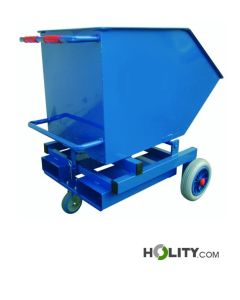
300-liter steel tipping skip for industrial waste. 500 kg load capacity, dimensions 1200x820x985 mm and discharge system for forklift.
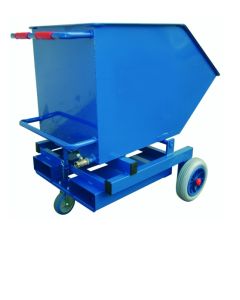
300-liter steel tipping skip with tap and internal grid, 500 kg capacity. Ideal for separation and controlled discharge of liquids.
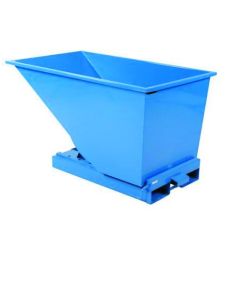
320-liter steel self-tipping hopper, watertight structure and 800 kg capacity. Ideal for rapid discharge of bulk and wet materials.
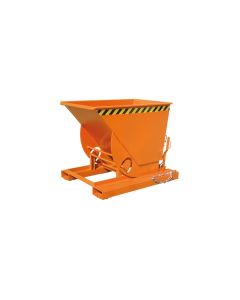
Tipping hopper for forklift. Capacity: approx. 0.50 m³. Dimensions: W.1010 x D.1420 x H.1070 mm.
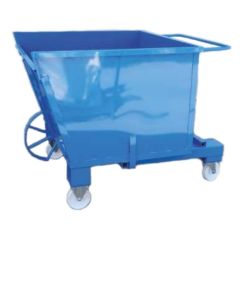
Tipping skip in painted carbon steel. Dimensions: 130x86 x h. 80 cm. Tank height: 45 cm. Capacity: 600 kg.
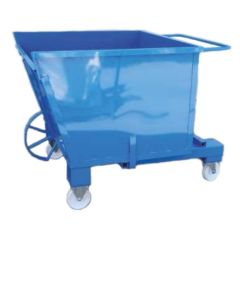
Painted carbon steel tipping skip for the industrial sector. Dim.: 130x 92 x h. 100 cm. Tank h.: 65 cm. Load capacity: 1000 kg.
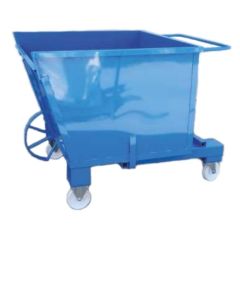
Painted steel skip bin for industrial waste disposal. Tipping. 130x 106 x h. 101 cm. tank height: 70 cm. Load capacity: 1500 kg.
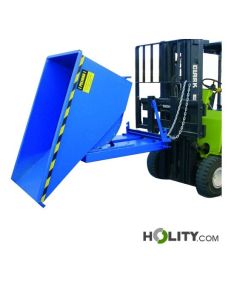
260L self-tipping hopper in 2mm steel. 1,000kg capacity, watertight structure and compact dimensions for solid and wet waste management.
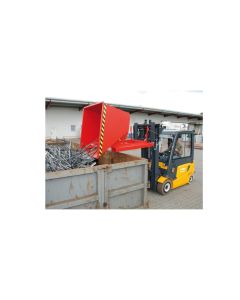
Industrial tipping container. Capacity: approx. 0.75 m³. Dimensions: W.1190 x D.1420 x H.1070 mm.
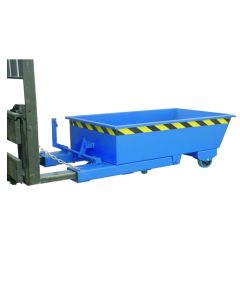
300-liter self-tipping container in 3 mm steel. Low profile for tight spaces, 800 kg capacity and watertight structure.
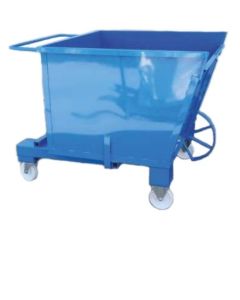
Tipping skip for material disposal. Dim.: 150x106 x h. 115 cm. h. tank: 80 cm. Load capacity: 1700 kg. In painted carbon steel.
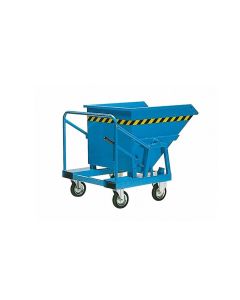
400L steel scrap hopper with 120° rotation. 800kg load capacity, integrated wheels and fork pockets, ideal for bulk waste and liquids.
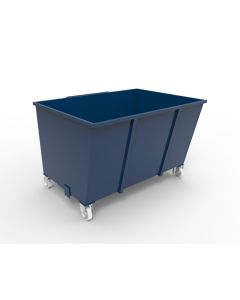
Reinforced carbon steel tipping skip for forklift, capacity 1.5 m³ and load capacity 1500 kg. Watertight structure with nylon wheels.
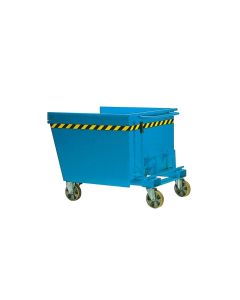
500-liter reinforced steel tipping skip for forklifts, with a watertight tank and Vulkolan wheels for safe waste management.
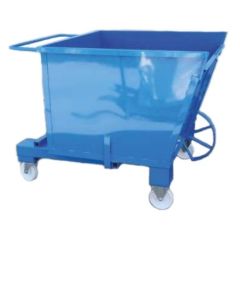
Industrial tipping container, in painted carbon steel. Dim.: 150x130 x h. 120 cm. tank h.: 85 cm. Capacity: 2000 kg.
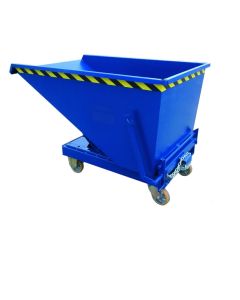
610-liter self-tipping skip in 2.5 mm steel, capacity 1500 kg. Automatic emptying and polyurethane wheels for industrial logistics.
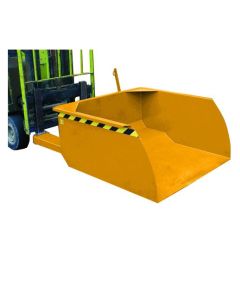
750-liter collection hopper in 4 mm sheet steel for bulk materials. 1,500 kg capacity and tipping discharge operable from the driving position.
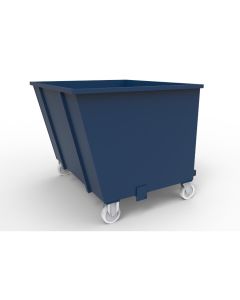
h332_17 carbon steel tipping skip for forklifts. Capacity 1 m³, load capacity 1000 kg, watertight tank and safe remote emptying.
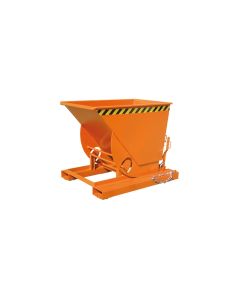
Forklift tipping skip. Capacity: approx. 1.50 m³. Dimensions: W.2280 x D.1420 x H.1070 mm.
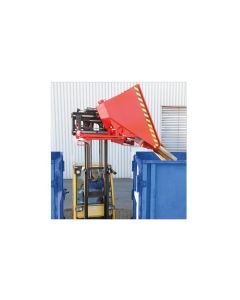
Tilting bucket for forklift. Capacity: approx. 0.30 m³. Dimensions: W.1010 x D.1460 x H.890 mm.
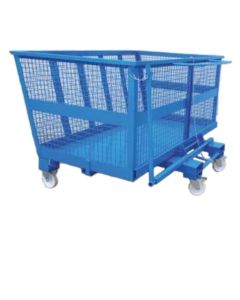
Mesh tilting skip, made of powder-coated carbon steel. Dim: 155x195 x h. 121 cm. bin h.: 90 cm. Load capacity: 1000 kg.
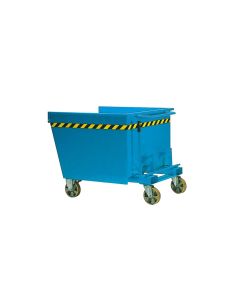
800L steel tipping skip for forklifts, 1350kg capacity. Watertight tank and 160° rotation for the safe discharge of industrial waste.
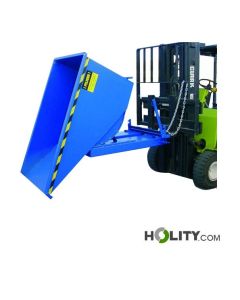
1,100 L self-tipping hopper in 2.5 mm sheet metal for bulk materials. Capacity 2,000 kg, watertight structure and integrated handling.
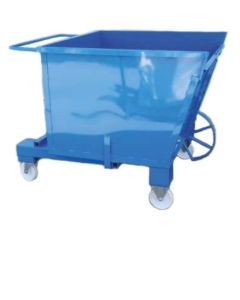
Tipping container in painted carbon steel. Dim: 155x195 x h. 121 cm. tank h.: 90 cm. Load capacity: 2000 kg.
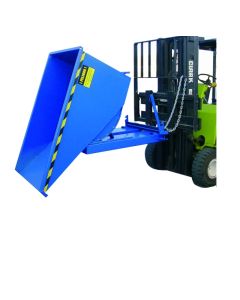
Industrial self-tipping skip in 2.5 mm sheet metal, 1,500 liter capacity and watertight. Ideal for safe unloading via forklift.
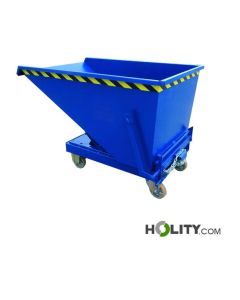
1500-liter self-tipping skip in 2.5 mm sheet metal, dim. 1860x1600x1245 mm. Watertight seal and polyurethane wheels for heavy loads up to 2500 kg.
Tipping skips for forklifts represent a consolidated solution in the handling and storage of materials in industrial and commercial environments. These containers are characterized by the ability to tilt until reaching a complete discharge of the load, significantly reducing operating times and labor use. A tipping skip for forklifts integrates the lifting system of the forklift truck with a manual or automatic tipping mechanism, allowing for the efficient transport of waste, scrap, bulk materials, and debris. The versatility of these containers makes them indispensable in warehouses, construction sites, recycling plants, and manufacturing companies where material management represents a critical aspect of production.
Tipping skips for forklifts offer significant operational advantages in contexts where the transport and unloading of materials are repetitive activities. The main advantage lies in the automation of the unloading process: thanks to the tipping system, the operator does not require additional manual interventions, thus reducing the risk of accidents and accelerating work cycles. The ability to operate with different types of loads—from dry materials to wet waste, from metal scrap to production residues—makes these containers extremely flexible. Furthermore, a tipping skip allows for full use of the available height in depots and warehouses, as unloading occurs vertically or at an angle, without the need for additional lateral space.
From an economic point of view, the investment in a tipping skip pays for itself quickly through the reduction in handling times and the decrease in physical wear and tear on employees. Many companies see a reduction in waste management costs of up to 30% within the first year of use, as the compactness of the load and the absence of dispersion during transport limit the loss of valuable or expensive-to-dispose-of material.
The catalog of tipping skips for forklifts includes several categories, each optimized for specific operational needs. Standard painted steel skips, available in capacities from 300 to 1500 liters, represent the most widespread solution thanks to the advantageous quality-price ratio and compatibility with most forklift trucks. Skips with a grid and tap are dedicated to the transport of liquids or materials that require controlled discharge, ensuring a watertight tank through leak-proof welding and allowing drainage through a lower tap. Self-tipping hoppers differ by their autonomous tipping system, activated by a front button without direct manual intervention, ideal for operations in tight spaces.
Among the more specialized variants, we find scrap skips with controlled rotation via a control lever, which allow for precise tilting up to 160°, and mesh skips made of painted carbon steel, specifically designed for the transport of bulky materials that do not require airtight containment. Dimensions vary considerably: from compact versions with a useful height of 45 centimeters and a capacity of 600 kg, to industrial containers with a tank depth exceeding 90 centimeters and a capacity of up to 2000 kg. The choice of construction material—sheet metal with thickness varying from 2 to 4 millimeters—directly influences durability and resistance to concentrated loads or particularly abrasive materials.
The selection of a suitable tipping skip requires a careful analysis of various technical and operational factors. First and foremost, it is essential to verify dimensional compatibility with the available forklift: the width of the skip must not exceed the forklift’s loading platform, and the capacity of the loaded container (volumetric capacity multiplied by material density) must be less than the lifting capacity declared by the manufacturer. A frequent error is underestimating the specific weight of the materials to be transported: a compact industrial residue can weigh as much as 1000 kg per cubic meter, while a nominally 300-liter skip might only support 600 kg effectively if used with dense material.
The nature of the material to be transported affects the choice of structural configuration. Corrosive materials or liquids require skips with leak-proof welding and a specific protective coating, while dry waste or metal scrap tolerate standard solutions. The operational environment is equally relevant: in tight spaces, a self-tipping hopper reduces maneuvering times; on outdoor construction sites, a mesh skip is preferable for natural drainage. Finally, evaluate the frequency of use: a company with intense daily handling will benefit from a reinforced skip with thicker sheet metal and higher capacity, while sporadic use allows for more economical solutions without compromising functionality.
Tipping skips for forklifts must comply with rigorous technical regulations that guarantee operational safety and product durability. The ISO 1496 standard governs containers for multimodal transport, while the ISO 2876 standard applies to forklift attachments, defining the geometric characteristics of the fork pockets and the structural resistance to dynamic stress. All containers destined for the Italian market must comply with Directive 2006/42/EC relating to machinery safety, even when these are considered "work tools" rather than actual machinery. Furthermore, skips transporting hazardous materials or waste must comply with ADR regulations (European agreements concerning the international carriage of dangerous goods) and national waste management legislation.
From a structural point of view, the painting must guarantee protection against corrosion for at least 5 years under normal climatic conditions, while welding must be performed according to EN 288 standards to ensure mechanical resistance and tightness. Reliable manufacturers provide test certificates attesting to the actual capacity of the container and the resistance of critical elements—such as welding zones and fork pocket attachments—to repeated stresses. The CE marking, when present, indicates compliance with European directives and represents a guarantee of product quality and safety throughout the entire operational life cycle.
Explore all the products in the category and compare the available solutions to find the one best suited to your operational context. Carefully evaluate the capacity, dimensions, and tipping system in relation to your specific handling and storage needs.
The manual skip requires the operator’s intervention to tilt the container, usually via a control lever or a screw mechanism. The self-tipping skip uses a front button that activates automatic tilting, eliminating manual effort and reducing unloading times in tight spaces.
Add the weight of the empty skip (usually between 150 and 400 kg) to the weight of the load you intend to transport. This total must not exceed the maximum capacity declared by the forklift. For example, 300 liters of metal scrap weigh approximately 450 kg, requiring a skip with a capacity of at least 700 kg.
Yes, but only if the skip is certified as watertight with a leak-proof welded tank and equipped with a lower drain tap. Standard skips do not guarantee liquid tightness due to their open construction. Always check the technical specifications for tightness before transporting liquid or wet materials.
Dimensions vary based on capacity. A 300-liter skip measures approximately 1200x820 mm horizontally with a useful height of 80-100 cm. Industrial 1500-liter versions reach 1860x1600 mm. Always check compatibility with your forklift’s loading platform.
With routine maintenance and use according to specifications, a painted steel skip lasts an average of 10-15 years. The protective paint requires annual inspection to identify any scratches or peeling. Humid or corrosive environments reduce the lifespan to 7-10 years if not treated with additional protection.
Capacity is the maximum weight the structure can support without permanent deformation. To calculate the total load, add the weight of the empty skip to the weight of the material (material density × volume). If the total exceeds the declared capacity, the skip could be damaged or cause forklift instability.
Maintenance is minimal: monthly visual check of welds, inspection of the paint, lubrication of tipping hinges if present. For skips with a drain tap, periodically check the seal’s tightness. Regularly clean material residue to avoid buildup that corrodes the steel.
Yes, many manufacturers offer painting in custom colors (for example, RAL 5015 blue for corporate identification). Common accessories include drainage grids, internal dividers, grip handles, and additional anchoring systems. Contact the supplier to check availability and customization times.
 English
  Italian
 French
 German
 Spanish