
mon-fri 9-13 / 14.30-18.30
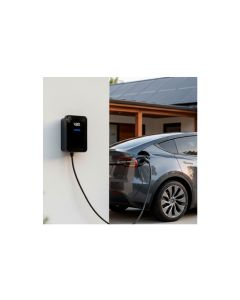
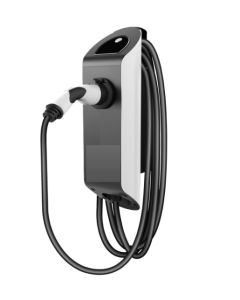
Black single-phase charging station h1044_01 with 5 m Type 2 cable, 2.6” display and dynamic control. Smart integration and automatic recovery.
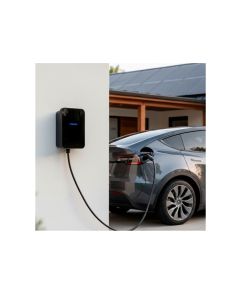
Three-phase charging station 22 kW h1044_05 black. 5 m Type 2 straight cable, 2.6" display, dynamic power control and smart functions.
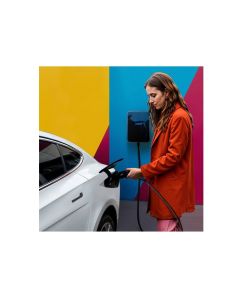
7.4 kW single-phase black charging station h1044_03 with 5 m Tesla cable, 2.6" display and push-button control for flap release.

7.4 kW single-phase charging station h1044_06 in polycarbonate with 4G/Wi-Fi connectivity, RFID/NFC reader and 5-meter Type 2 cable.
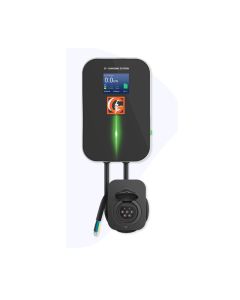
3.7 kW Wallbox h1040_02 charging station for electric cars. Single-phase 220V power supply, IP66 rating for outdoor use and Type 2 socket. Ideal for home use.

22 kW three-phase charging station h1044_07 in polycarbonate with 4G technology, RFID/NFC reader and 5 m Type 2 cable for companies and individuals.
Wall-mounted metal EV charging station, 3.7 kW single-phase. Dimensions 250x200x450 mm. Offline plug-and-play system for private garages and boxes.
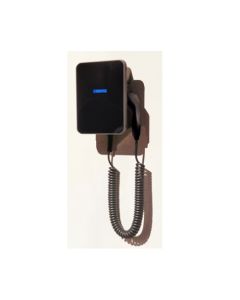
Single-phase charging station 7.4 kW h1044_04 black. 4.5 m Type 2 coiled cable, 2.6" display and dynamic power control.

7.4 kW single-phase black charging station h1044_02 with 10 m Type 2 cable, 2.6" display, smart integration and dynamic power control.
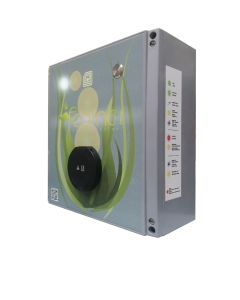
Electric vehicle charging station with 1 Type 2 panel socket, three-phase max. 16A (11 kW). Mounting: wall-mounted.
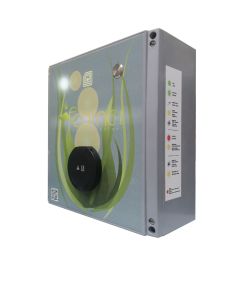
Electric vehicle charging box equipped with 1 type 2 panel socket. Cover, shutter and anti-extraction interlock included.
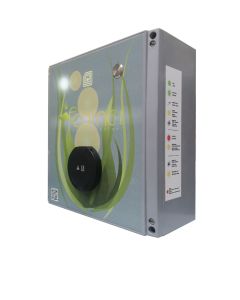
Charging box for electric vehicles in fiberglass-reinforced polycarbonate. Type 2 three-phase socket. Power: max. 32A (22 kW).

Charging column for electric vehicles with 2 Type 2 Mennekes sockets. Dimensions: W. 350 x D. 280 x H. 1300 mm.

Electric car charging station with 2 Type 2 single-phase sockets max. 32A (7 kW) + single-phase max. 32A (7 kW). Material: painted sheet steel.

Electric car charging column, three-phase base version max. 32A (22 kW) + single-phase max. 32A (7 kW).

Charging station for electric cars with 2 Type 2 Mennekes sockets. Three-phase max. 32A (22 kW) + Three-phase max. 32A (22 kW).
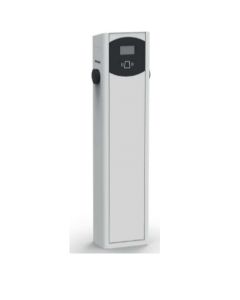
Ground-mounted electric car charging station in galvanized steel with 2 Type 2 7kW sockets. Height 1400mm, ideal for outdoor installations.
The evolution of sustainable mobility has transformed electric vehicle charging stations from a simple technological accessory into critical infrastructure for the HoReCa, commercial, and industrial sectors. The integration of charging points in hotels, hotel chains, and shopping centers represents not only a regulatory adjustment but a strategic asset for attracting high-end clientele and building visitor loyalty through value-added services. Modern charging solutions are distinguished by their ability to manage complex energy flows while ensuring extreme ease of use for the end user and simplified management for the property owner.
Implementing an internal charging network requires a deep understanding of power demand dynamics and the type of users frequenting the physical space, moving from the slow overnight charging typical of hospitality to the rapid charging needed at commercial hubs. The adoption of European standards and universal connector compatibility ensures that the investment remains current over time, allowing for modular scalability based on the growth of the electric vehicle fleet. Choosing the right technology means balancing energy efficiency with material robustness, ensuring service continuity indispensable in high-frequency professional contexts.
The adoption of professional charging stations within hospitality facilities and commercial hubs responds to a growing logistical need arising from the global ecological transition, where electric vehicles are absolute protagonists of private transport. For a hotel or hotel chain, offering the possibility to recharge the car during an overnight stay eliminates one of the modern traveler’s main concerns, transforming the facility into a mandatory stop along long-distance routes.
In addition to the competitive advantage in terms of marketing, installing these infrastructures allows for intelligent management of electrical loads via advanced communication protocols, avoiding local network overloads and optimizing operational costs. The integration of remote monitoring systems also allows for consumption analysis, management of charging rates, and real-time health monitoring of devices, ensuring that every charging point is always operational when needed.
In industrial and corporate settings, charging stations become fundamental tools for managing internal fleets, allowing for a smooth transition toward zero-emission vehicles that drastically reduce maintenance and fuel costs. The presence of visible and functional charging points also communicates a concrete commitment to environmental sustainability, improving brand positioning in the eyes of partners and customers sensitive to ecological issues. The technical reliability of these solutions ensures that the charging process occurs in total safety, protecting both the vehicle’s sensitive electronics and the building’s electrical system from any anomalies or sudden voltage peaks.
The technological landscape of charging infrastructure is divided into several variants designed to meet specific installation needs and delivery speeds. Wall-mounted stations, commonly known as Wallboxes, represent the ideal solution for underground parking lots, hotel garages, or areas where floor space is limited; these units offer a compact design while maintaining high standards of power and smart connectivity.
Conversely, floor-standing bollards are the choice for outdoor areas, shopping center parking lots, and public spaces, thanks to their robust structure in steel or composite materials resistant to atmospheric agents and vandalism. These solutions often allow the simultaneous charging of two vehicles, optimizing the footprint and wiring costs per individual charging point.
From a technical profile, the main distinction lies in the charging mode and power delivered, ranging from 7.4 kW single-phase models up to 22 kW three-phase units for alternating current (AC) charging, typical of contexts where the car is parked for several hours. For fast charging needs, direct current (DC) stations exceeding 50 kW are used, ideal for shopping centers or service stations where user turnover must be fast.
The choice between an integrated cable or a Type 2 socket depends on the service strategy: the integrated cable offers greater convenience to the end user, while the socket alone ensures greater versatility and protects the investment against the risk of wear or damage to the cable in unsupervised environments. Each type is equipped with authentication systems such as RFID readers, mobile applications, or plug-and-charge payment interfaces, allowing for granular control over access.
Identifying the most suitable charging solution requires a detailed analysis of the operational context and the profile of the end user who will benefit from it. In a hotel chain, for example, the priority is often the ease of integration with the facility’s management system, so that the cost of charging can be charged directly to the guest’s room. It is essential to evaluate the power available at the meter and consider the installation of Dynamic Load Management systems, which modulate the energy sent to the vehicles based on the instantaneous consumption of the entire building, avoiding untimely shutdowns during peak working hours.
A common mistake is underestimating the need for connectivity: an isolated station does not allow firmware updates or remote problem solving, risking becoming quickly obsolete or unusable. Conversely, choosing devices compatible with the OCPP (Open Charge Point Protocol) ensures interoperability with different management platforms, leaving the owner free to change service providers without having to replace the hardware.
In the context of shopping centers, where the average stay time is shorter than that of a hotel, it is advisable to aim for higher power levels or a mix of AC and DC charging to satisfy both short-stay visitors and those who stay longer. Mechanical resistance of the product must also be considered, checking the IP protection rating for waterproofing and the IK rating for impact resistance, especially in high-pedestrian and vehicular traffic areas.
Ignoring the scalability of the system is another critical factor; it is always preferable to prepare the basic infrastructure (conduits and electrical panels) for a number of points higher than those initially installed, drastically reducing future expansion costs. The choice must therefore focus on products that offer guarantees of specialized technical assistance and availability of spare parts, vital elements to maintain the high level of service offered to one’s professional clientele.
The installation of electric vehicle charging infrastructure is regulated by a rigorous framework aimed at ensuring personal safety and electrical network stability. In Italy and Europe, the main technical reference is the IEC 61851 standard, which defines charging modes and electrical safety requirements for the onboard and ground systems. Facilities open to the public, such as hotels and shopping centers, must also comply with current fire prevention provisions, especially when stations are located in underground or enclosed parking lots, where proper compartmentalization and emergency shut-off systems become mandatory.
It is essential that every station is equipped with appropriate residual current and overcurrent protection devices, as well as a DC leakage monitoring system to prevent malfunctions of the building’s electrical system. Compliance with the AFID Directive is another fundamental pillar, as it imposes precise standards regarding the accessibility of charging points and price transparency for the end user.
Beyond purely technical aspects, companies must consider requirements related to privacy and personal data processing, especially when stations use apps or RFID cards for user identification, in full accordance with the GDPR. The certificate of conformity issued by the qualified installer at the end of the works is the document that certifies the regular execution of the work and relieves the business owner of civil and criminal liability in case of accidents.
Staying updated on legislative developments is crucial, as tax incentives, tax credits, or regional calls for tenders for the purchase and installation of charging infrastructures are often provided, benefits that can significantly reduce the initial investment cost for businesses in the HoReCa and industrial sectors. Proper design, entrusted to qualified professionals, ensures that the system is not only compliant today but can be easily adapted to future evolutions in international regulations.
Explore all the products in the category and compare the available solutions to find the one most suitable for your operational context.
For hotel facilities, the most suitable solution is usually an alternating current charging station of 7.4 kW or 11 kW per individual point. Since vehicles are mostly parked during overnight hours, these power levels guarantee full battery restoration without requiring excessive increases in the power committed to the general meter.
Yes, professional charging stations are designed with high protection ratings, usually IP54 or IP55, which guarantee resistance to rain, dust, and atmospheric agents. For installations in unsupervised public areas, models with IK10 certification are recommended, the highest class of resistance to mechanical impacts and vandalism.
Certainly, modern stations integrate management systems that allow monitoring the consumption of each individual session. Through the use of personalized RFID cards or mobile applications, the administrator can decide whether to offer the service for free, apply a flat rate, or charge the cost based on the kWh actually delivered to the vehicle.
The use of stations equipped with dynamic load balancing allows for the intelligent distribution of available energy among all connected vehicles. This system avoids exceeding the maximum power threshold of the electricity contract, reducing delivery when necessary and increasing it as soon as other building loads are turned off.
The European standard for alternating current charging is the Type 2 connector, also known as Mennekes. All our charging stations adopt this universal socket, ensuring full compatibility with all electric and plug-in hybrid car models currently on the market on the continent.
Charging stations require minimal but fundamental maintenance, which consists of periodic checks of the efficiency of electrical protection devices and visual inspection of cables and sockets. An annual check by a qualified technician ensures maximum operational safety and prevents downtime that would damage the service image.
Absolutely yes, smart charging stations can be configured to communicate with the photovoltaic system inverter. This allows for maximizing energy self-consumption, charging vehicles mainly with the excess solar energy produced, thereby reducing operating costs and improving the environmental impact of the fleet or guests.
Installation requires a building permit or a notice of commencement of works, depending on local regulations and the power of the plant. A project drawn up by a registered professional and a subsequent declaration of conformity from the installer are mandatory, as well as the updating of the fire prevention certificate if the facility is subject to Fire Brigade controls.
 English
 Italian
 French
 German
 Spanish