
mon-fri 9-13 / 14.30-18.30
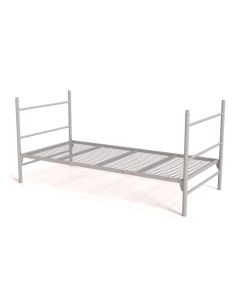
Steel single bed for barracks and prisons (209x99.5x95 cm). Modular structure with 150 kg load capacity, steel mesh and no sharp edges.
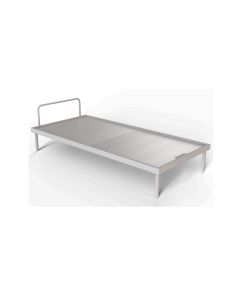
Professional single bed h1033_25 in reinforced steel (Grey RAL 7035). 150 kg capacity, three longitudinal reinforcements and melamine top. Ideal for barracks and communities.
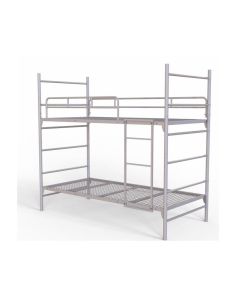
Steel bunk bed for barracks and dormitories (209x99.5x190 cm). Quick assembly in 5 minutes, steel mesh and safe fall protections.
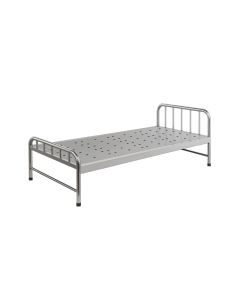
Anti-vandal single bed in AISI 304 stainless steel (1900x900 mm). Dismountable structure with security screws, satin finish. Ideal for barracks and collectivities.
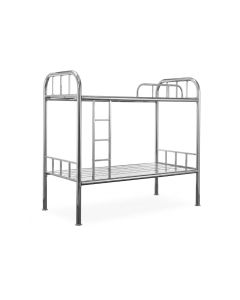
Anti-vandal bunk bed in AISI 304 stainless steel (1900x900x1850 mm). Removable structure with security screws and satin finish for intensive use.
The furnishing of high-intensity collective contexts, such as military facilities and correctional institutions, requires furniture design that prioritizes structural strength and passive safety. Barracks beds and inmate beds are not just simple furniture, but critical infrastructure that must withstand extreme mechanical stress, tampering attempts, and prolonged loads over time, while ensuring high hygiene standards. In these environments, metal—and specifically steel and treated iron—represents the choice of preference thanks to its intrinsic properties of non-combustibility and ease of sanitization, essential requirements for compliance with public safety and collective hygiene regulations.
The selection of a bed system for institutional contexts must consider the need to optimize space without compromising stability. For this reason, bunk models and floor-fixed solutions represent the standard for prison beds and common dormitories, where every square centimeter must be managed with operational efficiency. These products are designed with reinforced joints and anti-tamper fastening systems, minimizing the presence of removable elements that could be used improperly or dangerously within a detention section or a professional military barrack.
The choice of specific equipment for the defense and prison administration sector responds to logic of durability that far exceeds those of the standard residential or hotel market. A steel bed for correctional facilities must be conceived as a single body, capable of withstanding not only body weight but also acts of vandalism or unauthorized disassembly attempts. The use of increased thickness tubular profiles and electro-welded meshes integrated into the frame eliminates structural weak points, ensuring that the structure remains intact even after decades of continuous and heavy use. Corrosion resistance, achieved through high-temperature epoxy powder coatings, prevents deterioration caused by humidity or aggressive detergents.
In addition to robustness, a decisive factor in choosing these solutions is the prevention of health risks, such as pest infestations, a recurring problem in crowded dormitories. Metal structures offer very few hiding places compared to wood, facilitating disinfection operations and ensuring a healthier environment for occupants and surveillance personnel. Furthermore, the fire-retardant nature of the materials used for inmate beds is fundamental to limit the fire load inside cells or dormitories, offering passive protection that is required by law in all premises used for the overnight stay of large groups or persons under liberty restriction regimes.
Construction variants are mainly divided between single beds and iron bunk beds, each designed for specific volumetric needs. Barracks bunk beds are often equipped with quick-connect but extremely stable systems, with integrated ladders and fixed protection rails that cannot be accidentally removed. For maximum security correctional facilities, “monoblock” models or those prepared for chemical or mechanical floor and wall fixing are preferred instead, transforming the bed into an integral part of the building. This configuration prevents the movement of furniture, an essential security measure to maintain order and visual control within common living spaces.
Another relevant distinction concerns the mattress support base. While barracks often use metal mesh or flexible steel slats to improve the comfort of personnel on duty, for prison beds, perforated sheet metal tops or tight-mesh electro-welded meshes are frequently chosen. The latter are designed to prevent objects from being hidden between the mesh patterns or the mesh itself from being cut and manipulated. Surface finishes are usually made in neutral and resistant colors, capable of maintaining a professional and clean appearance despite the intensive cleaning cycles and daily mechanical wear they are inevitably subjected to.
To correctly select the most suitable bed system, it is necessary to analyze the risk profile and the rotation intensity of the occupants. In a barrack, the priority is often the balance between comfort and space optimization; here, the choice of a military bunk bed with integrated storage compartments or compatibility with under-structure trunks allows for better management of the soldiers’ personal belongings. Conversely, in a prison setting, the absolute priority is the absence of sharp edges and removable components. One must ask if the environment requires “anti-suicide” or “anti-vandalism” type furniture, technical terms that identify products with completely welded joints and the total absence of visible bolts, minimizing any potential risk for the safety of the guest and the operator.
A common mistake consists in underestimating the quality of the welding and the thickness of the steel. Initial savings on less structured products often translate into extremely high maintenance costs and the need to replace the entire bed fleet after a few years due to structural failure or mesh deformation. It is essential to verify the certified load capacity for each bed level, especially for prison bunk beds, where static and dynamic loads can be considerable. The choice must therefore fall on suppliers who can guarantee material traceability and compliance with ministerial or international technical specifications, ensuring that the investment is sustainable in the long term and respects occupational safety and reception regulations.
Beds intended for communities and penal institutions must respond to stringent European and national regulations, including the UNI EN 747 standard for bunk beds, which defines safety, strength, and durability requirements. These standards cover crucial aspects such as the height of protection rails, the distance between slats or mesh patterns, and the overall stability of the structure to prevent accidental tipping. In military and prison sectors, specific technical specifications are often added, imposing dynamic load resistance tests superior to the standard norm, to simulate intensive and sometimes improper use of the equipment in emergency contexts or social tension.
Fire safety compliance is another insurmountable regulatory pillar. Metal structures are by definition in class A1 (non-combustible), but the entire bed system, including mattresses and coordinated accessories, must respect the fire reaction classes established by the Ministry of the Interior for communities. In beds for correctional facilities, safety is integrated into the design: the absence of accessible gaps reduces the risk of concealment of unauthorized substances or objects, facilitating periodic checks by police personnel. Complying with these requirements is not only a legal obligation but a guarantee of operational continuity for the managing body, reducing civil and criminal liabilities in the event of accidents within the residential structure.
Explore all products in the category and compare the available solutions to find the one best suited to your operational context.
The steel used in prison beds offers superior tensile and corrosion resistance compared to common iron. This material allows for the creation of lighter but extremely rigid structures that do not deform under load and better resist mechanical tampering attempts typical of detention environments.
Yes, many models of beds for barracks and correctional facilities are equipped with perforated plates at the base of the legs to allow permanent fixing using heavy-duty anchors or chemical anchors. This practice is essential to ensure maximum stability and prevent unauthorized movement of furniture in common spaces.
Military bunk beds must comply with the UNI EN 747 standard, which requires continuous protective rails on all four sides of the upper level and a secure access ladder. Furthermore, welds must be certified to withstand repeated dynamic loads, ensuring the safety of personnel even in rapid-use contexts.
Prevention of concealment is achieved through a simplified design that eliminates open tubes, cavities, and gaps. The use of tight-mesh electro-welded meshes or solid sheet metal surfaces prevents the hiding of prohibited objects under the mattress or inside the structure, facilitating visual inspections by surveillance personnel.
Bed structures made entirely of iron or steel are classified as non-combustible (Class A1). For complete safety, these structures must be paired with mattresses and pillows certified fire-retardant in Class 1IM, minimizing the risk of flame propagation within cells or dormitories.
Maintenance is minimal and consists of periodic checks on the integrity of the welds and the tightening of any anti-tamper bolts. The powder-coated surface can be sanitized with hospital-grade detergents or chlorine-based solutions without suffering damage, ensuring maximum hygiene in high-rotation environments.
For high security, monoblock models without any moving or removable parts are used. Every component is fully welded, and the structure is designed to be anchored to both the floor and the wall, eliminating any potentially dangerous attachment points and making the bed a fixed and inviolable element.
 English
  Italian
 French
 German
 Spanish