
mon-fri 9-13 / 14.30-18.30
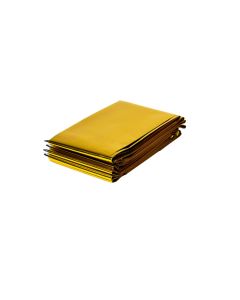
Pack of 200 pieces
€172.80 VAT incl.Disposable emergency thermal blanket in gold/silver PET 210x160 cm. DIN EN ISO 11092 certified thermal protection, professional pack of 200 pieces.
Pack of 180 pieces
€274.32 VAT incl.Isothermal blanket 210 x160 cm.
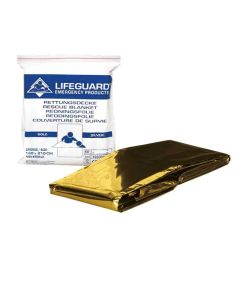
Pack of 50 pieces
€105.60 VAT incl.Emergency blanket for protection from heat or cold. Dimensions: 160 x 210 cm.

Pack of 50 pieces
€111.00 VAT incl.Thermal sheet for patient rescue operations. Dimensions: 160 x 210 cm. With layer for protection from heat and layer for protection from cold.
Pack of 140 pieces
€473.76 VAT incl.Isothermal blanket for first aid. Class I medical device
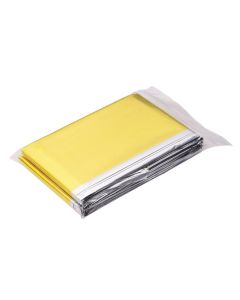
Pack of 5 pieces
€25.44 VAT incl.Emergency thermal blanket. Dimensions: 210 x 160 cm
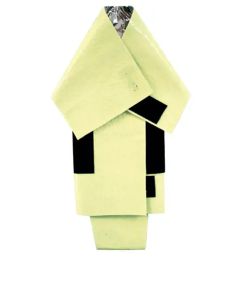
Life-saving emergency blanket with double insulation for heat maintenance in the head and chest area. Suitable for body sizes from 50 to 90 cm.
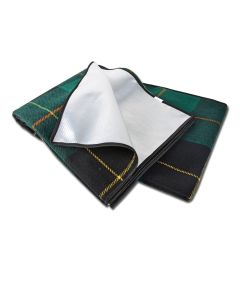
Pack of 4 pieces
€213.41 VAT incl.Multipurpose emergency blanket, washable, waterproof. Dimensions: 200x150 cm.
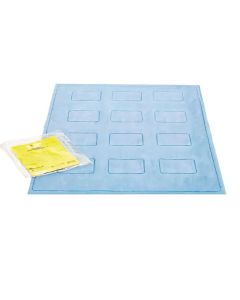
Isothermal blanket for first aid operations. Dimensions: 86 x 122 cm. Suitable for protection against hypothermia.

Emergency thermal sheet with heat pads. Dimensions: 86 x 122 cm. Can also be used as a transfer sheet.

Emergency blanket with thermal pads. Dimensions: 86 x 152 cm. Capable of maintaining heat for 10 hours.

100% waterproof emergency thermal blanket. Dimensions: 90 x 110 cm. Washable and reusable.
Emergency thermal blankets represent an essential medical device in every first aid context, both in civil environments and in specialized healthcare facilities. These devices, characterized by a polyethylene and aluminum structure, play a critical role in the thermal stabilization of patients affected by trauma, burns, hypothermia, or heat stroke. Their effectiveness depends on the ability to reflect or dissipate body heat, operating through a double-sided system that allows versatile use in different emergency situations. Their lightness and minimal bulk make them indispensable components for portable rescue kits, emergency backpacks, and medical equipment for critical facilities.
The use of emergency thermal blankets brings specific and measurable benefits in the context of first aid and pre-hospital management. The thermoregulating capacity allows for preventing or counteracting accidental hypothermia, a frequent complication in major traumas that can significantly worsen clinical conditions. The dual functionality, with a silver side for heat and a gold side for cold, allows for addressing opposite scenarios with a single device, reducing the amount of material to be transported and simplifying intervention procedures. In case of extensive burns, the isothermal blanket protects the damaged areas by reducing evaporation and maintaining a stable environment until arrival at the hospital facility. In the context of heat stroke, reflecting heat outwards contributes to reducing body temperature non-invasively.
Emergency thermal blankets find practical application in multiple operational scenarios: mountain emergencies, civil protection interventions, ambulance and rescue center equipment, university and sports facilities, healthcare structures, and even domestic contexts where the first intervention makes the difference. Their waterproof nature also makes them suitable for humid environments or wet surfaces, where contact with water does not compromise the insulating functionality. Mechanical resistance allows for repeated use during patient assessment and monitoring without risk of tearing, while the absence of toxicity makes them safe even in prolonged contact with the skin. Numerous healthcare facilities integrate them into permanent equipment because their versatility reduces the need for frequent replacements.
The catalog of emergency thermal blankets is divided according to various construction and functional variables. The disposable 210x160 cm gold/silver PET blankets represent the most widespread solution in professional packaging: lightweight, packaged in high quantities (200 pieces), they guarantee an optimal economic ratio for facilities requiring frequent replacement. Isothermal polyester blankets maintain similar characteristics but offer greater mechanical strength, suitable for contexts where repeated use is expected before disposal. Smaller sized sheets (86x122 cm) are also available for situations where space is limited or for pediatric patients, while larger versions (200x150 cm) ensure full coverage even on robust body types.
A specific category concerns thermal sheets with integrated thermal pads, which maintain heat for prolonged periods (up to 10 hours) and include additional patient transfer functionality thanks to structured handles. There are versions dedicated to severe hypothermia with double insulation concentrated in the head and chest area, designed for specific body sizes (50-90 cm). Reusable and washable blankets represent a sustainable solution for contexts where the volume of use does not justify frequent disposal: 100% waterproof, they withstand repeated washing cycles without loss of insulating efficiency. The differentiation between packs of 5, 15, 50, 180, and 200 pieces allows the purchase to be adapted to the operational scale of the facility, from a single post to an extended network supply.
Selecting the appropriate thermal blanket requires a systematic evaluation of several decision criteria. The first element concerns the scale of use and the frequency of intervention: a facility with a high number of annual emergencies will benefit from economical packs of 180-200 disposable pieces, while a secondary post or domestic equipment can opt for smaller quantities. Patient size represents a critical criterion often underestimated: compact versions (86x122 cm) are insufficient for average-sized adults, while standard sizes (210x160 cm) offer adequate coverage in most cases. Durability and reusability gain increasing importance if the blanket must support prolonged phases of clinical evaluation and monitoring, such as in hospital environments where internal transport and triage phases require repeated contact with the device.
A frequent error consists in underestimating the importance of integrated thermal pads in severe hypothermia scenarios, where maintaining the temperature for 10 hours can make the difference between full recovery and irreversible complications. The choice between disposable and reusable also depends on the cross-infection prevention policy: in contexts where treatment of patients with known infectious diseases is frequent, replacement at each intervention (disposable) represents the safety standard. Facilities with limited resources can opt for hybrid solutions, maintaining a core of reusable blankets for frequent use and a reserve of disposables for complex emergencies. Practical experience suggests checking the compatibility of the chosen blanket with existing transport systems (stretchers, carriers, evacuation chairs), as non-compliant dimensions can compromise operational efficiency during hectic interventions.
Emergency thermal blankets are regulated as medical devices, with classification generally referred to Class I according to the EU 2017/745 (MDR) regulation. The most relevant technical certification is represented by the DIN EN ISO 11092 standard, which specifies the thermal protection parameters and testing methods for insulating capacity. This standard ensures that the device maintains a minimum temperature difference between the inside and the outside, validating the functionality declared by the manufacturer. Blankets intended for direct contact with the skin must comply with biocompatibility requirements according to ISO 10993, excluding the presence of allergenic or irritating substances. CE marking is mandatory for marketing in the European area and represents the declaration of conformity with essential safety and performance requirements.
At an operational level, healthcare facilities and emergency services must verify the regulatory compliance of suppliers through technical documentation and certificates of origin, an element often overlooked in the acquisition of supplies. Storage represents an underestimated regulatory aspect: thermal blankets must be stored in dry environments, away from direct sunlight, to preserve their insulating properties over time. Extreme temperatures (below -10°C or above +50°C for prolonged periods) can compromise the integrity of the aluminum and polyethylene, reducing the effectiveness of thermal reflection. Sealed packages generally maintain a guaranteed validity of 5 years, with periodic checks suggested to verify the absence of internal condensation or signs of deterioration. Lot traceability, particularly relevant in case of market recalls, requires a recording system that collects the lot number and expiration date for each shipment received.
Explore all products in the category and compare the available solutions to find the one best suited to your operational context. Each blanket is selected according to strict quality standards and international certifications, ensuring reliable performance in critical situations.
The silver side reflects heat inwards and protects against the cold, while the gold side reflects heat outwards, protecting against heat stroke. In case of hypothermia or trauma with heat loss, face the silver side toward the patient. In case of heat stroke, position the gold side internally to allow the dissipation of body heat.
It depends on the type. Disposable PET blankets must be disposed of after a single use, while polyester versions or those specifically labeled as reusable can be washed and reused. 100% waterproof washable blankets maintain their effectiveness even after repeated washing cycles, representing an economical solution for facilities with a high volume of interventions.
Standard 210x160 cm dimensions are suitable for average-sized adults, ensuring full coverage from shoulders to feet. Smaller versions (86x122 cm) are suitable for pediatric patients or when space is limited. For robust body types, verify that the length exceeds 200 cm to avoid accidental exposure during transport.
Thermal sheets with integrated pads maintain heat for about 10 hours, ensuring prolonged protection during extended rescue phases or long transports. This functionality is particularly relevant in severe hypothermia scenarios where maintaining temperature is critical until arrival at the hospital facility.
Yes, certified thermal blankets must comply with the DIN EN ISO 11092 standard for thermal protection and EU 2017/745 for medical devices. Always check for the CE marking on the package and request technical documentation from the supplier, which is essential for the compliance of hospital acquisitions.
For disposable blankets, reuse is discouraged for reasons of hygiene and prevention of cross-infections. Reusable versions can be reused only after a proper disinfection procedure between interventions, following the protocols of the reference healthcare facility.
Store in dry environments, away from direct sunlight and extreme temperatures (avoid environments below -10°C or above +50°C). Sealed packages maintain validity for about 5 years. Periodically check for the absence of internal condensation or signs of deterioration of the aluminum and polyethylene.
It depends on the operational volume: facilities with frequent emergencies benefit from packs of 180-200 pieces for a reduced unit cost, while secondary posts or domestic equipment can start with packs of 5-50 pieces. Evaluate the average annual usage rate and available storage space before ordering.
 English
  Italian
 French
 German
 Spanish