mon-fri 9-13 / 14.30-18.30
Special waste containers represent an essential solution for the compliant management of hazardous and unconventional materials within public, healthcare, commercial, and industrial facilities. These collection systems are designed according to strict regulations to ensure isolation, traceability, and safety during the temporary storage of waste such as expired medicines, spent batteries, used mineral oils, printer toners, and discarded electronic equipment.
The correct segregation of special waste is not only a regulatory obligation but an essential practice to prevent environmental contamination, protect the health of operators, and subsequently facilitate treatment and recovery at specialized centers. Facilities that handle these materials—hospitals, pharmacies, offices, shopping centers, and production plants—require reliable, durable, and certified solutions to meet the specific needs of each type of waste.
The choice of the appropriate container depends on the chemical-physical composition of the material to be stored, the expected quantities, the frequency of emptying, and the environmental conditions of the storage site.
The use of specific containers for special waste offers significant operational and regulatory advantages that directly reflect on the safety of the work environment and the administrative compliance of the entity responsible for management. These collection systems reduce the risk of cross-contamination, prevent hazardous materials from being mixed with ordinary waste, and facilitate traceability throughout the management chain, from collection to delivery at authorized plants.
The main benefits include the protection of the health of cleaning and handling personnel, the prevention of environmental dispersion, the reduction of costs related to administrative sanctions, and the ability to correctly document disposal procedures in the event of inspections. Furthermore, containers certified and compliant with current standards facilitate collaboration with specialized disposal companies, which immediately recognize the correct preparation of materials and can proceed with optimized timelines.
Healthcare facilities, pharmacies, and centers where a variety of hazardous waste accumulates daily find in these containers a solution that combines management practicality with regulatory rigor. The implementation of an orderly separate collection system for special materials also leads to indirect savings: it reduces the administrative burden linked to non-compliant management, avoids interruptions in operational activity resulting from inspection blocks, and improves the perception of reliability among customers, suppliers, and control bodies.
Investing in quality containers translates into a significant reduction in risks related to the incorrect handling of potentially toxic, flammable, or corrosive materials, while protecting the external ecosystem from the consequences of improper disposal.
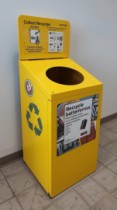
The landscape of special waste containers is extremely varied and responds to the physical-chemical characteristics of each waste category. Containers for expired medicines, for example, are made of thick-walled plastic material with a secure snap-on lid and often feature a compact design ideal for premises with limited space such as small pharmacies or medical offices. Containers for spent batteries must guarantee internal insulation that avoids accidental contact between opposite poles, thus preventing spontaneous combustion; these models often integrate separate compartments for different types of batteries.
Used oil containers tend to have a larger capacity and require superior structural strength because mineral fluid is heavier and more corrosive; they are made of painted steel or high-density polyethylene with internal reinforcements. Used toner containers feature charging ports designed to reduce dust dispersion and usually include internal filters to contain particulate matter. Finally, containers for toxic and harmful waste are characterized by specific certifications relating to chemical resistance and impermeability, essential when dealing with materials that are highly hazardous to the environment.
Micro WEEE—small electrical and electronic waste such as chargers, cables, small tools—require containers with structured containment systems to avoid leakage of liquid substances or the dispersion of fragments during transport. Construction variants range from simple smooth-walled containers to models with modular internal compartments, integrated locks, and facilitated handling systems with wheels or ergonomic handles for high-volume collection structures.
The choice of size depends on the frequency of use: facilities with high special waste generation opt for 50-100 liter containers with weekly emptying, while offices or small clinics lean towards compact 10-20 liter models. The construction material also varies significantly: resistant plastic for indoor use, galvanized steel for humid or corrosive environments, and special composites for particularly chemically aggressive waste.
Selecting the appropriate container requires a thorough preliminary assessment based on several technical and organizational factors. First of all, it is necessary to precisely identify the type of special waste to be managed: medicines, batteries, oils, toner, or other; not all containers are suitable for all materials, as some present chemical incompatibilities or reaction risks.
It is necessary to estimate the average volume generated in the period between two consecutive emptyings, considering both seasonal peaks and periods of lower activity, to avoid undersized containers that lead to frequent uncontrolled storage on one hand, and oversized solutions that occupy valuable space without justification on the other. A common mistake is selecting the container based on the lowest price without evaluating durability, the number of emptyings possible before replacement, and compatibility with the transport vehicles used by the authorized disposal company.
Critical aspects are also the ease of identifying the contents—through standardized labeling, color coding, or prominent markings—essential for both operators and transport workers, and the accessibility of the loading port in relation to the physical abilities of the staff and the frequency of use. Facilities with many dispersed users (hospitals, universities, shopping centers) benefit from containers with easy closing systems and dimensions that allow for easy positioning at collection points.
Compliance with local regulations and internal company guidelines represents a further discriminating criterion: some entities require specific certifications, integrated traceability systems, or particular construction materials. Consulting the authorized collection manager in advance helps avoid logistical incompatibilities and ensures that the chosen container is effectively recognizable and manageable according to the disposal company’s operational protocols.
The management of special waste in Italy is regulated by Legislative Decree no. 152 of April 3, 2006 (Environmental Code), which defines categories, identification methods, classification, and management of these materials. Each special waste is identified by a CER code (European Waste Classification) which determines the hazard profile and the applicable disposal procedures.
The containers used must guarantee the complete containment of the material during temporary storage, prevent access by unauthorized persons, facilitate immediate identification of the contents, and comply with specific chemical-physical resistance standards for each waste type. For toxic and hazardous waste, even more stringent requirements apply, with obligations for periodic inspection, meticulous documentation, and temporary storage limited to twelve months for hazardous waste, and three years for non-hazardous waste.
At the European level, Directive 2008/98/EC establishes the principle of extended producer responsibility for waste, which remains legally responsible until correct treatment and final disposal. This constraint makes the use of containers that guarantee complete traceability and documentation throughout the entire chain fundamental. Furthermore, specific sectoral regulations govern certain categories: expired medicines are subject to the EIDF (European Illegal Drugs Forum) protocol with branded containers, used oils require compliance with Directive 75/439/EEC and subsequent amendments, while electronic waste must comply with the WEEE Directive 2012/19/EU.
At the corporate level, many facilities implement additional internal standards through the Environmental Management System (ISO 14001 certifications) or voluntary disciplinary codes that provide for additional checks on the quality and integrity of the containers themselves. Worker safety is protected by Legislative Decree 81/2008, which imposes specific risk assessments during the handling and transport of hazardous waste, influencing the choice of ergonomic and certified containers.
Explore all products in the category and compare the available solutions to find the one best suited to your operational context. From collection to identification, from capacity to chemical resistance, every detail of the container impacts the safety, compliance, and efficiency of management.
Special waste is generated by specific economic activities (hospitals, industries, shops) and differs from urban waste by origin and characteristics. Among these, hazardous waste is a subcategory with properties that make it toxic, flammable, corrosive, or explosive. Not all special waste is hazardous, but all hazardous waste requires certified management and containers.
A pharmacy typically needs at least one container for expired medicines and one for minor medical waste. If present, add containers for batteries (from meters) and printer toner cartridges. The size depends on the inflow volume and the emptying frequency agreed upon with the authorized collection company.
No. Used oil containers are certified for that specific type of waste. Using them for other liquids like solvents or acids involves risks of chemical reaction, container corrosion, and regulatory non-compliance. Each category requires a dedicated and identified container.
Temporary storage of non-hazardous special waste can last up to three years, while for hazardous waste the limit is twelve months from the storage date. After these terms, the person in charge must initiate the disposal procedure at authorized plants, subject to significant penalties.
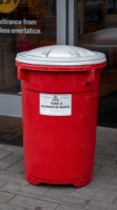
Each container must bear a clearly visible label with the waste EWC code, description of contents, storage start date, and the name of the person responsible. Many also use standardized color codes: red for hazardous, yellow for medicines, blue for batteries, brown for oils. Clear labeling avoids errors and simplifies inspections.
Containers for highly hazardous materials must have chemical-physical resistance certification, compliance with UN standards for the transport of dangerous goods if applicable, and resistance to mechanical stress. Homologation documents and detailed technical sheets must accompany the product at the time of purchase.
 English
  Italian
 French
 German
 Spanish