
mon-fri 9-13 / 14.30-18.30
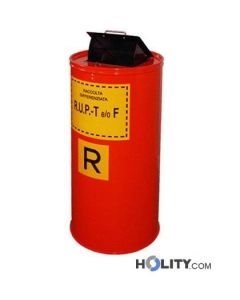
Hazardous waste container made of red enameled steel. Vertical cylindrical shape with flat bottom. Capacity: 100 liters. Dimensions: Ø 400 x H.800 mm.
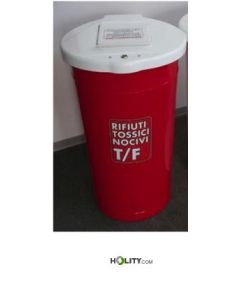
Container for toxic and harmful waste with anti-intrusion lid in rotational HDPE. Capacity: 105 l. Height from ground: 95 cm.
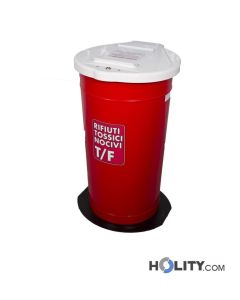
T/F toxic waste collection container with anti-intrusion lid and metal base. Capacity 105 lt.
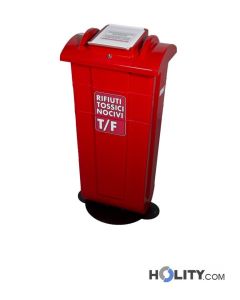
Container for toxic and harmful T/F waste with anti-intrusion lid. Metal base. Capacity: 90 liters. Material: polyethylene with rotational molding technique.
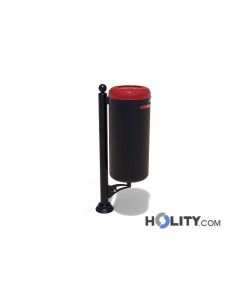
T/F toxic and harmful waste container in galvanized sheet metal with anti-intrusion lid. Capacity: 70 liters.
Containers for toxic and harmful waste represent specialized solutions for the safe management of hazardous waste from industrial, commercial, healthcare, and domestic activities. These devices must ensure the complete isolation of harmful materials from the surrounding environment, preventing atmospheric dispersion and soil contamination. The choice of the correct type depends on the nature of the waste, the quantity generated, and local disposal regulations. Hospital facilities, pharmacies, chemical companies, laboratories, and waste collection centers require different configurations to fully meet their environmental compliance and occupational safety obligations.
The effective management of hazardous waste involves complex technical and regulatory challenges. An unsuitable container exposes the organization to health risks, administrative penalties, and reputational damage. Specialized containers for toxic and harmful waste offer physical protection through materials resistant to impacts, chemical agents, and extreme temperatures. Rotomoulded polyethylene, enamelled steel, and HDPE are specifically chosen to prevent corrosion, leaks, and degradation over time. Furthermore, these containers facilitate visual identification of the contents through standardized coloring (red for toxic, yellow for expired medicines) and certified labeling systems, reducing the risk of errors during collection and transport to authorized disposal centers.
Modulated dimensions (from 70 to 120 liters) allow the solution to be adapted to realities of various sizes: a small pharmacy requires reduced capacity, while a chemical industry needs larger volumes with the possibility of frequent filling. Anti-intrusion lids ensure that animals and unauthorized persons cannot access the contents, a critical aspect in public contexts and at high-traffic sites. The ease of cleaning and disinfection, thanks to smooth surfaces without dead corners, extends the useful life of the product and maintains adequate hygienic standards.
The market offers various construction configurations to meet specific needs. Polyethylene containers obtained by rotational moulding guarantee uniform thickness, absence of critical joints, and homogeneous mass distribution, characteristics that make them extremely resistant to impacts and daily mechanical stress. This production process allows for rounded shapes that do not have sharp edges, further reducing the risk of injury during handling. Enamelled steel containers, on the other hand, offer greater structural stability and load resistance, making them ideal for environments with heavy traffic or where a completely waterproof base is required. The integrated metal base in T/F (Toxic/Medicines) models represents a construction element that prevents any infiltration from below, a critical factor in areas subject to moisture or occasional flooding.
Regarding capacity, standard models range between 70 and 105 liters, with heights from the ground fluctuating between 800 and 950 millimeters, dimensions calculated to allow ergonomic insertion of materials without the need for risky postures. The lids represent a differentiating element: those in HDPE (high-density polyethylene) offer lightness and chemical resistance, while ABS (acrylonitrile butadiene styrene) lids provide greater rigidity and longevity in environments with fluctuating temperatures. Some models include intrusion prevention systems through facilitated but secure closing mechanisms, particularly important in school contexts and at public facilities where uncontrolled access represents a concrete danger.
Choosing the appropriate container begins with the classification of the specific waste intended for collection. Paint residues, pesticides, chemical solvents, expired medicines, and empty spray cans have different chemical-physical characteristics and may require different isolation. For example, volatile solvents benefit from airtight lids in chemically inert material, while expired drugs mainly require protection from moisture and bacterial contamination. A frequent error consists of underestimating the actual volume of waste generated in a given period (monthly or quarterly): overestimating leads to economic inefficiencies, while underestimating leads to overflows and regulatory non-compliance. It is advisable to analyze historical production data and apply a safety margin of 20-30% when selecting capacity.
A second decision criterion concerns the placement environment: covered areas with climate control allow the use of rotomoulded polyethylene containers, while rooms with exposure to direct UV rays or extreme temperatures require materials with higher protection factors. Spaces with frequently wet flooring (for example, near washrooms in hospital facilities) make a waterproof metal base mandatory. Contexts with high pedestrian traffic need containers with a very low lid profile to reduce the risk of tripping. Finally, evaluate the emptying logistics: some disposal agencies prefer containers with a height of less than 1 meter for ease of handling with mechanical arms, while others require specific traceability certifications via unique codes printed on the container body. Consulting in advance with the local waste manager avoids costly post-purchase adjustments.
The collection of toxic and harmful waste in Italy is regulated by Legislative Decree April 3, 2006, n. 152 (Environmental Code) and by specific regional regulations. At the European level, Directive 2008/98/EC establishes the general principles for hazardous waste management, including obligations for segregation, labeling, and documentation. A universal requirement stipulates that containers be marked with clearly visible danger symbols and identify the type of waste contained through standardized coloring and legible text. Toxicity, harmfulness, or irritability symbols must remain visible and intact throughout the container’s duration of use. The ISO 3864 standard specifies the visibility and color criteria for symbols, ensuring that even people with impaired color vision can recognize the danger.
Further regulatory-construction obligations concern the containment capacity in case of accidental spillage: containers for volumes exceeding 50 liters must be equipped with controlled drainage systems or secondary collection basins to prevent soil contamination. The Ministry of the Environment Guidelines also require that containers be inspected periodically (at least annually) to verify physical integrity, leaks, corrosion, and lid wear. Healthcare facilities are subject to even stricter protocols according to biosafety standards: containers for potentially infectious waste must completely isolate the contents, with lids that close automatically after each insertion. CE compliance documentation and chemical-physical material test certificates must accompany the purchase, representing essential evidence in case of inspection or environmental litigation.
Explore all the products in the category and compare the available solutions to find the one best suited to your operational context. Choosing an appropriate container represents an investment in environmental safety and regulatory compliance for your organization.
The main materials are rotomoulded polyethylene (resistant to impacts and chemical agents), enamelled steel (for structural stability) and HDPE for the lids. The choice depends on the type of waste: solvents and acids require polyethylene, while humid environments need waterproof metal bases to prevent infiltration from the bottom of the container.
A medium-sized pharmacy typically generates 30-50 kilograms of expired medicines quarterly. A 70-liter container is generally sufficient if emptied every two months. Analyzing historical production data and consulting the authorized disposal agency avoids incorrect choices that would lead to additional costs or non-compliance.
Yes, they are mandatory in public contexts, at schools, and healthcare facilities according to safety regulations. They prevent accidental access by children or animals to hazardous waste, drastically reducing the risk of poisoning. Even in controlled private environments, they represent a fundamental protective element against contamination from atmospheric agents and pests.
Ministerial guidelines require inspection at least annually to verify physical integrity, absence of leaks, lid condition, and identification coloring. Environments with highly corrosive waste or extreme temperatures require more frequent checks (six-monthly). Documentation of each inspection must be kept for three years as evidence of management diligence.
In Italy, the Environmental Code (Legislative Decree 152/2006) and regional guidelines establish that toxic waste be identified with red containers and specific labels with danger symbols according to the ISO 3864 standard. The text must clearly indicate the type of waste and the prohibition of mixing with other waste to ensure traceability during transport.
No, European and Italian regulations expressly prohibit the mixing of waste with different chemical properties. A container must be intended for a specific category (for example, solvents or expired medicines). Accidental mixtures require supplementary documentation and can jeopardize the authorized disposal process, increasing costs by up to 40 percent.
Generators of less than 10 kilograms of hazardous waste per month (small generators) can deliver to collection centers with simplified logistics. The container must remain sealed during transport, be accompanied by waste identification forms, and be transported by trained personnel. Damaged or visibly deteriorated containers must not be transported and require immediate replacement.
Request the CE certificate of construction compliance, chemical resistance tests carried out on samples (according to UNI and ISO standards), food safety certificate for materials if the container could indirectly come into contact with food, and the manufacturer’s declaration of conformity certifying impact resistance from a specified height. These documents are essential evidence in case of an environmental inspection.
 English
  Italian
 French
 German
 Spanish