
mon-fri 9-13 / 14.30-18.30
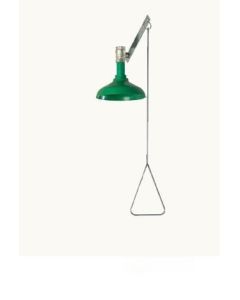
Vertical emergency shower installed directly to the ceiling. Galvanized steel structure. Plastic shower head.
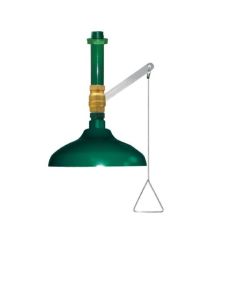
Vertical safety shower installed directly to the wall. Structure in ABS. Total height: 609 mm.
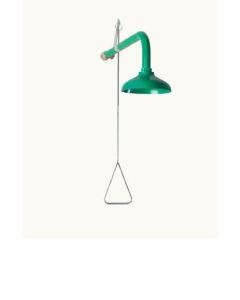
Horizontal emergency shower installed directly to the wall. Structure in galvanized steel. Plastic shower head.
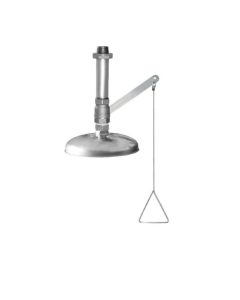
Vertical shower in stainless steel with wall-mounted installation. Total height: 609 mm.
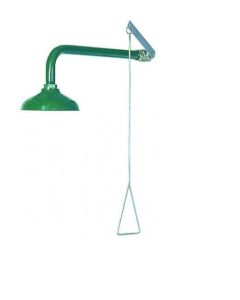
Wall-mounted emergency shower in steel manual operation
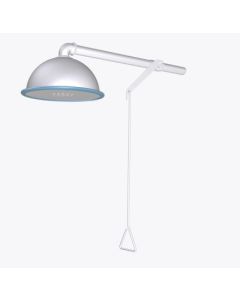
Wall-mounted emergency shower for emergencies with manual control.
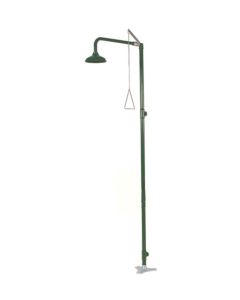
Shower column ideal for workplace safety. Operation via triangular handle. Available in plastic or stainless steel.
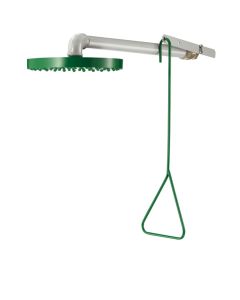
Emergency shower with wall mounting. Material: galvanized steel. Dimensions: W12 x D38 x H42 cm.
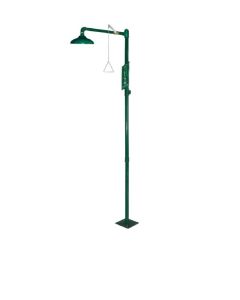
Emergency shower with ABS pedestal with automatic opening. Green epoxy finish. Total height: 2310 mm.
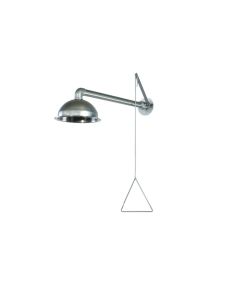
Wall-mounted emergency shower in AISI 304 stainless steel.
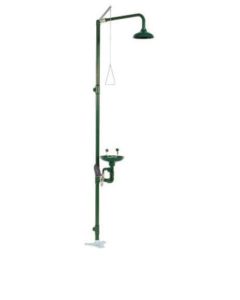
Emergency shower with ABS eyewash and shower head. Automatic opening via handle. Height: 245.6 cm
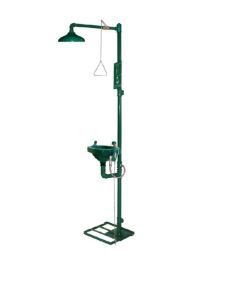
Safety shower with eye wash in ABS. Equipped with triple control. Total height: 2456 mm.
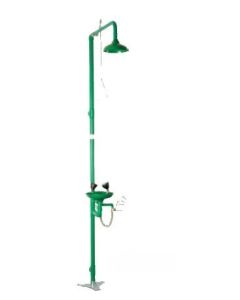
Emergency shower column ideal for workplace safety. Steel structure. Equipped with eye wash.
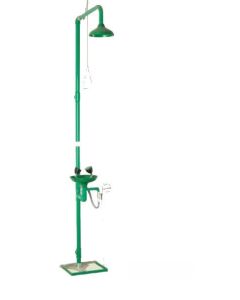
Emergency shower for occupational safety with eyewash. Activation via rigid rod. Shower head and basin in plastic.
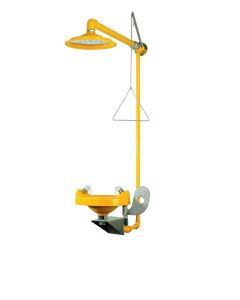
Wall-mounted emergency shower column in yellow ABS.
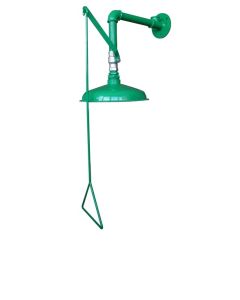
Safety shower for workplaces. Wall-mounted. Manual activation via pull rod.

Emergency shower column with manual anti-limescale opening complete with stainless steel hose and quick-opening eye wash
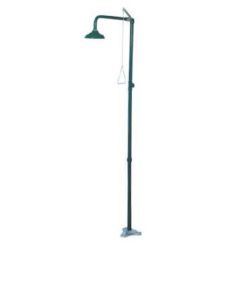
Emergency shower in stainless steel. Height: 237 cm
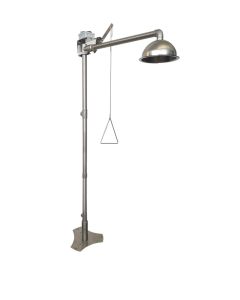
Emergency column in AISI 304 stainless steel. Height: 2135 mm

Emergency shower column with manual opening and eyewash with ABS basin with foot pedal and push-handle opening
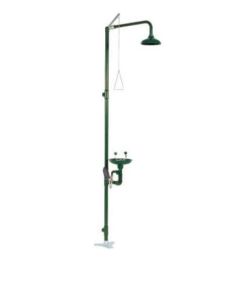
Floor-standing emergency shower, complete with eyewash station. Material: stainless steel.
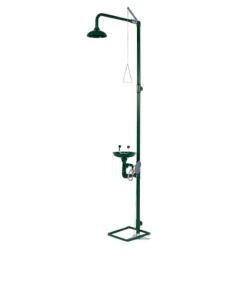
Emergency shower with triple control, complete with eyewash. Material: stainless steel and galvanized steel. Height: 235 cm
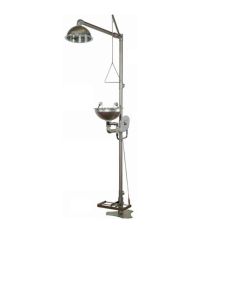
Emergency shower column with stainless steel eye wash.
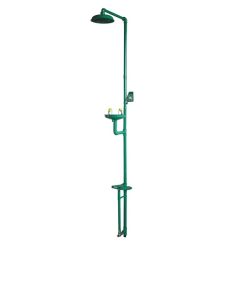
Emergency shower with eyewash. Material: galvanized steel and ABS. Manual and foot pedal operation.
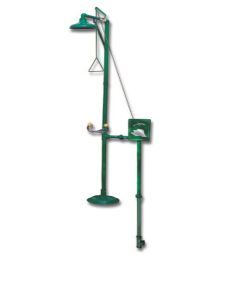
Safety shower with eyewash. Material: galvanized steel and ABS. Dimensions: W60 x H220 cm.
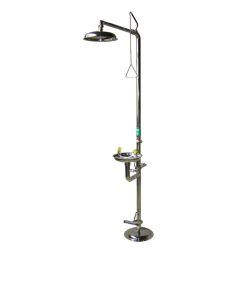
Safety shower with integrated eye wash station. Material: stainless steel. Dimensions: W64 x H220 cm.
Emergency showers represent an essential device in work environments where chemical, corrosive, or hazardous substances for the skin and eyes are handled. These systems intervene immediately in case of accidental contact with harmful agents, significantly reducing biological damage and ensuring on-site first aid before medical transport. Speed of action is critical: in the first 15-20 seconds following an exposure, the fresh water delivered by an emergency shower can make the difference between a minor injury and permanent damage. In chemical, pharmaceutical, metalworking industries, and laboratories, the installation of emergency showers is often a regulatory obligation as well as a collective protection measure.
A functional emergency shower must guarantee a constant and timely water flow, immediate accessibility without obstacles, and an effective cooling capacity of the affected area. Available models vary significantly in terms of installation (vertical wall-mounted, horizontal, self-supporting floor column), construction materials (galvanized steel, stainless steel, ABS plastic), and additional features such as the integrated eyewash. The choice depends on the location, the available space, the type of contaminant, and the specific regulatory constraints of the sector.
The installation of emergency showers drastically reduces intervention times in case of accidental exposure to dangerous substances. When a worker comes into contact with a corrosive or toxic agent, the proximity of the shower allows for immediate and prolonged rinsing, diluting and neutralizing the contaminant on the skin or mucous membranes. International studies show that initial emergency actions reduce hospitalization by 30-50% and the severity of residual injuries. Emergency showers work in tandem with the eyewash (when present) to specifically protect the cornea and conjunctiva, areas particularly vulnerable to permanent damage. Beyond the medical aspect, the installation represents a fulfillment of safety requirements established by regulatory bodies and confers a more limited civil and criminal liability on the company in the event of a documented injury.
On a practical level, a well-positioned emergency shower also allows rescuers to act quickly during the critical phases of an exposure. The cold water delivered causes vasoconstriction, reducing the systemic absorption of dangerous substances, while the continuous flow physically eliminates particles or liquid from the body surface. Models with manual or pedal operation ensure that the worker themselves can activate the device even in conditions of panic or poor visibility, a crucial aspect in industrial environments where confusion and disorientation are likely during an emergency. The efficiency of an emergency shower is also measured by the ability to keep it always operational: stainless steel models offer superior resistance to chemical corrosion, while ABS plastic ones are lightweight and easy to maintain.
Emergency showers are mainly classified into three construction categories: vertical wall-mounted, horizontal wall-mounted, and self-supporting floor columns. Vertical wall-mounted models are the most compact and suitable for tight spaces, characterized by a fixed shower head facing downwards, direct installation to the wall structure, and reduced dimensions (generally 40-60 cm depth). Horizontal models, less common, provide lateral delivery and are chosen in contexts where vertical space is limited or where the water flow must reach people in non-standard positions. Self-supporting floor columns represent the most versatile solution, as they do not require structural work on the wall, offer a controlled footprint (approximately 1.5-2.5 meters high), and allow for complete rinsing of the body. Many columns also integrate a collection basin and a drain, making the system hydraulically complete.
Regarding materials, galvanized steel represents the most economical choice and is suitable for sectors not exposed to particularly aggressive contaminants; AISI 304 stainless steel offers superior resistance to chemical corrosion, ideal for environments with acid or saline vapors; ABS plastic is lightweight, fireproof, economical but less durable over time. The shower head can be made of plastic or steel, with diameters varying from 10 to 15 cm to control the flow and dispersion of water. Showers with an integrated eyewash add two small nebulizers at a fixed height (about 150 mm) which allows for simultaneous rinsing of the eyes during body rinsing. Activation can be manual (pull rod, triangular handle, or lever), pedal-operated, or via a pneumatic button; some automatic opening showers are activated by passage or physical contact, further reducing reaction times. Some specialized models, such as ATEX showers, are certified for explosive atmosphere environments and constitute the only legal choice in specific sectors (mining, petroleum industries, chemical deposits).
The selection of an emergency shower begins with the evaluation of the available space and the type of feasible installation. If the wall structure is available and robust, a vertical wall-mounted shower reduces installation and maintenance costs; if space is limited or the walls are unreliable (light partition walls, plasterboard partitions), a floor column with a self-supporting base is the correct choice. The second criterion concerns the construction material: environments with exposure to acid vapors, saline solutions, or inorganic corrosives require stainless steel, while less aggressive contexts (textile industry, food sector with mainly biological risk) tolerate galvanized steel. The third aspect is the flow rate and volume: typical emergency showers deliver 30-40 liters per minute, sufficient for effective rinsing on one person; high-flow industrial showers can reach 60-80 liters per minute if the plumbing system allows. Verifying that the water pressure is adequate (minimum 0.5 bar, ideally 1-2 bar) is essential to avoid insufficient flow in a real emergency.
A frequent error is underestimating the importance of the integrated eyewash: although not mandatory everywhere, the presence of one or two specific nozzles for the eyes significantly reduces the risk of permanent blindness in case of chemical contact. The fourth decision criterion concerns the activation: manual pull rods (simpler and mechanical) are reliable but require awareness; pedals are useful in sectors where hands might be contaminated; automatic opening systems by physical contact are expensive but ideal for high-risk environments where reaction time is critical. The fifth factor is regulatory compliance: in Italy, the design of emergency shower systems must comply with the UNI EN 15424 standard (for showers and eyewashes), which defines minimum flow rates, accessibility distances, activation times, and cooling capacity. For specific sectors such as the oil or mining industry, ATEX certification is indispensable (Explosive Atmospheres), guaranteeing that the device does not constitute an ignition source. Last critical element: ease of maintenance and accessibility for periodic inspections, which must be performed at least twice a year to verify flow functionality and cleanliness of the delivery orifices.
In Italy, the regulatory framework for emergency showers is mainly defined by the UNI EN 15424:2008 standard (Emergency showers for rinsing whole body areas - Safety and performance requirements). This standard establishes that an emergency shower must deliver a minimum flow rate of 30 liters per minute for at least 15 consecutive minutes, with a water temperature between 15 and 35°C (cold water is preferable because it induces vasoconstriction and reduces systemic absorption of toxins). Accessibility is a critical requirement: the shower must be located no more than 10-15 seconds walking distance from the workplace (straight path, free of obstacles, marked with luminous and phosphorescent safety signage). The structure must withstand mechanical stress (shocks, falling objects) without losing functionality, and materials in contact with water must be non-toxic and corrosion-resistant. For integrated eyewashes, the EN 15424 standard prescribes a minimum flow rate of 0.4 liters per minute for each nozzle, with simultaneous opening and pressure regulation to avoid damage from a too violent jet.
Legislative Decree 81/2008 (Consolidated Law on Safety) refers the employer to the responsibility of assessing chemical risk and providing adequate collective protection measures, which include emergency showers. Risk assessment must consider the nature of the contaminant (acid, caustic, systemic toxic, irritant), the quantity handled, the frequency of exposure, and other preventive measures already in place (personal protective equipment, ventilation, confinement). European compliance is guaranteed by a CE certification (Declaration of Conformity) issued by the manufacturer, certifying compliance with the Machinery Directive 2006/42/CE and the EN 15424 standard. In specifically regulated sectors (for example, oil plants, chemical laboratories registered with the environmental authority, hospital oncology departments for cytotoxic drugs), emergency showers are explicitly mentioned in safety protocols and their absence exposes the entity to administrative and criminal penalties. The employer’s civil liability is particularly severe should an injury occur in the absence of an emergency shower in a context where it was reasonably foreseeable: historical sentences in Italian jurisprudence have recognized damages from 50,000 to 200,000 euros for loss of sight or severe preventable chemical burns. Finally, it is mandatory to subject emergency showers to semi-annual preventive maintenance and an annual functional inspection, with recorded documentation of compliance in written form.
Explore all products in the category and compare the available solutions to find the one best suited to your operational context. Carefully evaluate the selection criteria illustrated, verify the regulatory compliance of the selected model, and ensure that the installation respects accessibility and distance requirements from workplaces. The correct emergency shower is not a luxury, but an investment in the health protection of your employees.
The vertical wall-mounted shower is more compact and convenient, ideal for limited spaces. The floor column offers greater versatility and does not require wall interventions; it is the best choice for environments with fragile walls or when mobility is desired. Both deliver the same water flow if correctly installed.
AISI 304 stainless steel is the best for chemically aggressive environments (acids, saline solutions); galvanized steel is economical and suitable for less severe contexts; ABS plastic is lightweight and fireproof but less durable. Evaluate the nature of the contaminants present in your work environment.
It is not mandatory in all contexts, but it is strongly recommended and often required in high chemical risk sectors (laboratories, pharmaceutical industry, oil sector). In case of contact with substances irritating to the eyes, the integrated eyewash reduces the risk of permanent damage to the cornea.
 English
 Italian
 French
 German
 Spanish