
mon-fri 9-13 / 14.30-18.30
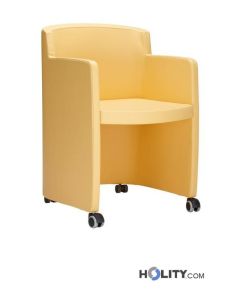
Mobile tub armchair in eco-leather and steel, with wheels Ø 50 mm. Compact design 58x55x74 cm, ideal for meeting rooms and congress contexts.
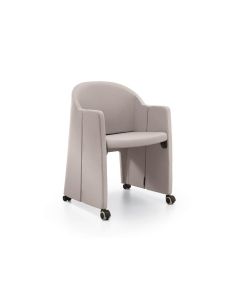
Foldable tub armchair h1038_30 with wheels. Steel frame, cold foam padding and high-resistance PVC/PU upholstery.
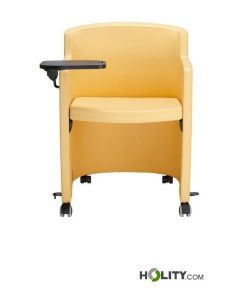
Professional faux leather armchair with folding writing tablet, steel and multilayer beech frame and Ø 50 mm wheels for meeting and conference rooms.
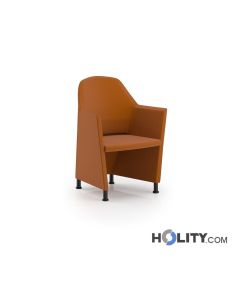
Conference armchair in steel and wood with eco-leather upholstery. Dimensions 65.5x57.5x85 cm. Horizontally stackable design for meeting rooms.
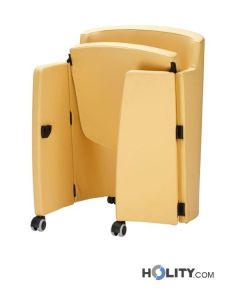
Folding armchair for meeting rooms with steel and beech structure, cold foam padding and eco-leather upholstery on wheels.
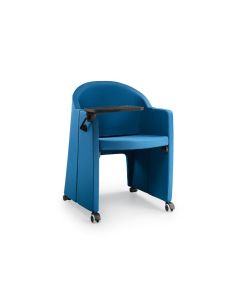
Folding tub armchair h1038_31 with writing tablet and wheels. Steel structure, cold-molded foam padding and high-resistance upholstery (100,000 Martindale cycles).
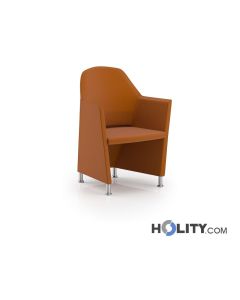
Small armchair for conference rooms, horizontally stackable. Dimensions: W.65.5 x D.57.5 x H.85 cm. Available in multiple colours.
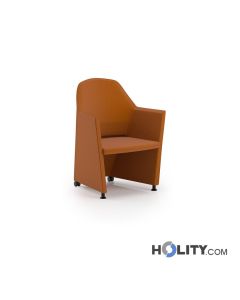
Meeting armchair in steel and eco-leather (65.5x57.5 cm). Horizontally stackable with rear wheels for dynamic space management.
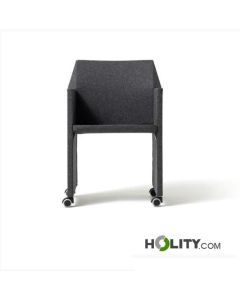
Folding and stackable meeting room armchair. Dimensions. W.61 x D.53 x h.88 cm. Equipped with wheels at the base.
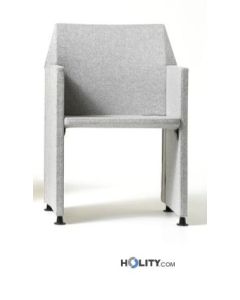
Armchair for conference room furnishing. Fully foldable and stackable. Dimensions: W.61 x D.53 x h.86 cm.
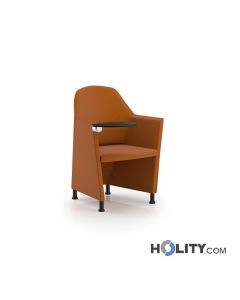
Conference armchair in faux leather with anti-panic writing tablet, steel and wood frame. Dimensions 65.5x66.5 cm, stackable.
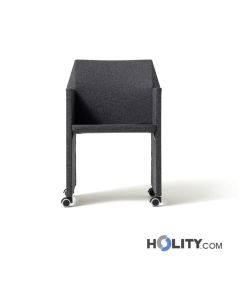
Meeting room armchair with writing tablet and wheels. Dimensions: W.63 x D.61 x h.88 cm. Available in multiple colors.
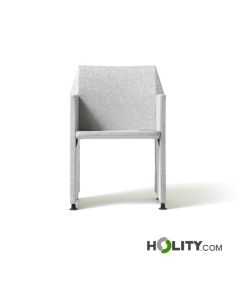
Armchair for meeting rooms with writing tablet. Dimensions: W.63 x D.61 x h.86 cm. Base complete with wheels.
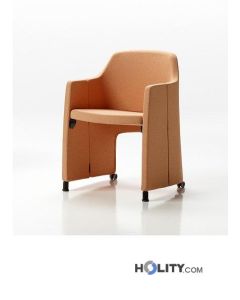
Tip-up armchair for conference room furnishing. Dimensions: W.57 x D.57 x H.82 cm. Available in several colors.
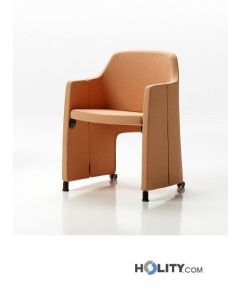
Meeting room armchair complete with tablet. Dimensions: W.57 x D.57 x H.82 cm. Folding seat.
Conference room armchairs represent a strategic element in the setting up of spaces dedicated to meetings, congresses, seminars, and summits. The choice of the correct seat directly affects the comfort of participants, their ability to maintain attention during prolonged events, and the efficient management of available space. An ergonomic and versatile armchair contributes to creating a professional environment, where perceived quality begins with the seat and where the movement of furniture remains practical even in contexts with limited square footage. In conference rooms, theaters, classrooms, and event centers, investing in quality seating translates into a better overall experience for guests and organizers.
The catalog of conference room armchairs offers solutions designed to adapt to different operational scenarios: from fixed configurations for permanent environments, to folding and stackable versions for those who need spatial flexibility. Each model combines a structure in resistant materials, padding that correctly supports posture, and easy-to-clean upholstery. The availability of accessories such as foldaway writing tablets, folding armrests, and wheels allows each solution to be customized based on the specific needs of the environment and the users.
Conference room armchairs offer concrete advantages from both a functional and ergonomic point of view. Appropriate seating supports the spine, reduces muscle fatigue, and allows participants to maintain a correct posture even during long sessions. Prolonged comfort improves concentration and engagement, essential factors when the content of the conference or meeting requires continuous attention. Furthermore, modern armchairs for congress environments are designed to facilitate movement: versions on wheels guarantee agility in reconfiguring the space, while folding models allow the furniture to be stored when the room must be used for other purposes. This versatility makes professional seating an investment that pays for itself over time, as it supports multiple usage configurations and adapts to needs that evolve over time.
From an aesthetic standpoint, conference room armchairs contribute to the overall image of the space. Well-chosen furniture conveys professionalism to participants and reflects the organizer’s attention to the well-being of those attending. Eco-leather upholstery, premium fabrics, and water-repellent materials not only guarantee a pleasant appearance but also simple maintenance in high-traffic contexts. Color and design choices are wide, allowing the seating to be integrated with the room’s interior architecture, whether in classic or contemporary settings. The structural robustness of professional armchairs also ensures a long life cycle, reducing replacement costs and maintaining an orderly and credible appearance over time.
The conference room armchair market offers different categories, each with specific characteristics. Folding tub armchairs represent the ideal solution for those who need to save space: thanks to the closing mechanism, they can be stored vertically or folded, occupying minimal space when not in use. These models still maintain an adequate level of comfort thanks to the cold-molded foam padding and resistant upholstery. Versions with wheels further facilitate transport and movement, particularly useful in contexts where set-up and dismantling are frequent. Conversely, horizontally stackable chairs, while remaining compact, maintain a more robust and stable structure once in use, as they stack one on top of the other horizontally without folding. This type is particularly common in congress halls and theaters where the frequency of reorganization is regular but not daily.
Another important category concerns accessorized armchairs, available with foldaway writing tablets, ideal for contexts where participants need to take notes or consult documents without standing up. The design of the tablet allows it to be easily folded down when not needed, maintaining the overall aesthetics of the seat. Padded armrests, sometimes folding, increase lateral comfort and offer support during long sessions. Versions with headrests, less frequent but present in some premium models, add further support. Armchairs can also be available with fixed feet or with a base equipped with wheels, usually 50 mm in diameter, which allow agile movement without the need for lifting. The choice between a fixed and mobile version depends on the space reconfigurability needs and the expected frequency of movements.
Selecting the most appropriate armchair starts with an objective evaluation of the available space and frequency of use. If the room is exclusively for conferences and the furniture remains in a fixed position, a structured armchair with feet and high-quality eco-leather upholstery represents the best choice: it guarantees durability, professional aesthetics, and ease of cleaning. If, instead, the space must be versatile and used for multiple functions (meetings, presentations, social events), a folding armchair with wheels offers the necessary flexibility. The size of the seat body is crucial: length and depth must allow for adequate thigh support without creating compression behind the knees, while the seat height must allow the feet to touch the floor when the person is seated with legs bent at ninety degrees. Models with heights between 74 and 88 cm satisfy most users, but variations depend on the average physical build of the expected audience.
An often underestimated aspect is the robustness of the padding and upholstery compared to the expected number of uses. In high-traffic environments, such as congress centers that host dozens of events a year, it is advisable to choose materials tested for high resistance: eco-leather or fabrics with Martindale certification (at least 50,000-100,000 cycles) guarantee longevity. Armchairs with a structure in steel and wood (beech or similar) offer an optimal compromise between lightness and solidity, reducing the risk of deformation over time. The choice of color and upholstery also affects maintenance: dark shades hide dust better, while water-repellent materials simplify the cleaning of accidental stains. Common mistakes include underestimating the room size during configuration: calculating the number of seats needed precisely and leaving adequate passage spaces is fundamental to avoid incorrect orders or dysfunctional configurations.
Conference room armchairs must comply with safety and quality standards defined at the European level. The UNI EN 1335-1 standard regulates the general requirements and dimensions of chairs for office and public use, including aspects such as stability, resistance to movement, and the safety of the adjustment mechanism (if present). Resistance to usage cycles is measured according to standardized protocols that verify the durability of metal structures, closing mechanisms, and upholstery over time. Fabric covers must respond to flammability standards, in particular the EN 1021 standard, which provides for resistance tests to open flames, guaranteeing safety in public environments where the density of people is high. For versions with wheels, stability is further controlled through tests that verify that the chair does not tip over during normal use.
From an ergonomic point of view, the requirements refer to seat height, seat shape, lumbar support, and overall structural stability. Several manufacturers submit their models to ISO 5970 certification, which attests to compliance with specific quality criteria for office furniture. In contexts of high hygiene, such as healthcare facilities hosting conferences or meetings, it is advisable to opt for armchairs with completely removable and washable covers, facilitating sanitization operations. The stability of versions with wheels is also regulated: wheels must be of adequate diameter (minimum 40-50 mm) and equipped with brakes or special configurations that slow down involuntary movement. The choice of reliable and certified manufacturers represents the best guarantee to ensure compliance with these standards.
Explore all the products in the category and compare the available solutions to find the one best suited to your operational context. From folding armchairs for dynamic spaces to structured models for permanent environments, the catalog offers versatile options for any conference room, meeting, or event need.
A folding chair closes on itself, taking up minimal vertical space and is ideal for limited storage. A stackable chair remains structurally whole but overlaps horizontally with others, suitable for those who rarely dismantle furniture but frequently change the room configuration.
The ideal height allows feet to touch the floor when legs are bent at ninety degrees. For most users, heights between 74 and 88 cm are comfortable. Evaluate the average height of the expected audience and physically test the model if possible.
Yes, wheels facilitate movement during set-up and clearing. If the room remains static, prefer fixed versions with feet for greater perceived stability during seating, although modern wheels are sufficiently stable for use in a stationary position.
Eco-leather and fabrics with Martindale certification of at least 50,000-100,000 cycles guarantee long life in contexts of frequent use. Always check the manufacturer’s certification and prefer water-repellent materials if cleaning is frequent.
It depends on the folding mechanism. Most professional models allow the tablet to be folded downwards without significantly increasing the total footprint when the chair is closed, although technical verification is still recommended.
Eco-leather upholstery is easily cleaned with a damp cloth and light degreaser. Fabrics require regular vacuuming and, if necessary, washing with specific detergents. Choose water-repellent materials if you want to minimize extraordinary maintenance operations.
Yes. Proper padding and adequate lumbar support maintain the natural posture of the spine, reducing muscle tension and fatigue after sessions of several hours. Choose models with cold-molded foam and certified lumbar support.
Yes, as long as they maintain aesthetic consistency and similar seat height. Mixing different series from the same manufacturer ensures visual compatibility. Avoid combinations that create perceptible nonuniformity that could give an impression of disorder.
 English
  Italian
 French
 German
 Spanish