
mon-fri 9-13 / 14.30-18.30
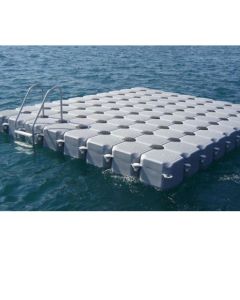
Floating platform ideal for various uses. Modular system consisting of HDPE floats. Total dimensions: 2 x 2 m. Available in different color variants.
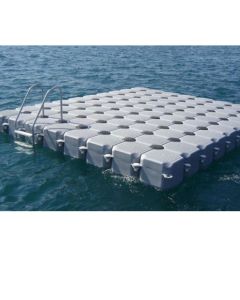
Platform made of modular floats. Material: high-density polyethylene (HDPE). Total dimensions: 2 x 3 m.
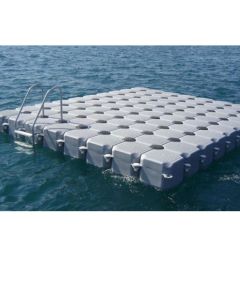
Jetty composed of high-density polyethylene (HDPE) floating modules. Available in multiple colors. Total dimensions: 3 x 3 m.
Floating platforms represent a fundamental structural solution for operations on bodies of water in port, nautical and recreational contexts. Made from high-density materials such as polyethylene (HDPE), these mobile structures guarantee exceptional stability, uniform buoyancy and significant load capacities. Their modularity allows dimensions and configurations to be adapted to the specific needs of each project, whether it be permanent docks, work bases for shipyards, service platforms for fish farms or recreational decks at bathing facilities and resorts. Each module is designed to distribute the load on the water in a balanced way, ensuring operational safety and durability over time, regardless of weather conditions and exposure to corrosive agents.
Floating platforms offer significant operational advantages in multiple sectors. In the port and nautical sector, they allow for the creation of mobile docks that naturally adapt to water level variations, eliminating the need for complex and expensive fixed infrastructure. Their uniform buoyancy capacity distributes loads without stress concentrations, ensuring stability even during loading and unloading operations of boats. For companies operating on rivers and canals, modular floating platforms solve the problem of seasonal water level variability, allowing constant use throughout the year. In the recreational sector, floating decks transform water spaces into functional areas for diving, sport fishing or simply as relaxation areas at bathing establishments, with an ease of installation and removal that makes them ideal even for seasonal structures.
The practical aspect of floating platforms lies in their structural lightness combined with construction robustness. Individual modules, although lightweight and easy to transport, maintain considerable load capacities when assembled, allowing small teams to perform installations and modifications without heavy equipment. Non-slip surfaces ensure the safety of personnel even in wet conditions, while the absence of sharp corners and sharp edges reduces the risk of injury. Maintenance is extremely simplified compared to traditional structures: high-density polyethylene does not require periodic painting, does not rust and naturally resists marine corrosive agents, acids and ultraviolet rays, maintaining its physical characteristics even after decades of continuous use.
The floating platforms available in the catalogue are mainly distinguished by modular dimensions and assembled configurations. Base modules in high-density polyethylene (HDPE) represent the fundamental components: each modular unit is self-buoyant, ensuring that the installation of one or more modules always maintains controlled stability characteristics. The most common modular formats range from 2x2 meter configurations up to 3x3 meters and beyond, with the possibility of extending the platforms in length and width by the progressive addition of units. Some models include integrated stainless steel ladders, facilitating vertical access from boats or from the water, while others are simple support surfaces ready for the installation of specific equipment. The color variability (available in beige, blue and gray tones) allows aesthetic choices consistent with the surrounding environment, whether it be port, recreational or industrial.
In addition to standard polyethylene modules, the catalogue includes specialized variants designed for particular contexts. Some platforms are equipped with eyebolts and stainless steel anchoring kits, essential for ensuring the fixing of structures in specific positions on bodies of water subject to currents or wind. Functional limitations relating to floating modules mainly concern load capacity constraints per square meter: it is essential to accurately calculate the total weight that the platform will have to support, considering not only stationary loads (people, equipment) but also dynamic ones (movement of people during operations). Some marine contexts with high salinity or prolonged exposure to chemically aggressive environments may require further surface treatments, even if the HDPE material already offers superior natural resistance compared to many traditional alternatives.
Selecting the appropriate floating platform begins with an accurate assessment of the body of water and environmental conditions. The first decision criterion concerns the total dimensions: the length and width of the platform must be proposed in relation to the activities they will host, considering not only the minimum space necessary for people or equipment, but also safety margins for movement and evacuation. The calculation of the load capacity requires adding the weight of the expected personnel, fixed and mobile equipment, and adding a safety coefficient (generally 20-30% above the theoretical maximum load). A frequent error is underestimating the seasonal variability of the water level: if the body of water has significant oscillations, modularity becomes a crucial advantage, as it allows for the addition or removal of modules to maintain the correct hydrostatic balance. Even the geographical location affects the choice: marine environments require emphasis on salinity resistance, while rivers and freshwater lakes often allow for a wider selection of solutions.
A second decision area concerns accessory equipment and the level of finish. If the use involves access from boats, the stainless steel ladder becomes non-negotiable from a safety point of view; if the platform will serve as an anchoring base for boats, the eyebolt kit and the quality of the fixing are critical parameters. The color of the platform, although it may seem like an aesthetic detail, affects visibility and night safety, especially in port or river contexts. The most common errors in selection emerge when ease of maintenance is not considered: selecting high-density polyethylene means giving up periodic painting and intensive structural inspections, a tangible advantage in terms of long-term management. Finally, it is essential to check that the chosen configuration allows for future expansion without the need for complete replacement, should projects evolve toward larger surface requirements or increased load capacities.
Floating platforms in use in Italy must comply with specific technical and regulatory standards to ensure structural and functional safety. TÜV certification represents an internationally recognized standard for construction materials, certifying that high-density polyethylene meets mechanical strength, durability and stability requirements in buoyancy conditions. ISO 12401 provides specific guidelines for floating structures and mobile platforms on bodies of water, covering aspects such as load distribution, sinking resistance and safety devices. For installations in port areas, compliance with regional provisions and local port regulations is mandatory; many port authorities require additional certifications and periodic inspections. In the recreational sector (bathing establishments, resorts), floating platforms must respond to safety regulations for bathing and accident prevention, including the adequacy of non-slip surfaces and the availability of safe escape routes.
Critical aspects of compliance concern residual buoyancy capacity in emergency conditions and anchoring mechanisms. Platforms must maintain buoyancy capacity even if one or more modules suffer partial damage, ensuring a stability reserve. Anchoring, particularly relevant in river environments with significant currents or coastal environments exposed to wind, must respond to specific standards on pull resistance and the distribution of holding forces. Eyebolts and stainless steel anchoring kits must be sized according to the expected hydrodynamic conditions and periodically checked to highlight corrosion phenomena or structural failure. Specific areas such as shipyards, fish farms and diving centers may be subject to additional regulations relating to environmental management, water contamination and occupational safety. Documenting regulatory compliance at the time of purchase and maintaining periodic maintenance records is an essential practice to avoid legal complications and ensure the operational continuity of the structure.
Explore all the products in the category and compare the available solutions to find the one best suited to your operational context. Each modular platform can be configured according to specific dimensional, load and accessory requirements, allowing you to create aquatic infrastructures that are scalable and reliable over time.
Floating platforms are modular structures made of high-density polyethylene (HDPE) that maintain the load above the water level through hydrostatic buoyancy principles. Each module distributes the weight evenly on the water surface, allowing multiple units to be assembled without losing stability. They resist temperatures from -55° to +75° and do not undergo deformation over time.
Applications range from the port sector (mobile docks, mooring bases) to the nautical sector (refitting shipyards, service platforms). They are used in fish farms, diving centers, bathing establishments as recreational decks, and at resorts for relaxation spaces on the water. They are also used in river contexts and on canals with seasonal level variability.
Modularity allows platforms to be extended in length and width progressively, adapting to evolving needs without complete replacement. It also allows automatic compensation for water level variations, facilitates transport and installation using lightweight components, and simplifies partial repairs by replacing individual damaged modules.
Capacity depends on the module dimensions and the density of the HDPE material. To calculate it correctly, sum the weight of the intended personnel, fixed and mobile equipment, and add a safety margin of 20-30%. Technical data for each product specify the maximum load per square meter; always consult these values before installation.
Maintenance is minimal thanks to high-density polyethylene, which does not rust and naturally resists corrosive agents, salinity and UV rays. It does not require periodic painting; regular cleaning with fresh water and annual visual inspection of the anchoring eyebolts and stainless steel ladders are usually sufficient to keep the structure in optimal condition.
Yes, the materials used are TÜV certified and meet ISO 12401 standards for floating structures, as well as regional and local port regulations. They feature non-slip surfaces, an absence of sharp edges, and maintain residual buoyancy in case of partial damage. Always check the specific requirements of your field of application.
 English
  Italian
 French
 German
 Spanish