mon-fri 9-13 / 14.30-18.30
Port equipment represents the set of structural components and accessories designed to ensure safety, functionality, and operational efficiency in port and maritime environments. Whether it is infrastructure dedicated to nautical tourism, commercial loading-unloading operations, or the management of small vessels, the correct choice of these systems directly affects the facility’s capacity, the quality of service offered, and the prevention of accidents.
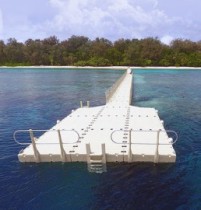
Floating pontoons, gangways, bollards, mooring fingers, and safety ladders constitute an indispensable technical synergy for creating port infrastructures compliant with international standards. Each element performs specific functions: some ensure safe access, others facilitate docking operations, and others distribute structural loads and stresses. Product selection must consider local environmental conditions, the type of vessels to be moored, expected traffic volumes, and current regulatory compliance in the reference territory.
Professional port equipment solves multiple recurring problems in maritime infrastructure: the instability of mooring operations, accelerated deterioration caused by salt exposure, insufficient capacity, and the risks of injury during embarkation and disembarkation operations. A correctly sized mooring system reduces operation times, minimizes hull damage, and allows port managers to optimize available space. In the context of marinas, furthermore, the perceived quality of docking services directly influences the reputation of the facility and the return frequency of boaters.
From a technical perspective, investing in quality port equipment entails long-term advantages: less routine maintenance, superior resistance to adverse weather conditions, automatic compliance with safety standards, and greater operational versatility. Floating pontoons made of modern composite materials, for example, guarantee stability even in rough sea conditions, while certified fingers and bollards allow the safe mooring of vessels of various sizes without requiring frequent adjustment interventions.
The port equipment catalog is divided into several macro-categories, each with specific construction variants and materials. Floating pontoons and platforms represent the core infrastructure: available in modular configurations, they can be made of aluminum, galvanized steel, treated wood, or composite materials, each with different buoyancy, durability, and maintenance characteristics. Gangways, a fundamental connecting element, are available in fixed, mobile, telescopic, and removable versions, with length variations from a few meters up to over 20 meters, and equipped with anti-slip surfaces according to current safety regulations.
Mooring fingers are lateral structures designed to guide vessels into position and distribute traction loads; they differ in length, material (aluminum or steel), load capacity, and type of articulation. Bollards, simple but critical, are installed on pontoons, docks, and hulls themselves and are classified by tensile strength, shaft diameter, and fixing method. Safety ladders, service pedestals (water, electricity, fuel), boarding bags, and fender systems complete the ecosystem, allowing complete operation and comfort for users.
The choice of port equipment requires an in-depth preliminary analysis of the specific operational context. Critical questions include: what will be the maximum load moored simultaneously?, what range of vessel length and tonnage?, what is the tidal range at the site?, what are the average and extreme weather conditions?, and what is the balance between permanent and transit stay? Common errors involve underestimating load capacities—often evaluated only based on the weight of the single largest boat, neglecting the combined effect of wind, current, and sea state—or choosing cheap materials that require frequent maintenance in saline environments. Another frequent criticality is the insufficient evaluation of accessibility: a gangway that is too short or with an excessive slope creates daily operational problems and accident risks.
Decisive technical factors include corrosion resistance (essential in a marine environment), design buoyancy (which must be maintained even in case of partial flooding), the friction coefficient of walking surfaces, the energy dissipation capacity of fender systems, and compatibility with available spaces. Always check if the supplier provides certificates of conformity to ISO 1026 (for pontoons), EN 13914 (for gangways), and local port regulations. Furthermore, evaluating the availability of spare parts and the possibility of scheduled maintenance ensures operational continuity over time.
Port equipment is governed by a complex set of national and international regulations that vary depending on the type of infrastructure and the geographical context. In Europe, ISO 1026 standards (Marine technology – Floating pontoons – Safety requirements and test methods) and EN 13914 (Walkways – Safety requirements and test methods) represent mandatory reference standards for pontoons and gangways. In Italy, the local Port Authority requires compliance with specific port regulations, often based on international standards (IEC, IMCA, PIANC).
Critical compliance aspects include certified load capacity (expressed in kN or tons), corrosion resistance (protection class according to ISO 12944), fire suitability of materials (where required), drainage systems (to avoid water stagnation that accelerates degradation), and safety signage according to ISO 3864. Structures dedicated to the public must meet accessibility requirements for people with reduced mobility (Legislative Decree September 19, 1996, n. 494). Check with the competent port authority or professional orders for any additional specific prescriptions in the area, especially in areas subject to environmental constraints or where protected sites exist.
Explore all the products in the category and compare the available solutions to find the one best suited to your operational context. An informed choice guarantees durable, safe infrastructure capable of optimizing the capacity of your port facility.
A fixed pontoon is anchored to the seabed or masonry structures; it remains at a constant height but exposes vessels to oscillations due to tides and waves. A floating pontoon naturally follows water level variations, maintaining a constant relative height to the boats and reducing structural stresses. Floating pontoons are preferred in areas with significant tidal ranges or high sea dynamics.
The length must cover the maximum height difference between the pontoon and the mainland (considering the tidal range and the oscillations of the pontoon itself) and the horizontal distance between the attachment points. The slope should not exceed 10–12% to ensure accessibility and safety; longer gangways require intermediate or articulated support structures.
Hot-dip galvanized steel according to EN ISO 1461, class III anodized aluminum, and duplex stainless steel alloys (UNS S32205) offer superior corrosion performance. Fiber-reinforced composite materials (FRP) do not rust but require protection from UV rays. For very aggressive environments, galvanizing followed by painting offers double protection.
It depends on the weight and dimensions of the intended vessels, the fetch (the distance over which the wind blows), and local currents. A standard finger for 8–12 meter boats must withstand 5–10 tons of lateral load. Always request a specific assessment from the supplier based on the maximum expected length and tonnage, with a safety margin of 50–100%.
Pontoons and fingers require visual inspection at least every six months to detect corrosion, cracks, or subsidence. Gangways and ladders must be checked for structural integrity and anti-slip surface grip. Annual checks with detachments and instrumental measurements are recommended; high-traffic areas may require shorter cycles according to local port regulations.
Yes. Modular pontoons and fingers in aluminum or composites allow flexible configurations, future expansions, and easier replacement of components. Modularity also facilitates transport and installation in difficult sites. Check dimensional and interface compatibility between different manufacturers; prefer tested proprietary solutions or recognized PIANC standards.
Fenders are bumpers that absorb impact energy when a vessel hits the pontoon, protecting both the boat and the port structure. They are classified by rigidity (soft, medium, hard), energy capacity (expressed in kJ), and material (natural rubber, synthetic, polyurethane). Correct selection depends on vessel size, expected docking speed, and the width of the docking area.
Gangways must have a maximum slope of 10%, a minimum width of 1.5 meters, and continuous bilateral handrails. Ladders must follow uniform tread and riser standards (ISO 2083). Boarding platforms require adequate maneuvering spaces (at least 1.5x1.5 meters). Use accessibility software or consultants to verify compliance with WCAG criteria adapted to the port context.
 English
  Italian
 French
 German
 Spanish