mon-fri 9-13 / 14.30-18.30
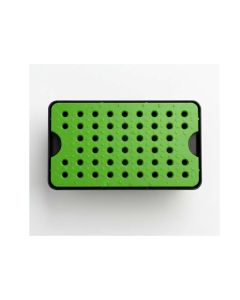
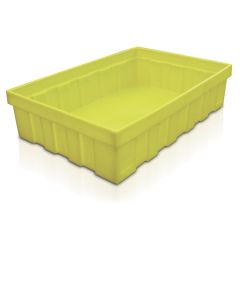
Spill containment platform and compact drip tray h104313 in 100% recyclable polyethylene (PE), UV resistant and rustproof. Dimensions: W 60 x D 40 x H 15.5 cm.
Polyethylene drum storage spill pallet. For 4 drums of 50/60 l. W. 1230 x D. 830 x h. 300 mm.
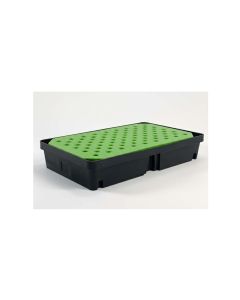
Spill tray and drip tray h104314 in 100% recyclable polyethylene (PE), UV-resistant and rustproof. Dimensions 1000x600x175 mm, maximum capacity 87 liters (60 liters with grid inserted).
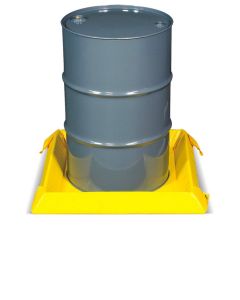
PVC spill tray for drum containment. With fixing supports. Capacity: 19 lt.
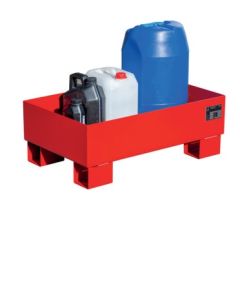
Liquid collection sump capacity 65 liters, without grid, made of 3 mm sheet steel. Dimensions: W 800 x D 500 x h 290 mm.
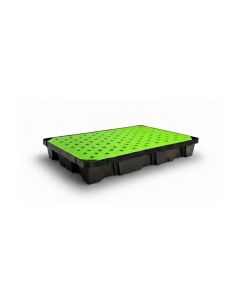
Containment platform and drip tray h104315 in 100% recyclable polyethylene (PE), UV-resistant and rustproof. Dimensions: W 120 x D 80 x 17.5 cm, maximum capacity 143 liters (100 liters with grid inserted).
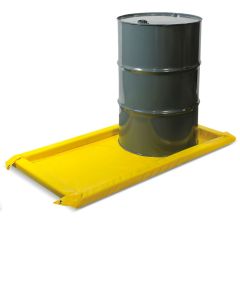
Lightweight coated PVC fabric tray for drum containment. Capacity: 38 lt. Foldable.
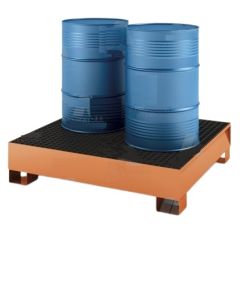
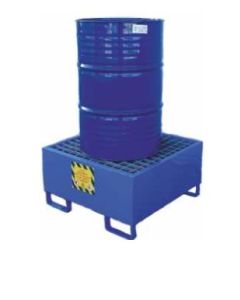
Liquid containment bund for 1 x 200 lt drum. Dimensions: W. 86 x D: 86 x h. 33 cm. Capacity: 210 lt.
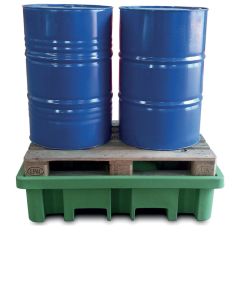
Spill pallet for drum storage on europallets. In eco-friendly polyethylene. 1300x900xh. 330 mm. Load capacity: 600 kg.
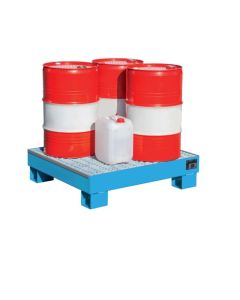
Sump tray for the safe storage of up to 4 x 60-liter drums, load capacity 1000 kg/m². Dimensions: W 910 x D 800 x h 225 mm.
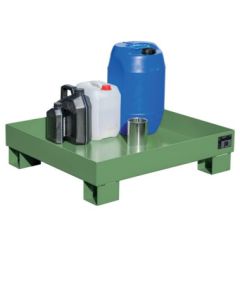
Liquid storage tray, designed for industrial environments. Made of 3 mm steel, with a collection volume of 68 liters. Dimensions: W 900 x D 800 x H 220 mm.
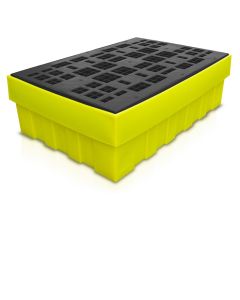
Polyethylene spill pallet for 2 cans/drums of 200 lt.. W. 1230 x D. 830 x h. 380 mm. Load capacity: 250 kg.
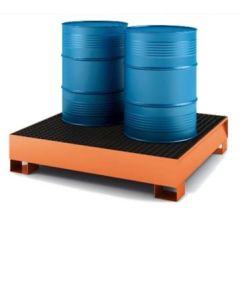
Liquid containment spill pallet for 2 drums of 200 lt. Dimensions: L. 134 x D. 85 x h. 23 cm. Capacity: 230 lt.
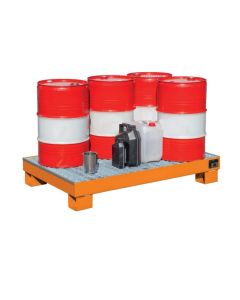
Sump pallet for storing 6 drums of 60 liters, made of sheet steel with a galvanized grate. Dimensions: W 1310 x D 800 x h 200 mm.
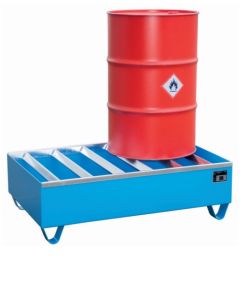
Industrial spill pallet for storing up to 2 x 200-liter drums, made of resistant steel, with a base in galvanized profiles. Dimensions: 1200 x 800 x h 360 mm.
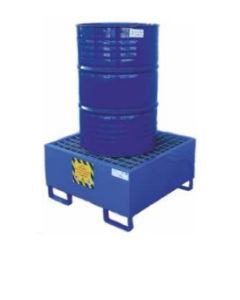
Liquid containment basin. Ideal for 1 drum of 200 kg. Capacity: 240 liters.
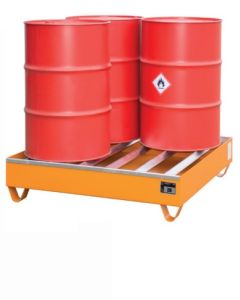
Steel sump for safe storage of industrial liquids, suitable for 4 x 200-liter drums. Dimensions: 1200 x 1200 x h 285 mm.
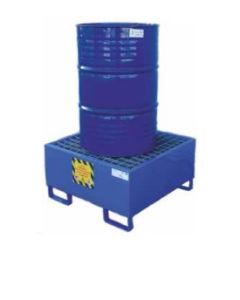
Containment basin for drums. Capacity: 240 liters. Ideal for 1 drum of 200 kg.
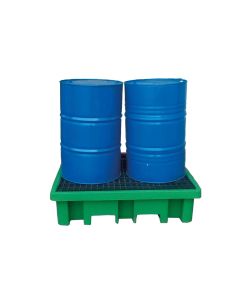
Spill tray in virgin polyethylene for 2 x 200L drums. Dimensions 130x90x33 cm, capacity 210L. Durable and stackable monobloc structure.
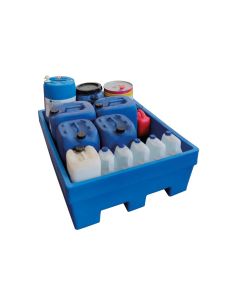
Industrial spill pallet in virgin polyethylene (120x80x40 cm). Capacity 200L, stackable and easy to handle, ideal for acids, oils, and solvents.
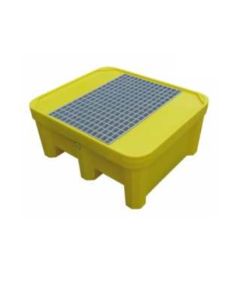
Polyethylene liquid collection tray. Ideal for 1 x 200 kg drum. Load capacity: 300 kg.
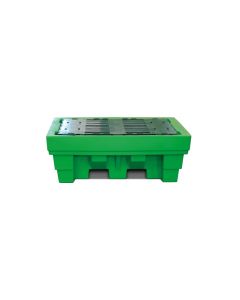
Virgin polyethylene containment tray for 2 drums, 142x102x52 cm. 370L capacity, chemical-resistant stackable monobloc structure.
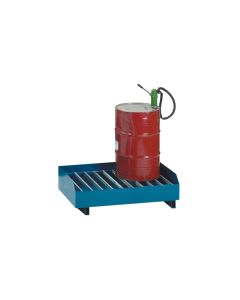
Welded steel storage sump for 200-liter drums (80x80x50cm). Palletized base and removable supports for secure containment.
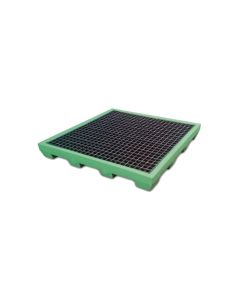
Modular polyethylene spill collection tray, 160L (132x132x15.5 cm). Acid-resistant monobloc structure, ideal for drum storage platforms.
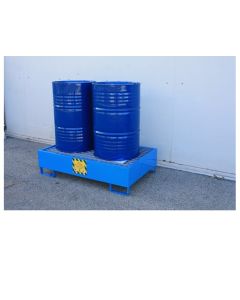
Steel liquid collection sump. Ideal for 2 drums of 200 kg.
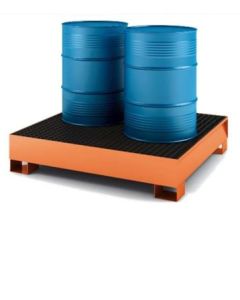
Spill pallet for 4 drums of 200 lt. Dimensions: W. 134 x D. 125 x h. 20 cm. Capacity: 280 lt.
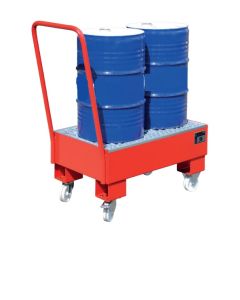
Steel spill containment pallet with a collection capacity for 2 drums of 60 liters. Dimensions: W 940 x D 500 x h 1075 mm.
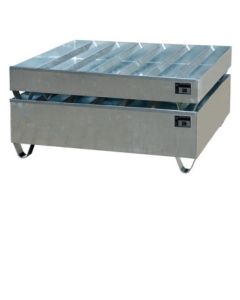
Spill pallet for 4 drums of 200 lt, made of hot-dip galvanized steel. Collection capacity 410 lt. Dimensions: 1200 x 1200 x h. 410 mm.
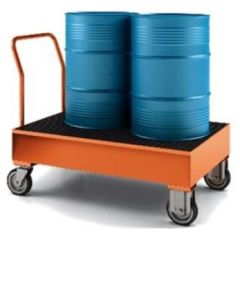
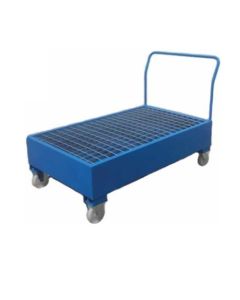
Trolley with spill containment pallet with a capacity of 210 l. For 1 x 200 l drum. Dimensions: W. 86 x D. 86 cm.
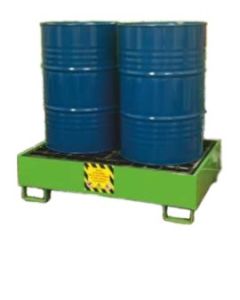
Liquid containment tray. Ideal for 2 drums of 200 kg. Capacity: 260 liters.
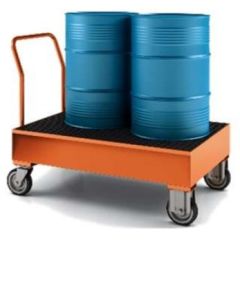
Steel wheeled spill pallet. For 2 drums of 200 l. Capacity: 230 l. Dimensions: W. 134 x D. 85 cm.
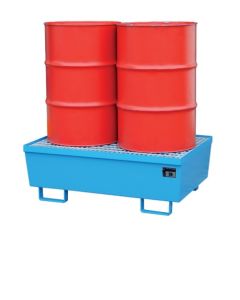
Liquid storage sump for 2 x 200-liter drums, in reinforced steel with profiled edges. Dimensions: 1200 x 800 x h 415 mm. Sump capacity: 225 lt.
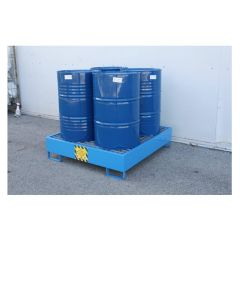
Hazardous substance collection tray. Ideal for 4 drums of 200 kg.
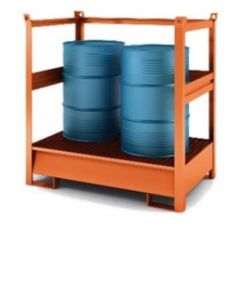
Liquid containment sump for 1 x 200 lt drum, stackable. Capacity: 210 lt. Dimensions: L. 87 x D. 87 x h. 146 cm.
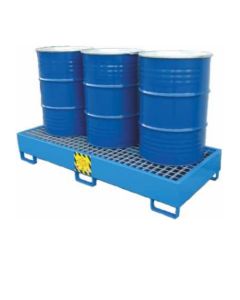
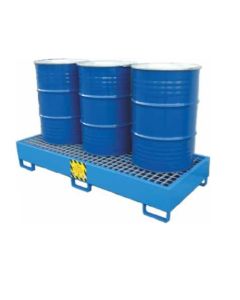
Hazardous substance collection tray. Ideal for 3 drums of 200 kg.
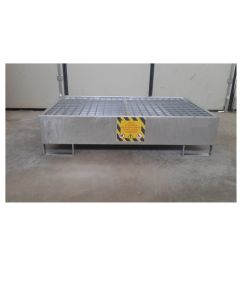
Liquid containment bund. Capacity: 260 liters. Ideal for 2 drums of 200 kg.
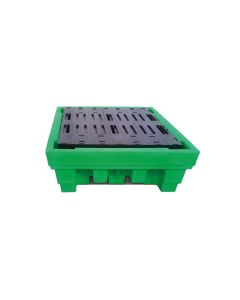
UV-stabilized polyethylene spill pallet for storing 4 x 200L drums. Capacity 550L, stackable and forkable monobloc structure.
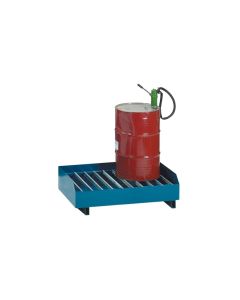
Industrial welded steel spill pallet for 2 x 200L drums, dimensions 135x80x40 cm. Palletized structure with removable tubular supports.
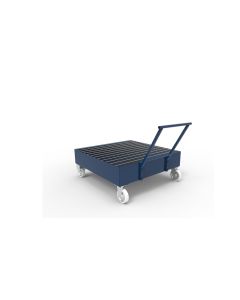
Ecological spill containment tray. Wheeled model. Capacity: 180 L. Dimensions: L.1300 x H.800 mm.
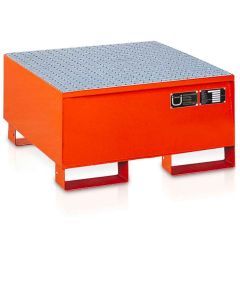
Spill containment pallet 860x860xh. 330 mm. For 1 x 200 lt drum. Capacity: 221 lt. Load capacity: 233 kg.
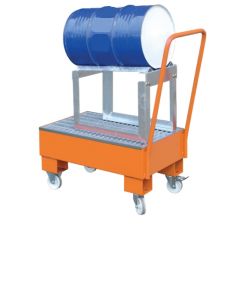
Spill tray for horizontal storage of 1 60-liter drum, with galvanized support and steel structure. Dimensions: W 940 x D 500 x H 1075 mm.
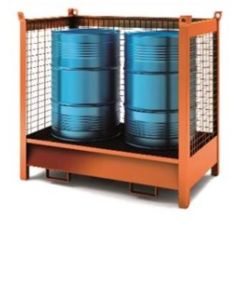
Stackable container with spill pallet and 3 mesh sides. For 1 x 200 l drum. Capacity: 210 l.
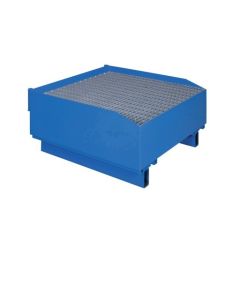
Spill containment pallet. Capacity: 190 liters. Dimensions: W. 80 x D. 80 x h. 50 cm.
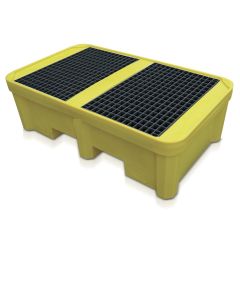
Anti-corrosion polyethylene sump pallet for 2 drums of 200 lt. 1350x800x h. 420 mm. Load capacity: 400 + 400 kg.
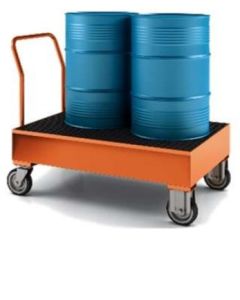
Mobile steel spill pallet for liquids. For 4 drums of 200 lt. Capacity: 280 lt. Dimensions: W. 134 x D. 125 cm.
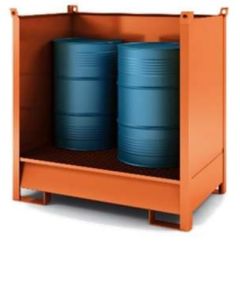
Stackable container with collection sump and 3 sheet metal sides. For 1 drum of 200 lt. Capacity: 210 lt.
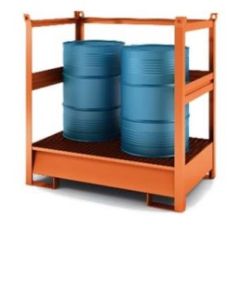
Stackable spill pallet for 2 drums of 200 lt. Capacity: 230 lt. Dimensions: W. 135 x D. 86 x h. 146 cm.
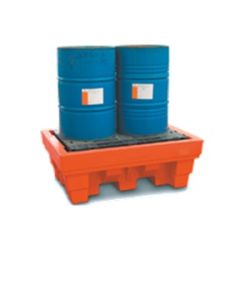
Polyethylene spill pallet for 2 x 200 kg drums. Load capacity: 650 kg.
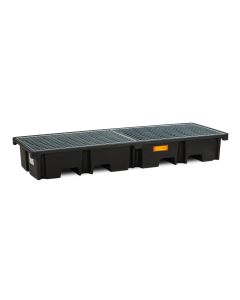
PE sump pallet for 2 pallets h1042_13, capacity 425 L, for 2 euro pallets or 4 x 200 L drums. In high chemical resistance black LLDPE, 4-way forkliftable and DIBt approved.
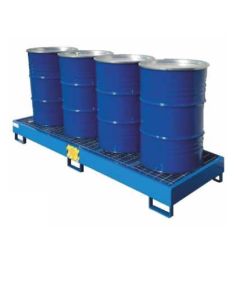
Spill pallet for 4 drums of 200 kg. Dimensions: 251 x 80 x h. 25 cm.
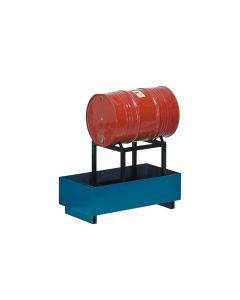
Steel spill pallet for 1 horizontal 200-liter drum, 120x66x57cm, with drum supports for dispensing and palletized base.
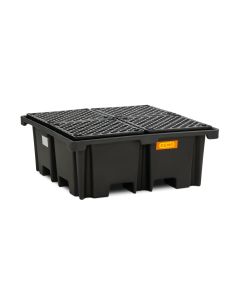
Spill pallet for pallets with PE grid h1042_12, capacity 400 L, for 1 industrial pallet or 4 x 200 L drums. Made of high chemical resistance black LLDPE, DIBt approved.
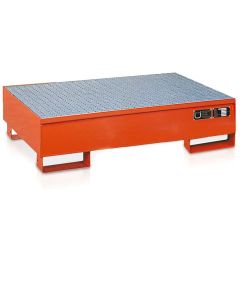
Spill containment pallet 1340x850xh. 230 mm. For 2 drums of 200 lt. Capacity: 227 lt. Load capacity: 480 kg.
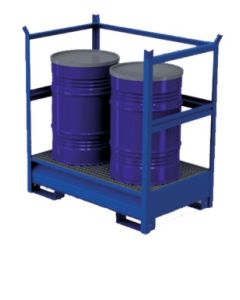
Liquid spill containment pallet with sides. Ideal for 2 x 200 kg drums.
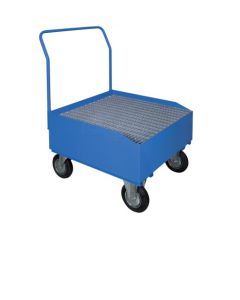
Liquid containment tray with wheels. Capacity: 190 liters.
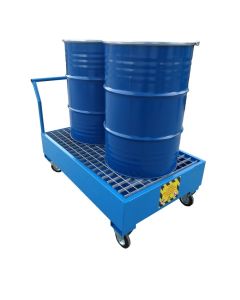
Drum containment tray. Ideal for two 200 kg drums. Dimensions: 154 x 85 x h. 100 cm.
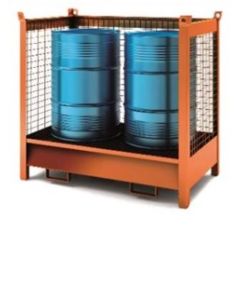
Stackable spill containment pallet with 3 mesh sides. For n. 2 drums of 200 lt. Capacity: 230 lt.
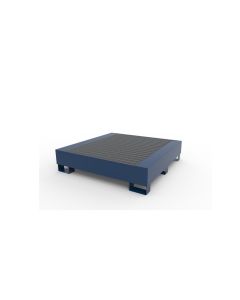
Spill containment pallet for the industrial sector. Capacity: 350 liters. Dimensions: 1300 x 1300 x 300 mm.
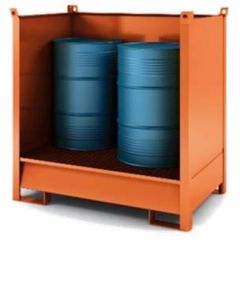
Steel spill pallet for drums. 3 sheet metal sides. For 2 x 200 l drums. Capacity: 230 l.
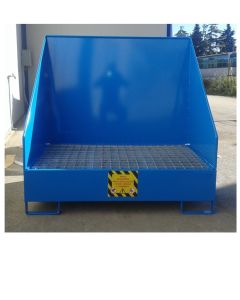
Liquid containment pallet. Ideal for 2 x 200 kg drums. Dimensions: 134 x 85 x 133 cm.
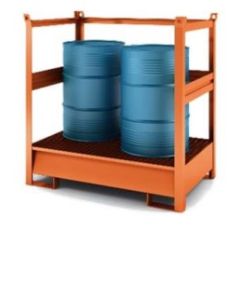
Stackable spill pallet for 4 drums of 200 lt. Capacity: 280 lt. Dimensions: W. 135 x D. 126 x h. 143 cm.
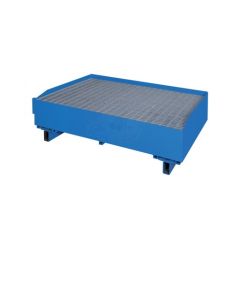
Forkliftable liquid containment basin. Capacity: 300 liters.
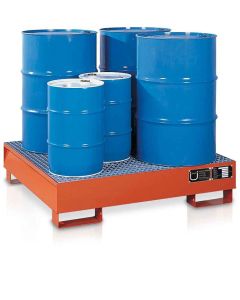
Spill containment pallet 1340x1250xh. 200 mm. For 4 drums of 200 lt. Capacity: 284 lt. Load capacity: 909 kg.
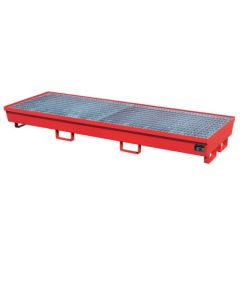
Liquid containment sump pallet, ideal for storing up to 4 drums of 200 liters in a vertical position. Dimensions: 2400 x 800 x h 285 mm. Collection volume: 233 lt.
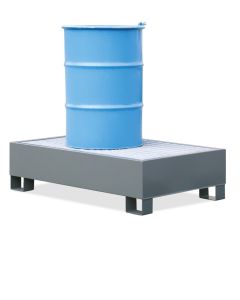
Spill pallet for storage of no. 1 vertical drum. Dimensions: 1000x850x h. 350 mm. In painted carbon steel thickness 25/10.
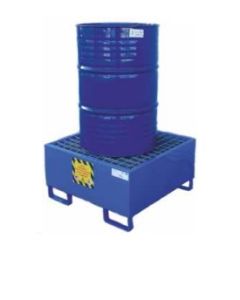
Hazardous substances collection sump. Capacity: 240 liters. Dimensions: 85 x 85 x h. 160 cm.
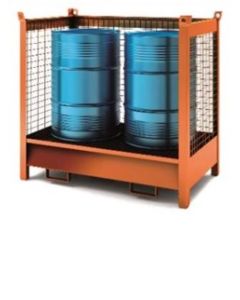
Stackable sump pallet. 3 mesh sides. For storage of 4 drums of 200 lt. Capacity: 280 lt.
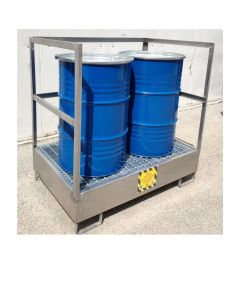
Steel spill containment pallet for liquids. Ideal for 2 x 200 kg drums.
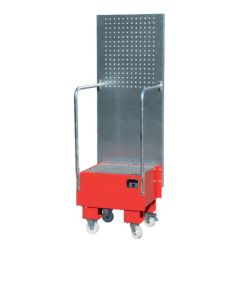
Mobile sump for industrial liquid collection, for the containment of 1 x 60-liter drum, equipped with perforated sheet metal. Dimensions: 570 x 590 x h 1775 mm. Collection volume: 60 lt.
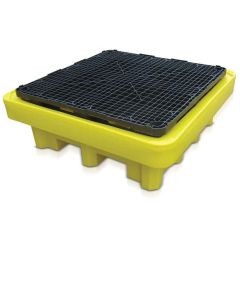
Polyethylene spill pallet for chemical storage. L. 1350 x D. 1350 x h. 490 mm. Capacity: 500 lt.
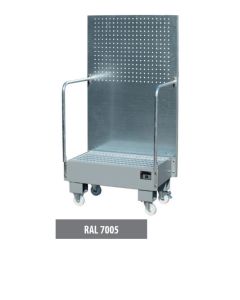
Liquid containment and industrial storage tray, with a capacity for 2 x 60-liter drums. Equipped with a perforated tool wall and wheels. Dimensions: 570 x 890 x h 1685 mm.
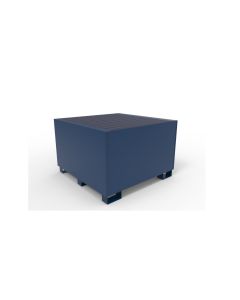
Ecological containment tray for liquids. Capacity: electro-welded galvanized steel. Dimensions: L.1200 x D.800 x H.800 mm.
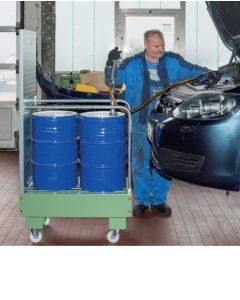
Mobile collection sump for industrial oils and liquids, designed to hold 2 x 60-litre drums, with an aluminum wall for tools. Dimensions: 875 x 500 x h 1685 mm.
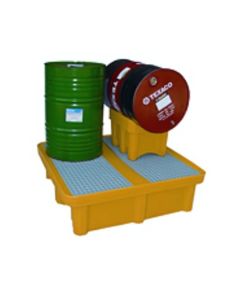
Sump pallet h836_32 for 4 drums, 500-liter capacity with metal grid. High-visibility yellow structure for hazardous liquids.
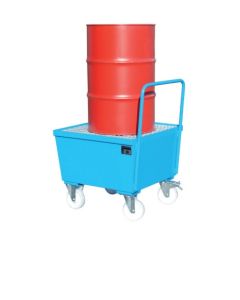
Mobile sump for storage and liquid collection. Capacity: 1 x 200 lt drum. Dimensions: 870 x 800 x h 1110 mm. Collection capacity: 215 lt.
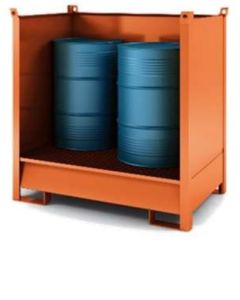
Stackable container with spill tray. For 4 drums of 200 liters. Capacity: 280 liters. 3 sides in sheet metal.
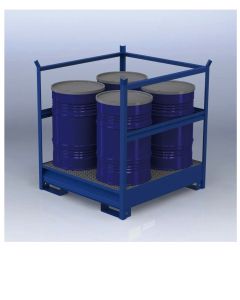
Liquid containment bund. Ideal for 4 drums of 200 kg. Dimensions: 134 x 125 x h. 130 cm.
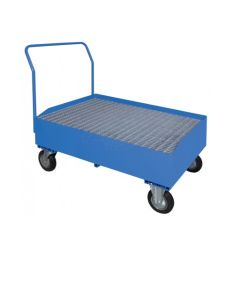
Drum containment sump. Capacity: 300 liters.
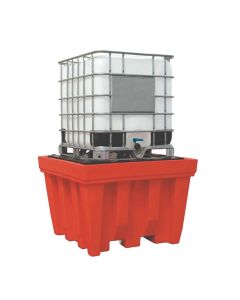
UV polyethylene spill containment pallet for 1000 L IBC tanks. Dimensions 142x142 cm, stackable monobloc structure with high chemical resistance.
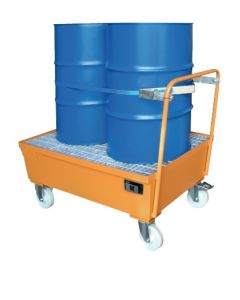
Mobile spill containment pallet for liquids, capacity 2 drums of 200 liters. Dimensions: 1280 x 800 x h 1110 mm. Sump capacity: 225 lt.
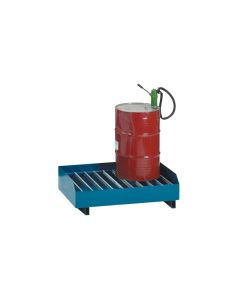
Welded steel storage sump H286_56, 200x80x40 cm. For 3 drums of 200L, with removable tubular supports for simplified leak recovery.
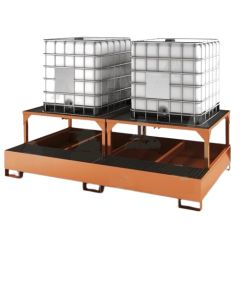
Liquid collection sump with riser. For 1 x 1000 lt IBC tank. Capacity: 1000 lt.
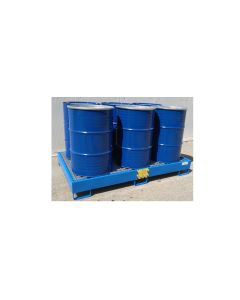
Painted carbon steel containment spill pallet for 6 drums (not included). Dimensions: W 200 x D 125 x H 25 cm.
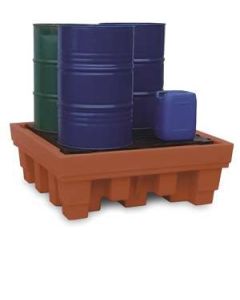
Polyethylene basin ideal for 4 drums of 200 kg. Load capacity: 1000 kg.
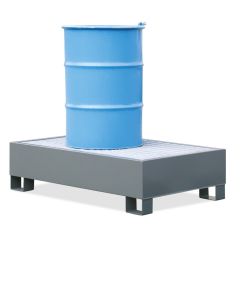
Containment pallet for storage of 2 vertical drums or 1 horizontal drum. Dimensions: 1400x850x h. 350 mm. In painted carbon steel thickness 25/10.
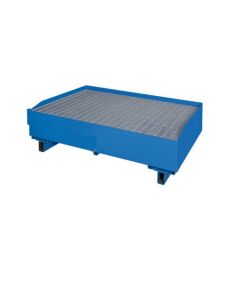
Liquid containment tray. Capacity: 418 liters. Load capacity: 1200 kg.
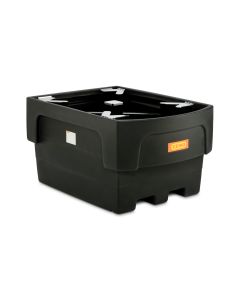
Spill tray with dispensing device h1042_15 for 1 IBC, collection capacity 1,100 L. Made of high chemical resistance black LLDPE polyethylene, DIBt approved with 1500 kg load capacity.
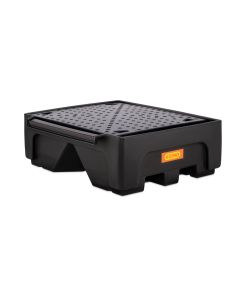
Extension sump pallet with perforated plate h1042_14 for 1 IBC, made of high chemical resistance black LLDPE polyethylene. DIBt approved, equipped with PE perforated plate and stable support cross.
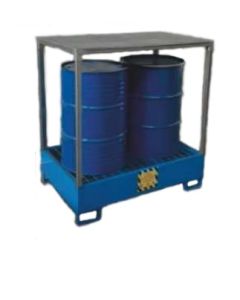
Steel liquid containment bund. Capacity: 260 liters. Dimensions: 134 x 85 x h. 160 cm.
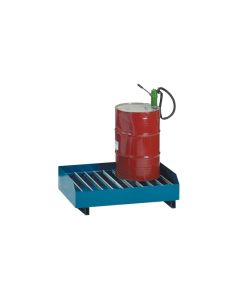
h286_57 welded steel storage tray for 4 drums. Dimensions 250x80x40 cm, capacity 400L, palletized structure and removable tubular supports.
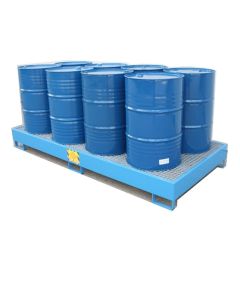
Spill containment pallet for 8 drums of 200 kg. Dimensions: 272 x 125 x 28 cm.
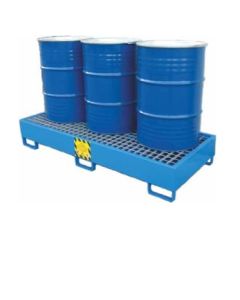
Spill containment basin for drums with galvanized roof. Ideal for 3 drums of 200 kg.
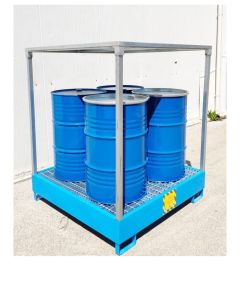
Sump pallet for drums. Ideal for 4 x 200 kg drums. Dimensions: 134 x 125 x h. 160 cm
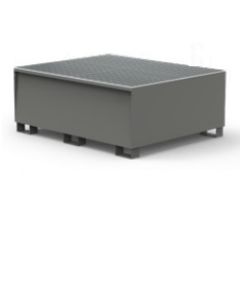
Steel sheet spill pallet for 1000 lt tank. L. 1600 x D. 1300 x h. 535 + foot 100 mm. Load capacity: 1300 kg.
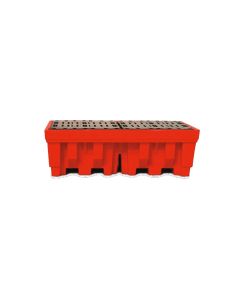
Spill containment pallet for 2 x 1000L IBCs in UV-stabilized virgin polyethylene, 240x142x74 cm. Rotational monobloc structure with high chemical resistance.
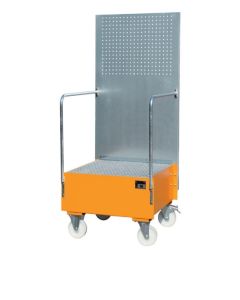
Spill containment pallet with galvanized grate, polyamide wheels, and tool panel, ideal for holding 1 x 200-liter drum. Dimensions: 870 x 890 x h 2110 mm.
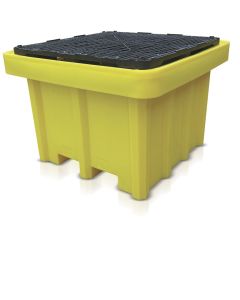
Polyethylene spill pallet for 1 x 1000 lt IBC. 1350x1350x h. 970 mm. Static load: 1500 kg.
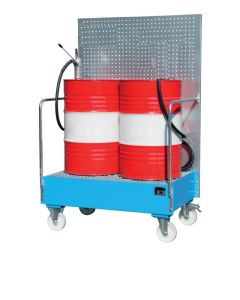
Collection sump for industrial liquids, with galvanized grid and perforated tool wall, suitable for holding up to 2 x 200-liter drums. Dimensions: 870 x 1290 x h 2015 mm.
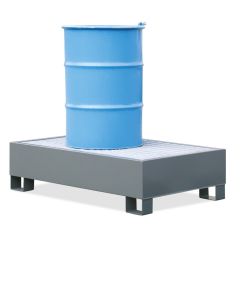
Spill containment pallet for storage of 4 vertical or 2 horizontal drums. Dimensions: 1400x1400x h. 350 mm. In painted carbon steel 25/10 thickness.
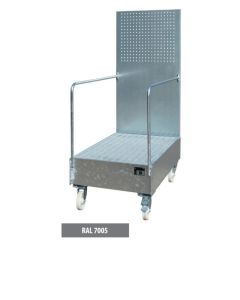
Sump pallet for managing industrial liquids, with a galvanized grid and tool holder back panel, suitable for containing up to 2 x 200-liter drums. Dimensions: 1280 x 800 x h 2015 mm.
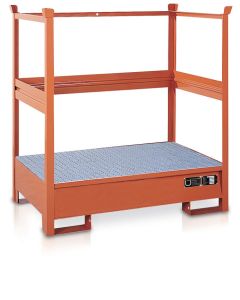
Liquid containment tray for 2 drums of 200 lt, stackable. 1350x860xh. 1300 mm. Load capacity: 460 kg. Capacity: 227 lt.
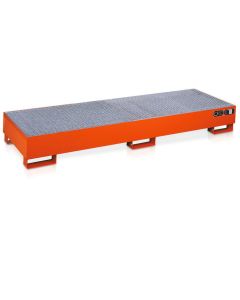
Liquid spill containment pallet 2660x850xh. 230 mm. For 4 drums of 200 lt. Capacity: 425 lt. Load capacity: 920 kg.
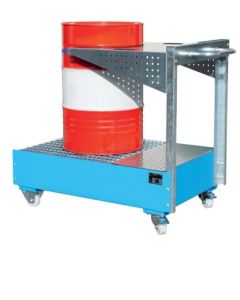
Liquid containment sump with integrated support, suitable for 1 x 200-liter drum. Dimensions: 1450 x 800 x h 1195 mm.
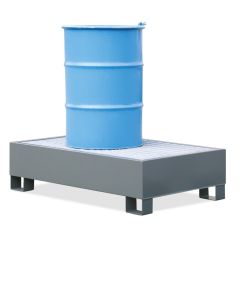
Painted carbon steel spill pallet for storing 6 vertical drums. Dim.: 2000x1400x h. 350 mm.
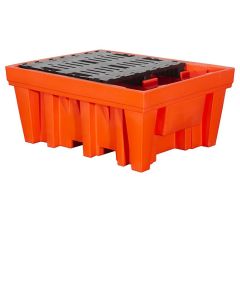
Spill pallet for 1000 lt IBC tank with safety discharge sump. In polyethylene. 1420x1800xh. 770 mm. Load capacity: 1600 kg.
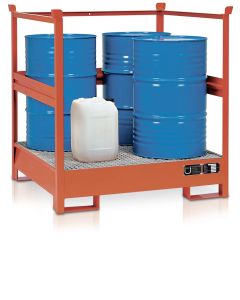
Liquid containment bund for 4 drums of 200 lt, stackable. 1350x1260xh. 1270 mm. Load capacity: 909 kg. Capacity: 284 lt.
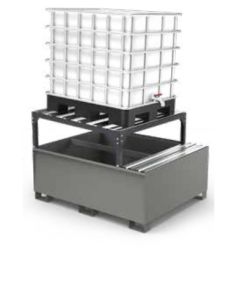
Sheet metal spill tray for 1 x 1000 litre IBC tank, with inclined support. L. 1600 x D. 1300 x h. 950 + 100 mm foot. Load capacity: 1300 kg.
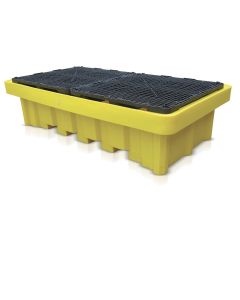
Polyethylene spill containment pallet for 2 x 1000 lt IBC tanks. 2540x1370 x h. 650 mm. Static load capacity: 3000 kg.
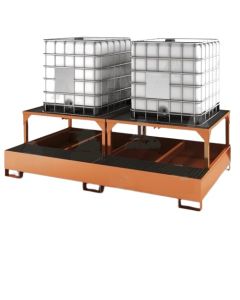
Liquid collection bund with stand. For 2 x 1000 lt IBC tanks. Capacity: 1000 lt.
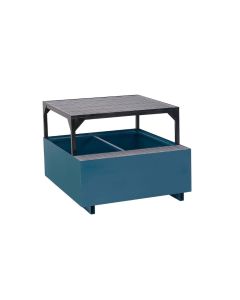
Steel spill pallet for 1000L tank, 135x165 cm. Palletized structure with inclined grating to facilitate dispensing.
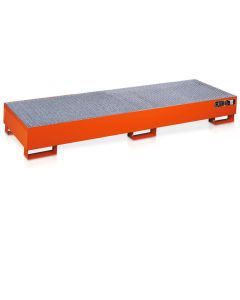
Liquid containment bund 2720x1250xh. 200 mm. For 8 drums of 200 lt. Capacity: 578 lt. Load capacity: 1824 kg.
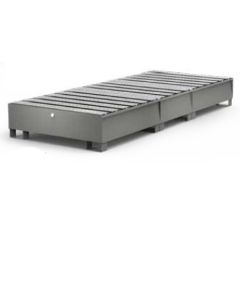
Sheet metal spill pallet for 1000-litre IBCs. L. 3200 x D. 1300 x h. 292 + foot 100 mm. Load capacity: 2500 kg.
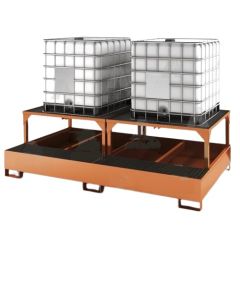
Liquid containment spill tray with stand. For 3 IBC tanks of 1000 lt. Capacity: 1200 lt.
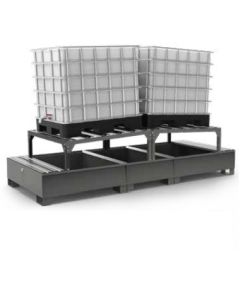
Steel sheet spill pallet for 1000 lt IBCs, with inclined support. L. 3200 x D. 1300 x h. 707 + 100 mm foot. Load capacity: 2500 kg.
Liquid containment pallets represent a fundamental solution for the safe management of hazardous substances and drums in industrial, chemical, and manufacturing sectors. These collection systems are designed to prevent accidental spills, protect the environment, and ensure compliance with occupational safety regulations. Their importance is growing in environments where contact with oils, solvents, acids, or other liquids represents a daily risk. An appropriate containment pallet is not just a regulatory obligation, but an investment in preventing accidents, environmental damage, and production downtime. Choosing the right pallet depends on the required capacity, the type of liquid to be contained, the dimensions of the available space, and the specific requirements of the application.
Liquid containment pallets offer multiple levels of protection: they reduce the risk of soil and groundwater contamination in the event of leaks, minimize operator exposure to harmful substances, and facilitate proper waste management according to regulatory provisions. In industrial contexts where 60, 200, or 1000-liter drums are stored, an appropriate collection pallet allows for maintaining order, organizing space efficiently, and responding promptly to emergencies. The implementation of containment systems significantly reduces costs associated with environmental remediation and administrative sanctions. Furthermore, modern pallets are designed with a capacity that reaches 110% of the largest stored container, ensuring a safety margin that completely absorbs any spill.
From an operational perspective, pallets facilitate the transport and handling of heavy containers thanks to integrated supports and stable bases. Many models are equipped with removable grids that allow for quick visual inspection and easy cleaning. In chemical and pharmaceutical environments, where traceability and documentation are critical, pallets also represent a key element in documenting safe storage procedures, a fundamental aspect for audits and ISO certifications.
The market offers containment pallets in various configurations, materials, and capacities. Polyethylene pallets are among the most common: lightweight, resistant to chemical corrosion, easy to clean, and suitable for a wide range of substances. Some models are made of UV-stabilized virgin polyethylene, ideal for outdoor use as it resists degradation caused by solar exposure. Polyethylene pallets are available in capacities ranging from 19 liters up to over 600 liters, and many models are foldable, solving storage problems when not in use. Steel pallets, on the other hand, represent the choice when maximum structural strength and prolonged durability are required: made of 3 mm steel sheet or hot-dip galvanized steel, they withstand higher loads and maintain integrity even in high-humidity environments or with significant temperature fluctuations.
Alongside these two main materials, specific solutions exist such as PVC pallets, particularly suitable for containing medium-sized drums, and lightweight PVC-coated fabric pallets, designed for situations where practicality and space are critical factors. Collection capacity varies in relation to the number of drums: compact models hold a single 200-liter drum, while larger pallets can store 4 or 6 60-liter drums or 2-4 200-liter drums. External dimensions are designed to integrate into standard workspaces, with lengths between 80 and 1310 millimeters and depths ranging from 500 to 1200 millimeters.
The selection of the containment pallet must start from four fundamental parameters: the total capacity of the liquid to be contained, the type of substance (acidic, alkaline, oily, flammable), the dimensions of the containers, and the available space. A common mistake is underestimating the collection capacity: regulations require the pallet to contain at least 110% of the volume of the largest container, not 100%. If storing two 200-liter drums, the pallet must have a minimum capacity of 220 liters. Evaluating in advance the maximum number of containers that will occupy the pallet is decisive to avoid improper choices that would compromise regulatory compliance.
A second aspect concerns the chemical compatibility of the material: not all substances are suitable for all materials. Polyethylene resists mineral oils, organic solvents, and many chemicals well, but might be unsuitable for some high-concentration aromatic solvents. Steel is universally compatible with most industrial liquids; however, in environments with high humidity or specific corrosive liquids (such as certain strong acids), hot-dip galvanized or stainless steel represents the optimal choice. Always check the product’s technical data sheet or consult chemical compatibility data provided by the manufacturer. An additional selection factor concerns the ease of cleaning and maintenance: removable grids simplify inspection and sanitization operations, while trolley-mounted models offer mobility for situations where containers must move frequently between different areas of the facility.
The regulatory framework governing containment pallets is complex and varies depending on the type of liquid and the geographic context. In Europe, the ISO 13516 standard specifies technical requirements for secondary containment tanks, establishing minimum capacities, leak tests, and inspection methods. At the Italian national level, Legislative Decree 231/2017 (regulations on the prevention of marine pollution) and Legislative Decree 152/2006 (environmental code) mandate the use of containment systems for hazardous liquids and waste. Substances classified as hazardous according to the CLP Regulation must be stored in pallets that guarantee total impermeability and a capacity equal to at least 110% of the volume of the largest container. For industrial environments subject to ARPA or VVF inspections, photographic documentation of the pallet’s status and its capacity represents documentary evidence of compliance.
In addition to environmental regulations, occupational safety standards exist: Legislative Decree 81/2008 requires that workplaces be organized to prevent accidents and occupational diseases, and the safe containment of hazardous liquids falls under this responsibility. Periodic maintenance of the pallet is mandatory: monthly visual inspections, cleaning when necessary, and structural integrity checks at least annually. In the chemical and pharmaceutical sector, GMP (Good Manufacturing Practice) regulations require full traceability of storage systems and documentation of procedures. In the case of flammable products (ATEX classification), the pallet must be positioned in designated areas and away from ignition sources according to the minimum distances imposed by national fire safety regulations.
Explore all the products in the category and compare the available solutions to find the one best suited to your operational context. The liquid containment pallets in our catalog cover a full range of capacities, materials, and configurations, ensuring regulatory compliance and long-term reliability.
A containment pallet is a secondary container designed to collect liquids in case of leakage or spillage from primary containers. It serves to protect the soil, water, and surrounding environment, ensuring regulatory compliance in industrial, chemical, and manufacturing settings. The minimum required capacity is 110% of the volume of the largest container stored.
Polyethylene pallets are lightweight, resistant to chemical corrosion, and easy to clean, ideal for limited spaces and indoor use. Steel pallets offer superior structural strength, prolonged durability, and are suitable for heavy loads and high-humidity environments. The choice depends on the type of liquid, expected duration, and environmental conditions.
Multiply the volume of the largest container by 1.10 (the 110% required by regulations). If you store two 200-liter drums, the minimum capacity of the pallet must be 220 liters. If there is more than one container, some regulations require 110% of the total: always check the regulations for your specific sector.
Yes, as long as it is made of suitable material such as UV-stabilized virgin polyethylene or hot-dip galvanized steel, which resist solar exposure and atmospheric agents. However, protecting the pallet with a cover or canopy extends its life and prevents the accumulation of rainwater, which complicates waste management.
Some concentrated aromatic solvents, certain specific hydrocarbons, and some aggressive chlorinated solvents can degrade polyethylene over time. Always consult the product technical data sheet or contact the supplier to verify chemical compatibility with the liquid you intend to store. In case of doubt, steel is a universal choice.
Inspect the pallet monthly for signs of leaks or accumulation. Remove the grid (if present) and empty any stagnant water. Clean with water and neutral detergents; avoid abrasive products that damage the material. If chemical residues are present, use distilled water. Inspect the structural integrity at least once a year.
Trolley-mounted pallets are ideal if you need to frequently move containers between different areas. They offer mobility and practicality but slightly reduce the total capacity compared to fixed models. Evaluate whether your operations actually require this flexibility before choosing this type.
 English
  Italian
 French
 German
 Spanish